Photo credit: Texas Plinking Gear/YouTube
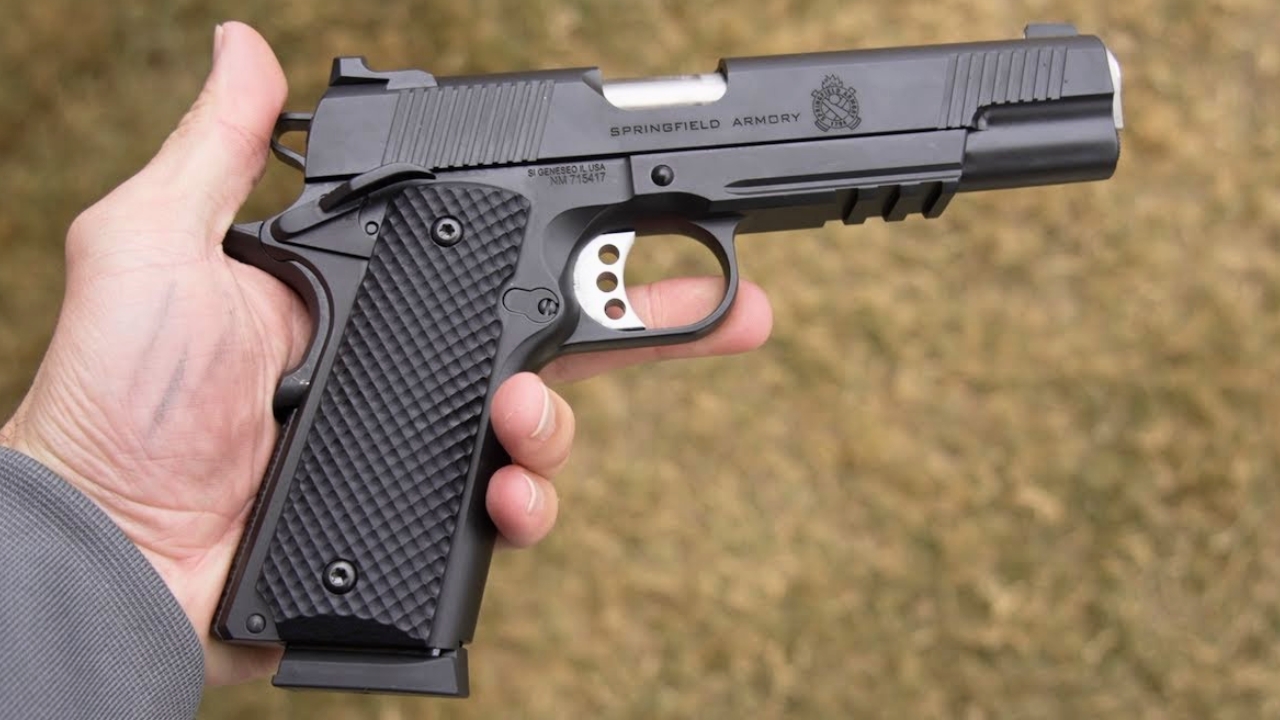
There aren’t many 1911s left that you’d trust for work outside the range. A lot of modern handguns have replaced the platform outright in duty roles, but the Springfield Operator remains one of the few that still convinces serious shooters it belongs in that conversation. It mixes the familiar feel of a well-built 1911 with features that actually matter when you’re running drills, managing recoil, or working in low light.
You don’t pick an Operator because it looks good. You pick it because it delivers consistent performance in places where lesser 1911s start showing their limitations. When you spend time behind one, the reasons become obvious fast.
Forged frame and slide that hold up under real use

The Springfield Operator uses forged components instead of cast parts, which gives the pistol strength where it counts. That durability shows up during long training blocks when lesser 1911s begin developing play in the frame rails or loosening under recoil. With the Operator, hard use doesn’t immediately translate into mechanical wear you can feel.
You can run high round counts and still get smooth cycling and predictable lockup. The tight but functional fitment helps the gun stay consistent when exposed to heat, dust, and debris. It’s built to take an actual workload, not sit in a safe.
A rail that actually works with modern lights
The accessory rail on the Operator isn’t decorative—it fits real-duty weapon lights without needing odd adapters or forcing awkward indexing. That means you can use reliable illumination tools and expect the gun to stay balanced and controllable.
Plenty of 1911 rails are inconsistent in dimensions or sit too shallow to hold a light securely. The Operator’s rail locks gear in place, giving you a capable fighting handgun in low-light environments. Whether you’re clearing corners or training after sunset, the setup feels stable and predictable.
A trigger that supports accurate shooting
One of the Operator’s biggest strengths is the trigger. It’s clean, consistent, and encourages precision without being so light that it becomes a liability under stress. You get a short, crisp break and a repeatable reset—exactly what you want when working through rapid drills or stretching your accuracy.
Even under fatigue, the trigger lets you maintain control. Many modern polymer pistols rely on spongy or rolling breaks, but the Operator’s trigger gives you a level of confidence that helps during demanding sessions. It’s a feature that keeps the pistol relevant in duty roles.
Night sights that actually stay visible
The Operator ships with sights designed specifically for defensive and duty applications. The tritium inserts stay visible when lighting conditions shift, and the wide rear notch helps you pick up the front sight quickly. That matters when you move from bright areas into shadows or need to track the sight during recoil.
Instead of relying on aftermarket upgrades, the Operator gives you usable sights straight from the factory. In scenarios where clarity matters—whether training or real-world work—the sight picture supports fast, confident shooting.
A match-grade barrel that maintains accuracy
Springfield equips the Operator with a match-grade barrel that delivers consistency across ammunition types. The fitment between the barrel, bushing, and slide contributes to repeatable lockup, which is why the Operator holds tight groups even after extended use.
High round counts don’t immediately degrade accuracy, and the gun performs well when hot. Many 1911s shift once they reach operating temperature, but the Operator stays predictable. That stability is one of the reasons shooters continue relying on it for serious roles.
Recoil management that keeps the gun controllable
Even though it runs full-power .45 ACP, the Operator handles recoil better than many pistols in its class. The weight distribution, checkering, and grip angle help keep the muzzle steady, especially during rapid follow-up shots.
When you’re working through multi-shot strings or transitions, the pistol settles quickly after each cycle. Instead of fighting the gun, you guide it. That controllability is why experienced shooters value the Operator during high-tempo training.
A proven extractor and internal parts that stay reliable
Springfield uses well-machined internal components that hold up under prolonged use. The extractor tension is set correctly from the factory, which reduces the chance of erratic ejection or feeding problems that plague poorly tuned 1911s.
After thousands of rounds, the gun continues to operate smoothly without constant retuning. That level of internal consistency is rare in the 1911 world, where parts often need tweaking. With the Operator, you get reliability that stays with the gun instead of relying on frequent adjustments.
Checkering and ergonomics that work without overthinking
The Operator’s frontstrap checkering and grip texture provide traction without feeling abrasive, giving you control even when your hands are wet, sweaty, or gloved. The controls are positioned where experienced shooters expect them, and they move with the right amount of resistance.
The pistol feels planted during recoil and natural when lifted from a duty holster. Nothing feels out of place. This level of ergonomics makes long training days noticeably easier because the gun never feels like it’s fighting you.
A duty-ready finish that resists wear
The Operator uses a finish designed to handle holster use, environmental exposure, and constant handling. It resists corrosion, holds up under sweat and moisture, and doesn’t immediately show scratches from daily carry.
This matters more than most people realize. A finish that fails early exposes metal and accelerates long-term wear. The Operator’s protective coating helps maintain structural integrity while giving the gun a clean, professional look even after extended duty use.
Feeding reliability across common ammunition types
A major reason the Operator is trusted for serious work is its ability to run hollow points and standard defensive loads without constant tuning. Many 1911s struggle with non-ball ammunition, but Springfield set the feed geometry to handle modern defensive rounds reliably.
When you’re running drills that force quick reloads or varied shooting angles, the pistol continues chambering smoothly. This type of reliability is critical for duty use, and it’s something the Operator consistently delivers without needing aftermarket adjustment.
A platform that bridges heritage and modern requirements
The Operator takes the traditional strengths of the 1911—its trigger, ergonomics, and shooting feel—and pairs them with features required in contemporary defensive work. You get a gun that handles like a classic but performs like a modern tool.
Whether you’re drawn to the platform for its shootability or its proven track record, the Operator ensures you aren’t compromising capability. It fits into today’s training standards while offering the familiarity many shooters prefer.
Like The Avid Outdoorsman’s content? Subscribe to our newsletter so you never miss an article.
Here’s more from us: