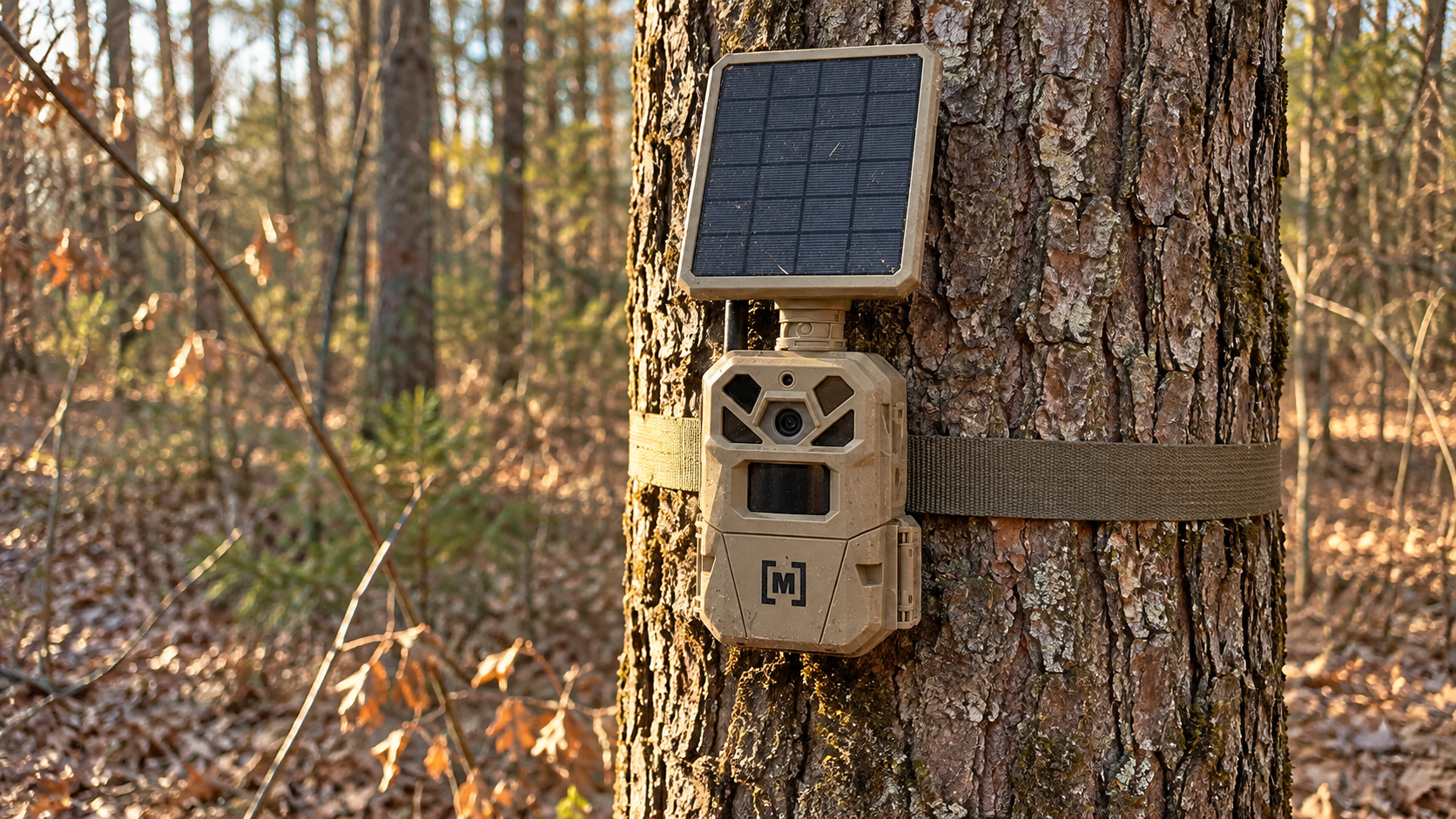
Photo credit: The Avid Outdoorsman
Prices and plan terms verified September 5, 2026. The Avid Outdoorsman is a Bass Pro Shops affiliate — if you buy through a link here we earn a small commission at no cost to you.
Every cellular trail camera review compares sticker prices. Almost none of them mention that the $160 camera you’re looking at will cost you $520 before the third season is out.
That’s not a gotcha. It’s just how the business works: the camera is the cheap part, and the subscription is the product. But it means the way most people choose a trail camera — comparing two sticker prices that differ by $40 — is backwards. The $40 is noise. The plan is the purchase.
Here’s the arithmetic, done properly.
What a camera actually costs over three years
Camera price plus 36 months of the entry-level plan, one camera:
| Camera | Camera | Plan (entry) | 3-year total |
|---|---|---|---|
| Spypoint Flex-M2 (free tier) | $79.99 | 100 photos/mo free | $80 |
| Tactacam Reveal Pro 4.0 | $159.99 | ~$5/mo, per account | $340 |
| Spypoint Flex-M2 (paid) | $79.99 | ~$10/mo per camera | $440 |
| Stealth Cam Deceptor Max 3.0 | $119.99 | ~$10/mo per camera | $480 |
| Moultrie Edge 4 Solar | $169.99 | $9.99/mo per camera | $530 |
| Covert Interceptor Solar | $219.99 | ~$10/mo per camera | $580 |
Look at the Spypoint rows. The same $80 camera lands at $80 or $440 depending entirely on which plan you end up on. That’s a 5.5x swing on one product, and it has nothing to do with the camera.
Now look at the Stealth Cam and the Moultrie. The Moultrie costs $50 more on the shelf. Over three years the gap is $50 — identical, because their plans cost the same. All that agonizing over the sticker price decided 10% of the real number.
The one number that changes everything: per-camera vs per-account
Most brands charge you again for every camera you add. Tactacam charges once for your account, no matter how many cameras hang on it. That sounds like a footnote until you scale it.
| Cameras | Tactacam (per account) | A per-camera brand at $9.99 |
|---|---|---|
| 1 | $340 | $530 |
| 2 | $500 | $1,060 |
| 4 | $820 | $2,120 |
| 6 | $1,140 | $3,180 |
| 8 | $1,460 | $4,240 |
Camera cost plus 36 months of service.
At one camera it’s a $190 difference. At eight it’s $2,780.
The important part isn’t any single row — it’s the slope. Per-camera billing means every time you get more serious about scouting, your costs go up in a straight line. Per-account billing means they don’t. If you think there’s any chance you’ll be running more cameras three seasons from now than you are today, you are choosing a billing model, not a camera.
Cuddeback’s CuddeLink system is the other answer to this problem. Its cameras mesh together and route photos through one cellular “home” camera, so up to 24 cameras share a single plan. It’s more technical to set up and it only makes sense at real scale — but for a large property or a club splitting costs, it’s the cheapest way to run a lot of cameras that exists.
Four ways people waste money on plans
1. Buying the top tier “to be safe.” Higher tiers buy photo volume and video. Unless you’re running burst mode over bait or a mineral site, entry level covers a normal season. Start low — you can upgrade mid-season the week you actually hit the cap, and that’s a much better order of operations than guessing high in August and paying for it all year.
2. Paying twelve months for a four-month season. Some plans let you suspend or run month-to-month. Month-to-month usually costs more per month but far less per year if you genuinely only run cameras August through January. Do that math for your own season length before you auto-renew an annual plan. Six months of service on a $10 plan is $60; twelve is $120.
3. Letting false triggers eat the allowance. Every photo of a branch shadow is a photo you paid to receive. Hanging cameras six to seven feet up and angled down, and clearing the brush in front of the sensor, is free and cuts junk triggers substantially. On a metered plan that’s real money, not just tidiness.
4. Running two brands. Two brands means two plans and two apps, and you will stop opening one of them. Pick a system and stay inside it. This is the strongest practical argument for deciding the per-camera-versus-per-account question before you buy your first camera rather than after your fourth.
So what should you actually do?
Running one camera, low traffic: Spypoint Flex-M2 on the free tier. $80, three years, done. Nothing else comes close.
Running one to four cameras and you want it to just work: the plan cost is roughly a wash across brands, so buy the better camera. The Moultrie Edge 4 Solar is the one we’d pick — the solar panel means fewer trips into your spots, which is worth more than the subscription difference.
Running five or more: Tactacam, and it isn’t close. One plan, unlimited cameras.
Running a big property or a club: Cuddeback CuddeLink. Up to 24 cameras on one plan is a category of its own.
Full picks and specs are in our guide to the best cellular trail cameras for deer season.
Frequently asked
Can I cancel and restart between seasons? Usually yes, and it’s often the single biggest saving available to you. Check whether your brand charges a reactivation fee — some do, and it can wipe out the benefit.
Do free trials auto-convert? Most do. Put the end date in your phone the day you activate. This is the most common way people end up on a plan they never chose.
Does the plan cost count as a “hidden fee”? Not hidden, exactly — but it’s disclosed on a different page than the price, and every roundup that ranks cameras by sticker price is quietly training you to ignore it. That’s why we put the three-year column in every trail camera guide we write.
Bottom line: buy the plan you can live with for three years, not the camera that’s $40 cheaper this week. The plan is 65% to 80% of what you’ll actually spend.
Sources: Trail Cam HQ, Cellular Trail Camera Data Plans Compared · Field & Stream, Best Cellular Trail Cameras of 2026. Plan pricing changes more often than hardware — verify current terms before you commit.