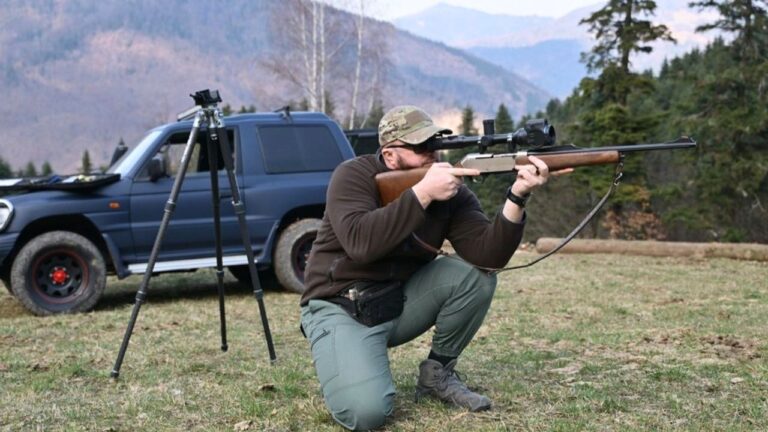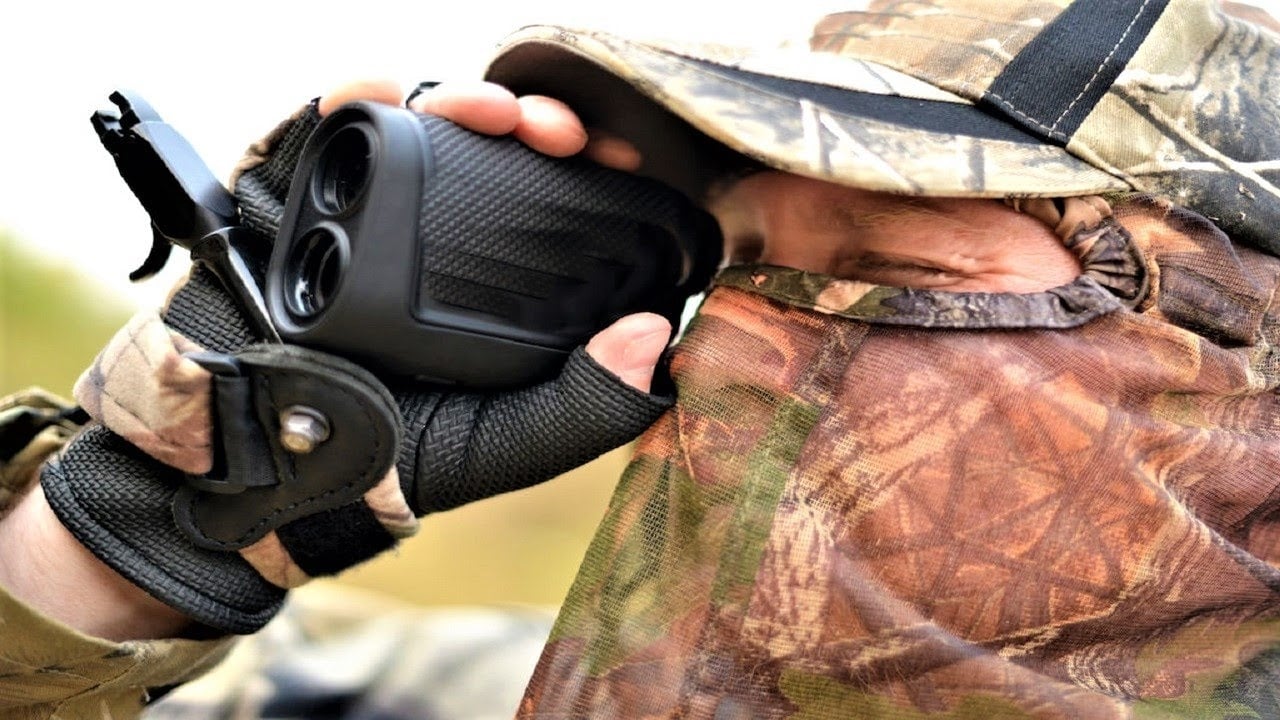
Photo credit: Latest Gear/Youtube
Prices verified September 30, 2026. The Avid Outdoorsman is a Bass Pro Shops and Amazon affiliate — if you buy through a link here we earn a small commission at no cost to you.
A lot of rangefinder guides are obviously written with rifle hunters in mind and then somebody throws “bowhunting” in the title. You can usually tell right away because the first thing they want to talk about is maximum range.
For bowhunting, I really don’t care that a rangefinder can hit a target at 1,700 yards. If I’m not taking a shot past 40 or 45 yards, that number means absolutely nothing to me.
What does matter is angle compensation.
If you’re 20 feet up in a tree and a deer ranges at 32 yards line-of-sight, the actual horizontal distance might be closer to 30. Your bow is sighted for that horizontal distance — not the longer angled measurement between you and the deer.
Use the wrong number and you can end up shooting high.
So every rangefinder on this list does the angle math for you. As far as I’m concerned, that’s not a bonus feature for a bowhunting rangefinder. That’s the bare minimum.
From there, I care about the stuff that actually matters when you’ve got a deer standing there: how fast it gives me a range, whether I can read the display at first and last light, how easy it is to use with one hand, and whether any of the extra features are actually useful instead of just giving me more buttons to mess with.
If you just want the short answer, I’d go with the Vortex Impact 1000 (~$300). It’s compact, it gives you the angle-compensated range you actually need, and Vortex backs the electronics with its warranty — something you don’t see from a lot of optics companies.
How we picked
The criteria, in the order they matter for archery:
- Angle compensation, on by default. Every brand calls it something different. Vortex calls it HCD. Leupold calls it TBR. Sig calls it AMR. It’s the same idea and it’s the whole reason you’re buying a rangefinder instead of guessing.
- Speed to a reading in low light. You get a window of a few seconds when a deer steps into the lane, and it’s usually the first or last twenty minutes of legal light.
- Display readability at dusk. An LCD readout goes gray against gray timber at exactly the wrong moment. This is the most common real-world complaint and the least-discussed spec.
- One-handed operation. You are holding a bow with the other hand.
- Size. A rangefinder that doesn’t fit a bino harness pocket is a rangefinder you leave in the pack.
Maximum range did not factor in. Anything on this list ranges far past bow distance with room to spare.
Where we haven’t run a unit ourselves, we say so and lean on published testing — primarily Target Tamers’ 2026 under-$300 rangefinder testing.
At a glance
| Model | Price | Max range | Mag | Angle comp | Display |
|---|---|---|---|---|---|
| Vortex Impact 1000 | ~$300 | 1,000 yd | 6x | HCD | LCD |
| Leupold RX-1400i TBR/W | ~$300 | 1,400 yd | 5x | TBR/W | Illuminated |
| Bushnell Prime 1700 | ~$300 | 1,700 yd | 6x | Yes | LCD |
| Leupold RX-FullDraw 3 | under $300 | 1,300 yd | 6x | TBR to 175 yd | Illuminated |
| ATN Laser Ballistics 1000 | ~$300 | 1,000 yd | 6x | Yes | LCD |
| Leupold RX-FullDraw 5 (over budget) | $499.99 | 900 yd on deer | 6x | TBR archery + Flightpath | Illuminated |
Best overall: Vortex Impact 1000 — ~$300
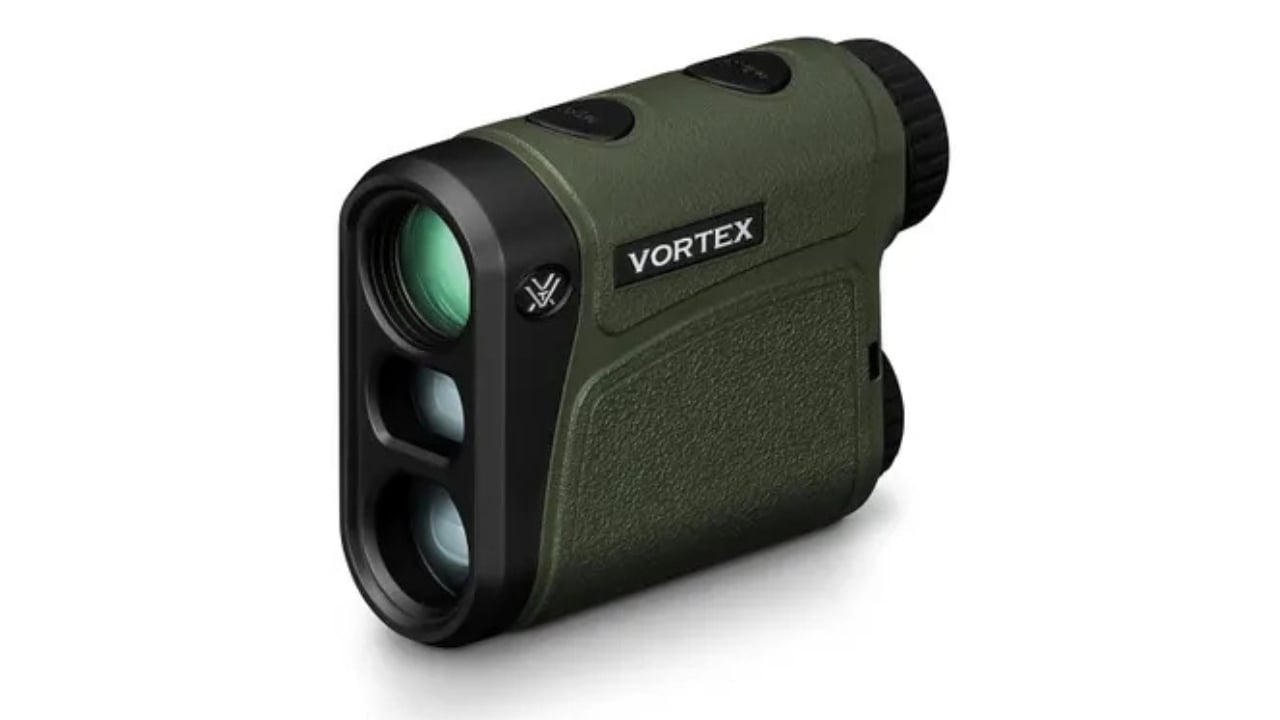
Angle compensation via HCD, 6x magnification, and a body that’s about 3.8 by 1.4 inches — small enough that it genuinely lives in a bino harness pocket instead of the bottom of your pack. That size is not a minor point. The rangefinder you actually have on you beats the better one you left behind.
The reason we put it first is the warranty. Vortex’s VIP warranty covers the electronics, which is unusual — most optics warranties cover glass and housing and quietly exclude the circuit board, which is the part that fails. A rangefinder is an electronic device that lives outdoors in the rain and gets dropped out of trees. Covering that is worth real money.
The catch: LCD display, no illuminated readout. In gray timber at the last ten minutes of legal light, an LCD can wash out. If you hunt thick dark cover and take a lot of last-light shots, that’s a real limitation, and the Leupold below is the better answer.
Who should skip it: anyone whose best hunting happens in the final twenty minutes of shooting light in heavy cover.
Best display: Leupold RX-1400i TBR/W — ~$300
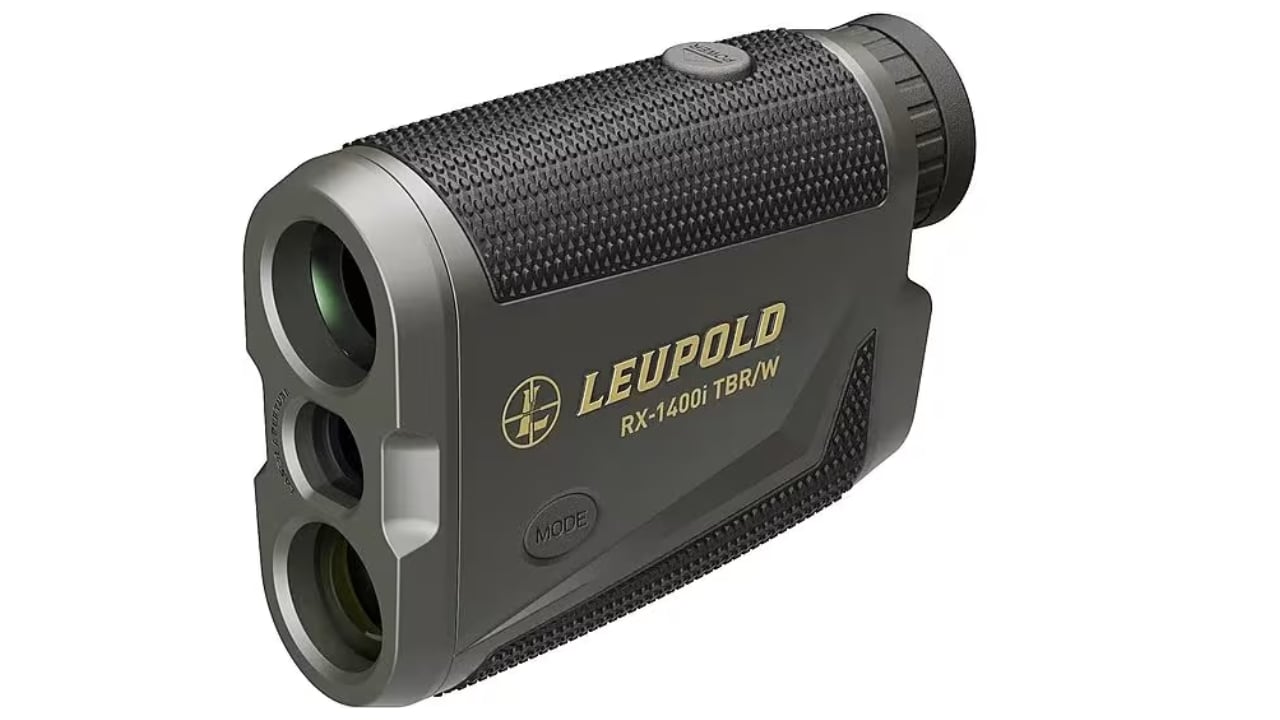
The illuminated display is the reason this one is on the list. It stays readable when the woods have gone flat gray and the LCD units are giving you nothing. If you’ve ever ranged a buck at 6:40 p.m. and couldn’t read the number, you already know what that’s worth.
TBR/W adds wind compensation and 25 ballistic groups on top of angle compensation — genuinely useful if you also rifle hunt, and mostly irrelevant to your archery setup. You’re paying a little for rifle features here.
The catch: 5x magnification, the lowest on this list, and the wind compensation isn’t fully customizable to real conditions. Neither matters much inside 50 yards.
Who should skip it: archery-only hunters who’d rather put that money toward the bow-specific features below.
Best for archery specifically: Leupold RX-FullDraw 3 — under $300
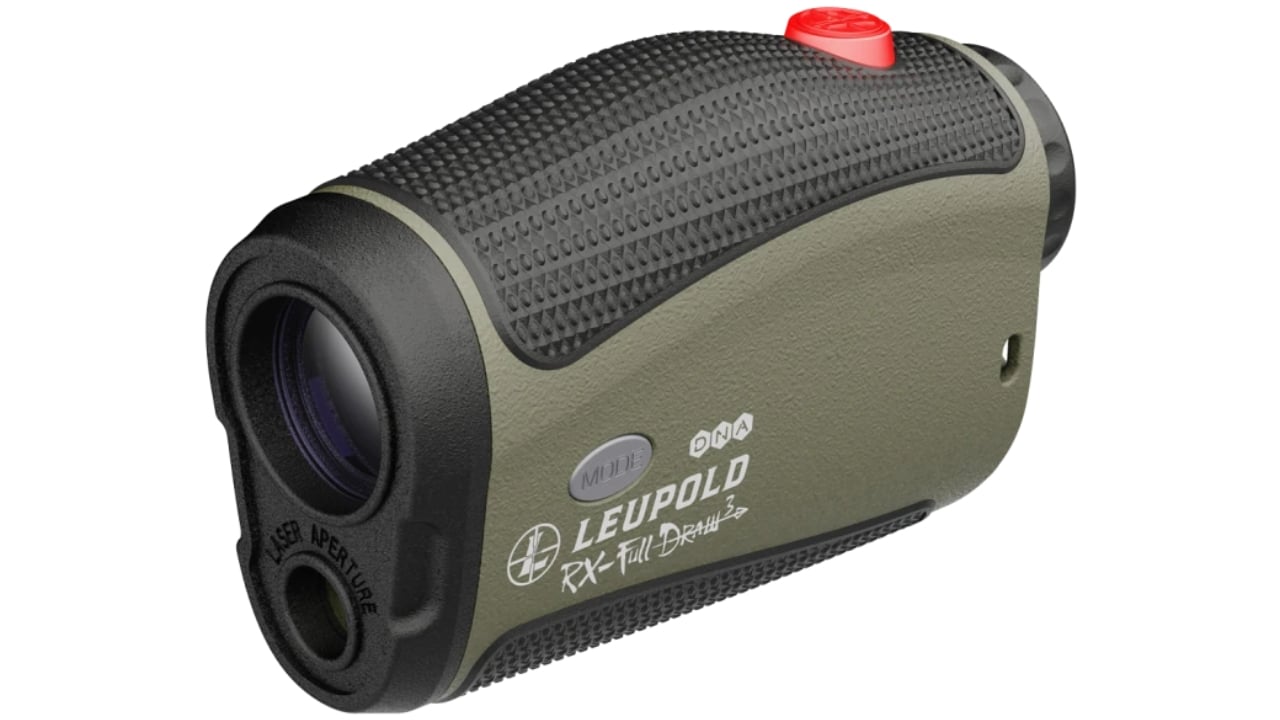
The only rangefinder under $300 built for archers rather than adapted for them. TBR runs in archery mode out to 175 yards — far past anything you’ll shoot, which is the point: it’s tuned for the distances you actually use instead of treating 40 yards as a rounding error. It’s watertight, it’s 6x, and it has Trophy Scale, which estimates an animal’s size in the display.
The catch, and it’s important: this is an older model. The line has moved on to the FullDraw 5, and availability on the 3 is inconsistent. Check that it’s actually in stock before you plan around it. If it’s gone, see the next entry.
Best long-range budget pick: Bushnell Prime 1700 — ~$300
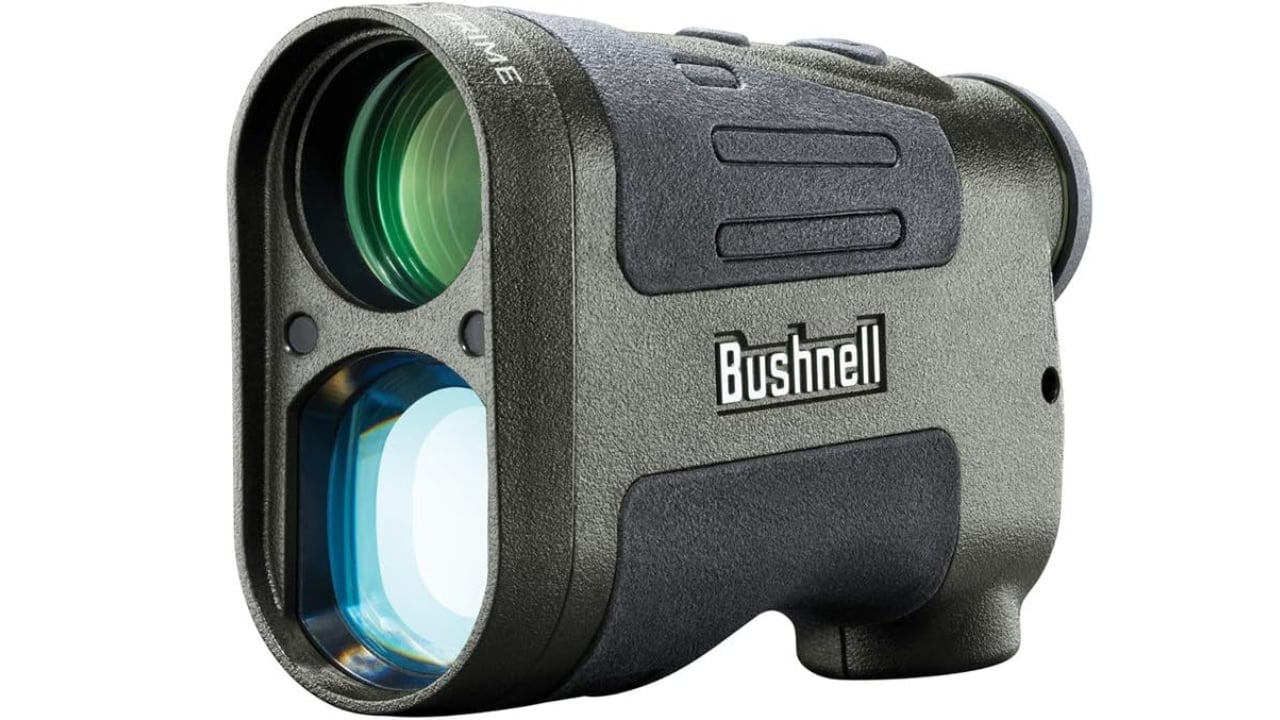
Three selectable reticles, muzzleloader calibration, and accuracy to about a yard. 1,700 yards is far more range than archery requires — which makes this the pick if the same rangefinder needs to serve your rifle season, your muzzleloader, and your bow.
The catch: LCD again, no illumination. Same low-light limitation as the Vortex.
Who should skip it: archery-only hunters. You’re paying for range you’ll never use.
For the tech-forward: ATN Laser Ballistics 1000 — ~$300
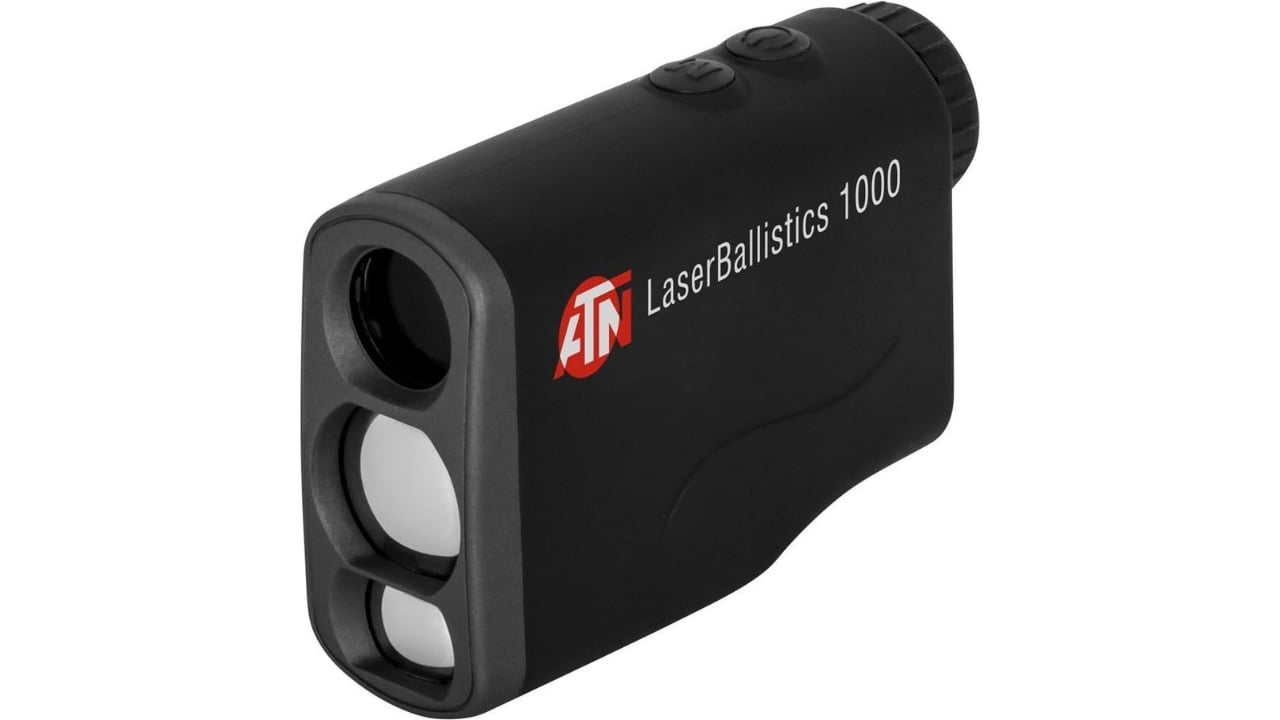
Bluetooth and smartphone integration, and it pairs with ATN smart scopes for auto-aim. If you’re already inside the ATN ecosystem it’s a natural fit.
The catch: enough owners have reported defective units that we’d think twice unless the app integration is specifically what you’re after. Buy it for the ecosystem or don’t buy it.
If you can stretch: Leupold RX-FullDraw 5 — $499.99
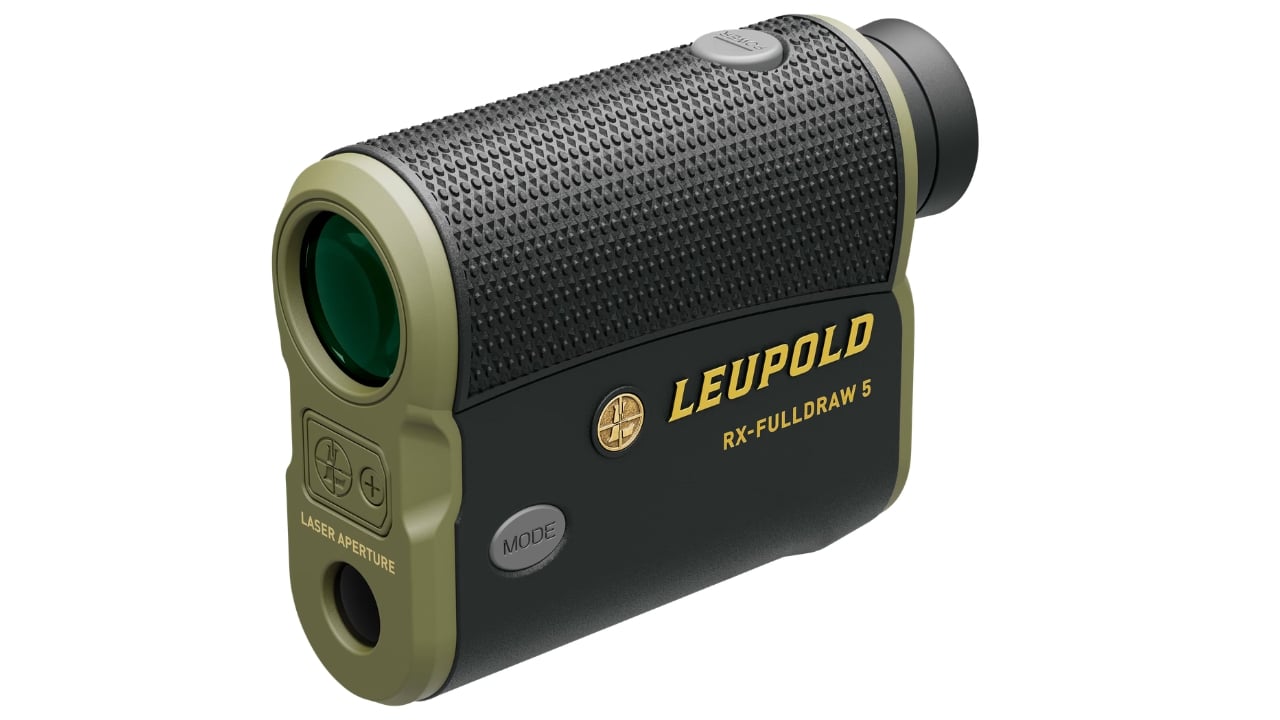
Over budget, and worth naming anyway because it’s the honest answer to “what’s the best archery rangefinder” without a price cap.
It calculates from your actual bow — arrow velocity, arrow weight, peep height — and its Flightpath feature displays the highest point your arrow will reach on the way to the target. That’s not a gimmick. It’s the tool for the shot you can’t otherwise judge: the one with a branch halfway to the deer. Being able to see whether your arrow clears it is worth more than any other feature discussed on this page.
Who should buy it: anyone who hunts from elevated stands in timber and has passed shots because of limbs. Who shouldn’t: field-edge and open-country bowhunters, who will never use Flightpath.
Two things worth knowing before you buy
Range the tree, not the deer. Before shooting light, range the landmarks around your setup — the fence post at 25, the big oak at 32, the trail crossing at 18. Then when a buck steps out, you already know. You’re not raising a rangefinder while a deer looks at you. Every rangefinder on this list is fast enough for this method, which is one more reason speed shouldn’t drive your choice.
Angle compensation should be the default mode. Some units ship in line-of-sight mode. Check yours in the yard before opening day. This is the single most common way a good rangefinder produces a bad shot.
Frequently asked
Do I need a rangefinder if I only shoot inside 30 yards? From the ground, arguably not. From 20 feet up, yes — the angle error is real and it grows with height, not distance. Steep and close is where people miss.
Rangefinder or rangefinding binoculars? Binoculars if you glass a lot in open country, standalone if you hunt timber. Rangefinding binos start well over $1,000 and are heavy for a treestand.
Does rain ruin these? Most are weather-resistant, not submersible. Keep it in a harness pocket rather than dangling on a lanyard, and check whether your model’s warranty covers electronics — most don’t. Vortex’s does, which is why it’s our top pick.
Bottom line: buy the Vortex Impact 1000 unless you hunt the last light in dark timber, in which case buy the Leupold RX-1400i for the illuminated display. If you hunt elevated in heavy cover and can stretch to $500, the FullDraw 5’s Flightpath is the one feature on this page that will change a shot you take.
Source: Target Tamers, Best Rangefinders Under $300 (2026) · Leupold RX-FullDraw 5 specifications. Prices and availability change — verify before you buy.
Like The Avid Outdoorsman’s content? Be sure to follow us.
Here’s more from us: