Photo credit: Ojas Raj/Unsplash.com
A lot of guys picture danger in the woods like it’s a clean, polite timeline: you spot the animal, you decide, you reach for your sidearm, and you handle it. Real encounters don’t give you that courtesy. Most bad situations start at bad distance—thick brush, low light, loud wind, steep ground, or a surprise at the waterline. If something hits you from inside a few steps, the truth is you might be busy staying upright and protecting your head long before you ever get a clean draw.
This list is the animals that can turn a normal day into a scramble fast. Not because they’re “out to get you,” but because they’re big, fast, territorial, protective, or built to ambush.
Grizzly bear

A grizzly encounter can go from calm to violent so fast it feels like your brain is behind the action. If you’re in tight cover and you bump one at close range, you may not get a clear look, much less a clean draw. Even a bluff charge is enough to put most people into full-body panic, and that’s the point: your hands don’t do fine motor work well when a bear is inside spitting distance.
The other part is terrain. Bears don’t trip over deadfall the way people do. They don’t hesitate at brush. If the bear decides to close distance, you’re reacting to a moving wall of muscle that can be on you before your mind finishes the sentence “that’s a bear.” That’s why experienced guys treat “surprise distance” like the real problem, not the caliber debate.
Black bear

Black bears usually want out, but “usually” isn’t a plan. Surprise a sow with cubs, crowd a bear on a carcass, or run into one that’s been fed around people, and you can get a charge that starts and finishes before you’re ready. A lot of hunters underestimate how quick a black bear can be because they’ve mostly seen them running away.
What makes it draw-proof is the startle factor. You’re not expecting it, so your first move is often to back up, turn, or get footing—anything except a clean draw stroke. If a black bear swats or bites in that first second, you’re now in a wrestling match with claws involved. The gun might still matter, but it’s no longer the first move.
Moose

Moose don’t need teeth to ruin you. They have size, reach, and a nasty habit of not backing down when they’re fired up. A rutting bull, a cow with a calf, or a moose that feels crowded can go from standing there to charging like it’s personal. If you’re close—like on a trail, in alders, or stepping out of a willowy creek bottom—you can get run over before your hand finds your grip.
The problem is how they fight. It’s not a bite-and-let-go thing. It’s stomps, strikes, and crushing weight. If a moose puts you down, you’re immediately focused on protecting your head and getting out from under it. That’s not a “draw and shoot” moment for most people. That’s a “stay alive for five more seconds” moment.
Wild boar

Boars turn distance into nothing in thick brush. They’re low, fast, and built like a battering ram. If you’re in palmettos, cattails, or tangled creek bottoms, you might not even see the boar until it’s already moving. And if it’s wounded, cornered, or protecting a sounder, it can commit hard and straight.
What makes boars so dangerous up close is the cutting. A big boar’s tusks can open you up fast, and you don’t always feel it right away because adrenaline is loud. A lot of guys imagine they’ll just sidestep and draw. In real cover, you’re tripping, turning, and trying not to get hit in the legs while the animal is under you. That’s a bad time to discover your draw is slower than you thought.
Mountain lion

A mountain lion isn’t going to run in like a bear. If a lion commits, it’s often from a spot you didn’t know it was in. That’s the whole advantage: quiet approach, close distance, then contact. If you’re already getting hit, your hands aren’t calmly reaching for a holster. They’re trying to protect your head and neck while you figure out what’s on you.
The other ugly truth is that cats grab high. They go for control—neck, shoulders, head. That means your balance disappears immediately. Hunters who’ve spent time in lion country talk about the “watched feeling” for a reason. You may never see one, but the way they hunt is exactly why “before you draw” is a real scenario.
Wolf pack

A single wolf encounter is rare. The bigger issue hunters talk about is packs—especially if you’ve got a dog with you. If wolves decide to test a dog, it can happen fast and close, and your attention is instantly split between managing your dog and managing the wolves. That chaos is exactly what kills a clean draw. You’re moving, shouting, grabbing a collar, spinning—anything but setting your feet and doing a perfect presentation.
Wolves also don’t fight like a solo animal. They use numbers, angles, and pressure. Even if they never fully commit, the “closing in” feeling is what makes people freeze up. If things go bad, it’s not a movie duel. It’s a fast, confusing, close-range mess, and your gun may not be the first thing you can safely bring into play.
Bison

Bison look slow until they decide they’re not. They’re heavy, explosive, and strong enough to do damage without even trying hard. The way most bison injuries happen is simple: people get too close, the animal feels crowded, and it charges or pivots faster than the person can react. In the woods, swap “tourist” with “hunter who steps out at close range,” and the same dynamic can hit.
Once a bison is moving, you’re not outdrawing anything. You’re trying to get out of the path. And if you get clipped, you’re going down hard. When something weighs that much, it doesn’t need teeth to “maul” you. It just needs contact. The gun is irrelevant if you don’t have a second to get it into your hand.
Cape buffalo

Cape buffalo are famous for turning bad angles into bad endings. They’re not skittish like most prey animals, and they can go from standing there to coming for you with intent. If you’re close enough to be in the thick stuff with them, you’re close enough for the whole thing to be decided in a few seconds. That’s why hunters describe them like they’re a problem to solve, not a target to chase.
If you’ve never seen a buffalo move through brush, it’s eye-opening. They don’t care about saplings or thorns. They care about the threat. That kind of “forward pressure” is what makes drawing hard. You’re not standing still with time. You’re moving, stumbling, trying to clear a line, and hoping you don’t end up on the ground when the animal hits.
Hippo
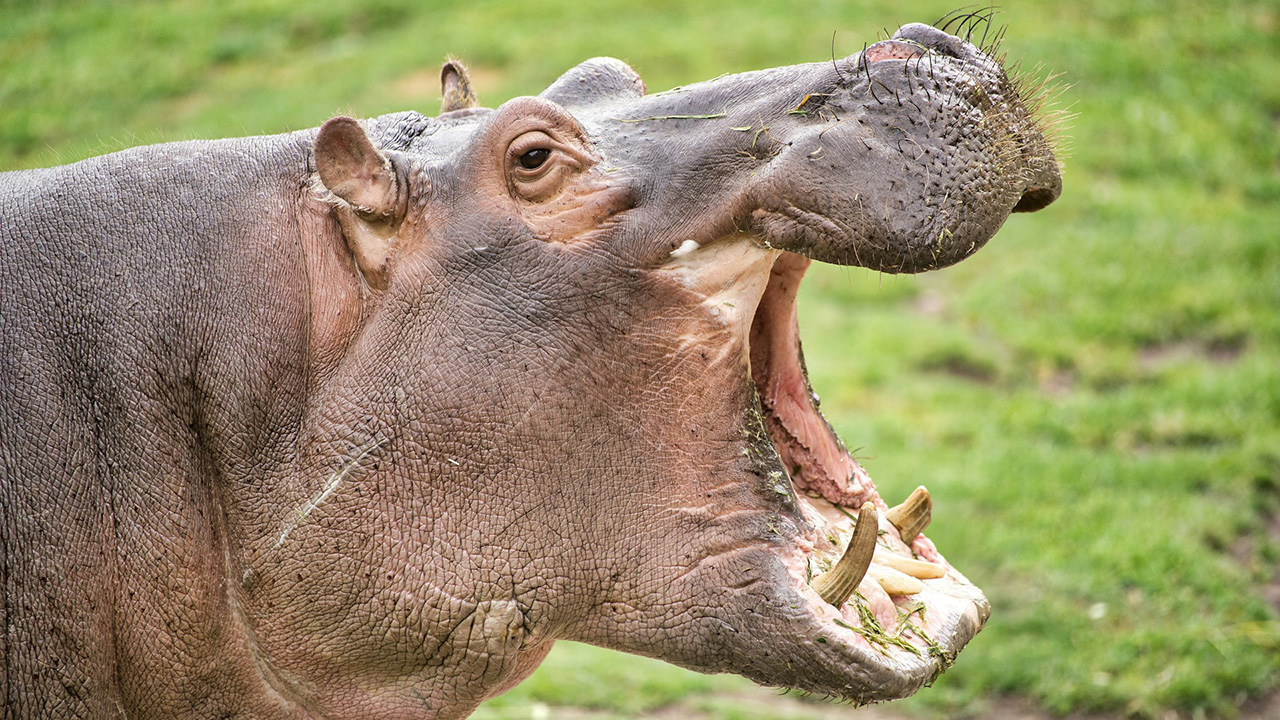
Hippos don’t look like ambush animals, but they’re one of the most aggressive, territorial animals around water. The danger comes when people treat them like slow cows. If you’re on foot near a riverbank or you surprise one in grass along the waterline, it can charge fast and hit hard. And because most hippo encounters happen near water, footing is usually bad—mud, rocks, steep edges.
A hippo doesn’t need to “hunt you” to wreck you. It just needs to decide you’re in its space. If it commits, you’re not drawing clean while you’re trying not to fall in the water or get pinned against something. The injury pattern with hippos is crushing, biting, and being knocked down. That’s exactly the kind of scenario where your draw gets pushed to “if you even have time.”
Nile crocodile

Crocodiles are the definition of “it’s already happening.” They don’t posture. They don’t roar first. If you’re close enough for a croc to strike, you’re close enough to be grabbed before you process movement. That’s why experienced guys treat croc water like a loaded trap. You don’t casually kneel at the edge. You don’t wade without thinking.
And once contact happens, it’s not about your draw speed. It’s about control. A croc grabs and drags, and the fight becomes a tug-of-war where you’re losing leverage instantly. Even if you’re armed, it’s hard to use anything effectively when you’re being pulled, twisted, or submerged. The best plan is distance and discipline, because “react after the strike” is a losing strategy.
Alligator

Alligators aren’t crocodiles, but a big gator can still hit you before you’re ready if you’re too close to the edge. The way people get surprised is thinking the gator is “just sitting there” or assuming it’ll slide away. Then it doesn’t. Or it moves with more speed than expected. Gators are opportunists, and the shoreline is where opportunists win.
A lot of gator problems are human mistakes—bad distance, bad habits, bad timing. But the result is the same: if a gator lunges from close range, you’re reacting with your whole body first. You’re stepping back, yanking a dog away, stumbling on slick ground. That’s not a clean draw. That’s a scramble where you’re lucky if you stay on your feet.
African elephant

Elephants aren’t predators, but a charge is still a “mauling” in every practical sense. If an elephant decides you’re a threat—especially a cow with a calf—it can close distance and flatten the situation fast. The scary part is how quiet a big animal can be until it’s already coming, and how quickly the distance disappears when something that large is moving with intent.
In a charge, your first move is survival, not marksmanship. You’re looking for cover that actually works, and most cover doesn’t. Trees aren’t always enough. Brush is nothing. And the ground you’re on matters. If you slip or get boxed in, you won’t have the calm seconds you imagine in your head. You’ll have a violent moment and a hard lesson.
Leopard

Leopards are a “close-range problem” by design. They hide well, they move quietly, and if they commit, they tend to do it from cover at bad distance. That’s what makes drawing hard. You don’t see it pacing at 80 yards. You notice it when it’s already inside your space, and then you’re dealing with claws, weight, and a bite that targets control.
Hunters talk about leopards like they’re unpredictable, but it’s really the opposite: they’re predictably sneaky. They do the same thing over and over because it works. That’s why they’re on this list. It’s not that you can’t defend yourself. It’s that the window to do it clean can be brutally small.
Jaguar

Jaguars are built for close-range violence in thick cover. They’re strong for their size and they don’t need a long chase. If a jaguar attacks, it’s often a surprise at close range where you don’t have time to build a plan. That’s why jungle and river-edge encounters are so dangerous—visibility is low, and the animal has the advantage.
The other thing hunters mention is how “heavy” a jaguar feels when it hits. It’s not a light cat bouncing off you. It’s a compact animal built to hold and finish. If you’re already being grabbed, your draw is now competing with staying upright and keeping teeth away from your neck. That’s not a fair race.
Cassowary

Cassowaries look like a weird bird until you realize they can kick like a weapon. They’re territorial, fast, and their claws are no joke. If you crowd one, surprise one, or get between it and where it wants to go, it can attack hard and fast. And because people underestimate them, they end up inside bad distance before they realize they should’ve backed off.
What makes cassowaries dangerous is how they fight. It’s not a warning peck. It’s explosive kicking aimed at what’s in front of them, and that can be legs, torso, and anything else within reach. If a cassowary charges, your “draw” isn’t the point. Your feet are the point. You need to create distance fast, because close range is exactly where the bird wins.
Wild boar sow with piglets
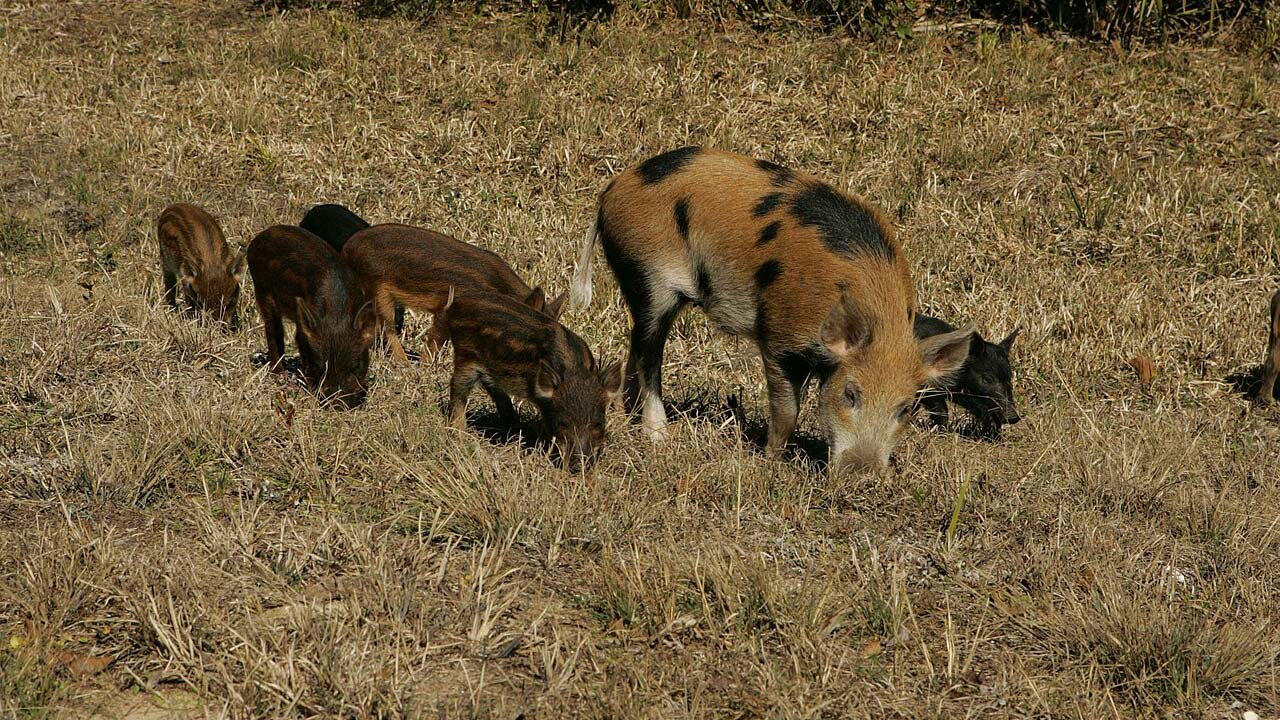
Most people think “the big boar is the problem,” and that’s often true. But a sow with piglets can be just as dangerous in the moment, because she’s not thinking about escape first. She’s thinking about stopping you. That’s a common theme in fast attacks: protective animals don’t want to run. They want the threat gone.
If you’ve ever walked into thick cover and suddenly heard piglets squeal, you know the feeling. Your brain goes from “hunt” to “uh-oh” instantly. And in that instant, you’re not drawing clean. You’re pivoting, backing out, trying to find footing, trying to get your dog under control. Those are the exact seconds that decide how bad it gets.
Like The Avid Outdoorsman’s content? Subscribe to our newsletter so you never miss an article.
Here’s more from us: