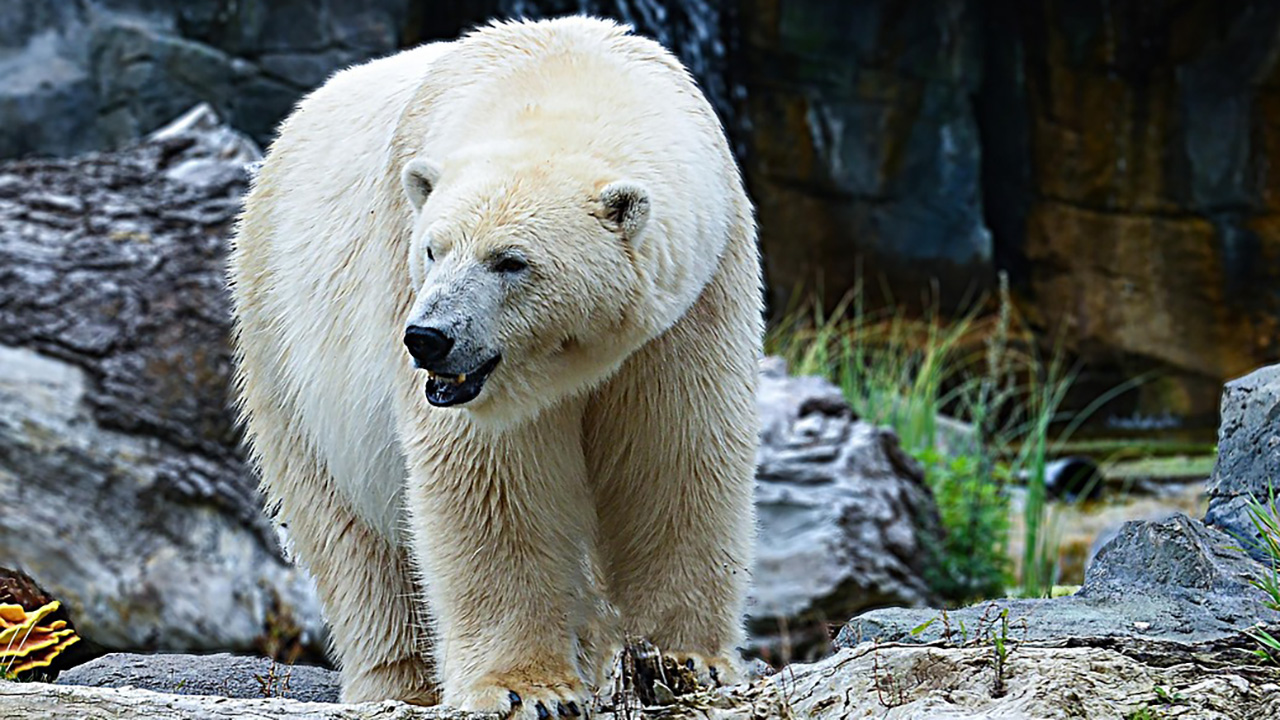
Photo credit: Wildfaces/Pixabay.com
Most predators want nothing to do with people. The problem is the exceptions: animals that are habituated, food-conditioned, protecting a kill, defending young, or (rarely) treating you like prey. In those moments, the “it’ll run off” assumption can get you in trouble fast, because the animal’s next move is closing distance instead of creating it.
This list isn’t meant to scare people into paranoia. It’s meant to keep you from doing the dumb stuff that flips an encounter from “cool sighting” to “oh no.”
Polar bear

Polar bears are the big one for “it might chase you” because they’re predators that can see humans as food, not just a threat. In polar bear country, you’re not dealing with an animal that’s trying to coexist. You’re dealing with an animal that has the size, speed, and confidence to keep coming if it decides you’re on the menu.
What makes them different is persistence. A polar bear may follow at distance, test your reactions, and close in when you turn away or lose sight. People get in trouble treating it like a normal bear encounter. The point here is simple: in polar bear areas, you need a real safety plan and you don’t ever assume “it’ll leave.”
Grizzly / brown bear

Most grizzlies don’t want to chase you like prey, but they absolutely can charge to clear space, and sometimes they’ll keep coming longer than you expect if they think you’re still a threat. Surprise encounters, cub defense, or a bear on a carcass can turn into an aggressive pursuit in a heartbeat.
The key detail is distance and terrain. In thick brush or tight draws, a grizzly can be on you before you process what’s happening. If you get a bluff charge, it can still go sideways fast. The smartest move is avoiding surprise: noise in blind spots, scanning for sign, and not walking into a carcass situation like you’re on a sidewalk.
Black bear

Black bears usually run, but food-conditioned black bears are the ones that change the game. Bears that learn people = easy calories (trash, coolers, camp food, feeders, pet food) can get bold and pushy. In rare cases, especially with predatory behavior, they may follow or close distance instead of bailing.
This is why “don’t feed bears” isn’t just a cute sign. A bear that’s learned it can win that standoff will test you. If it keeps approaching, circling, or following, that’s not normal “bear wants out” behavior. Your best defense is prevention: clean camp, secure food, and don’t let bears get rewarded for being close.
Mountain lion

Mountain lions don’t “chase” in the loud, dramatic way people imagine. They stalk. That’s worse, because you often don’t know you’re being followed until it’s close. If a lion decides you’re prey—more common with small people, kids, or runners—it can shadow you and look for the moment you look away or break posture.
Lions are built for ambush and control. If you see one and it isn’t leaving, treat it seriously. Don’t turn your back. Don’t run. Make yourself big, maintain eye contact, and back toward safety while keeping it in view. A lion encounter is one of the few times “stay loud and dominant” is actually the right vibe.
Wolf

Wolf attacks on humans are rare, but wolves will sometimes shadow people—especially where they’re habituated to humans, used to seeing hikers, or in areas where food sources (trash, gut piles, livestock feed, pets) pull them close. They may follow at a distance, pace you, or test your response.
The danger is misreading behavior. A curious wolf that keeps closing distance isn’t a “cool documentary moment.” It’s an animal getting comfortable. The fix is not panic; it’s firm behavior: get big, make noise, throw rocks or sticks near (not at) the animal if needed, and keep moving toward safety without acting like prey.
Coyote

Coyotes usually bounce, but the ones that don’t are often the ones that have learned people don’t matter—or worse, that pets and neighborhoods are easy hunting zones. Coyotes will sometimes follow people walking dogs, and they can bait a dog outward while others hang back. That’s not a myth; it’s a pattern folks see.
The chase risk goes up at dawn/dusk, near dens, or when you’re between them and something they want. Another factor is disease: a sick coyote can behave boldly and unpredictably. If one is approaching instead of leaving, take it seriously. Yell, throw objects, keep your dog close, and get out of that area.
Leopard

Leopards are famous for being quiet, bold, and opportunistic. In parts of their range, they’ll follow people, especially in low-light conditions or where human movement overlaps their hunting routes. They’re also known for grabbing prey fast and disappearing into cover before anything can be done.
They don’t need to “chase” you across open ground. They just need to stay with you long enough to find the opening. If a leopard is stalking, it’s reading your posture and attention. People survive these situations by staying upright, staying loud, staying grouped up, and not giving that cat the classic cues it’s looking for.
Tiger

Tigers usually avoid humans, but when they don’t, it can go very bad very fast. In some places, tigers will shadow people on trails or field edges, especially where habitat is tight and prey is scarce. A tiger doesn’t need to sprint after you to be dangerous—it’s more likely to close distance unseen and commit when you’re vulnerable.
The “chase” behavior is often a mix of territorial aggression, predatory interest, or a tiger that has learned humans aren’t as risky as they should be. If a tiger is following, your job is to keep eyes up, stay grouped, make noise, and get to shelter. Running is the wrong move.
Lion

Lions aren’t known for solo stalking like leopards, but they will pursue when they feel threatened, challenged, or when a group is protecting space. Lions are also social predators, so what looks like “one lion nearby” can turn into “more lions appear” quickly.
A lion that stands its ground and doesn’t give you space needs to be treated like a serious threat. The mistake people make is acting timid or backing away sloppily while looking down. Stay big, stay loud, don’t break into a run, and don’t let kids or smaller individuals drift to the back of the group.
Spotted hyena

Hyenas are bold, tough, and smart, and in some areas they’re comfortable around people because they’ve learned how to work the edges—villages, camps, trash, livestock. That comfort can turn into following and testing, especially at night or when someone is alone.
Hyenas don’t need to chase you for long. They look for weakness: limping, distraction, separation, panic. People get hurt treating hyenas like “scavengers” that are automatically scared off. If you’re in hyena country and one is following, you get loud, get grouped up, and get into secure shelter.
African wild dog

Wild dogs aren’t common around people, but they are high-drive, pack-oriented predators. If a pack decides you’re a threat near a kill site or den area, they can pursue aggressively. Their whole system is coordination and pressure, and you don’t want to be on the receiving end of that.
The real risk comes from surprise encounters at close range or from being near a den without knowing it. Packs move fast and can appear and disappear in brush quickly. If you see them and they’re closing distance instead of leaving, the goal is to get behind barriers and into a vehicle or solid shelter fast.
Jaguar

Jaguars are ambush predators, but they’re also confident and powerful, especially around water. In some regions, jaguars will trail people along river corridors or dense forest edges because that’s their travel lane too. Like lions, the danger isn’t always a long chase—it’s the quiet follow and the sudden commit.
People get into trouble when they treat jaguars like “big cats that are shy.” Many are, but a cat that’s comfortable in its zone and sees a vulnerable opportunity can act fast. If you’re in jaguar country, stay out of dense cover alone, keep kids close, and don’t wander into riverbank brush like it’s harmless.
Saltwater crocodile

Saltwater crocs don’t chase like a mammal, but they absolutely follow and they absolutely stage. A big croc can track movement along a bank, shadow a boat, and pick a moment to hit when you’re close to the edge. That’s a form of chase—just done underwater where you don’t get to see it.
The mistake is thinking “I don’t see it, so I’m safe.” Crocs can sit where you can’t spot them and still be perfectly positioned to strike. If you’re in croc country, you stay back from the water, avoid cleaning fish at the edge, don’t let dogs roam shorelines, and don’t wade. That’s how you avoid becoming the event.
Alligator

Gators aren’t typically “pursuit hunters,” but they will do short aggressive pushes—especially if they’re habituated, being fed, or guarding a nest. A gator that has learned people don’t hurt it can get comfortable doing things that look like following, especially around popular ponds and canals.
The risk goes up with dogs and kids near the edge. A gator doesn’t need a long chase. It needs one quick closing move. If you see a gator that isn’t sliding off when it spots you, don’t assume that means it’s “used to people in a harmless way.” It may be used to people in the worst way—because someone fed it.
Bull shark

Bull sharks are one of the better examples of a predator that can “follow” you in water without you knowing it. They’re comfortable in shallow water, can handle brackish environments, and sometimes move into areas where people are wading, fishing, or swimming near river mouths.
Again, it’s not a dramatic chase. It’s a predator cruising, checking, and closing distance when the setup looks right. Murky water, baitfish, fishing activity, and splashing all stack the odds the wrong way. The lesson isn’t “never get in water.” It’s “don’t pretend you’re alone in water where predators are actively working.”
Like The Avid Outdoorsman’s content? Subscribe to our newsletter so you never miss an article.
Here’s more from us: