Photo credit: ASWPhotography/Shutterstock.com
You do not have to live deep in the wilderness to have predators moving around your property. Suburbs, farms, small towns, and even the edges of major cities can provide everything a wild animal needs: food, water, shelter, and surprisingly easy travel corridors. A trash can, chicken coop, pet bowl, bird feeder, brush pile, or backyard pond can turn an ordinary property into a regular stop.
Most predators that approach houses are not looking for people. They are following rodents, rabbits, insects, pets, livestock, fruit, garbage, or other easy food sources. Many also move after dark, which means homeowners may never realize how close they are coming until a trail camera catches them. These 20 predators are especially willing to show up around homes when the conditions are right.
Coyote
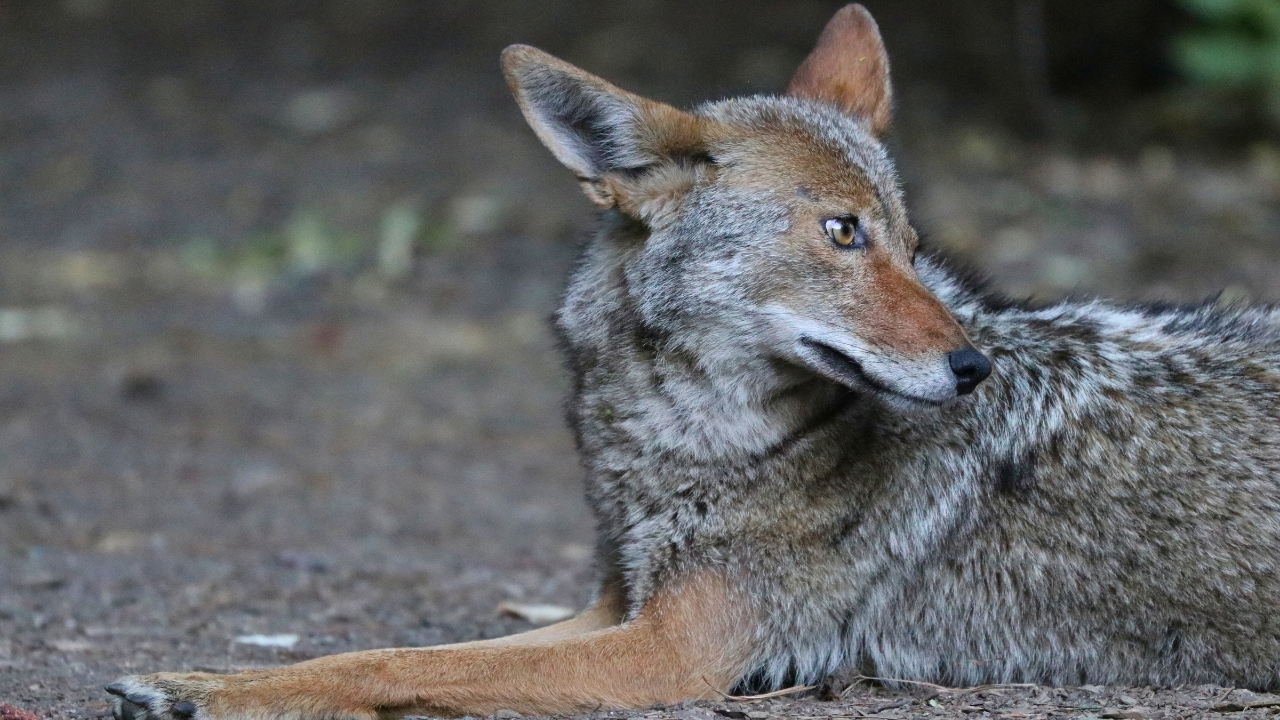
Coyotes may be the ultimate example of a predator that has learned how to live beside people. They can move through ranch country, subdivisions, golf courses, industrial areas, and suburban greenbelts without attracting much attention. Most of that movement happens after dark, when coyotes can slip through drainage corridors and vacant lots before crossing directly behind homes.
Backyards can become especially attractive when they contain outdoor pet food, unsecured garbage, rodents, rabbits, chickens, or fallen fruit. Small pets can also attract attention, particularly around dawn and dusk. Coyotes usually avoid direct contact with people, but repeated access to easy food can make them increasingly comfortable around houses. Removing attractants and keeping pets supervised is far more effective than assuming coyotes will stay in the woods.
Bobcat
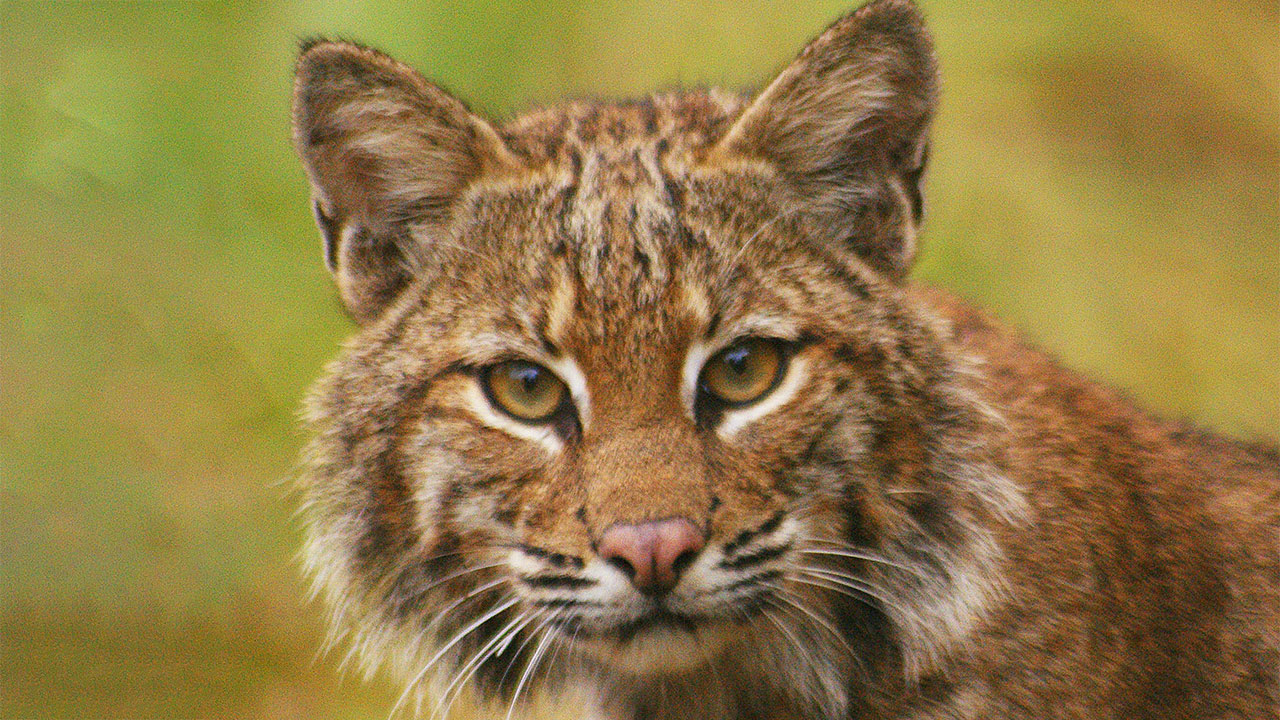
A bobcat can be living astonishingly close to a home without anyone realizing it. Their spotted coats, quiet movement, and preference for traveling through brush make them excellent at slipping around the edges of properties unnoticed. Suburban neighborhoods with creeks, wooded strips, or undeveloped lots can provide plenty of cover.
Bobcats are primarily hunting rabbits, rodents, squirrels, and other small animals when they approach homes. Poultry can also attract them, especially where chicken runs are poorly secured. They are generally secretive and unlikely to seek confrontation with people, which is why many encounters consist of nothing more than seeing one cross a driveway or catching it on a security camera. Their ability to adapt to fragmented habitat has made backyard bobcat sightings increasingly familiar in parts of the country.
Red Fox

Red foxes are surprisingly comfortable around people when a neighborhood offers reliable food and hiding places. They may den beneath sheds, decks, abandoned buildings, or brushy edges and can raise pups within sight of occupied houses. Their light-footed movement makes them easy to miss even when they visit the same property repeatedly.
Foxes eat rodents, rabbits, insects, birds, and whatever other small prey is available. Chicken owners have more reason to pay attention because an unsecured coop can quickly become a target. Foxes generally retreat when approached, but they can become accustomed to people if they are intentionally fed. A fox casually crossing a lawn at night is often a sign that the surrounding neighborhood supports far more wildlife than homeowners realize.
Gray Fox
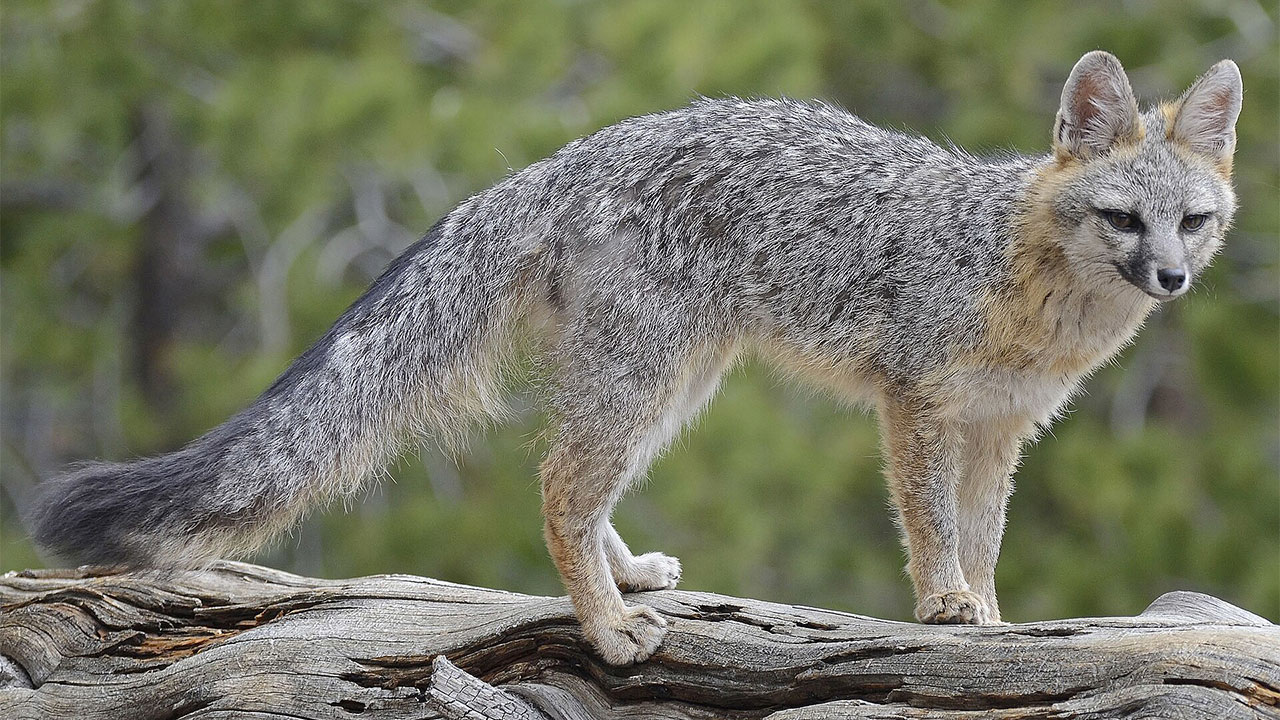
Gray foxes are even more secretive than red foxes and are particularly well suited to wooded neighborhoods. Their gray and reddish coloration disappears against brush and tree trunks, while their ability to climb gives them access to places most people would never expect to see a fox.
They prey on rodents, rabbits, birds, reptiles, and insects, but they will also eat fruit and other available foods. A property bordering thick woods can give a gray fox enough cover to travel within a few yards of a porch without being seen. They are generally not dangerous to people and would rather escape than fight. Still, poultry and very small animals should be securely enclosed at night in areas where foxes are common.
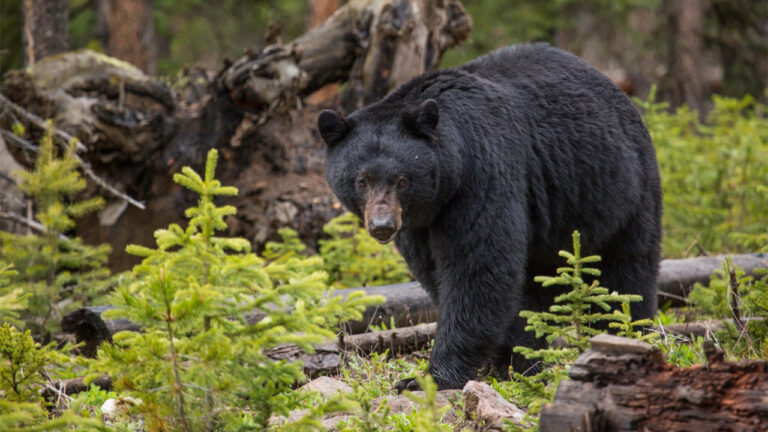
Black Bear

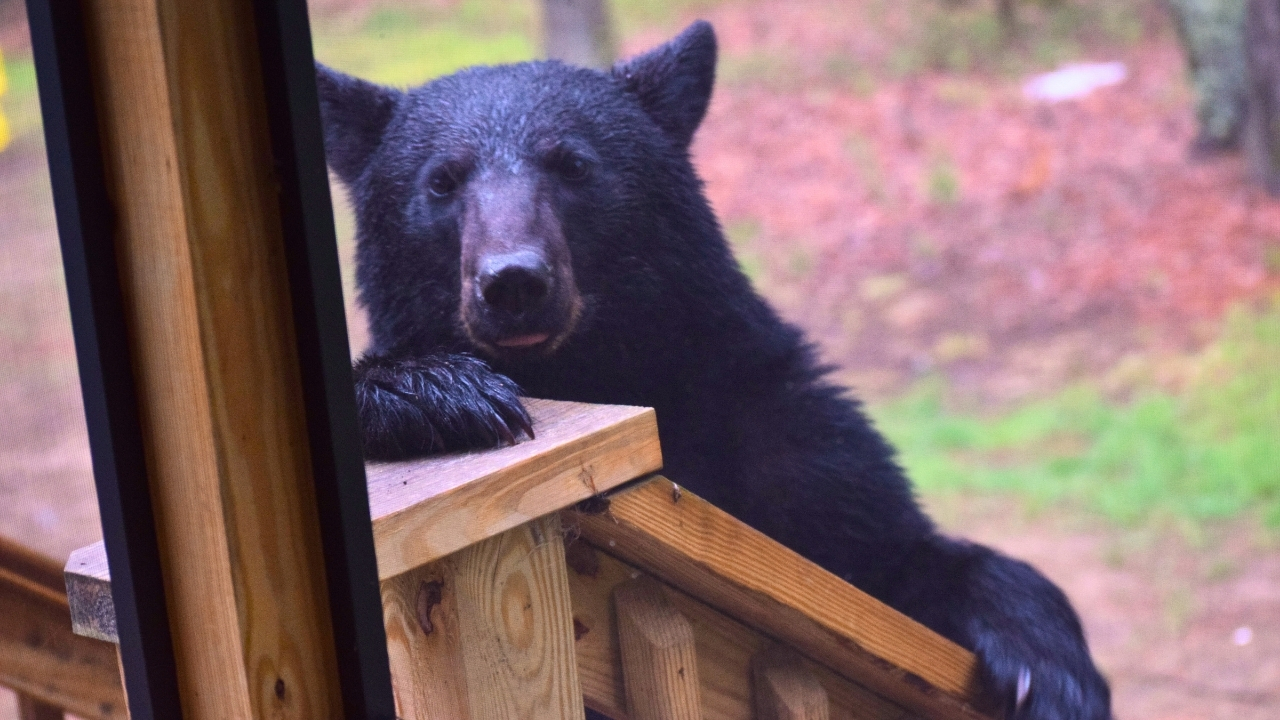
Black bears regularly approach homes in parts of North America where neighborhoods overlap with bear habitat. They are powerful predators, but most visits are motivated by food rather than hunting. Garbage, birdseed, pet food, compost, grills, fruit trees, and livestock feed can all draw bears directly toward a house.
Once a bear learns that a property provides an easy meal, it may return repeatedly and become increasingly difficult to discourage. That is why wildlife agencies place so much emphasis on securing attractants before a problem develops. Black bears normally avoid humans, but their size makes close encounters serious regardless of intent. Seeing one at the edge of a yard is impressive. Seeing one repeatedly checking the porch means something around the property is probably rewarding the behavior.
Mountain Lion

Mountain lions are masters of moving unseen, and homes built along foothills, canyons, forests, or other wild edges can fall directly within their travel routes. A cougar may walk behind a house at night and leave nothing more obvious than tracks in soft soil or footage on a trail camera.
Deer are a major reason mountain lions approach developed areas. Neighborhoods with abundant deer effectively bring prey closer to houses, and cougars may follow. Small livestock and pets can also be vulnerable in areas with established lion populations. Encounters remain uncommon compared with coyotes or foxes, but homeowners in mountain lion country should recognize that fencing and porch lights do not necessarily represent meaningful barriers to a large cat capable of moving silently through difficult terrain.
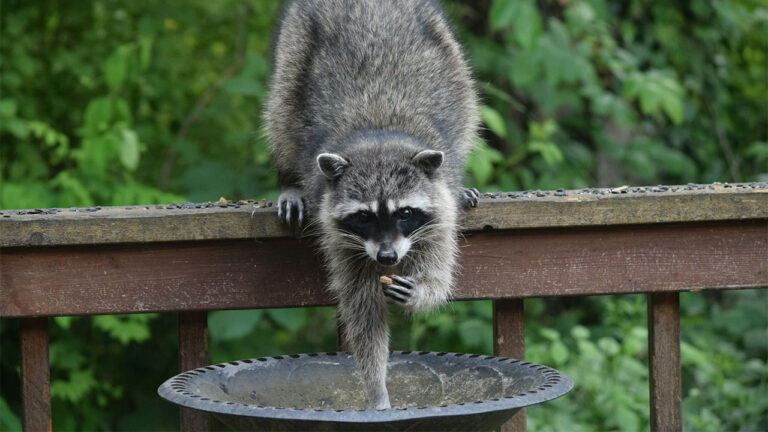
Raccoon
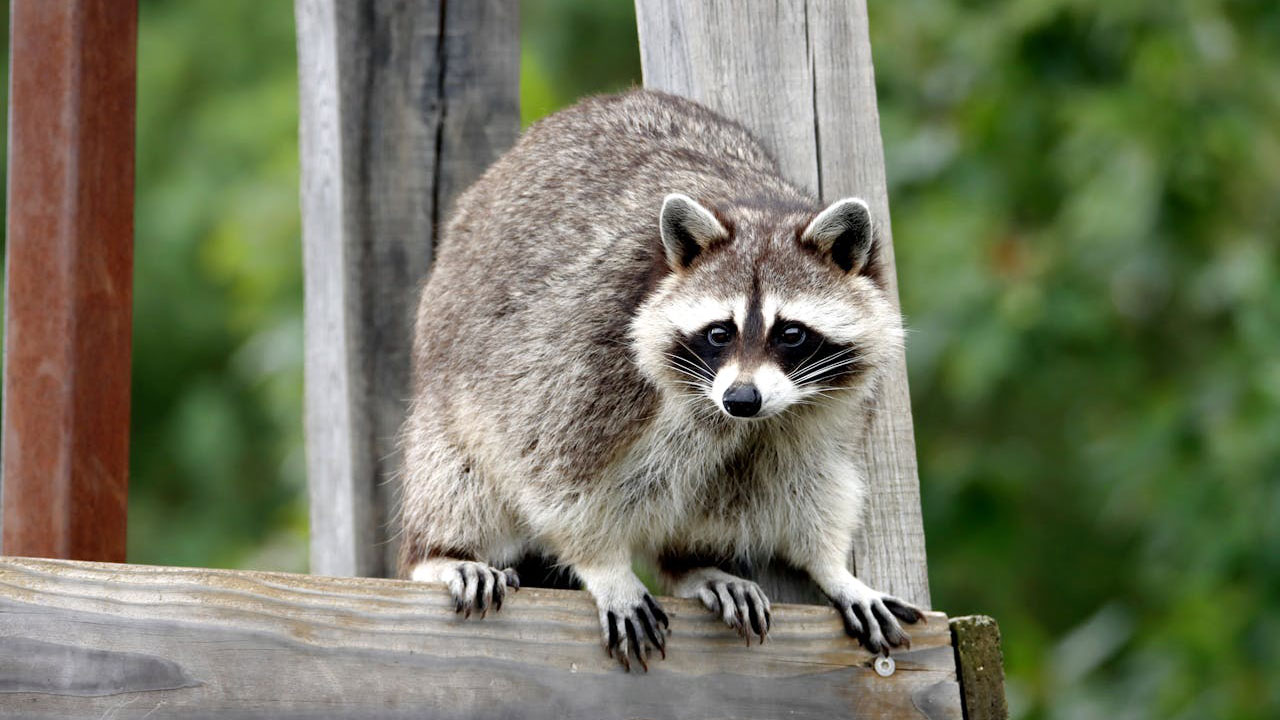
Raccoons may look more like backyard troublemakers than predators, but they are capable hunters with no hesitation about approaching houses. They raid nests, catch small animals, eat fish from backyard ponds, and can do serious damage in poultry enclosures. Their intelligence makes them especially good at exploiting human environments.
Trash cans, pet food, birdseed, attics, chimneys, crawl spaces, and decks all provide potential rewards. A raccoon that discovers a reliable food source may visit night after night until the opportunity disappears. They usually avoid people, but cornered raccoons can defend themselves, and they should never be treated like tame animals. Their adaptability is one reason they thrive in places where larger predators would struggle to survive.
Striped Skunk

Skunks are opportunistic predators that frequently wander directly into yards while searching for grubs, insects, mice, eggs, and other small prey. They also take advantage of spilled birdseed, garbage, pet food, and unsecured poultry areas. Their slow, deliberate movement can make them seem unconcerned about being near houses.
That confidence comes from having one of the most effective defensive systems in North America. Skunks usually give warning before spraying, but a startled dog can turn a quiet backyard visit into a memorable night. They may den beneath porches, sheds, or other structures if suitable openings exist. Closing access points and removing food sources is usually much easier than trying to convince a skunk to leave after it has settled under the house.
Virginia Opossum

Opossums are often thought of as scavengers, but they are opportunistic predators that eat insects, mice, frogs, snakes, eggs, and other small animals. They readily visit yards because residential areas provide food and shelter in abundance. A porch, shed, crawl space, or brush pile can give an opossum everything it needs for a temporary hiding spot.
Their appearance can be intimidating when they bare their teeth, yet opossums are generally reluctant to fight. Much of their defensive behavior is bluff, and they are famous for becoming motionless when seriously frightened. Around homes, they are more likely to be searching for food than causing trouble. Poultry owners should still secure eggs and young birds, because an opportunistic opossum will not ignore an easy meal.
Fisher
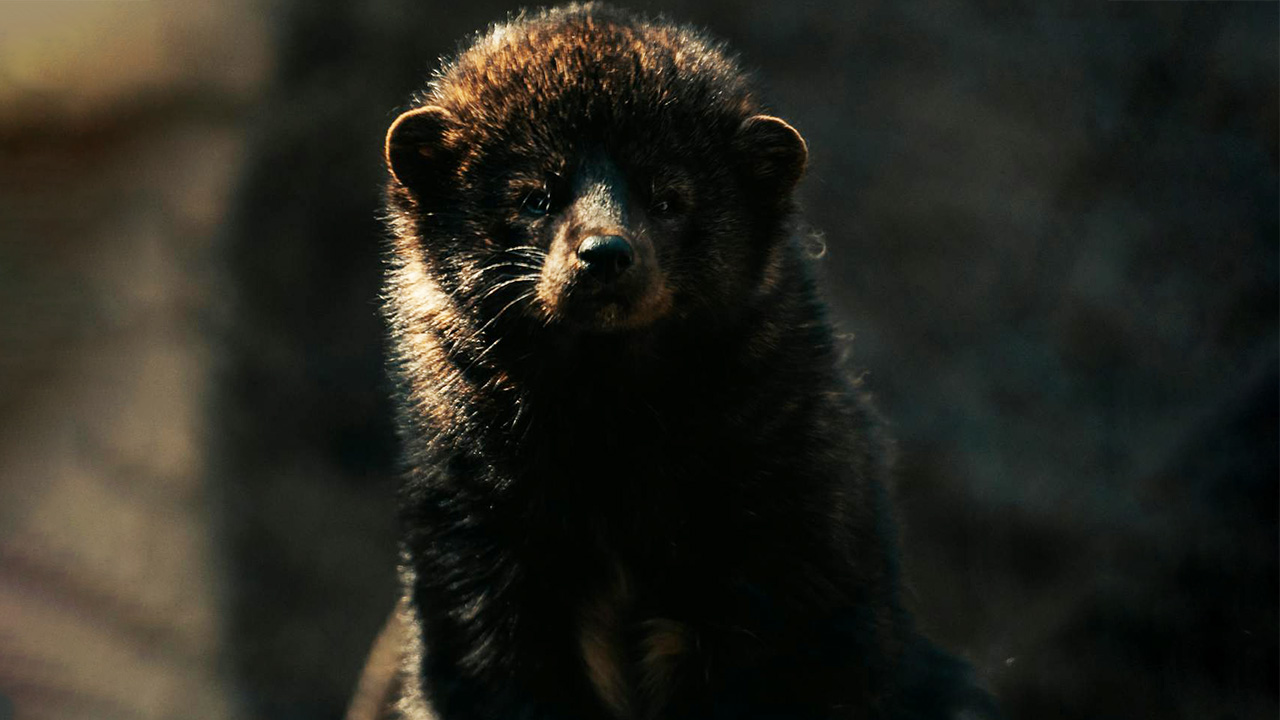
Fishers are medium-sized members of the weasel family that can approach homes in heavily wooded parts of the northern United States. Their dark coats and low profile make them difficult to notice as they move between trees, stone walls, and brushy edges. Despite their name, they spend much of their time hunting on land.
Fishers prey on rodents, squirrels, rabbits, birds, and other animals and are capable of taking surprisingly challenging prey. Backyard sightings remain relatively uncommon, but houses near suitable forest can fall within normal fisher territory. They are generally wary of humans, yet free-ranging poultry and very small animals should be protected where fishers occur. Their secretive habits mean residents may have them nearby for years before seeing one.
Mink
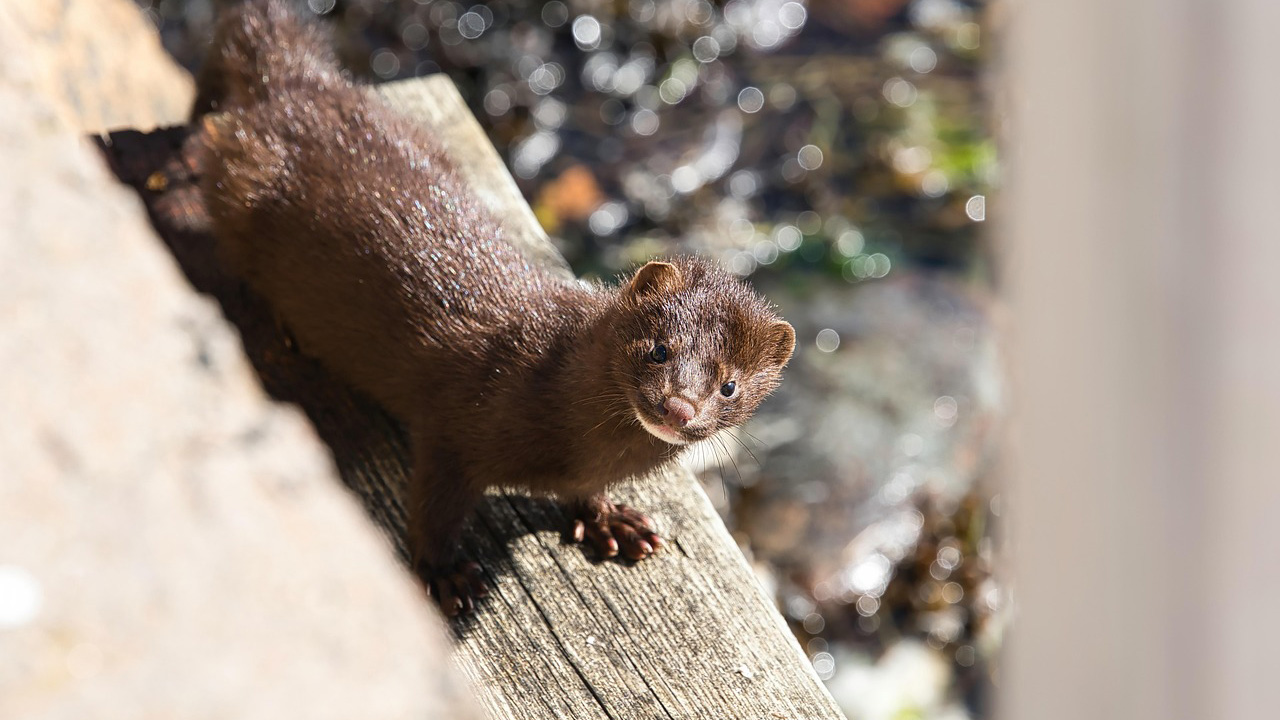
Homes located near creeks, ponds, marshes, and drainage ditches can occasionally receive visits from mink. These sleek little predators are fast, aggressive hunters that pursue fish, frogs, rodents, crayfish, birds, and other small animals around water.
Chicken owners should take mink especially seriously because one that gains access to a coop can kill multiple birds in a short period. Their narrow bodies allow them to squeeze through gaps that seem far too small for a predator. Mink usually avoid busy yards during daylight and are much more likely to appear when everything is quiet. Properties near water provide the most likely setting for an unexpected encounter.
Long-Tailed Weasel
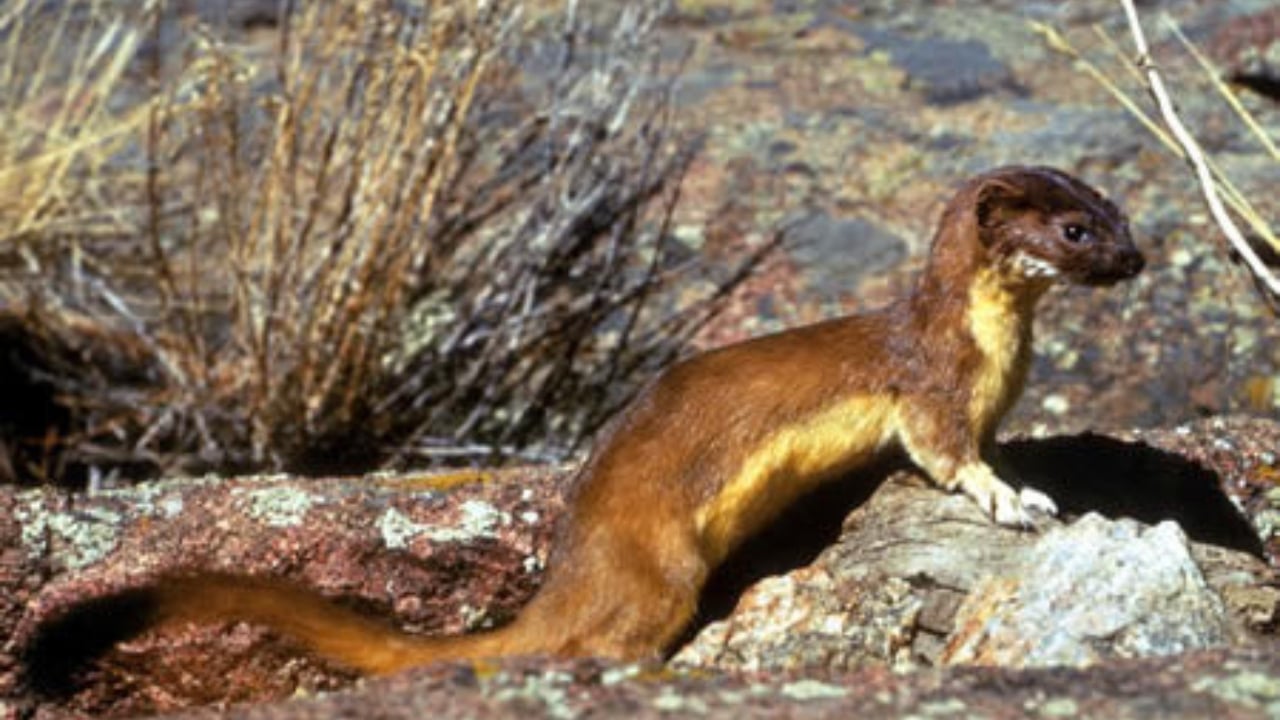
A long-tailed weasel may be small, but few predators are more determined relative to their size. These slender hunters pursue mice, voles, rats, rabbits, and other small animals through tunnels, brush piles, barns, sheds, and field edges. Their narrow bodies make it easy for them to follow prey into tight spaces.
That same ability can bring them surprisingly close to homes. A barn full of rodents or a chicken coop with vulnerable chicks may attract a weasel repeatedly. They move quickly and often disappear before a homeowner gets a good look, which helps explain why sightings are much less common than their actual presence. Despite their size, they should never be underestimated around small poultry.
Coyote-Dog Hybrids

Domestic dogs can occasionally hybridize with coyotes, producing animals commonly called coydogs, although stable wild populations are much less common than people sometimes assume. Many supposed coydogs are simply coyotes showing unusual coloration, body size, or behavior.
Where genuine hybrids occur, they can share the same ability to move through human-dominated landscapes. Like coyotes, they may investigate livestock areas, pet food, rodents, or other accessible resources. Identification by appearance alone is difficult, so homeowners should avoid assuming every odd-looking canine is a hybrid. From a practical standpoint, the response is the same as with any unfamiliar wild canid: remove attractants, supervise small pets, and avoid encouraging the animal to approach people.
Feral Dog

Loose or feral dogs can function as serious predators, particularly in rural areas. Unlike most native predators, they may show relatively little fear of houses because they are descended from animals accustomed to living around people. Packs can chase deer, attack livestock, harass poultry, and threaten pets.
Their behavior varies tremendously. Some are frightened strays looking for food, while others may have lived independently for long periods and become much less predictable. A recurring group of unknown dogs on private property deserves more attention than a single pet wandering away from home. Securing livestock and contacting local animal-control authorities is generally safer than attempting to corner unfamiliar dogs yourself.
Feral Cat

A housecat-sized predator can have an enormous impact on the animals living around a yard. Feral and free-ranging cats hunt mice, voles, rabbits, lizards, songbirds, and other small wildlife, often moving through several neighboring properties in a single night.
Because cats are so familiar, homeowners may barely notice one slipping beneath a shed or crossing the back fence. Yet an established feral cat can become one of the most consistent predators visiting a property. Their comfort around human structures gives them access to places where many wild predators hesitate to travel. They are especially likely to remain near houses when food is intentionally or accidentally left outside.
Great Horned Owl
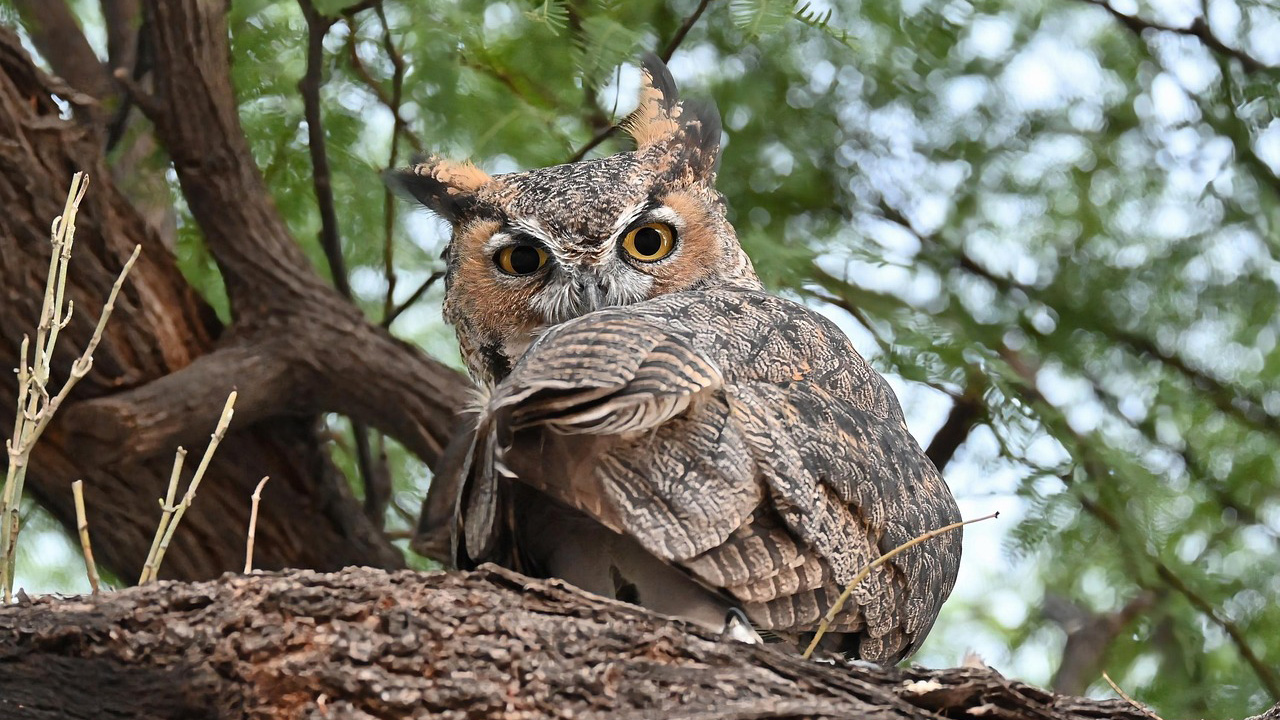
Not every predator approaching your home arrives on four legs. Great horned owls routinely hunt around neighborhoods, farms, and rural homes after dark. Rabbits, rats, mice, squirrels, and other prey attracted to yards give these powerful owls plenty of reason to patrol residential areas.
They may perch silently on roofs, fence posts, utility poles, or large trees while watching the ground below. Small outdoor pets can potentially be vulnerable to large raptors, although rodents and wild prey make up far more of their normal diet. Homeowners often hear the owl long before they ever see it. A pair calling after dark can be the only clue that one of North America’s most capable nighttime predators is sitting just beyond the porch light.
Barred Owl

Barred owls are common around wooded neighborhoods in much of the eastern United States, especially where mature trees and water are nearby. They hunt rodents, frogs, snakes, birds, and other small animals and are comfortable operating surprisingly close to houses.
Unlike some raptors that require wide-open spaces, barred owls can move effectively through dense forests and suburban tree cover. They may perch on low branches overlooking yards or drainage areas and sometimes become familiar nighttime residents. Their distinctive calls can make them sound farther away than they actually are. A homeowner listening from the porch may have an owl sitting within a few dozen yards, watching for movement in the grass.
Red-Tailed Hawk
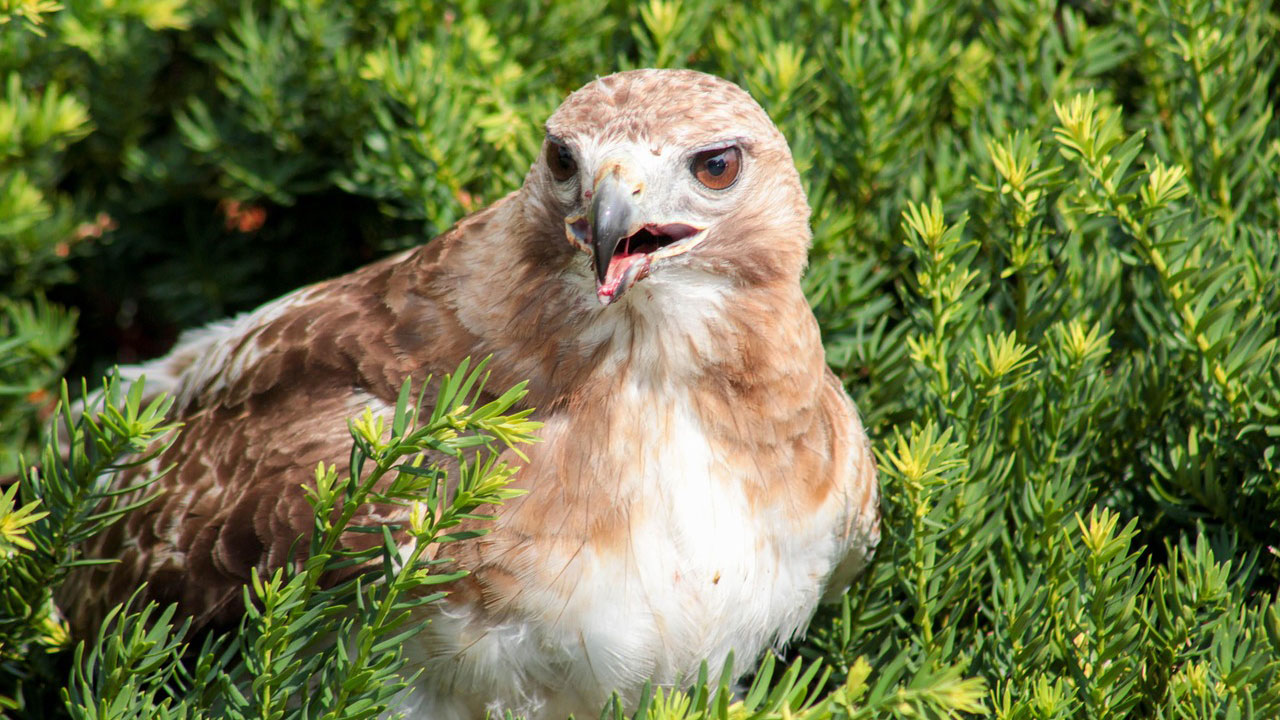
Red-tailed hawks have adapted extremely well to human-altered landscapes. They patrol pastures, roadways, subdivisions, utility corridors, and large yards because these places often contain abundant rodents and rabbits. A tall tree or utility pole provides the perfect observation point.
They generally hunt during daylight, making them much easier to notice than owls. Homeowners may see one repeatedly using the same tree because it offers a clear view of a productive hunting area. Very small animals should not be left completely unattended in areas with large raptors, but most red-tailed hawks are focused on naturally occurring prey. Their presence around a house often indicates that mice, rats, rabbits, or squirrels are plentiful nearby.
American Alligator

In parts of the Southeast, particularly Florida and the Gulf Coast, an alligator can turn up alarmingly close to homes. Neighborhood ponds, canals, drainage systems, golf-course water hazards, and retention basins provide habitat that may connect directly with residential properties.
Alligators primarily eat fish, turtles, birds, and other animals they can capture around water, but they may investigate pets near shorelines. Feeding wild alligators is especially dangerous because it teaches them to associate humans with food and can lead to increasingly bold behavior. Residents in alligator country should assume that almost any suitable body of water could hold one, even when none has been seen recently. The lawn may feel suburban, but the pond behind it can still be wild habitat.
Burmese Python
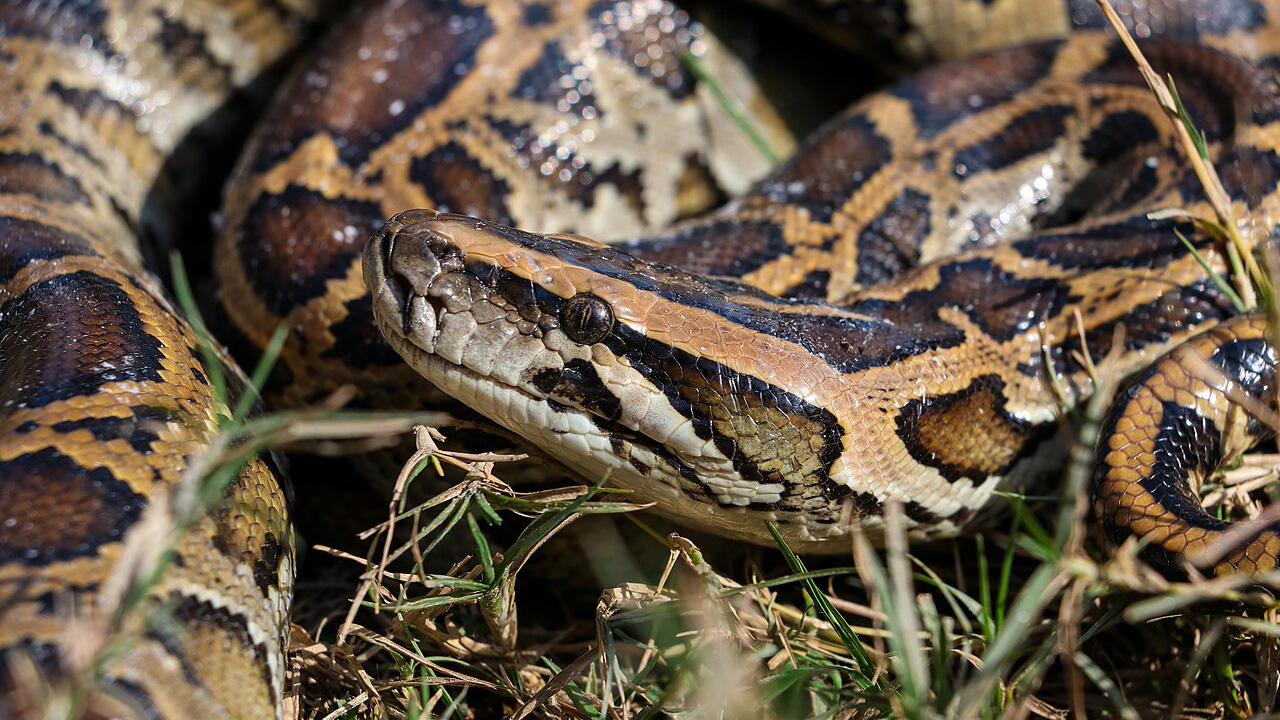
Burmese pythons are not a nationwide backyard concern, but in South Florida they have become established predators capable of appearing around properties near canals, wetlands, and undeveloped habitat. Their enormous size gets most of the attention, yet their camouflage is what makes them particularly difficult to detect.
These invasive constrictors prey on mammals and birds and can move through vegetation with remarkably little noise. Most Americans will never encounter one outside captivity, but homeowners within their established Florida range live in a very different situation. A large snake can travel through drainage areas or thick vegetation without being seen until it crosses an open lawn or roadway. In regions where pythons are established, unusual large-snake sightings should be reported according to local wildlife guidance.
Like The Avid Outdoorsman’s content? Be sure to follow us.
Here’s more from us: