Photo credit: Peter Paplanus – CC BY 2.0/Wiki Commons
You can walk through the same yard every day and never realize a snake has been living a few feet from your porch. Many species survive by doing exactly that. Instead of relying on speed or aggression, they use colors, patterns, and unbelievably good hiding places to disappear into grass, leaves, mulch, wood piles, and landscaping.
Some of these snakes are harmless backyard residents that spend their time eating insects, rodents, or other snakes. Others are venomous species that deserve considerably more space. Either way, spotting them can be surprisingly difficult. A snake stretched across pavement is obvious. A snake sitting motionless beneath brown leaves can practically disappear. These are some of the snakes that are especially good at hiding around yards, gardens, sheds, and the edges of rural properties.
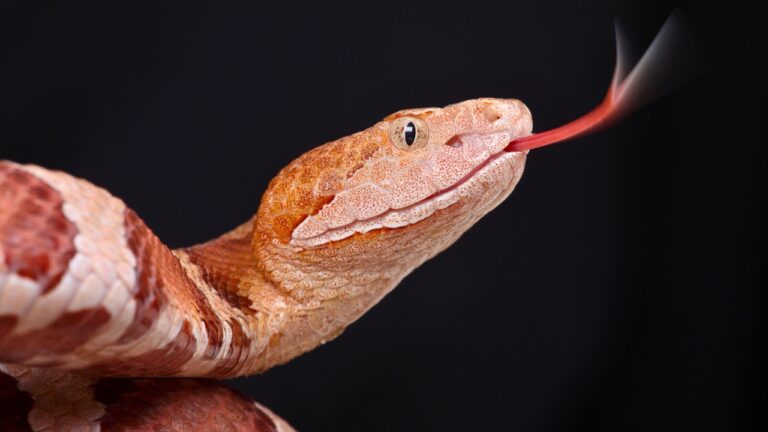
Copperhead

Few North American snakes disappear into dead leaves as effectively as the copperhead. Its tan body is covered with darker hourglass-shaped markings that break up the snake’s outline when it lies beneath oak leaves, pine needles, sticks, and other forest debris. You can stare directly at one from only a few yards away and still have trouble separating the snake from the ground. That camouflage becomes especially effective during fall when virtually everything around it turns some shade of brown.
Copperheads may show up around wooded yards, rock walls, brush piles, sheds, and other places that provide both cover and access to prey. They generally rely heavily on remaining motionless rather than immediately fleeing. That is one reason homeowners should be careful when reaching beneath leaves, lumber, or landscaping materials in copperhead country. They are venomous, so giving one plenty of distance is always the safest move.
Timber Rattlesnake
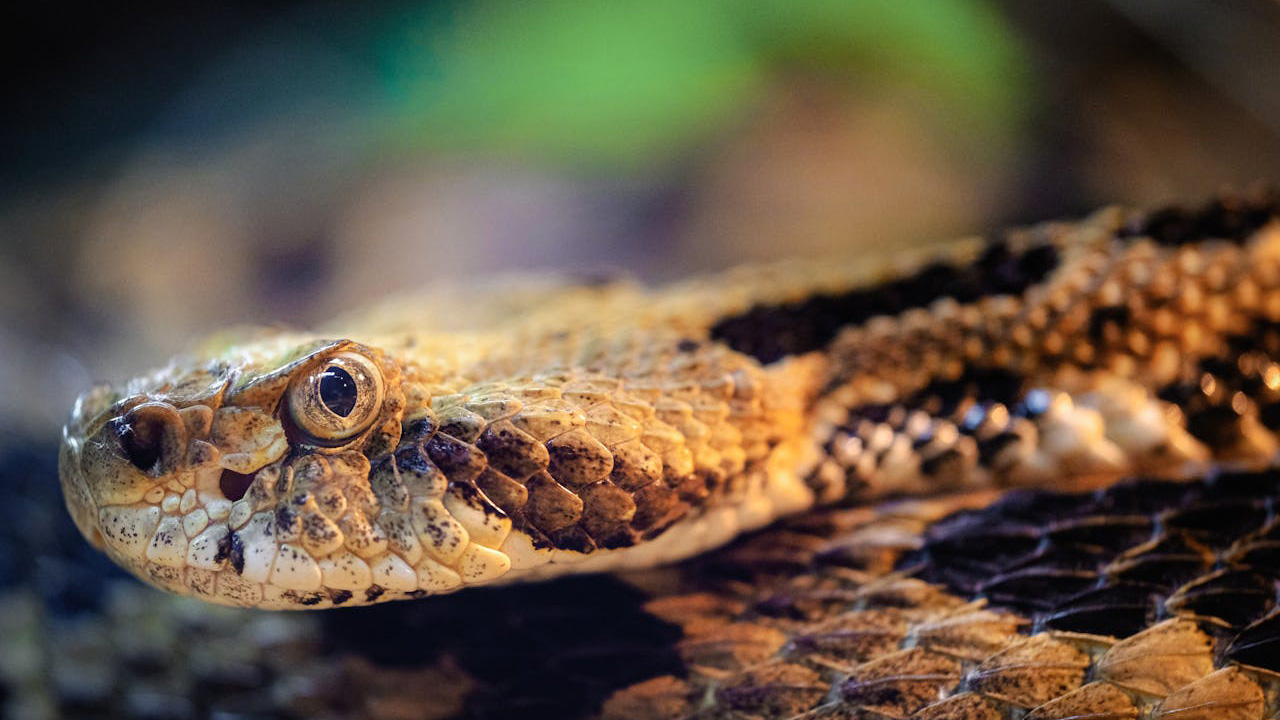
A timber rattlesnake can look enormous once you finally notice it, which makes it even more surprising how easily one can vanish into the landscape. Its bands and blotches mix extremely well with fallen leaves, broken shadows, rocks, and tree roots. In wooded areas, the snake’s pattern can make individual sections of its body appear like separate sticks or patches of shadow rather than one continuous animal.
Most suburban homeowners will never see a timber rattlesnake in their yard, but rural properties bordering suitable forests can occasionally provide the type of habitat these snakes use. Rock piles, downed timber, and sunny edges near dense cover are worth paying attention to in areas where the species occurs. Timber rattlesnakes are venomous, but they generally want nothing to do with people. If you discover one, backing away and leaving it alone is far safer than attempting to handle or move it.
Eastern Diamondback Rattlesnake

The eastern diamondback is one of the largest venomous snakes in North America, yet its size does not prevent it from hiding remarkably well. Dark diamond markings outlined against a brown or grayish background blend into sandy soil, pine needles, palmetto debris, and dry vegetation throughout its southeastern range. The snake can be lying almost completely exposed and still be surprisingly difficult to recognize until it moves.
Properties near pine woods, scrub habitat, coastal areas, or undeveloped acreage are more likely to encounter one than tightly developed neighborhoods. Eastern diamondbacks often use burrows and other sheltered spaces and may move through open areas while hunting. Despite their intimidating reputation, they do not roam around looking for confrontations with people. A rattlesnake found near a home should be given a wide berth, and homeowners should avoid trying to capture it themselves.
Pygmy Rattlesnake
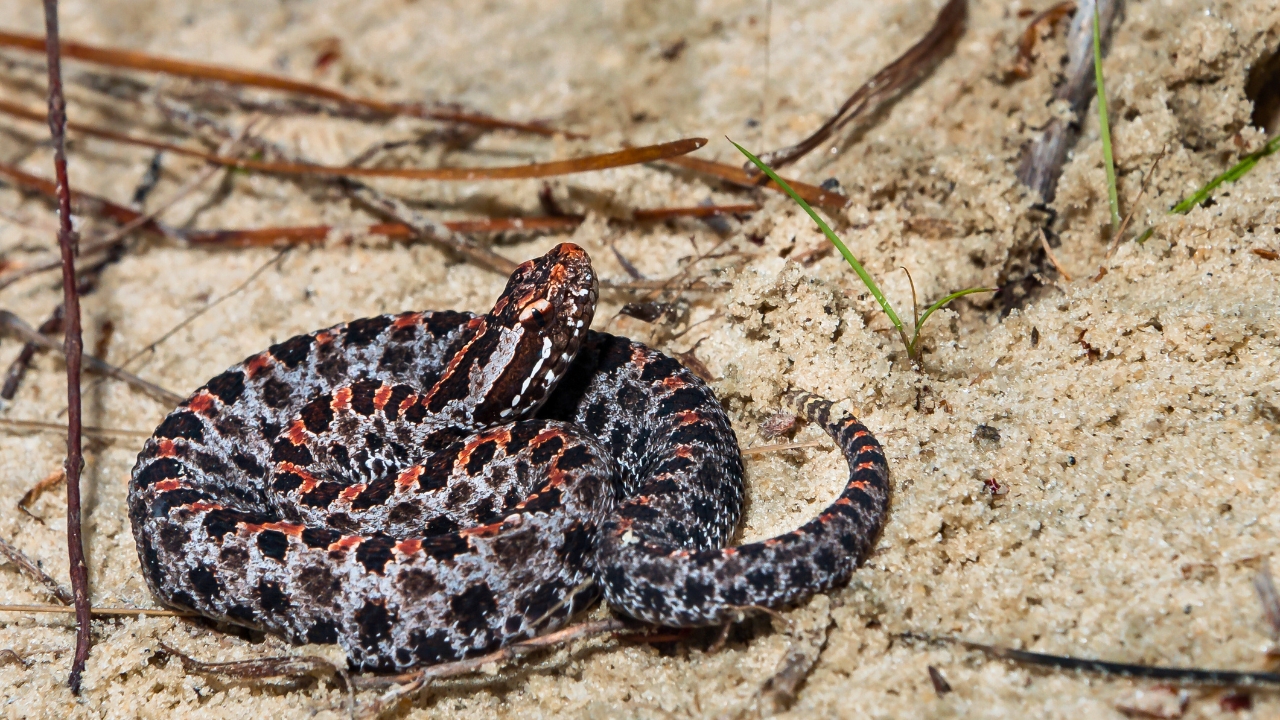
The pygmy rattlesnake has two advantages when it comes to hiding: camouflage and size. Adults are relatively small compared with many other rattlesnakes, allowing them to disappear beneath leaves and vegetation where a larger snake might be easier to notice. Their gray or tan bodies carry darker blotches that mimic the broken patterns found across forest floors and landscaped areas.
Because they are small, their rattles are also much less impressive than the loud warning produced by a large diamondback. Someone walking through a yard may never hear one at all. Pygmy rattlesnakes occur primarily in the Southeast and can occupy pine forests, wetlands, and other vegetated areas that may border homes. They are venomous despite their small size, so homeowners should never treat one as harmless. Watching where you place bare hands around ground cover and debris is particularly important within their range.
Cottonmouth

Cottonmouths are usually associated with swamps and waterways, but properties located beside ponds, creeks, drainage areas, or wetlands can occasionally put people surprisingly close to them. Their heavy bodies are often dark brown, olive, or nearly black, allowing them to blend into muddy banks, wet leaves, exposed roots, and shaded vegetation.
Younger cottonmouths often display stronger patterns than older snakes, but both can disappear effectively in the messy environments around water. They may remain motionless when approached, which sometimes causes people to get closer before realizing a snake is present. Cottonmouths are venomous, although their reputation for aggressively chasing people is greatly exaggerated. If one appears around a property, distance is the smartest response. Keeping brush, debris, and heavy vegetation controlled near frequently used areas can also make snakes of any species easier to spot.
Prairie Rattlesnake

Out on open ground, you might expect a rattlesnake to stand out immediately. The prairie rattlesnake proves otherwise. Its muted greenish, gray, or brown coloration and series of darker blotches closely match dry grass, dusty soil, sagebrush, and scattered rocks. When one coils beside a clump of vegetation, the pattern can make it nearly invisible from only a short distance away.
Prairie rattlesnakes occupy a large portion of the western and central United States and can occur around ranches, acreages, barns, and rural homes. Rodents around structures can give them another reason to investigate the area. They are venomous and should be treated accordingly, but most encounters occur because a person accidentally gets close to a snake that was trying not to be noticed. Keeping areas around buildings trimmed and reducing rodent attractants can make yards less inviting.
Eastern Hognose Snake
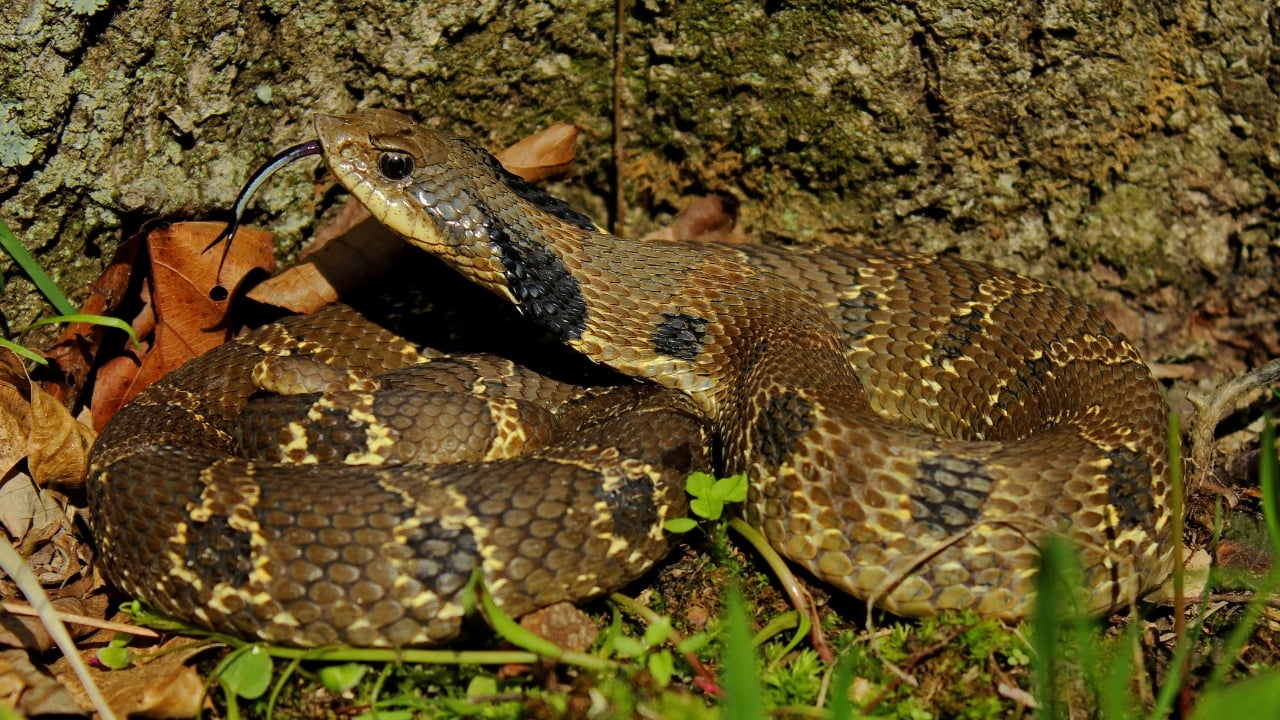
An eastern hognose can fool homeowners in more than one way. Its coloration is highly variable, with some individuals showing bold brown blotches while others are nearly uniform black, gray, or reddish. Those patterns can match sandy soil and leaf litter so well that the snake practically disappears when it stops moving.
If camouflage fails, the hognose has one of the strangest defensive routines in the snake world. It may flatten its neck, hiss loudly, make fake strikes, and eventually roll over and play dead. The performance frequently convinces people they have discovered something far more dangerous than they actually have. Eastern hognose snakes are not considered dangerous to people and specialize heavily in eating toads. Finding one around a rural yard can therefore mean you have stumbled across an unusual but beneficial predator rather than a serious threat.
DeKay’s Brownsnake
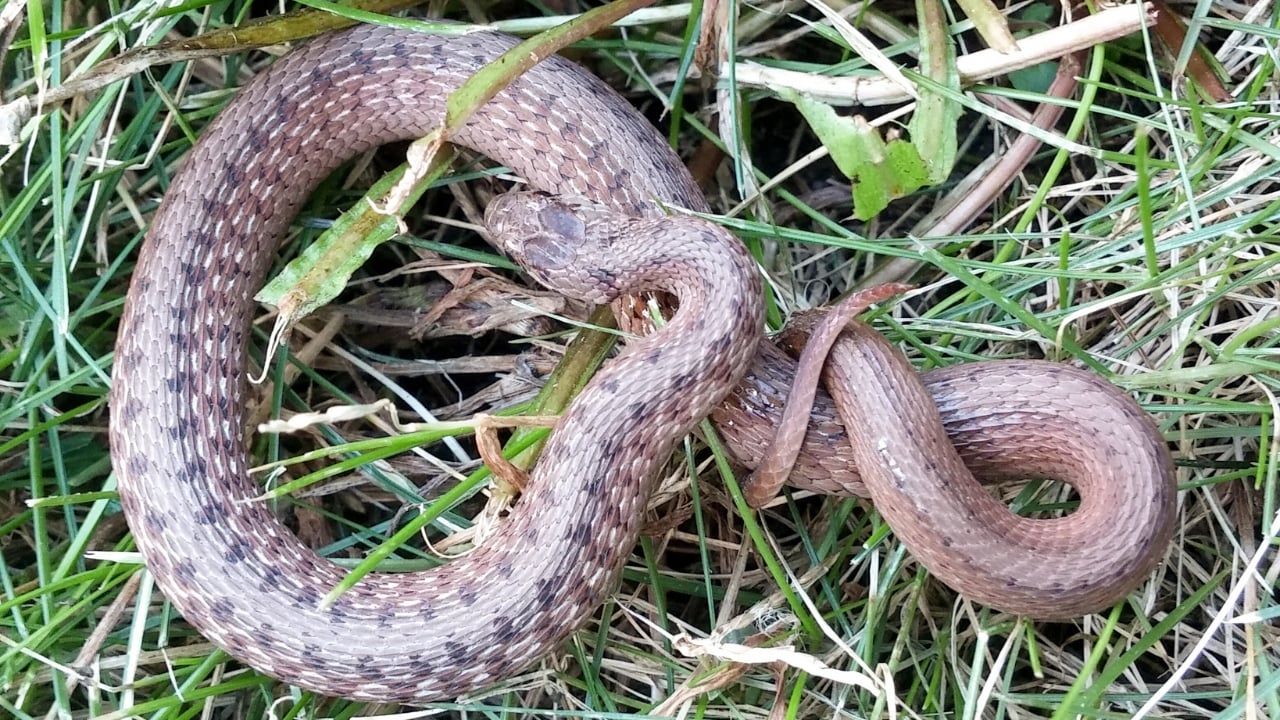
This tiny snake may be one of the easiest backyard species to overlook completely. DeKay’s brownsnakes are often only around a foot long and have subdued brown or gray coloration that disappears against soil, mulch, bark, and dead leaves. Homeowners frequently discover them while gardening because they spend so much time hidden beneath logs, landscape stones, flowerpots, boards, and other ground-level cover.
Despite the intimidating word “snake,” there is little reason to fear one. Brownsnakes are harmless to people and feed heavily on slugs, snails, earthworms, and other small creatures. They can live surprisingly close to houses without ever being noticed. In fact, someone who carefully turns over a few objects in a moist garden may discover that these miniature snakes have been quietly sharing the property all along.
Common Garter Snake
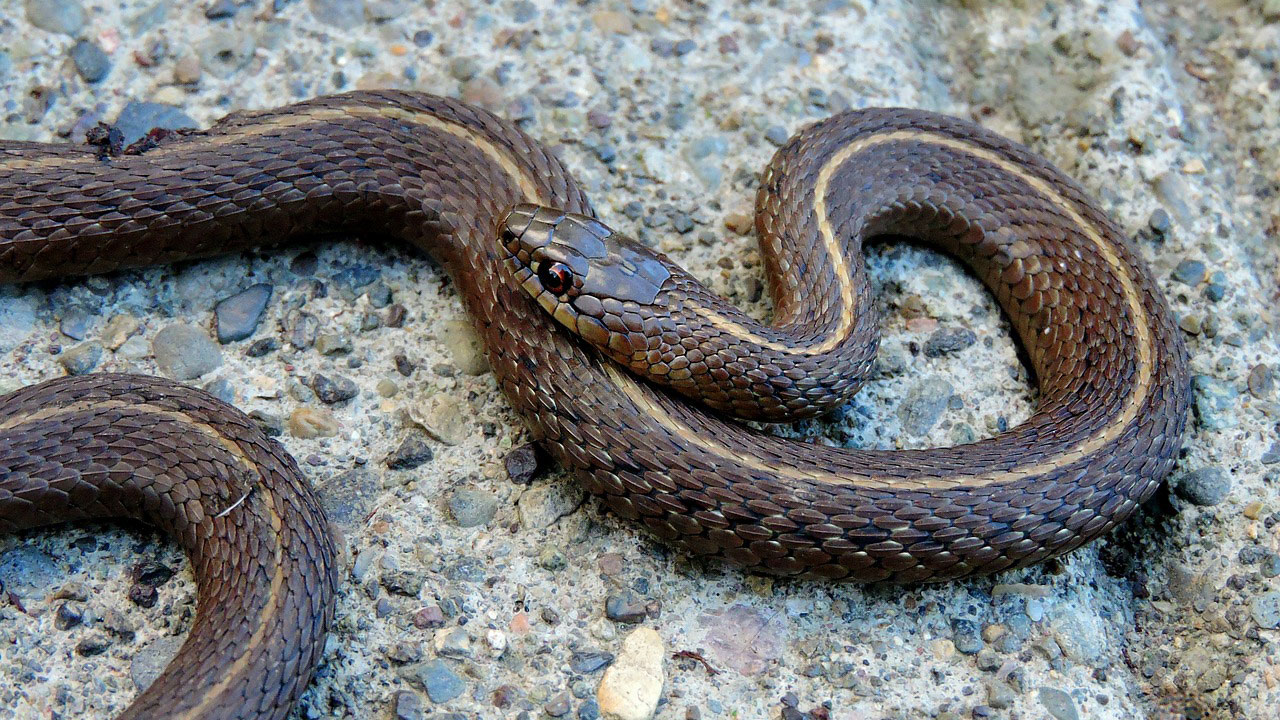
Garter snakes are among the most familiar snakes in North America, but familiarity does not mean they are easy to see. Their striped bodies line up remarkably well with grass blades, weeds, and other upright vegetation. A garter snake sitting still along the edge of a lawn can blend into its surroundings, then suddenly reveal itself when it darts toward thicker cover.
They commonly use gardens, landscaping, wood piles, sheds, and damp areas that hold frogs, worms, and other prey. Because garter snakes adapt well to human-altered environments, they may live surprisingly close to houses. They are not considered dangerous to people and are often beneficial predators. Homeowners who want fewer snake encounters can reduce hiding places, but finding a garter snake usually means nothing more alarming than discovering another native animal making use of the habitat around the yard.
Eastern Ratsnake
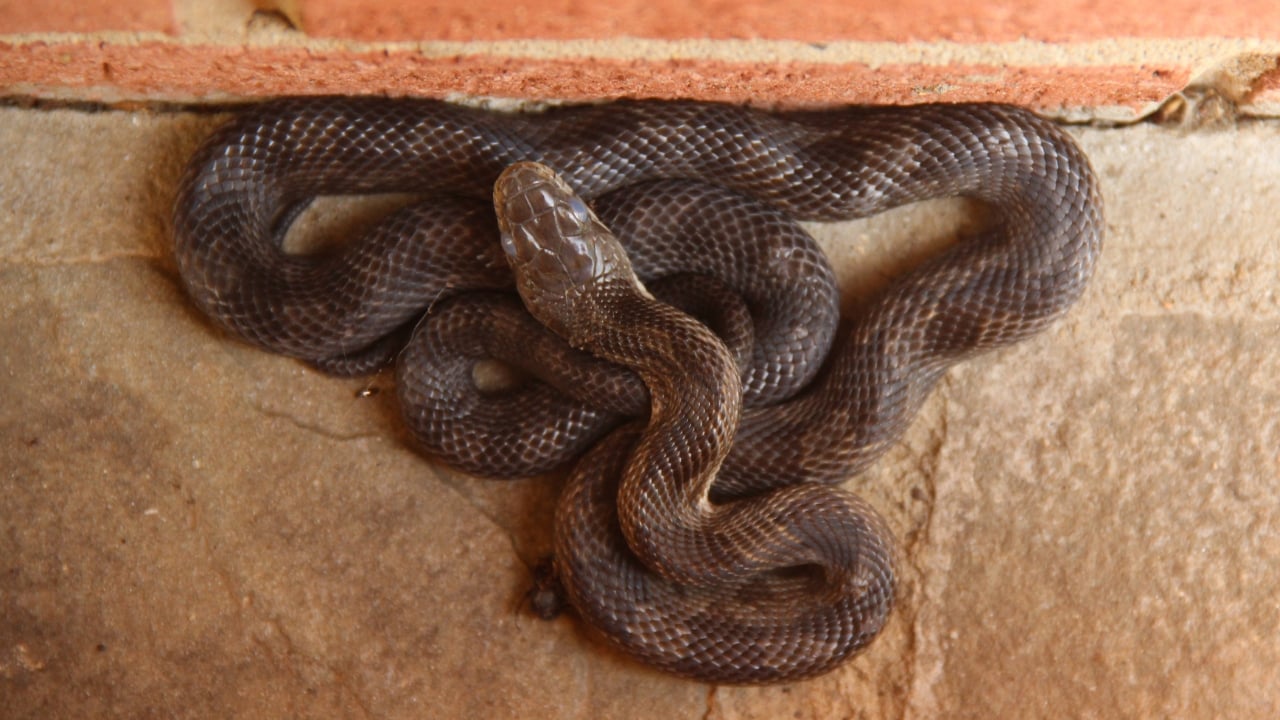
An adult eastern ratsnake can stretch several feet long, yet one can still be remarkably difficult to find. Dark adults disappear against shaded tree trunks, crawl spaces, barns, and dense vegetation, while younger snakes have blotched patterns that provide excellent camouflage against leaves and bark. They are also capable climbers, meaning the snake you are looking for on the ground might actually be halfway up a tree.
Ratsnakes commonly venture around homes because rodents, birds, and eggs provide attractive food sources. Barns, chicken coops, sheds, attics, and wood piles can all draw their attention. Although their size can startle people, ratsnakes are nonvenomous and valuable rodent predators. A big one disappearing into the rafters of an outbuilding can look intimidating, but it is often doing a job homeowners would otherwise be paying traps or poison to accomplish.
Black Racer
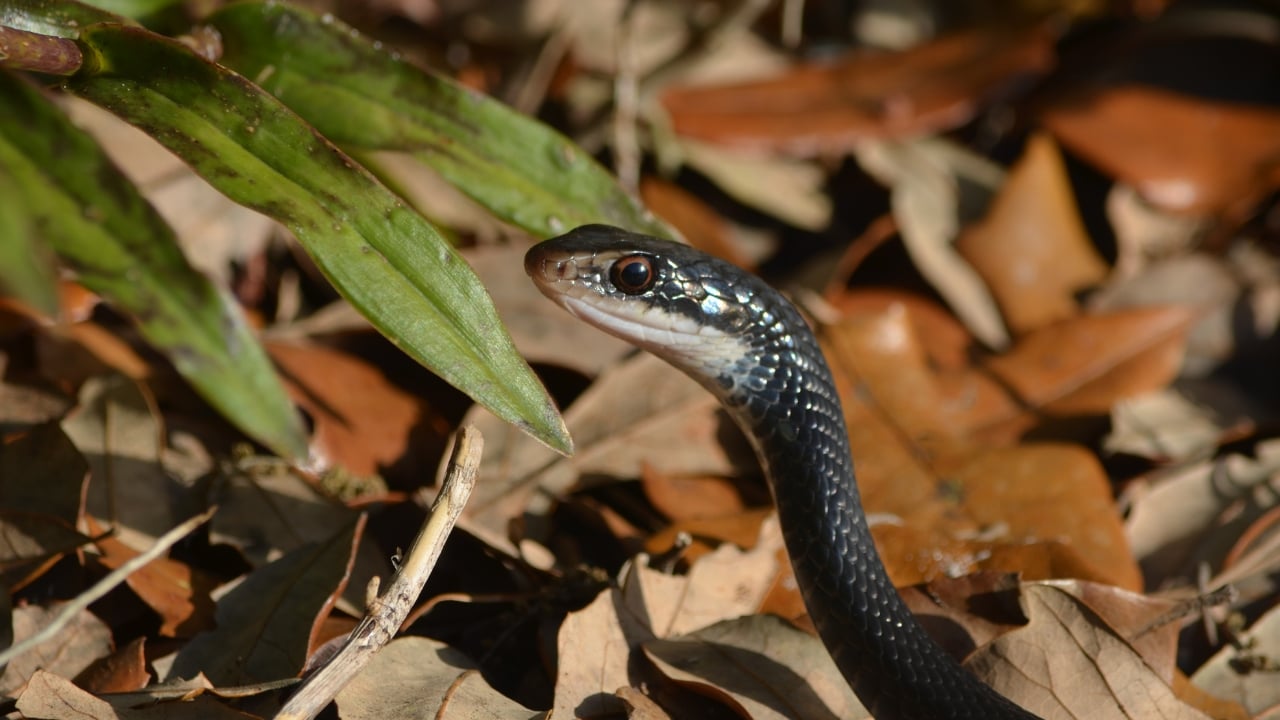
Black racers seem conspicuous when they are moving across a bright lawn, but everything changes when they reach shade. Their dark coloration can disappear almost instantly beneath bushes, along fence lines, underneath decks, and inside heavy vegetation. Their slender bodies also allow them to slip through openings where a heavier snake would have trouble following.
Unlike many snakes that rely on remaining motionless, racers are extremely quick. A homeowner may catch one brief glimpse and then spend several minutes staring at the exact place where it vanished without seeing anything. Racers are nonvenomous and feed on a variety of smaller animals, including insects, frogs, rodents, lizards, and other snakes. They may act defensive if cornered, but their first choice is normally to use that impressive speed to put as much distance as possible between themselves and people.
Common Watersnake
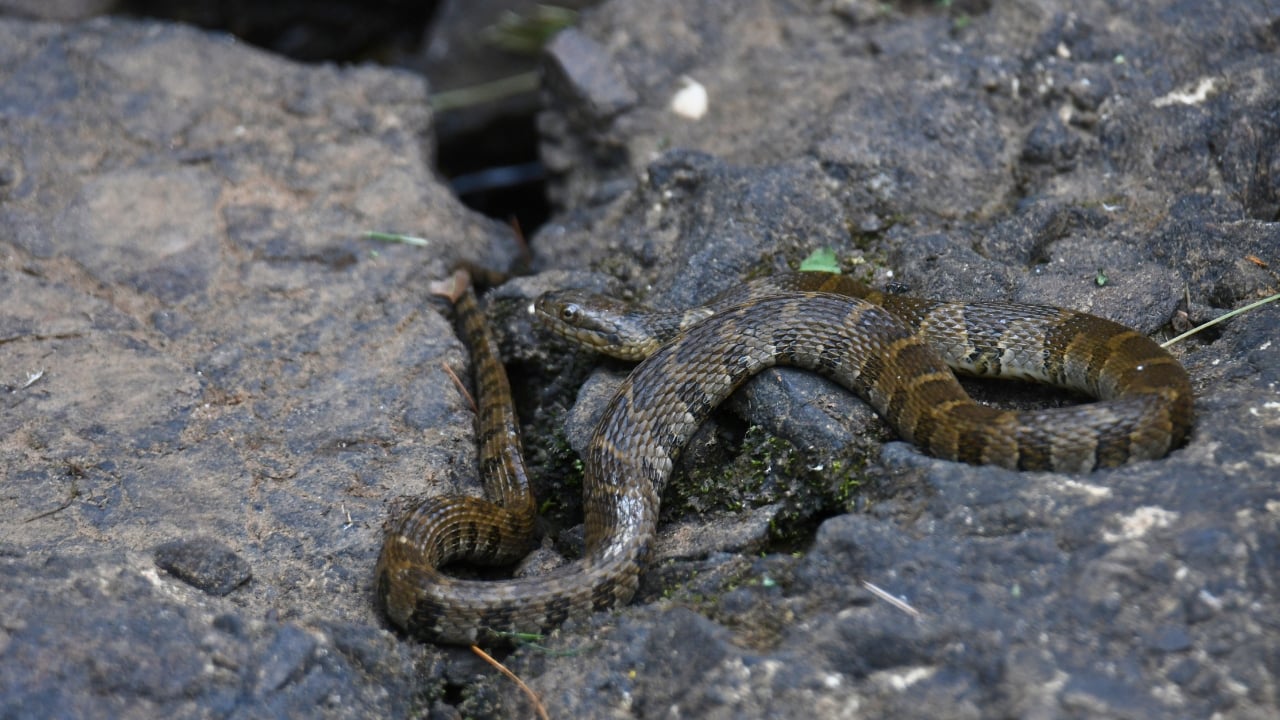
Common watersnakes create plenty of mistaken-identity moments because their blotched patterns and association with water sometimes cause them to be confused with venomous cottonmouths. Around ponds, creeks, docks, and wet sections of property, those same blotches allow watersnakes to blend extremely well with mud, stones, submerged branches, and wet leaves.
They often bask near water and can disappear beneath the surface almost instantly when disturbed. Properties with ponds may support watersnakes without the owners realizing how many are present because the snakes spend much of their time around thick shoreline cover. Common watersnakes are nonvenomous, although they can defend themselves enthusiastically if someone tries to grab them. Observing one from a distance is usually enough to let it retreat and continue hunting fish, frogs, and other aquatic prey.
Northern Ring-Necked Snake
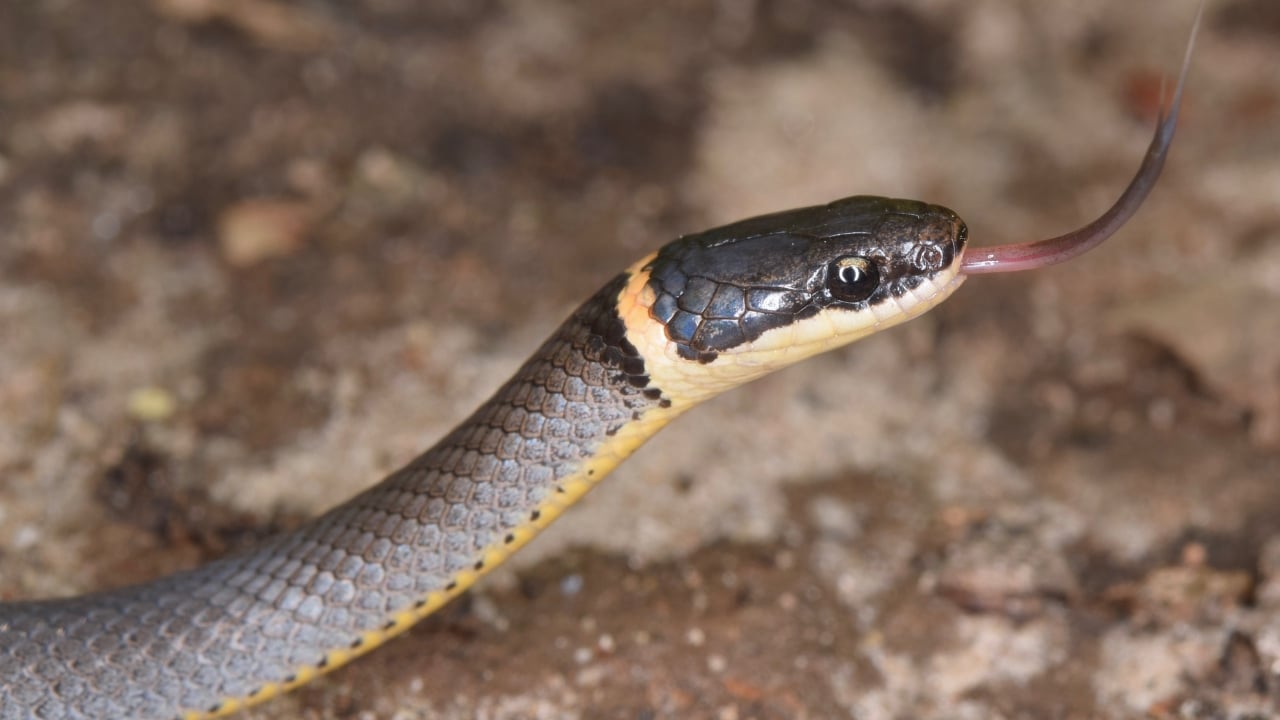
A ring-necked snake is easy to miss simply because there is so little snake to see. Most are small, slender, and dark above, with a bright ring around the neck that may remain hidden depending on the animal’s position. Their dark backs blend into moist soil, decaying leaves, and shaded areas beneath logs and rocks.
These snakes spend much of their lives concealed, so homeowners usually find them accidentally while moving landscaping stones, firewood, or garden materials. They feed on small amphibians, worms, slugs, and other tiny prey and present essentially no danger to people. Their secretive nature means a healthy population could live around the wooded edge of a property while rarely being noticed. If you discover one, replacing the object it was hiding beneath after the snake moves away helps preserve the little microhabitat it was using.
Rough Green Snake
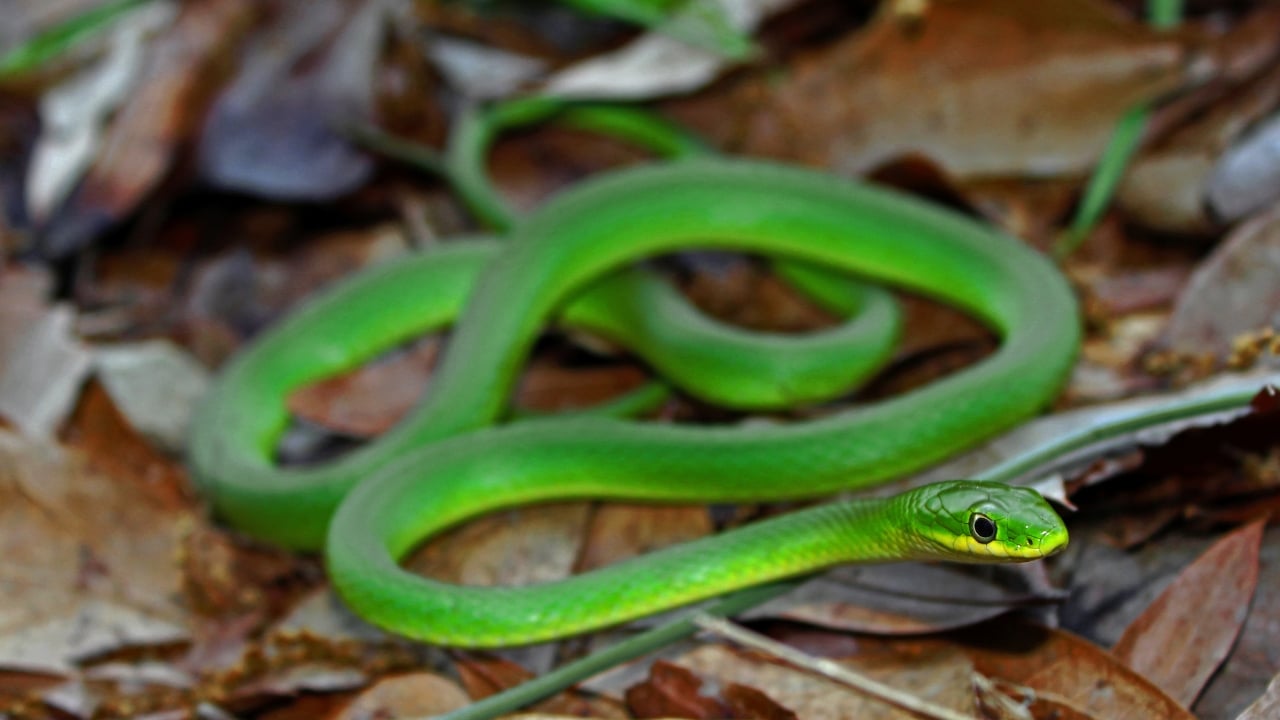
Sometimes the best camouflage is exactly what the name suggests. Rough green snakes are bright green, but that coloration becomes nearly perfect camouflage once they climb into vines, shrubs, bushes, and low tree branches. Their extremely thin bodies resemble stems so closely that your eyes can pass directly over one without registering that it is an animal.
These harmless snakes occur primarily in the southeastern and south-central United States and feed heavily on insects and spiders. They spend much of their time above ground, which means homeowners trimming shrubs may be more likely to encounter one than people walking through the lawn. Rough green snakes are gentle and usually attempt to escape rather than defend themselves. Their presence can be a good sign that your yard still supports enough vegetation and insect life to sustain native wildlife.
Eastern Milksnake
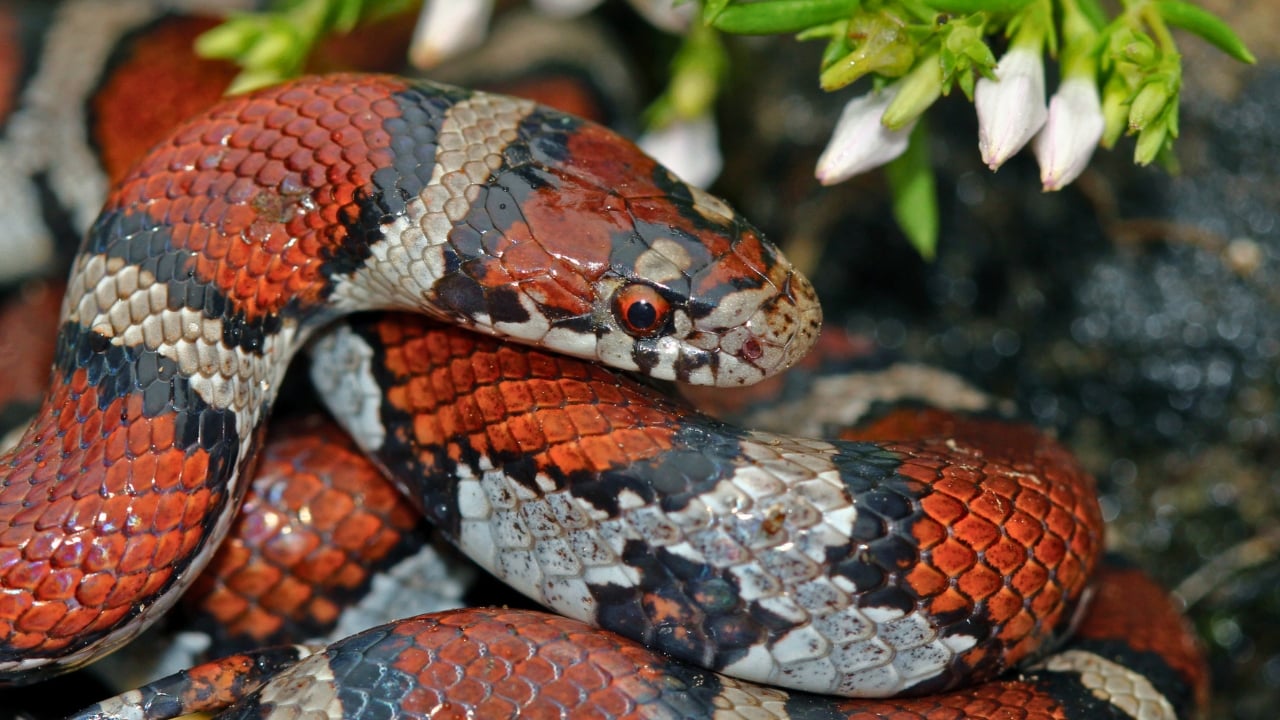
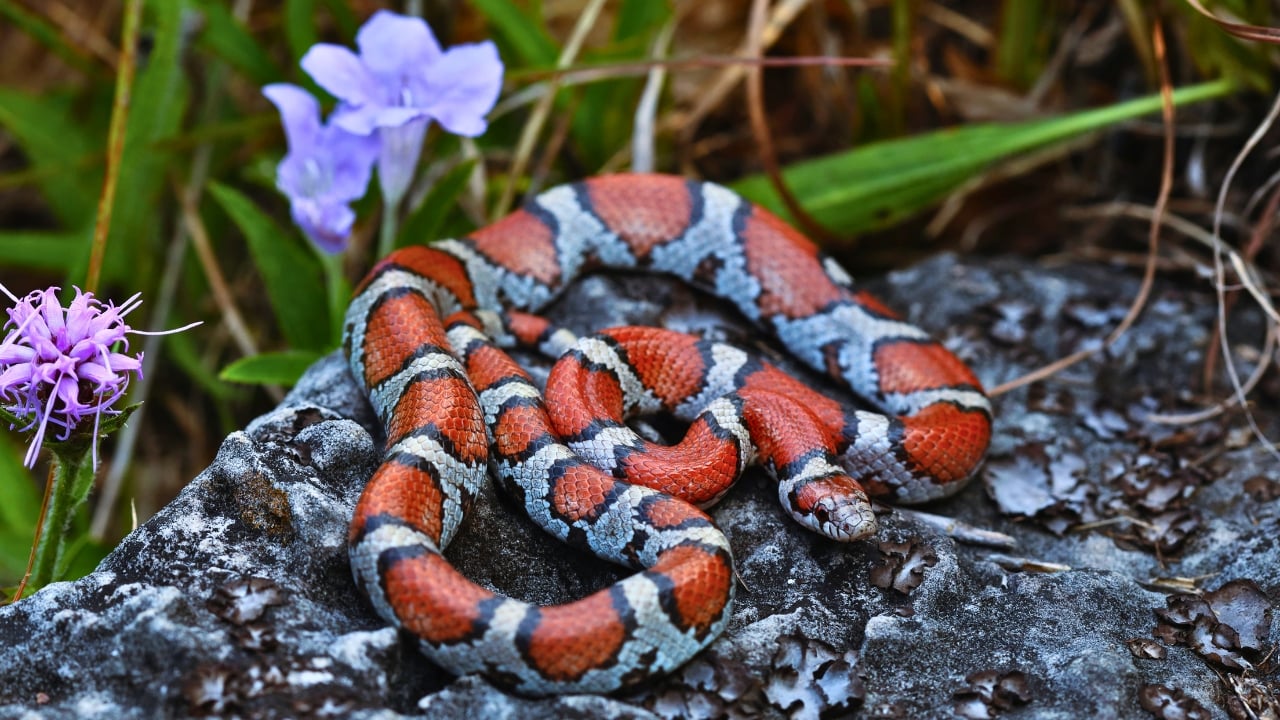
The eastern milksnake’s pattern looks bold when you see one against a plain background, but put the same snake among leaves, stones, and patches of sunlight and those markings suddenly make sense. Reddish-brown blotches outlined against gray or tan break up its body and help it disappear across cluttered ground.
Milksnakes often spend their days beneath boards, rocks, logs, and other cover, which allows them to live close to barns, sheds, and rural homes without being noticed. They are nonvenomous constrictors and feed on rodents, lizards, smaller snakes, and other prey. The old belief that milksnakes entered barns to drink milk was folklore rather than reality. Rodents were the real attraction. A milksnake around an outbuilding is much more interested in the mice hiding there than anything humans are doing.
Eastern Kingsnake
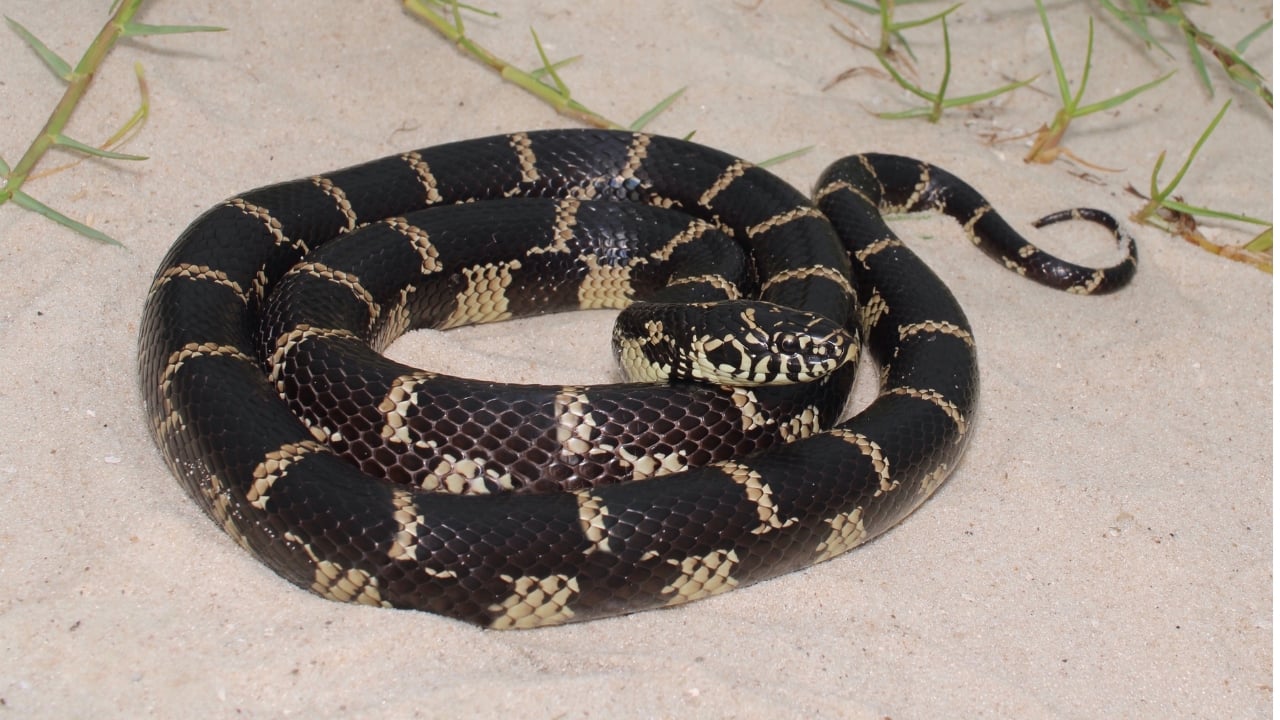
Kingsnakes can be fairly conspicuous when fully exposed, especially individuals with bright chain-like markings. In the broken shadows beneath bushes, logs, and leaf litter, however, those contrasting colors can actually help conceal the snake by disrupting the outline of its body.
Eastern kingsnakes may appear around wooded yards, farms, wetlands, and other areas with good populations of rodents, lizards, frogs, and snakes. They are especially famous for eating other snakes, including venomous species, because kingsnakes possess resistance to some snake venoms. That does not mean one kingsnake will magically rid a property of every copperhead, but it does make them valuable native predators. They are nonvenomous and generally better left alone if discovered moving through a yard or beneath an outbuilding.
Corn Snake
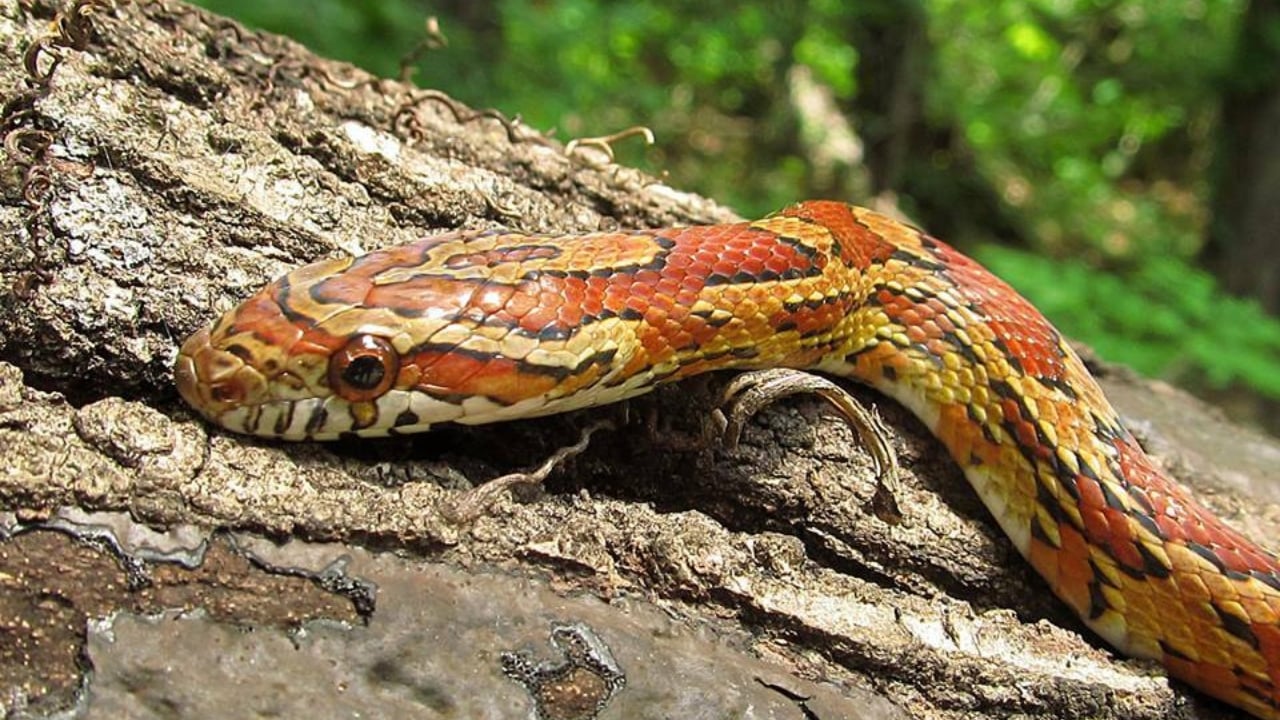
Corn snakes seem like they should be easy to spot because of their orange and reddish coloration. That assumption changes immediately when one crawls across pine needles, reddish soil, bark, or a pile of autumn leaves. Its saddle-shaped blotches break up its body surprisingly well, especially in the warm-colored environments common throughout parts of the Southeast.
Corn snakes frequently live around farms, barns, abandoned structures, and wooded properties because those places provide rodents and sheltered hiding spots. They are excellent climbers and may enter rafters, sheds, or other elevated areas while hunting. Despite sometimes being mistaken for copperheads, corn snakes are nonvenomous constrictors. Homeowners who encounter one are essentially looking at a highly effective mouse hunter wearing some of the best fall camouflage found on any backyard snake.
Gray Ratsnake
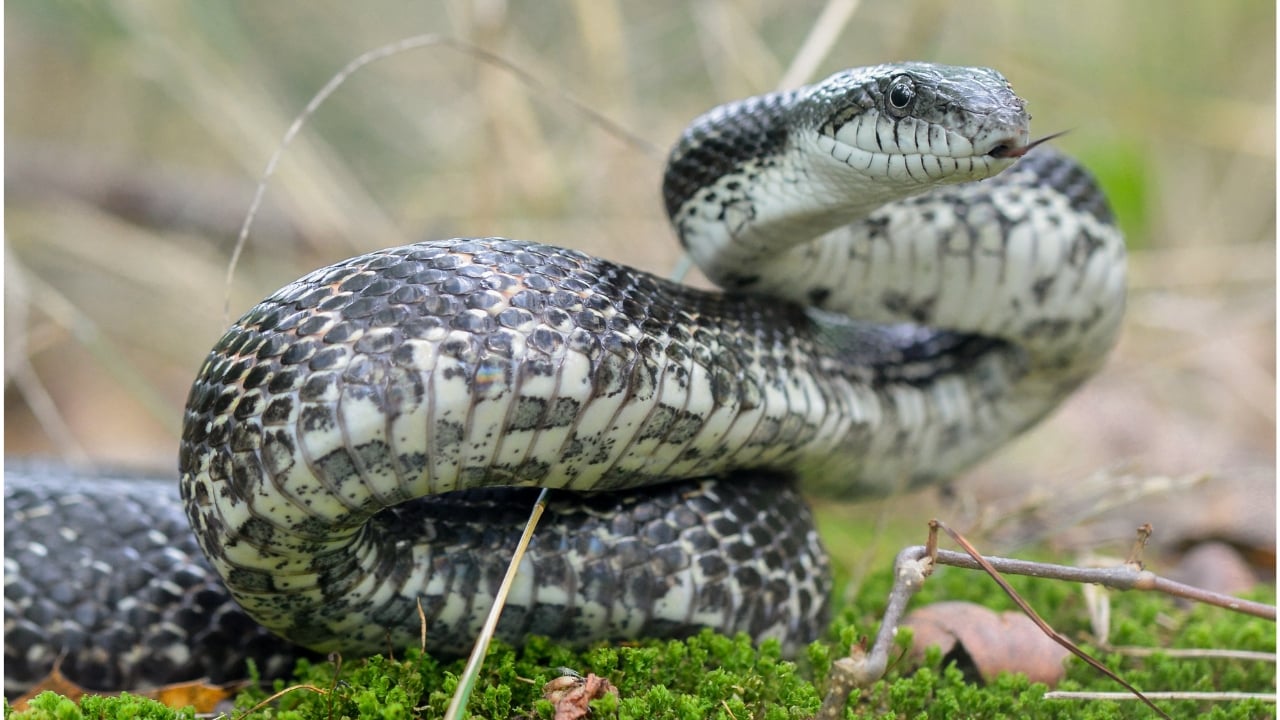
Gray ratsnakes are built for disappearing against bark. Their gray background and darker blotches resemble the irregular patterns found on mature trees so closely that a snake stretched vertically along a trunk can be surprisingly hard to notice. Juveniles may be even more strongly patterned, giving them excellent camouflage on the forest floor.
Like other ratsnakes, they are strong climbers and frequently search trees, barns, sheds, and other structures for rodents and bird nests. Rural homeowners may discover one near a chicken coop and immediately assume it poses a threat to adult birds. The snake is much more likely to be interested in eggs, young birds, or rodents attracted to spilled feed. Gray ratsnakes are nonvenomous, and having one around an outbuilding can greatly reduce the number of mice using the same structure.
Pine Snake
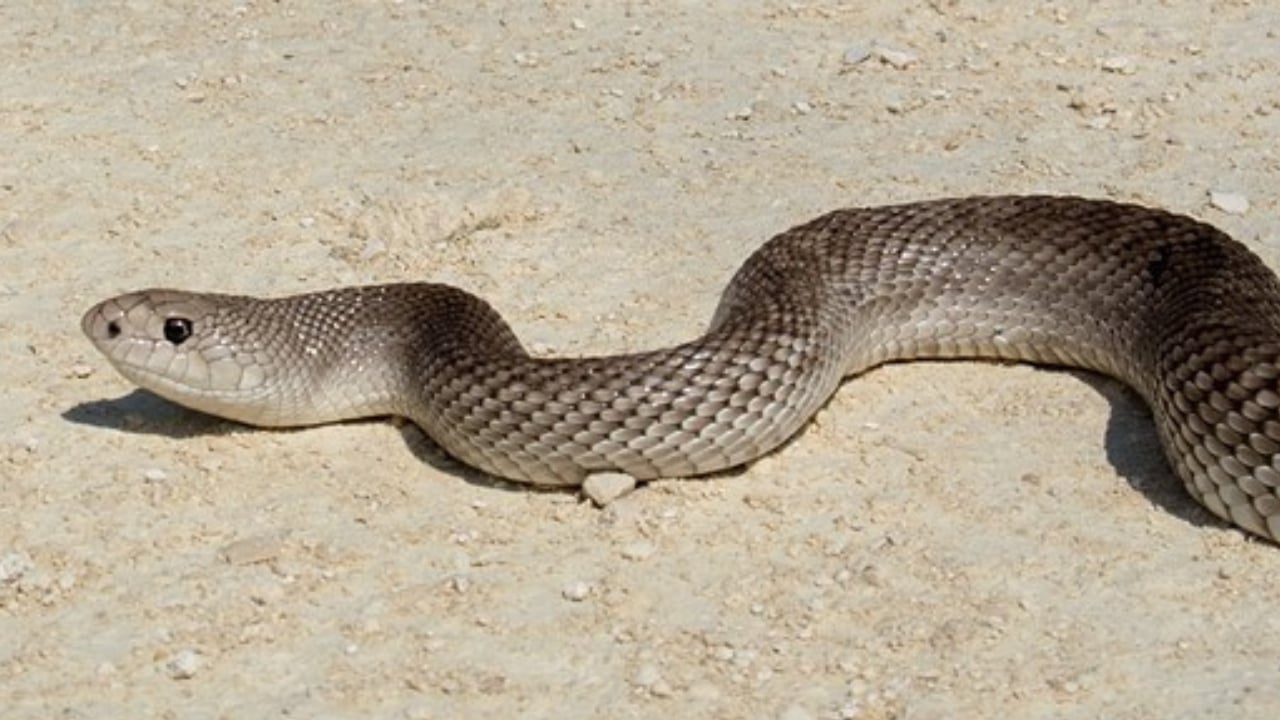
Pine snakes are large, powerful constrictors that spend a surprising amount of time underground. Their cream, tan, and brown coloration helps them blend into sandy soils, pine needles, and dry forest debris when they are above ground, but their burrowing behavior makes them even harder to detect.
They prefer habitats with loose soils where they can use rodent burrows or excavate shelter themselves. Homeowners living near suitable pine forests may occasionally encounter one crossing a road, yard, or clearing. A large pine snake can be intimidating and may hiss loudly when threatened, sometimes convincing people they have encountered a dangerous species. They are nonvenomous, however, and feed heavily on rodents. In areas where populations remain healthy, they are another example of a sizable snake that can exist surprisingly close by while spending most of its life unseen.
Western Hognose Snake
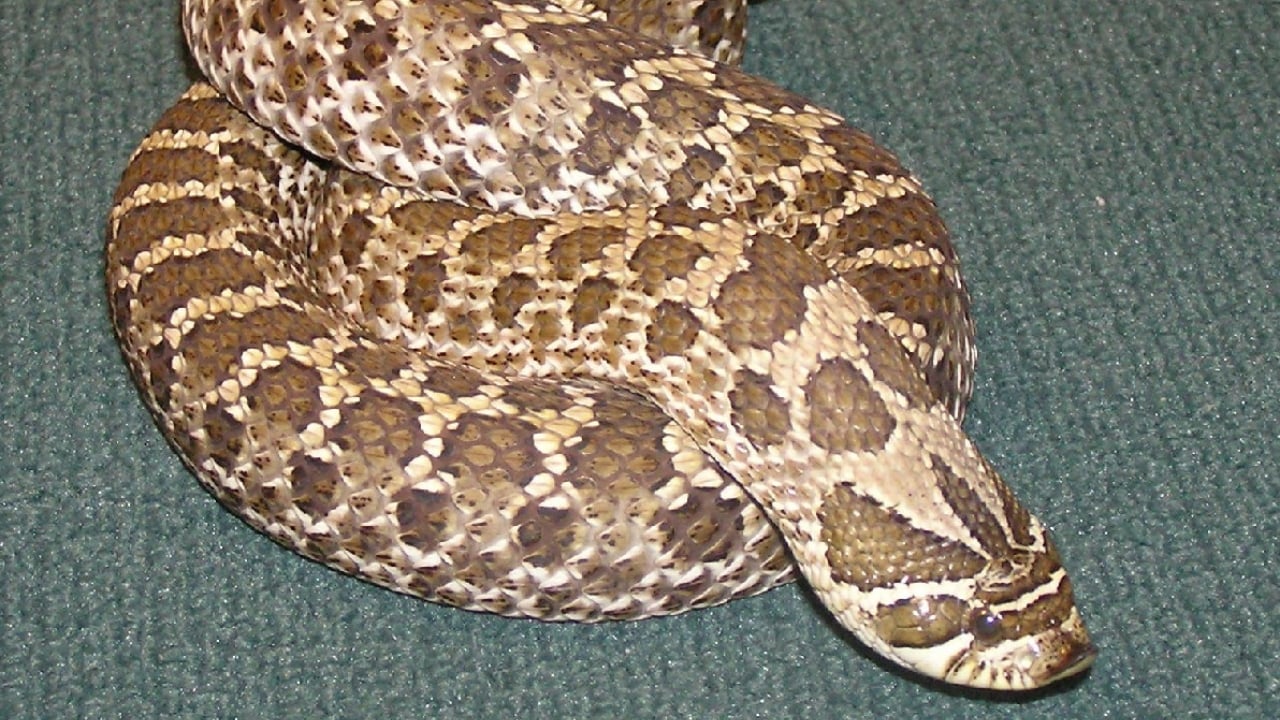
The western hognose may look like a tiny rattlesnake at first glance. Its stocky body, dark dorsal blotches, and sandy background coloration create excellent camouflage across dry grasslands, loose soil, and prairie environments. That resemblance sometimes gets harmless hognose snakes killed simply because people assume anything short, thick, and patterned must be dangerous.
Their upturned snout is designed for digging, and western hognose snakes spend considerable time burrowing through loose soil in search of prey or shelter. Rural yards within their range can provide exactly the sandy or open habitat they prefer. When threatened, they may flatten themselves, hiss, or perform the same dramatic death-feigning behavior seen in other hognose species. For people, they are not considered a serious threat. Most would much rather disappear underground than stick around for a confrontation.
Like The Avid Outdoorsman’s content? Be sure to follow us.
Here’s more from us: