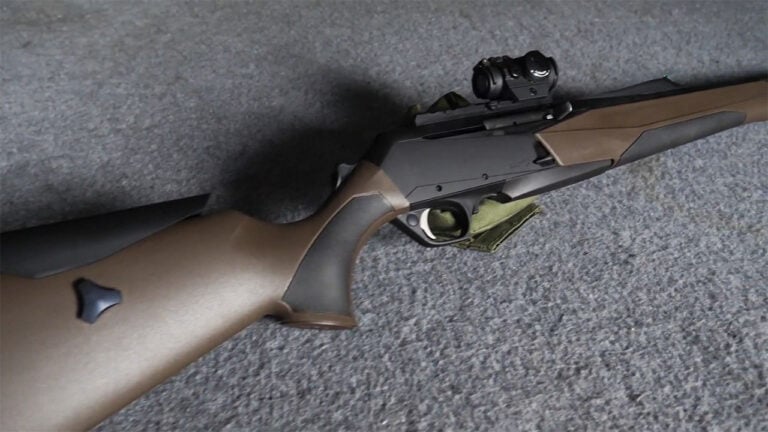
Photo credit: Gun Addicts/YouTube.
If you’re eyeballing lever guns and stuck between .30-30 and .45-70, you’re not alone. Both have deep roots in American hunting history, and each one brings something different to the table. Choosing the right one really depends on what you need it to do—and what you’re willing to put up with. Let’s break it down piece by piece so you can figure out which one fits your style best.
Recoil: Manageable vs. Meaty

The .30-30 is pretty easy on the shoulder, even in lighter rifles. That makes it a solid pick if you want fast follow-ups or just don’t enjoy getting punched by your gun.
The .45-70, on the other hand, hits back—especially with hotter loads. It’s manageable, but it’s not exactly gentle. If recoil is something you factor in heavily, the .30-30 has the edge here.
Range: Close Quarters or Stretching Out

The .30-30 starts to drop fast past 200 yards. It’s best for thick woods, brush, and typical deer ranges.
The .45-70 carries more weight and energy but still isn’t built for long-range precision. You can stretch it out farther than a .30-30, but you’ll need practice compensating for drop.
Power: Enough or Overkill?

The .30-30 gets the job done on deer, hogs, and even black bear with proper shot placement. It’s been doing that for well over a century.
The .45-70 brings serious muscle. It’s not just capable of dropping elk and moose—it’s a go-to for big bear territory. If you’re planning on chasing anything large and tough, this one wins the power game.
Ammo Cost and Availability

.30-30 ammo is usually cheaper and easier to find, especially in general sporting goods stores. That means more trigger time for less cash.
.45-70 can be pricey, and the options are a bit more specialized. Not impossible to find, but definitely harder on your wallet if you shoot often.
Rifle Weight and Size

Rifles chambered in .30-30 are often lighter and more compact, which makes them handy in the woods or up in a treestand.
.45-70 rifles tend to be heavier, especially models built to handle stout loads. That extra weight helps with recoil, but it’s something to consider if you’ll be carrying it all day.
Hunting Whitetail: Both Can Do It

For whitetail deer, the .30-30 is a classic and still one of the best brush guns around. It’s accurate enough and packs plenty of punch for ethical kills.
The .45-70 can absolutely take whitetail, but many would say it’s more than necessary. Unless you just like having extra power, the .30-30 is more than enough here.
Big Game: Time to Step Up

If you’re hunting elk, moose, or heading into grizzly country, the .45-70 is where you want to be. Its stopping power is no joke.
The .30-30 has limits with bigger game. You might get by with perfect conditions and good shot placement, but it’s pushing it beyond what the round was really meant for.
Lever Action Legacy

Both rounds are icons in lever guns, but the .30-30 probably holds the crown. It’s the cartridge most people picture when they think of a classic lever rifle.
The .45-70 has its own legacy, especially in Marlin and Henry rifles. It feels more purpose-driven—less cowboy, more wilderness guide.
Reloading Options

If you reload, the .45-70 gives you more flexibility. You can tailor light cowboy loads or heavy thumpers depending on what you need.
The .30-30 has fewer extremes in loading, but it’s still easy to reload and gives solid performance across a range of bullet types.
Which One’s Right for You?

If you hunt medium game in wooded areas and want a light, handy rifle, the .30-30 probably makes more sense. It’s reliable, affordable, and proven.
But if your hunts involve big animals or dangerous terrain—and you don’t mind a little kick—the .45-70 brings a whole lot of thump. Either way, you’re getting a cartridge with a serious track record.
*This article was developed with AI-powered tools and has been carefully reviewed by our editors.