Photo credit: AI-generated image created using ChatGPT. Illustrative only
It’s one thing to inherit a grandparent’s old hunting rifles. It’s another thing to realize you’re holding a family keepsake that can turn into a legal headache the minute you cross a state line.
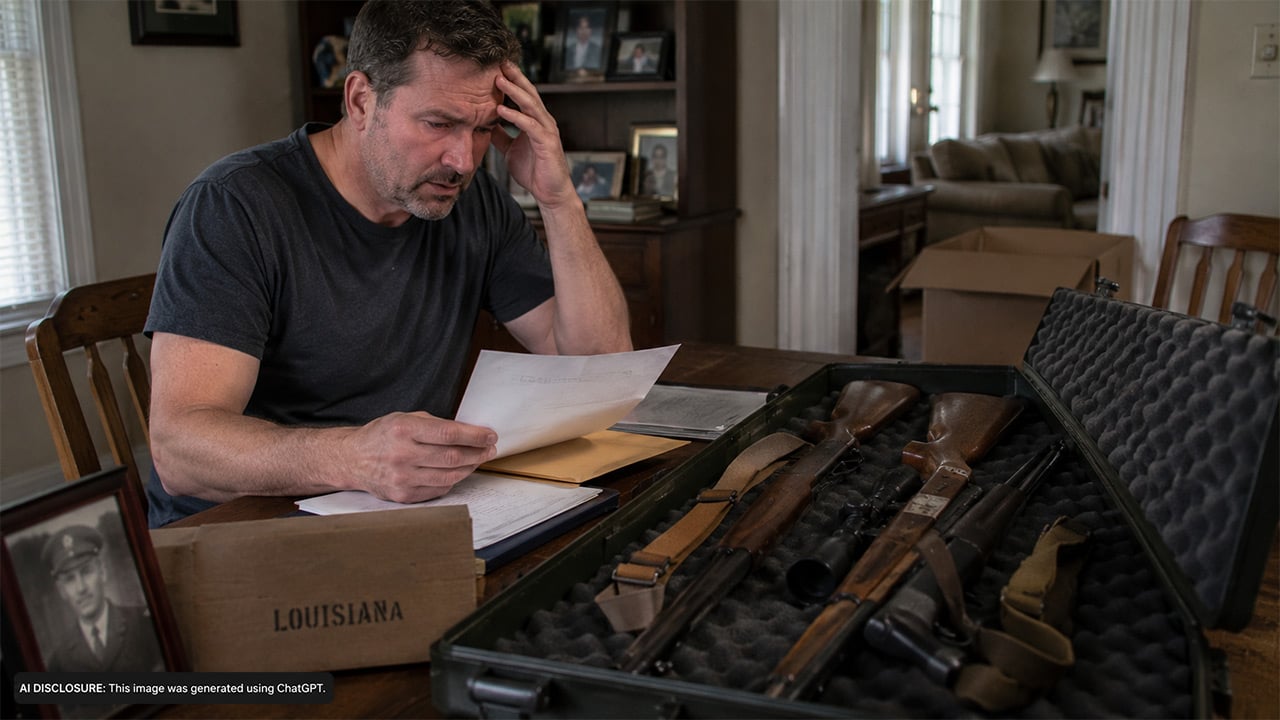
That’s the spot one California man found himself in after his grandfather passed away last fall. In the original post, he explained that his grandfather died in September without a will, and his grandmother set aside two of the man’s favorite rifles because “he had wanted me to have them.” The guns were still in Louisiana with the rest of the family. The grandson lives in California—and he wasn’t sure he could even legally possess them.
A family handoff that isn’t as simple as “they’re yours now”
On the surface, it sounds like the cleanest kind of inheritance: a widow honoring her late husband’s wishes and giving a couple rifles to a grandson who will appreciate them. No drama. No fighting. Just a quiet handoff while the family is together.
But the details matter. The grandfather didn’t leave a will, and the rifles are sitting in one state while the intended new owner resides in another. That instantly moves things out of the “family agreement” lane and into the “how do I transfer and transport firearms legally” lane—especially when California is involved.
The moment he realized California plays by different rules
The grandson’s biggest worry was what he called a lack of a “gun license/permit.” That’s a pretty common way people describe it when they’re not living and breathing the paperwork side of gun ownership. In much of the country, you don’t need a permit just to own a typical rifle, but California has extra requirements that can feel like a permit system if you’re coming from a different state’s mindset.
His questions were practical and immediate: What are my options? Can I legally own these rifles without a license? And, since he was already in Louisiana visiting family, could he just check them in his baggage on the flight home to California?
That last question is where a lot of folks get in trouble—not because they’re trying to do something shady, but because “it’s my gun and I’m flying home” feels normal until you hit airline rules, TSA procedures, and state transfer laws all at once.
Why flying them home isn’t just an airline question
People tend to think of flying with firearms as a TSA checklist: unloaded, locked case, declare at the counter, follow the airline’s rules. Those steps matter, but they aren’t the whole game here. Getting a firearm from Louisiana into California isn’t only about transport—it’s also about whether the transfer itself is lawful under the destination state’s rules.
When you inherit guns, especially across state lines, there can be requirements about how the firearms are delivered to you and documented. Add in California’s reputation for detailed gun laws, and the grandson’s fear makes sense: he didn’t want to do something that would end with his grandpa’s rifles confiscated.
And that’s the real heartbreak angle for a lot of outdoorsmen. These aren’t just “guns.” They’re the kind of rifles that sat in a closet for decades, rode in a truck during deer season, and got leaned in a corner while coffee brewed on a cold morning. Losing them to a paperwork mistake would sting.
The “no license” concern and what it usually means in real life
The post doesn’t specify exactly what “license/permit” he’s talking about, but the concern points to a common confusion: ownership versus purchase versus carry. Many states don’t require any sort of license simply to own a standard hunting rifle. California, however, layers in requirements that can affect receiving, buying ammunition, and transferring firearms.
Even if a person can legally possess rifles in general, California can require specific steps before you can receive firearms through a normal transfer, and there are separate rules depending on whether the firearms are long guns versus handguns, and depending on the relationship between parties involved. The rifles here are described only as “two of his favorite rifles,” with no make, model, or configuration noted—details that can matter a lot in California.
That’s why the safest path, in plain English, tends to be: don’t assume “inheritance” automatically equals “legal possession the moment grandma hands it to you,” especially when state lines are involved.
What he was really trying to avoid: a well-meaning mistake with big consequences
The grandson wasn’t asking how to sneak anything around the rules. He was asking how to do it right. That’s the mindset more gun owners ought to have—because the rules can be easy to trip over even when your intentions are solid.
Checking rifles as luggage might be legal under airline and TSA policy if done correctly, but that doesn’t automatically solve the California side of the equation. A guy can follow every airline rule and still end up on the wrong side of state transfer requirements once he lands, depending on how the guns were obtained and whether any required processes were followed.
There’s also a simple, practical issue: if something goes sideways in travel—missed connection, luggage delay, diversion—suddenly those rifles are sitting in an airport system while you’re trying to explain that they’re inherited property and you’re not sure what paperwork you need. That’s not where you want to be with family heirlooms.
The outdoorsman’s takeaway: treat heirloom guns like heirloom land—handle the transfer clean
Old rifles carry stories, and when they move from one generation to the next, they deserve the same care as any other legacy item. The smart play is to slow down and make sure the handoff is done in a way that lines up with both states’ rules—especially the receiving state.
The man’s instincts were good: he asked before acting, and he focused on keeping everything legal so the rifles don’t end up seized over a misunderstanding. If you find yourself in the same situation, the best mindset is to treat it like a formal transfer, not a casual “bring them home in a suitcase” moment. A little patience now can keep grandpa’s rifles in the family where they belong.
Like The Avid Outdoorsman’s content? Be sure to follow us.
Here’s more from us: