Photo credit: AI-generated image created using ChatGPT. Illustrative only
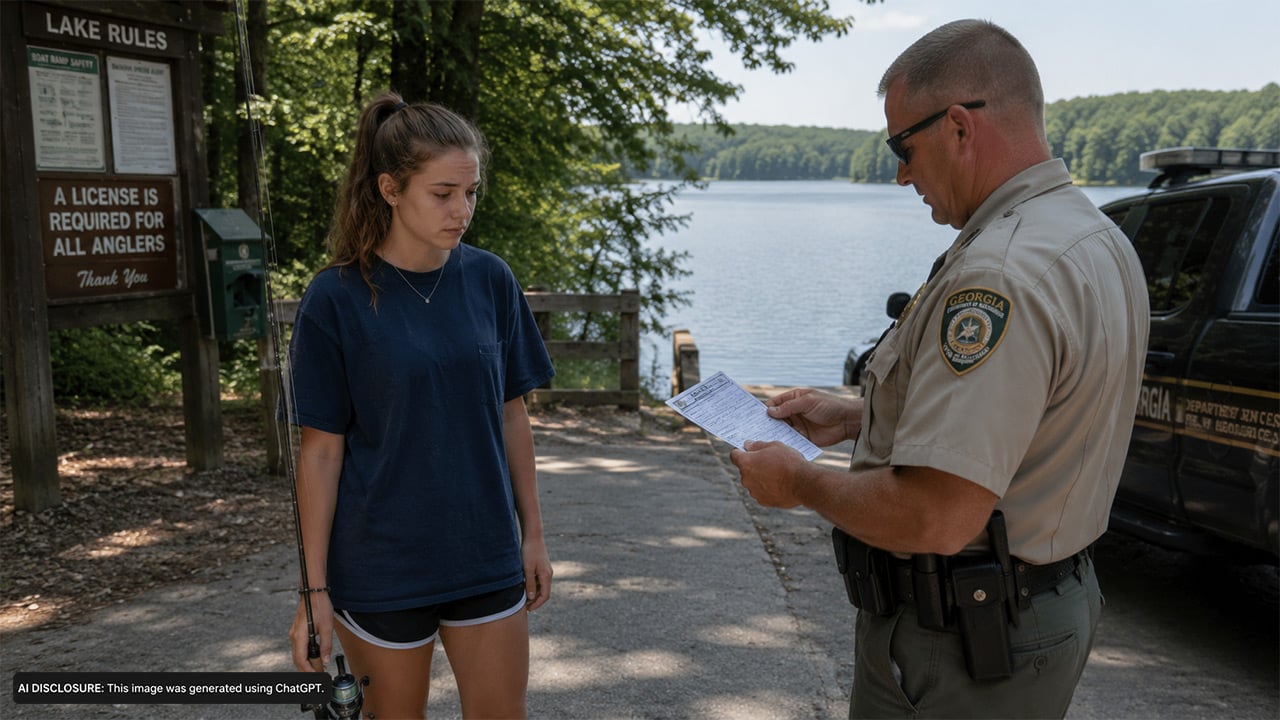
A 17-year-old Georgia girl picked up fishing a week ago, found a spot, and thought she was doing everything right. Then a game warden pulled up and wrote her a ticket for fishing without a license.
In the original post, she said she honestly didn’t know minors needed a license, and now she’s staring at a fine she can’t afford. She also mentioned she has no traffic or criminal history and was told by a parole officer to plead nolo contendere.
A common first-timer mistake with real consequences
A lot of folks grow up thinking fishing licenses are an “adult thing,” like a driver’s license or a hunting tag. In plenty of places, youth exemptions do exist for certain ages, certain waters, or certain supervised situations. But those details change fast from state to state, and “I’m under 18” isn’t automatically a free pass.
What made this one sting is how quick it happened—she’d only been fishing for about a week before getting checked. That’s the part new anglers don’t expect: game wardens often show up when you least think they will, and fishing regulations don’t give much grace just because you’re new.
Why game wardens check anglers early and often
If you spend any time on public water, you learn something pretty quick: conservation officers don’t have to “build a case” the way people imagine. Fishing is a regulated activity. If you’re on the bank or in a boat with a line in the water, it’s normal for an officer to check licenses, creel limits, and anything else that applies.
That’s not harassment; it’s how fisheries management is funded and enforced. License sales help pay for access, stocking, habitat work, and enforcement itself. And from a warden’s perspective, checking a young angler is the same as checking an older one—either the license is valid or it isn’t.
Her plan: nolo contendere, no record, and a fine she can’t pay
The teenager said a parole officer told her to plead nolo. That plea—often called “no contest”—basically means you’re not admitting guilt, but you are accepting a conviction and the penalty in that case. People use it for certain situations, but it’s not magic, and it doesn’t automatically erase costs.
The bigger issue she raised was money. She said she can’t pay the fine because she doesn’t have much, and she wanted to know how to get it reduced or thrown out. That’s where reality bites: even when a mistake is honest, the system still runs on fines, court costs, and deadlines.
What most people focus on in cases like this
When regular outdoorsmen talk about tickets like this, the conversation usually turns practical, not emotional. First question: “Does Georgia require a license at 17?” Because if the rule says you need one, then the officer didn’t have to give warnings—he can write it.
Second question: “What’s the cleanest way to handle it without making it worse?” That usually means don’t ignore it, don’t miss court dates, and don’t assume you can talk your way out of it at the last second. The best outcomes in minor violations tend to come from being respectful, being on time, and showing the court you corrected the problem.
The realistic paths forward when you’re young and broke
She asked for the fine to be reduced or thrown out. In the real world, there are a few ways situations like this sometimes go, depending on the county and the judge: the fine gets reduced, the charge gets amended to something smaller, or the court offers a payment plan. Some places are willing to look favorably on a first-time mistake if the person goes and buys the proper license immediately and shows proof.
But the key is understanding that “I didn’t know” isn’t usually a legal defense by itself. It can still matter in how a judge chooses to handle penalties, especially for a juvenile with no record, but it doesn’t automatically erase the violation.
If money is tight, courts often have set processes for payment plans or alternatives. That’s not “getting out of it,” but it can keep a small mistake from turning into a bigger one because of missed payments or missed appearances.
A hard lesson for new anglers: know the rules before the first cast
This is the part every experienced angler wants to tell a beginner, because we’ve all watched someone learn it the expensive way: the easiest ticket to avoid is the one you prevent before you ever leave the house. Licenses, stamps, size limits, seasons, and special-regulation waters can all change within a short drive.
The good news is this kind of mistake doesn’t have to end someone’s interest in the outdoors. If anything, it’s a reminder that fishing isn’t just about rods and bait—it’s also about doing things the right way so you can relax when that warden’s truck rolls up. For a new 17-year-old angler, the best outcome is usually keeping it simple: handle the ticket responsibly, get legal for next time, and keep fishing.
Like The Avid Outdoorsman’s content? Be sure to follow us.
Here’s more from us: