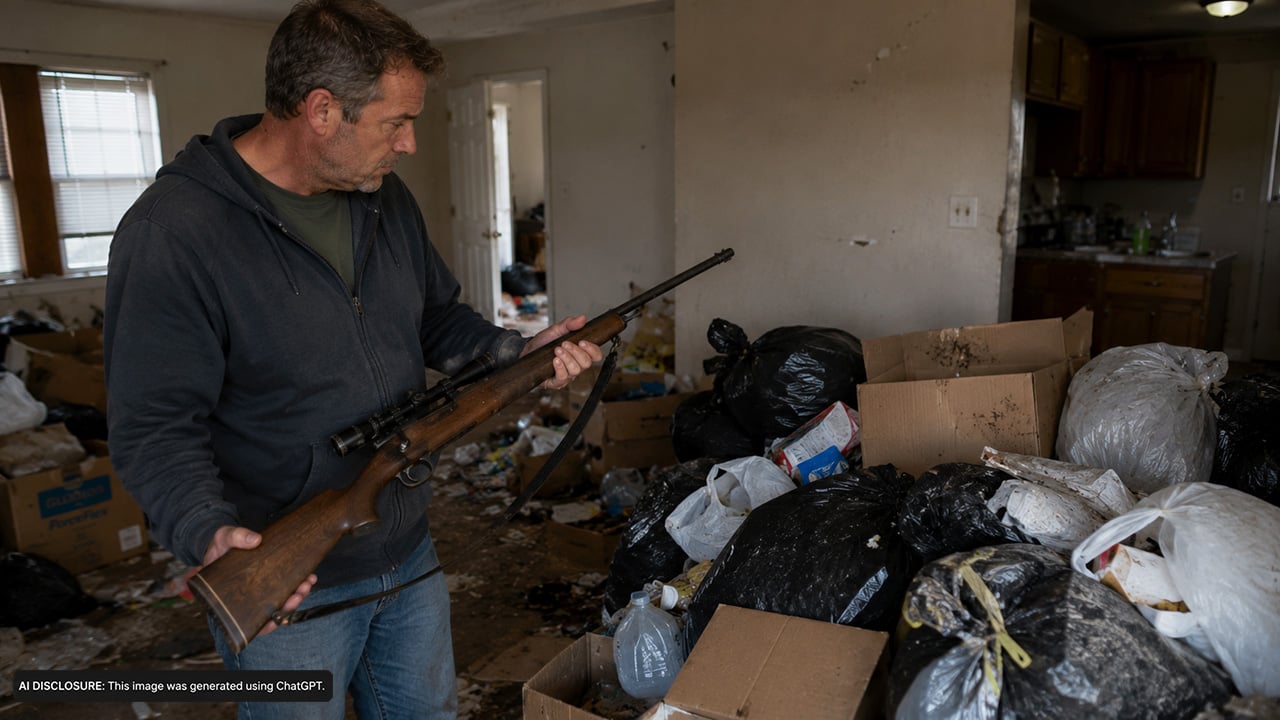
Photo credit: AI-generated image created using ChatGPT. Illustrative only
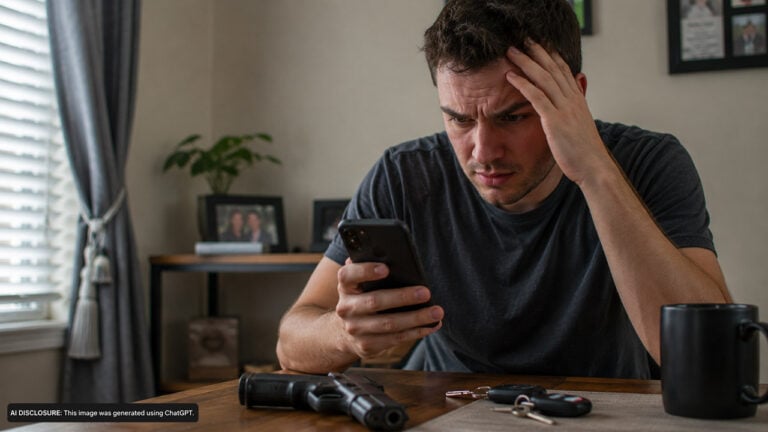
A move-out cleanout is usually a mix of busted furniture, half-empty paint cans, and whatever someone didn’t feel like hauling to the dump. But this Colorado landlord got a surprise that changes the whole tone of the job: a rifle left behind in the trash pile, and it was loaded.
In the original post, the landlord’s son explained that his dad owns a rental in Colorado. The tenant moved out a couple weeks earlier, leaving “a bunch of trash,” and among it was that loaded rifle. The big question was simple and practical—what’s the right way to handle it when you’re not licensed to carry, and the former tenant won’t come back to pick it up?
A loaded gun in a trash pile isn’t “abandoned property” like a couch
Landlords deal with abandoned stuff all the time. Mattresses, TVs, bags of clothes—annoying, but straightforward. A firearm is different, and a loaded firearm is different again. The immediate concern isn’t who owns it; it’s who might access it before it’s secured.
If you’ve spent any time around farms, rentals, hunting camps, or storage units, you already know how quickly other people show up when a place is being cleaned out. Friends of the old tenant. Curious neighbors. Contractors. The wrong kid cutting through the alley. A loaded rifle mixed in with trash is a liability waiting for a moment of bad luck.
“Not licensed to carry” doesn’t mean you can’t make the situation safe
The landlord in the post was worried because he’s “not licensed to carry a firearm.” That’s a common hang-up for people who don’t live in the gun world. They hear “gun” and “license” in the same sentence and assume that simply touching it puts them in hot water.
In real life, the bigger issue is handling it safely and lawfully in the context of where it was found. A carry permit is about concealed carry in public, not about encountering a firearm on your own property during a cleanout. Still, the smart move is to treat it like a serious hazard: don’t leave it where it sits, and don’t pass it around while you figure out what to do.
This is one of those moments where “common sense gun handling” matters. If you’re not comfortable around firearms, don’t pretend you are. Get someone competent to help—preferably someone who can safely clear and secure it—because the word “loaded” is the part that should keep you up at night.
The tenant refusing to retrieve it turns it into a longer-term problem
The post makes it clear the tenant “doesn’t want to pick it up.” That’s a strange decision if the rifle is theirs, and it puts the landlord in a corner. You don’t want a former tenant showing up unannounced later asking to grab a gun out of the garage. You also don’t want to be accused of “keeping” it if they change their mind after the dust settles.
From a property-owner perspective, the biggest mistake is handling it casually—tossing it in a closet and forgetting about it, or letting it float around between family members. If the former tenant comes back months later claiming it was a valuable rifle, now you’ve got a dispute. If something goes wrong and the rifle is stolen, now you’ve got a different kind of headache.
This is where documentation and clean boundaries matter. The landlord didn’t ask for the rifle, didn’t buy it, and didn’t want it. He found it during a move-out trash cleanup. The fact the tenant won’t retrieve it is important, and it should be recorded in whatever way is appropriate—texts, emails, written notice—because memories get fuzzy when money or firearms are involved.
What outdoorsmen and landowners tend to do in this situation
Most folks who own land, manage rentals, or run a hunting lease have a pretty simple rule: if you find a firearm where it shouldn’t be, you secure it and you stop the chaos around it. That doesn’t mean you claim it. It means you keep it out of the wrong hands while you sort out the right next step.
Practically speaking, there are only a handful of reasonable end points. One is the owner retrieves it in an orderly way. Another is you transfer it through a legal channel. And the third is you turn it over to law enforcement for safekeeping, especially when it’s loaded and the “owner” is refusing to touch it. Colorado has its own firearm laws and local practices, and the safest path often depends on the county and the agencies involved.
There’s also the basic “rental business” reality: a landlord is already dealing with deposit deductions, trash removal, and maybe property damage. Adding “loaded rifle left behind” to the list is not something you want to freestyle. When you’re unsure, it’s worth making a few phone calls rather than guessing wrong.
The safety piece is what changes the urgency
If the rifle had been unloaded and cased, it would still be an issue, but it wouldn’t be the same level of immediate risk. The fact that it was loaded means someone left a ready-to-fire firearm sitting in a pile of junk. That’s how accidents happen—someone picks it up thinking it’s empty, someone bumps a bag, someone’s “just looking at it.”
This is also why the landlord’s concern makes sense. A lot of people don’t know what to do when they unexpectedly come into contact with a firearm, especially on the business side of life. But the right mindset is the same whether you’re at deer camp or cleaning out a rental: slow down, keep it pointed in a safe direction, keep fingers away from the trigger, and don’t let bystanders crowd the situation.
And if you’re not the person to do that confidently, don’t force it. It’s not weakness to bring in help. It’s maturity.
The best outcome is one that leaves a paper trail and a secure rifle
The landlord’s situation boils down to two problems: immediate safety and long-term responsibility. The immediate part is making sure a loaded firearm is secured so it can’t hurt anyone. The long-term part is making sure there’s no confusion later about what happened, who declined to pick it up, and how it was ultimately handled.
If you’re a landlord, this is also a reminder to bake practical language into your process. Move-out checklists, written notices for abandoned property, and a clear policy for anything dangerous left behind can save you time. Most tenants won’t ever leave a gun in the trash. But all it takes is one careless move-out to put you in a position you didn’t ask for.
At the end of the day, a loaded rifle found during a cleanout isn’t a “cool free gun” story. It’s a safety problem first, a legal problem second, and a paperwork problem third. Handle it like you’d handle a stray spark in dry grass—quickly, carefully, and with as few moving parts as possible.
Like The Avid Outdoorsman’s content? Be sure to follow us.
Here’s more from us: