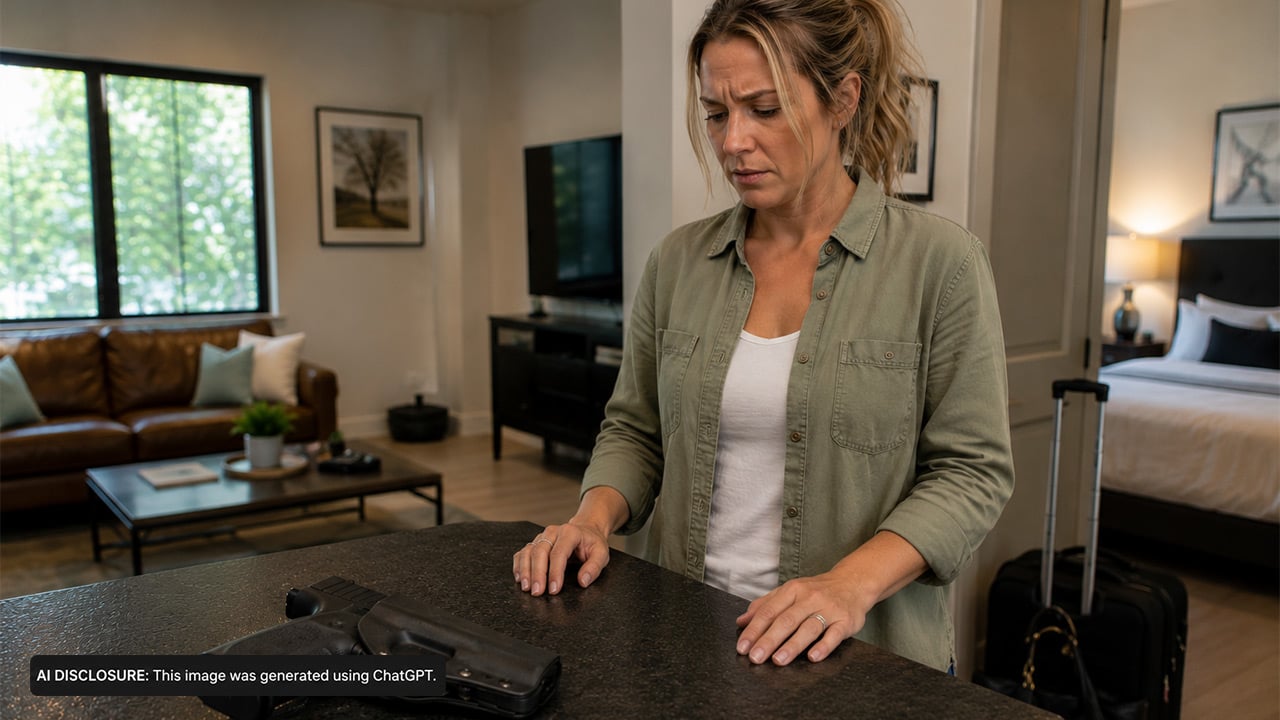
Photo credit: AI-generated image created using ChatGPT. Illustrative only
It’s one thing when a guest leaves behind a phone charger or a hoodie. It’s a whole different deal when the “lost item” is a concealed carry handgun and the owner says they can’t come back for it until next month.
That’s the situation a short-term rental host laid out in the original post, explaining the guest messaged a few hours after checkout saying they “may have” left their handgun at the house. The host also said they’re out of state and rely on a house manager to handle the property—something that suddenly feels a lot more complicated when a firearm might be sitting in a drawer or under a bed.
A handgun isn’t “lost and found” like sunglasses
If you own guns, you already know why this hits differently. A firearm left unattended in a rental isn’t just somebody’s property—it’s a safety issue and a liability issue, especially if cleaners, maintenance folks, or the next guests end up finding it first.
The host’s discomfort makes sense. They aren’t there in person, and they don’t want to put their house manager in a position where they’re handling someone else’s pistol without knowing the condition it’s in, whether it’s loaded, or where exactly it’s located.
The timeline is what makes it feel sketchy
The guest didn’t raise the alarm immediately at checkout; it came “a few hours after check out,” and even then the message wasn’t definitive—just that they “may have” left it. That kind of uncertainty is frustrating, because it forces the host to treat the situation as real while still not knowing if there’s actually a gun on the property.
Then there’s the detail that changes the whole tone: the guest reportedly told the host they can’t return to retrieve it until “next month.” Whether that’s travel, work, or something else, it doesn’t change the practical reality for the host—if a gun is there, it can’t just sit unsecured for weeks.
Why an out-of-state host gets boxed in fast
Remote ownership works fine until something high-stakes happens. In this case, the host isn’t in the same state, so there’s no quick option to swing by, verify the gun is actually there, and secure it properly.
That pushes the responsibility onto the house manager by default. And even if that manager is trustworthy, asking them to go “hunt for” a concealed carry handgun is not the same as asking them to swap batteries in a thermostat. It’s a serious ask with real risk if it’s handled casually or without clear direction.
What a practical, safety-first response can look like
There’s no perfect one-size answer here because state laws and company policies vary, but common sense doesn’t. The first priority is making sure nobody stumbles onto the firearm—cleaners, contractors, or a new family checking in with kids who like to open every drawer in a strange house.
A practical approach starts with confirming whether the handgun is actually on the property, and if so, treating it like any unattended firearm: don’t handle it more than necessary, don’t assume it’s unloaded, and get it secured somewhere access is controlled. The host’s concern about having the house manager deal with it is valid, but the alternative—doing nothing for weeks—is worse.
From there, the host is left with real-world choices: coordinate a safe handoff through whatever legal channels apply locally, involve the rental platform’s support process, or seek guidance from local authorities on how to handle found firearms. The point isn’t to escalate for drama—it’s to keep the property safe and keep the host from being stuck holding the bag if that handgun disappears or is mishandled.
The bigger lesson for gun owners who travel
Most concealed carriers are responsible people, but this is a good reminder that travel adds friction. Hotel rooms and rentals don’t have your normal routines. You’re packing in a hurry, moving gear around, and it’s easy for something to end up in a nightstand or under a pillow when you’re exhausted.
If you carry, a simple departure check matters: phone, wallet, keys, and the gun. Not because you’re worried about losing an expensive item, but because leaving a firearm behind creates a chain reaction for everyone else—hosts, cleaners, and the next guests who never agreed to be part of that situation.
For hosts and property managers, it’s also a reminder to think ahead. If you run a rental, it’s worth having a written plan for what happens if a guest leaves behind something dangerous—whether that’s a firearm, ammunition, or other hazardous items. You don’t want to be making it up under pressure, from another state, while a turnover clock is ticking.
At the end of the day, this isn’t about being anti-gun or anti-guest. It’s about the reality that firearms demand responsibility every minute they’re out in the world. If one gets left behind in a rental, the only smart move is to treat it as a time-sensitive safety problem—not a forgotten sweater that can wait until next month.
Like The Avid Outdoorsman’s content? Be sure to follow us.
Here’s more from us: