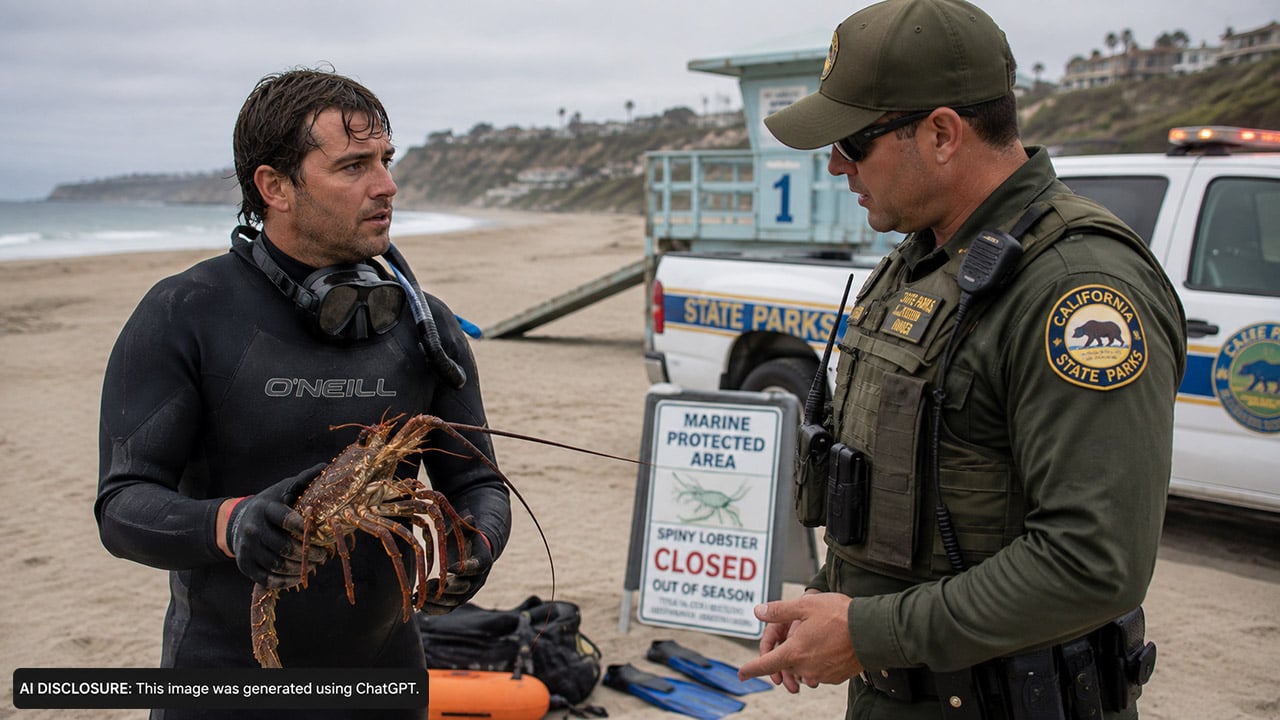
Photo credit: AI-generated image created using ChatGPT. Illustrative only
A Southern California diver learned the hard way that “I didn’t know” doesn’t go very far when you’re dealing with fish and game rules. After keeping a spiny lobster at Doheny State Beach without being sure the season was open, the diver said a game warden showed up, issued a citation, and seized the diver’s entire cooler.
The diver described the encounter in the original post, calling it a mess-up and asking if anyone else had experienced the same thing. It’s a short write-up, but it’s the kind of real-world reminder that hits home for anyone who fishes, dives, hunts, or even just keeps gear in the truck “just in case.”
It started with a single lobster in the cooler
The diver said they “caught and kept a spiny lobster” and put it in their cooler. The key detail is that they didn’t know whether lobster was in season at Doheny when they decided to keep it.
That little moment—dropping a lobster in the cooler instead of letting it go—was the turning point. Plenty of outdoorsmen have had a day where we’re focused on tides, surf, visibility, or just getting out of the water safely, and the regulation details get pushed to the back burner. Unfortunately, wardens don’t have the luxury of treating regulations like a suggestion.
When the warden arrived, things escalated fast
According to the diver, a game warden showed up and “next thing i know my cooler is taken and Im given a citation.” No long story about arguing, no mention of a warning—just a quick sequence: contact, enforcement action, cooler seized, citation issued.
That’s what catches a lot of people off guard. Most folks assume the consequence will match what they see as the size of the mistake. But fish and game enforcement tends to be very black-and-white in the field: if you’re in possession of something out of season, short, over limit, or otherwise illegal to take, you’ve put yourself in a bad spot.
Why a whole cooler can be fair game
The diver’s biggest shock seemed to be losing the cooler, not just the lobster. That’s understandable—coolers aren’t cheap, and a day’s catch or food and drinks can be worth a lot more than people expect.
From a practical outdoors perspective, the seizure part is a reminder that it’s not always just about the animal. In many enforcement situations, wardens may treat containers and equipment as part of the evidence chain, especially when the illegal item is inside it. The diver didn’t lay out the fine print of what was taken besides “my cooler,” but the takeaway is plain: once something illegal is in your possession, anything tied to storing or transporting it can suddenly become part of the problem.
The diver’s tone: regret first, questions second
What stands out in the diver’s own description is that it wasn’t written like a tough-guy story or a complaint about harassment. It was straight-up admission: “I messed up,” and “Ive never committed a lobster crime before.”
That’s a good mindset, because once you’re in citation territory, your best move is usually to stop digging. Take the ticket, stay polite, and handle the consequences through the proper channels. Getting mouthy in the field rarely improves anything, and it can turn a bad day into a worse one.
verify before you keep
This whole situation came down to one decision made without confirming the rules. If you’re diving a new stretch of coast or targeting a species you don’t keep often, you’ve got to treat the regulations like part of your gear list—right up there with a gauge check and a look at the conditions.
The simplest habit is to confirm season status before you ever get in the water, especially for heavily regulated species like lobster. If you’re not sure, the safest move is to enjoy the dive, take photos, and leave it be. Nobody wants to swim back in thinking about tacos and end the day explaining themselves on the sand while their cooler gets walked off.
A small mistake can carry big consequences
The diver’s post is short, but the message is loud: a single out-of-season spiny lobster led to a citation and the seizure of the entire cooler. That’s a steep price for what the diver described as not knowing the season status.
Outdoorsmen aren’t perfect, and honest mistakes happen. But regulations are one of those places where the burden is on us to know before we keep. If there’s one thing to take from this, it’s that checking seasons and rules ahead of time is a lot cheaper—and a lot less stressful—than learning them from a warden on the beach.
Like The Avid Outdoorsman’s content? Subscribe to our newsletter so you never miss an article.
Here’s more from us: