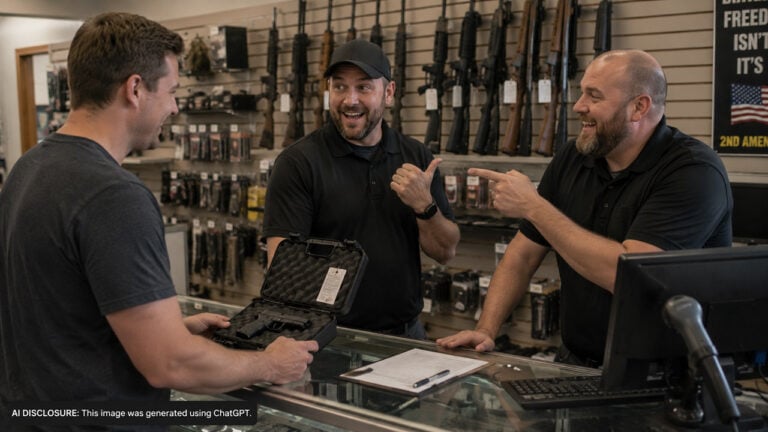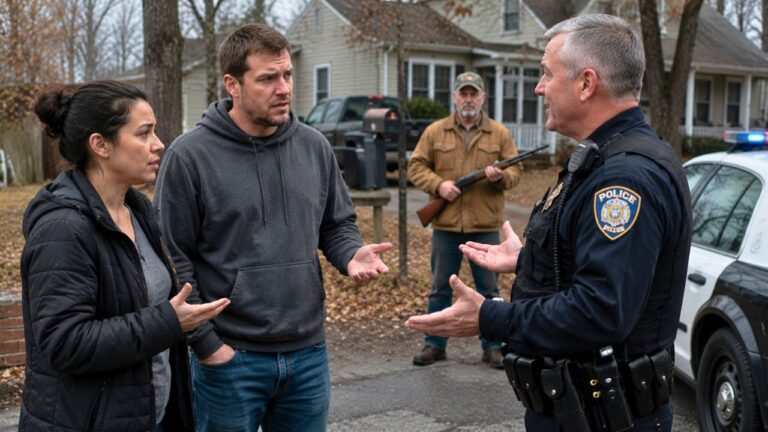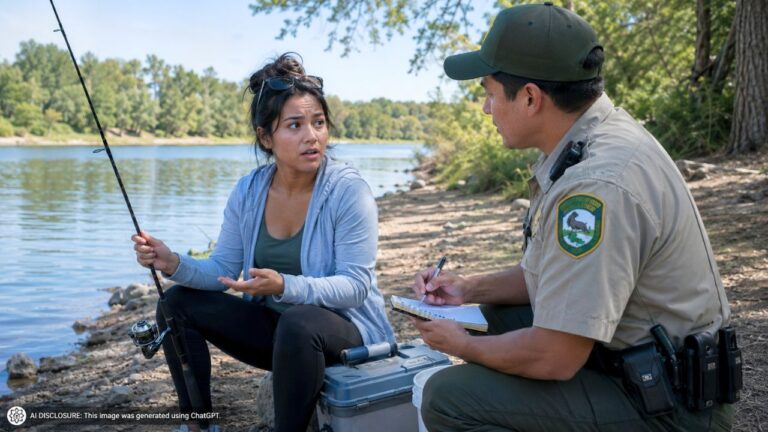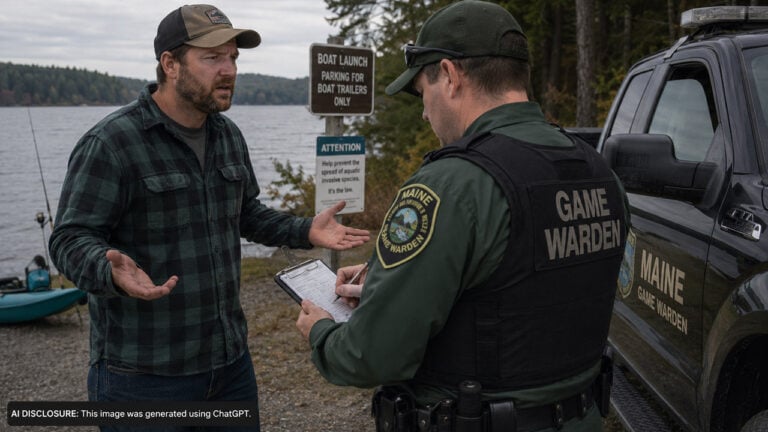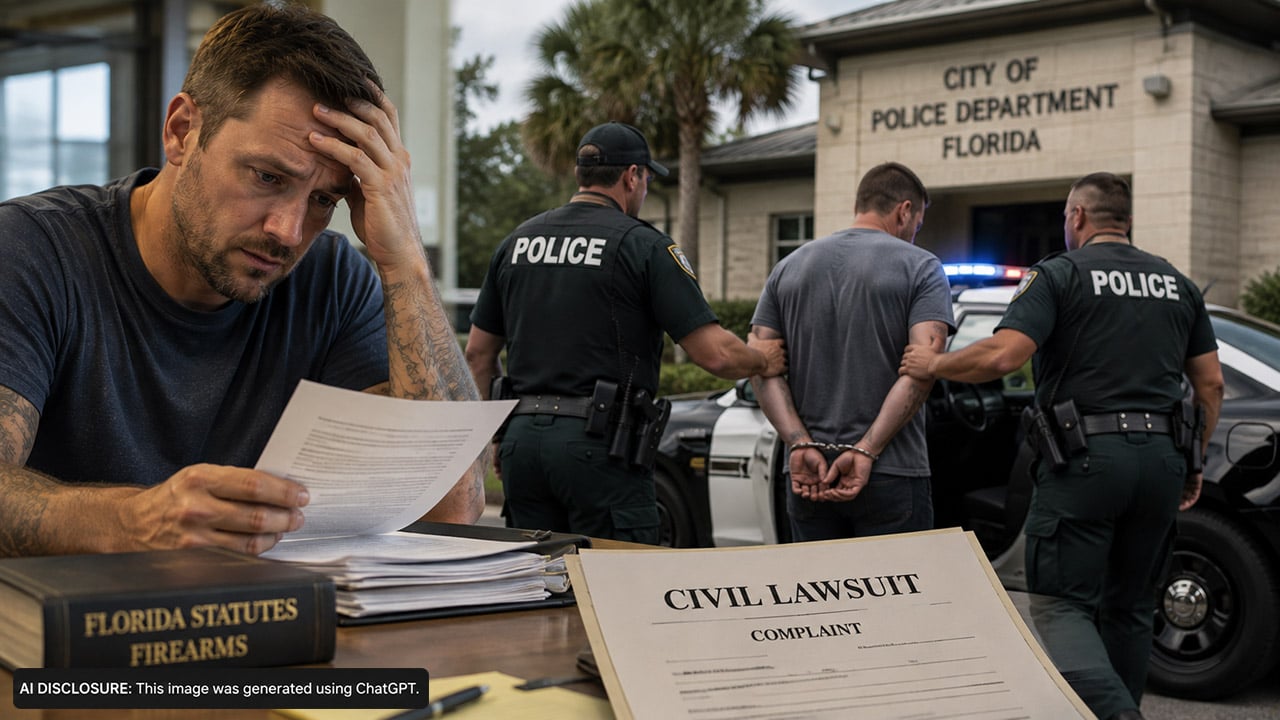
Photo credit: AI-generated image created using ChatGPT. Illustrative only
Most of us have made that quick stop on the way to the water—drop something off, grab ice, swing by the field to see the kids for a minute—then get back on the road with a rod tube in the truck and plans on our mind. One Florida dad says that kind of normal detour turned into a set of handcuffs, a squad car, and a case that later got dropped, and now he’s aiming his frustration back at the department that took him in.
In the original post, he describes being approached during his two daughters’ city league softball practice after his shirt lifted in the wind while he was kneeling behind home plate taking photos. He says he adjusted his shirt to keep his handgun covered, but two officers—one with a K-9—closed the distance anyway.
A quick glimpse of a gun turned into a full-contact stop
He writes that the officers were still 30 to 40 yards out when he noticed them coming straight toward him. Before he could do much of anything besides check that his firearm was still concealed, he says he was pushed into a fence and disarmed while an officer shouted to “secure the weapon.”
According to his account, he was cuffed and then asked if he “wanted to go have a talk.” He agreed, thinking it meant stepping away from the kids and the team—somewhere quieter, somewhere less humiliating. Instead, he says they moved only a few steps before telling him to get on his knees, and he complied.
The law he thought protected him didn’t matter in the moment
The central detail in his story is what he believed made his carry lawful that day. He says he had plans to go fishing and understood Florida law to allow unlicensed carry when fishing, hunting, and related outdoor activities, including traveling to and from those activities.
He also says he didn’t simply refuse to answer questions. When asked about a permit, he told them he’d submitted paperwork and was waiting. He claims he tried to explain that he was headed fishing and had only made a brief stop at the field to drop off shorts his wife requested for one of their daughters.
In his telling, once he acknowledged he didn’t yet have a permit in hand, the tone hardened fast. He says the officers weren’t interested in the exception he believed applied and quickly shifted to “let’s lock him up,” without letting him fully explain his intent.
Four hours in cuffs, then an odd turn into “help us buy dope”
He says he was put into a patrol car and made phone calls, and then things took a strange pivot. According to him, officers pulled him back out and asked if he could “buy dope around here.” He describes agreeing because he thought it was his best chance to avoid being hauled off for good.
From there, he says he was taken to the station, briefed on what they wanted and how they wanted it to happen, and told not to mention the undercover angle to his wife. He also alleges the handcuffs were painfully tight for hours—twisting his wrist and shoulder—and that officers refused to loosen them, with one officer telling him, “I can fit a finger between them.” He says he stayed polite and courteous throughout the ordeal.
He was eventually released after about four hours, but he says officers told him they’d filed a “sworn complaint” and implied it would “help” his case.
Thirty days later: an “official” arrest at the same ballfield
After that initial incident, he says he spent the next month trying to protect himself the right way—by hiring an attorney he describes as well known for Second Amendment and constitutional law work. He believed, based on his understanding, that the officers lacked reasonable suspicion to detain him in the first place because they didn’t know whether he had a valid permit when they initiated the stop.
Then, he says, exactly 30 days after the original encounter, officers returned to the same practice in plain clothes and “officially” arrested him. On top of that, he says he was trespassed from the city park, and when he pushed for an official reason—raising preemption concerns—he claims they refused to provide one.
He describes the next morning’s first appearance as a shock to the other side when his attorney showed up and got bail reduced. He also says his lawyer warned the state attorney to “do their homework” and that he was willing to take the matter as far as the Florida Supreme Court if needed.
Charges dropped fast, but the practical punishment lingered
The most telling part of the story is how quickly he says the case fell apart once counsel got involved. He writes that charges were dropped in less than a week, and that the state attorney wouldn’t call him back with an explanation.
But “dropped” didn’t mean “done.” He says he still couldn’t watch his kids play at that field for months because the trespass warning stayed in place while they waited on an official explanation. And he says his gun was held for over a month after the charges were dropped.
Eventually, he says the chief emailed his attorney that he had “verified” his permit was valid—after running his Social Security number through the system. Only then, he says, was he able to pick up his firearm.
That chain of events is why he’s now looking at redress through the court system. In plain terms, he believes the department crossed constitutional lines, and he wants to make sure the same thing doesn’t happen to someone else.
“going fishing” isn’t a magic phrase—paperwork and planning matter
There’s a hard lesson here for anglers and hunters who carry: legal exceptions can exist on paper and still fail you on the side of the field if you can’t quickly clarify what’s lawful and what’s not. A “to-and-from” allowance may be real, but it can become an argument you have in court instead of a protection you enjoy in the moment.
That doesn’t mean you should talk your way through a tense encounter or try to win a roadside debate. It means you should know your state’s carry rules cold, keep any required documentation squared away, and think through how you’ll handle inevitable detours—especially when you’re mixing family activities and outdoor plans in the same afternoon.
He put it bluntly: for years he carried when he could and assumed concealment meant nobody would know. His experience is a reminder that “nobody will notice” isn’t a plan. If your shirt rides up in the wind at the wrong place, you may find out fast whether the people responding understand the same laws you do.
If his account is accurate, what started as taking pictures of his daughters at bat turned into a months-long headache—lost time with his kids, a firearm held past the end of the case, and a legal fight he didn’t ask for. Outdoorsmen tend to accept risk as part of the deal, but getting locked up over a technicality—or over an exception an officer won’t recognize—shouldn’t be one of them.
Like The Avid Outdoorsman’s content? Subscribe to our newsletter so you never miss an article.
Here’s more from us: