Photo credit: AI-generated image created using ChatGPT. Illustrative only
When you’ve spent time in uniform or on a first responder call roster, you learn to disappear into the woods for a few hours when life gets loud. That’s exactly what one Virginia gun owner says he did after discovering his significant other was cheating: he turned his phone off and went hiking to clear his head. He came back to town the same afternoon, switched his phone back on, and found a string of missed calls from law enforcement.
In the original post, the man explains how that simple “phone off, boots on” decision spiraled into a welfare check, a court date, and a 180-day period where his firearms were out of his hands under a red flag order—despite no criminal history and no mental health history beyond therapy for anxiety through the VA.
A turned-off phone and a worried call set the chain in motion
The story starts with a breakup and a gut punch. He says he found out his partner was cheating, shut his phone off, and hit the trail to get his mind right. No threats. No goodbye text. No dramatic social media post—just a quiet hike.
From his telling, his significant other interpreted that silence as potential self-harm and called police. That’s the part many outdoorsmen can relate to: in a tense personal situation, perfectly normal “leave me alone” behavior can look ominous to someone on the outside—especially when they know you own guns.
The welfare check turned into a hard choice: surrender or seizure
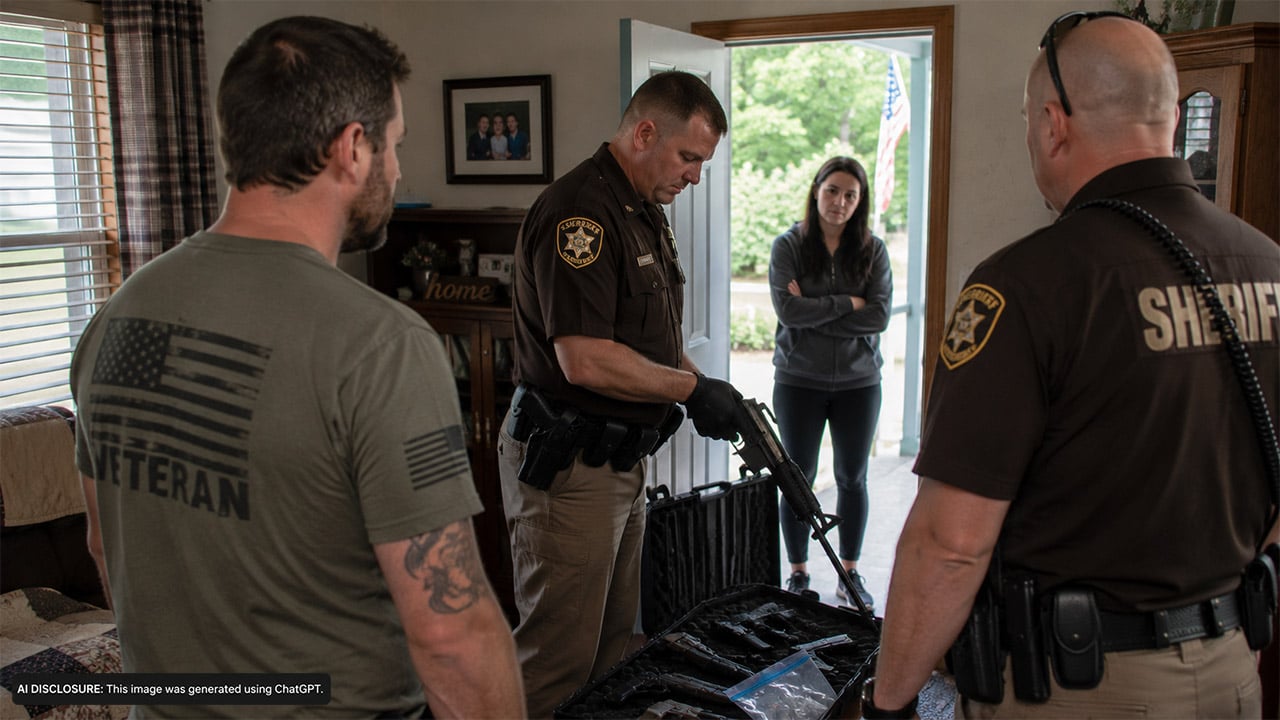
After he returned that afternoon and powered his phone back up, he contacted an officer. He says he was given a choice: voluntarily surrender his firearms or have them seized. He chose to surrender.
That’s a big moment in stories like this. A lot of folks picture a red flag situation as a SWAT-style takedown. His account reads more like a bureaucratic fork in the road: cooperate and hand them over, or resist and watch it happen anyway. Either way, the guns leave your control, and the clock starts.
Court, a 180-day order, and the weight of being “that guy”
He says he was served with an order to appear in court. He also notes he’s a veteran and a first responder, and that he receives regular therapy at the VA for anxiety. The court, he says, took note of that.
He didn’t contest the action, and the result was a 180-day order. During that period, he surrendered his carry permit and “went about” life as normal. But anyone who carries daily, hunts, or simply likes knowing what’s in the safe understands what that really means: you’re sidelined, and you’re doing it under a cloud you didn’t ask for.
He describes the process as humiliating, especially given a long history of public service and no criminal record. That’s a detail worth sitting with. In the gun world, reputation matters—at the range, at work, in your own family. A red flag order, even temporary, can feel like your name got dragged through town behind a pickup.
When the 180 days ended, even the officer had doubts
The part of his story that will stick with a lot of readers comes at the end of the order. He says the officer in charge of the case contacted him and told him they were not seeking to extend the order.
Then, according to the post, the officer admitted he wasn’t even sure the order had been needed in the first place. That’s a heavy statement. For gun owners, it hits the exact fear that comes with “better safe than sorry” policies: once the system moves, you may be forced to live with the consequences even when the people inside the system aren’t confident it was warranted.
And unlike a speeding ticket, you don’t just pay it and move on. You’re dealing with constitutional rights, property held in evidence, and the practical reality that your home-defense setup and your outdoor life got disrupted for half a year.
Picking up the firearms sounded simple—until you’ve lived it
After the order expired, he called the county to schedule pickup. He went through a standard background check, then went to the county evidence office where he says he was allowed to inspect his firearms before they were returned.
He also makes a point of saying the officers and non-sworn employees were helpful, and even complimented his collection. That matters because it’s easy for people to assume the worst about everyone involved. His account suggests the day-to-day interactions were professional—while the overall experience still felt degrading and unnecessary.
That’s a realistic snapshot of how these situations can go: decent people working the counter, a clean process on paper, and a citizen who still walks out feeling like he was treated as a risk instead of a person.
The practical lessons gun owners took from the story
Even without a full comment thread included, the post itself hints at what other gun owners tend to focus on: what happens after you get guns back, and what the paperwork trail does to you down the road. He said he planned to update whether future background checks for purchases and NFA items get delayed, and he’s reapplying for his carry permit.
For outdoorsmen, there are a few practical takeaways that don’t require anybody to guess at legal details. First, if you’re the type to go off-grid to clear your head, think about how that looks to someone who’s already emotional and knows you own firearms. A quick “I’m safe, I’m hiking, I’ll be back tonight” message to a trusted friend or family member can prevent the whole welfare-check snowball—without you having to hash out the relationship drama.
Second, understand that “voluntary surrender” can still come with court dates, permit impacts, and months-long restrictions. Cooperating may keep the temperature down in the moment, but it doesn’t mean you avoid the full process.
Third, document your stability the same way you document your zero. If you already have a relationship with a therapist, keep appointments and keep records. The man in this story notes the court took note of his VA therapy for anxiety. That kind of ongoing care can show you’re being proactive, not spiraling—especially when a stressful life event is what started the whole mess.
He got his firearms back. He also lost 180 days and his carry permit for doing what plenty of people do when they’re hurting: going for a long walk where cell service—and other people—can’t reach you. That’s a sobering reminder that in today’s world, the line between “taking a breather” and “raising alarm bells” can be thinner than most of us want to admit.
Like The Avid Outdoorsman’s content? Be sure to follow us.
Here’s more from us: