Photo credit: AI-generated image created using ChatGPT. Illustrative only
Air travel with a checked handgun usually feels pretty routine for folks who do it the right way: declare it, lock it up, follow the airline’s rules, and get on with your trip. But one traveler learned how fast that can go sideways when a connecting flight got canceled and the “easy fix” — grabbing your bag and driving — suddenly isn’t so easy in a place like New York City.
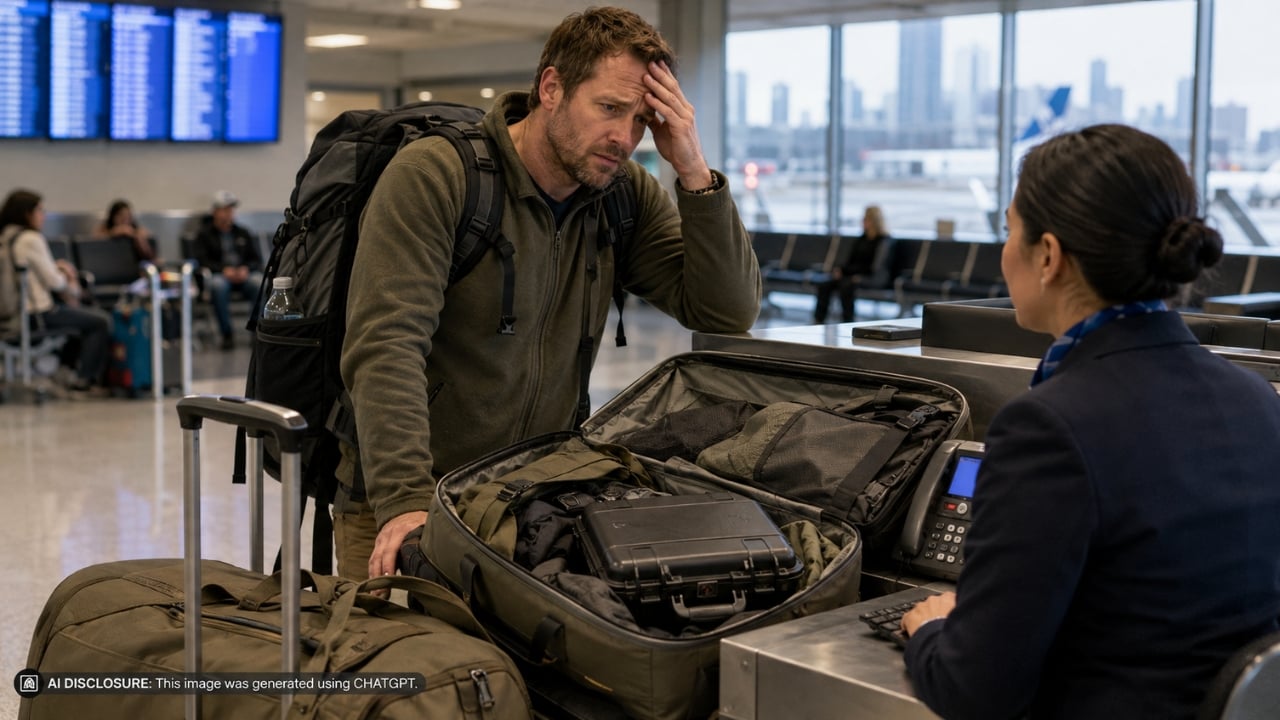
In the original post, the traveler said they were flying to Vermont with a transfer through JFK. Their handgun was in checked luggage, declared and properly packaged. Then the JFK-to-Vermont leg was canceled, and the airline offered two paths: take a voucher and stay in a hotel until the next day, or book another flight on their own. Either way, they’d need to retrieve their checked bag — and that’s where the real problem started.
A legal firearm on one side of the counter, a felony on the other
The traveler spelled it out plainly: they knew possessing a handgun in New York could be a felony, and they didn’t have any idea what to do next. They were sitting at JFK, needing to reach Vermont before morning, and the airline’s options pushed them toward taking possession of the bag.
This is the nightmare scenario for anyone who carries for the backcountry. You can do everything right at your home airport, follow the process, and still end up in a jurisdiction that treats simple possession like a serious crime if you don’t have the right local paperwork.
The “just grab your luggage” advice doesn’t work everywhere
Most hunters and hikers are problem-solvers by nature. Flight canceled? Fine — rent a car, drive the rest, grab a motel, keep moving. That mindset works in a lot of the country.
But the traveler understood that the moment they took that luggage back, they might be stepping into a legal trap. They even said they didn’t want to mention the handgun “for fear of getting arrested,” which tells you how tight the situation felt in real time.
Why the clock made everything worse
The airline offered a hotel voucher and a flight the next day. Under normal circumstances, that would be the clean solution: leave the checked firearm in the airline’s control chain, stay put, and continue the trip once the flight is available.
But the traveler said waiting until tomorrow was a “non-starter” because they needed to get to Vermont before the next morning. When time gets short, people start reaching for options that feel practical — changing airlines, re-checking bags, or renting a vehicle — and those options are exactly what can trigger trouble when your bag contains a handgun.
The traveler’s big question: can you legally re-check it with another airline or drive?
The post wasn’t a political rant or a tough-guy story. It was a straightforward plea: were there any legal options to retrieve the luggage and check it with another airline, or even get a rental car, without getting jammed up?
That’s the key point outdoorsmen should pay attention to. It’s not just “can I fly with a handgun?” It’s “what happens when the travel plan breaks and the airline hands you your bag in a place that doesn’t recognize your right to possess what’s inside?” That’s where people can stumble into charges even when they weren’t looking for a fight with anyone.
What people tend to focus on in situations like this
Even without seeing a long comment thread in the source material, the usual focus in these cases is pretty predictable: keep the firearm secured, don’t do anything sneaky, and don’t take legal advice from the loudest person in the terminal. When you’re dealing with a city and state known for aggressive enforcement, “winging it” is not a plan.
There’s also a common misconception outdoorsmen run into: that federal travel rules automatically shield you in every situation as long as the gun is unloaded and locked up. Real life is messier. Travel protections can be fact-specific, and the moment you take possession, leave the airport, or stay overnight, your “in transit” status can get debated in ways you don’t want to be the test case for.
Practical takeaways for anyone flying to hunt or hike with a sidearm
The hard lesson here is that travel doesn’t happen in a straight line anymore. Weather, mechanical issues, and cancellations are normal, and a missed connection can turn into an unexpected overnight in a high-restriction jurisdiction.
If you’re planning a trip where bear country has you packing a handgun, it’s worth building your travel plan around the weak links: avoid connecting through places with severe handgun possession rules if you can; give yourself time buffers; and think through what you’ll do if the airline tries to hand you your bag mid-trip. And if the worst happens, getting real legal counsel fast beats trying to “talk your way through it” at a counter with a line of tired travelers behind you.
For outdoorsmen, carrying a firearm for protection is about staying alive in the woods, not proving a point in a city airport. This traveler’s situation is a reminder that the most dangerous part of the trip isn’t always the trailhead — sometimes it’s the connecting gate, the canceled flight alert, and the moment someone says, “Just pick up your luggage and figure it out.”
Like The Avid Outdoorsman’s content? Be sure to follow us.
Here’s more from us: