Photo credit: AI-generated image created using ChatGPT. Illustrative only
Most folks who live near water or open ground learn to tell the difference between a few celebratory fireworks and something that doesn’t sound right. On one New Year’s Eve in a suburban cul-de-sac, a homeowner thought the late-night booms were just neighbors having fun—until daylight revealed holes in a bathroom ceiling and a bullet on the floor.
In the original post, the homeowner described waking up to damage that turned a holiday nuisance into a serious safety issue: multiple apparent gunshots that traveled across a retention pond, tore through parts of the home, and could’ve ended with a tragedy.
The setting: a cul-de-sac, woods, and a retention pond that changed everything
The homeowner said they live in the suburbs on a cul-de-sac, with their backyard facing woods and bordered on two sides by a long retention pond. Across that pond—about 150 yards to the left—sit the backs of several homes, including the house they believe the shots came from.
That detail matters because water isn’t a safe backstop. Folks who spend time outdoors know ricochets happen on hard ground, rocks, and frozen dirt—but water can be just as unpredictable. If rounds were fired toward the pond, it’s the kind of “safe direction” that isn’t safe at all.
What sounded like fireworks turned into something faster and louder
On New Year’s Eve, the homeowner said nearby neighbors were shooting off big fireworks for much of the night. Around midnight, the “booms” got noticeably louder and much faster. That’s a description a lot of gun owners recognize—when the pace changes from scattered thumps to a quick rhythm, it stops sounding like a mortar tube and starts sounding like someone running a firearm.
In the moment, plenty of people would shrug it off. Holidays are noisy. But the next morning delivered a hard reality check.
Daylight revealed a bullet inside and multiple hits through the house
The homeowner woke up to find a hole in the bathroom ceiling and a bullet on the floor. That’s not “maybe.” That’s not “could be.” That’s a projectile that made it into the living space where a family is supposed to be safest.
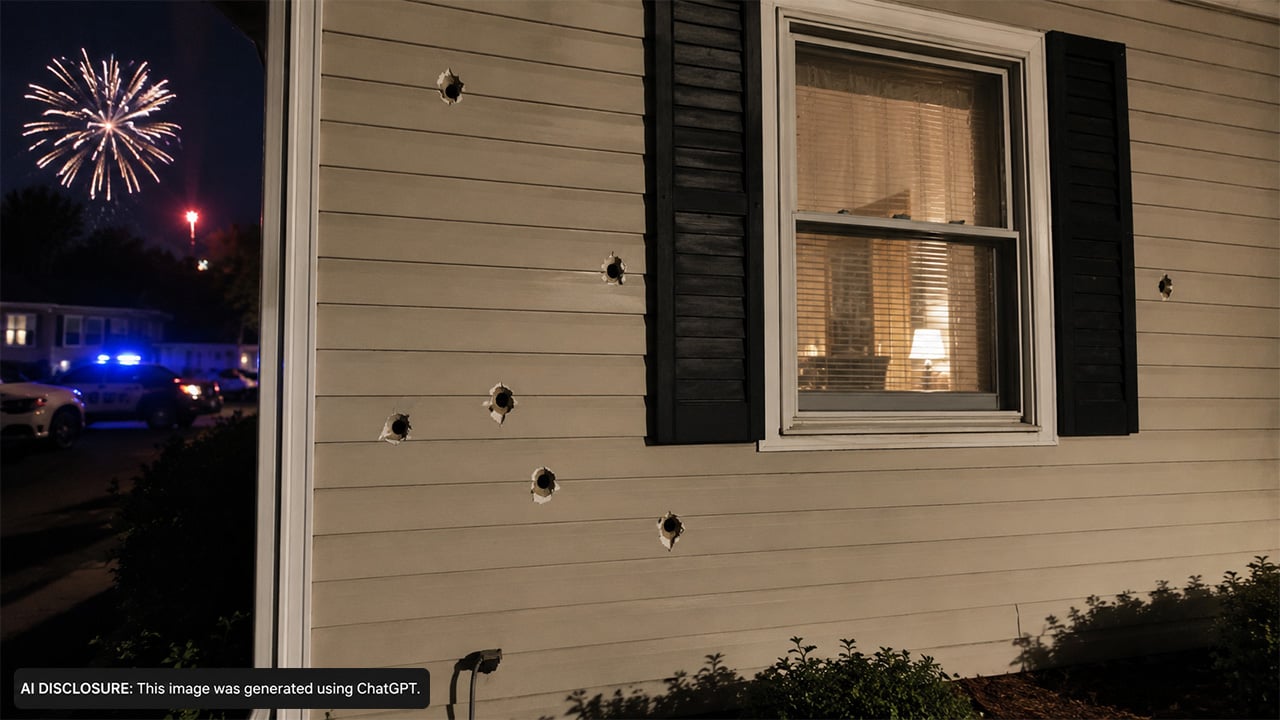
After that, they checked the side of the house facing the direction of the neighbors across the pond and found seven more bullet holes. The post says rounds went through a window, through the air conditioner, and through walls. They estimated property damage at $10,000 or more, with a homeowners insurance deductible high enough that the money side of it is going to sting, too.
Police response: trajectory clues and a yard full of casings
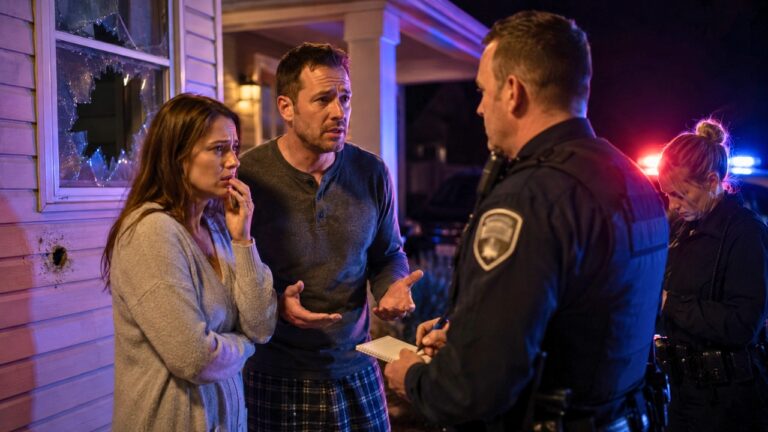
Police came out and, according to the homeowner, determined the most likely explanation was that bullets were fired into the water and ricocheted into the house. Based on the trajectory of the entry and exit points through the AC unit and window, the officer reportedly believed the shots came from the neighbors’ direction.
The officer then walked into the suspected backyard along the pond edge and found “70 or so casings” on the ground. That’s not a couple of careless shots. That’s extended firing, and it’s consistent with the louder, faster “booms” the homeowner heard around midnight.
That many casings also matters for a practical reason: it’s physical evidence that doesn’t depend on memory. Casings can be photographed, collected, and—depending on what was done—potentially tied to a firearm. Even if nobody wants to admit anything, evidence has a way of staying honest.
The neighbors denied it—and refused to share camera footage
Here’s where the situation turned from scary to infuriating. Based on what the homeowner wrote, police questioned the neighbors believed to be responsible. They claimed they weren’t home and didn’t know anything about anyone shooting guns.
The officer noticed they had a camera in the backyard and asked to see the footage. The neighbors refused. Other neighbors reportedly confirmed the suspected homeowners were there that night, even though those neighbors didn’t witness any shooting because they went to bed.
If you’ve ever dealt with a property-line dispute, a stray dog issue, or repeated trespass problems, you know this part: people who know they’re wrong often go quiet, deny, and lawyer up in their own way. The camera refusal doesn’t prove guilt by itself, but it’s the kind of behavior that makes a victim feel like they’re getting stonewalled right out of the gate.
Why this hits home for outdoorsmen: water ricochets, “safe directions,” and family risk
Plenty of responsible gun owners live in neighborhoods, and plenty of hunters grew up around ponds and drainage ditches. The common-sense rule is the same either way: you don’t send rounds toward anything you can’t control. Water, especially, is a bad bet. It can skip a bullet like a flat rock, and the new direction can be anybody’s guess.
The homeowner said they have two small children. That’s the part that makes your stomach tighten. It’s one thing to replace an AC unit or patch drywall; it’s another to realize a round made it into the house at all. Stray shots don’t care about age, bedrooms, or whether someone is standing at the sink getting ready for bed.
And when you combine that with a yard reportedly littered with dozens of casings, it reads less like a single negligent moment and more like sustained recklessness—exactly the kind of thing that gives gun owners a black eye and gets everybody’s freedoms squeezed tighter.
What the homeowner was really asking: are they stuck with the damage?
The homeowner’s question wasn’t complicated: after all that, are they “pretty much screwed” when it comes to holding someone accountable and getting property damage handled? They’re staring at expensive repairs and a high deductible, with the suspected shooters denying everything.
Practically speaking, this kind of incident usually comes down to documentation and persistence. Photos of every hole, the recovered bullet, repair estimates, copies of the police report, and records of any neighbor statements are the nuts and bolts that keep a case from turning into a he-said/she-said argument.
There’s also a safety angle that matters right now, not months later: if someone was willing to fire dozens of rounds on a holiday and the rounds reached a home, that’s not a “lesson learned” you assume is over. It’s a problem you treat as potentially repeatable until something changes—more enforcement, clearer accountability, or at minimum the message that the neighborhood is paying attention.
At the end of the day, the outdoorsman takeaway is simple: celebrate how you want, but bullets and backstops aren’t party favors. When gunfire ends up inside a family bathroom, it’s not noise—it’s negligence with real consequences, and it deserves to be taken seriously until the person responsible is found and the behavior stops.
Like The Avid Outdoorsman’s content? Subscribe to our newsletter so you never miss an article.
Here’s more from us: