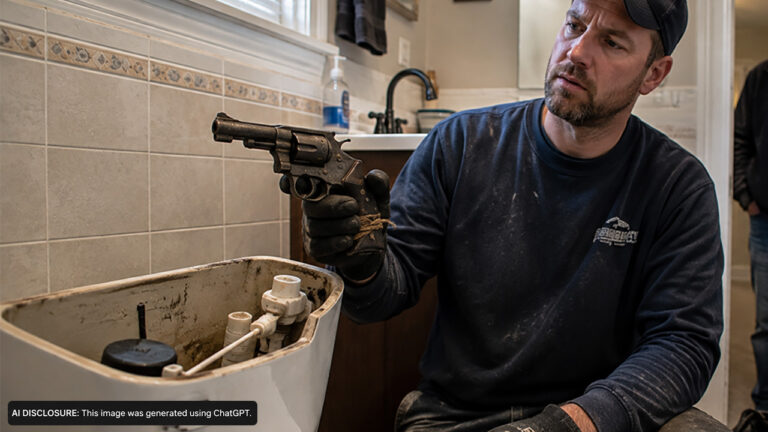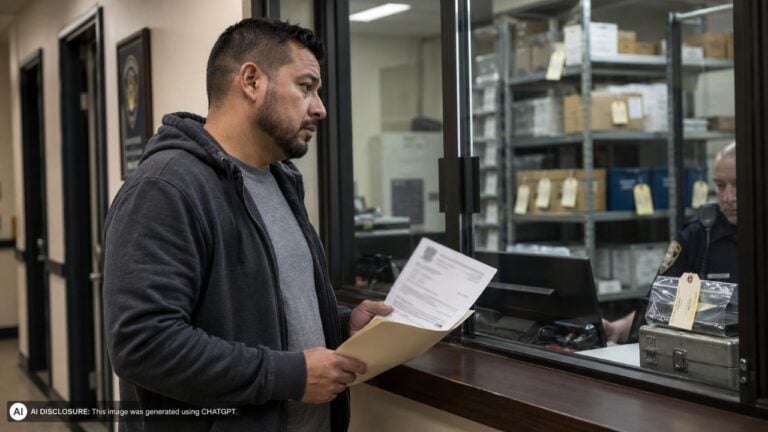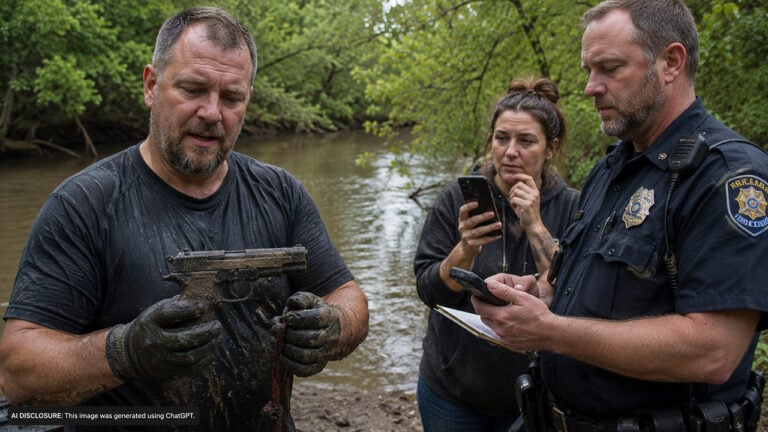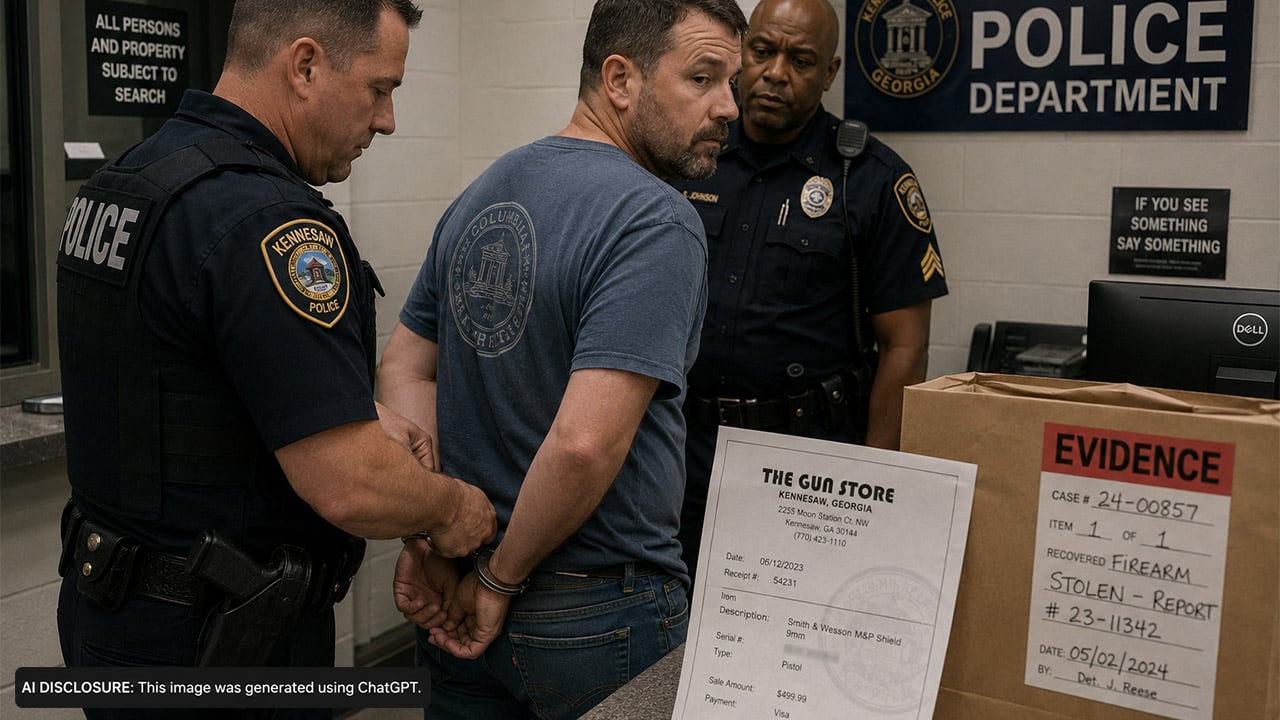
Photo credit: AI-generated image created using ChatGPT. Illustrative only
Buying a firearm from a big-name shop is supposed to be the “safe” route—paperwork, a receipt, and a clean conscience. But a Kennesaw resident says that didn’t stop him from being hauled off in handcuffs after the gun he bought later came back as stolen.
The details shared in the discussion point to a troubling chain of events: the man purchased the gun from Adventure Outdoors, then police arrested and jailed him anyway when it turned up on a stolen-gun hit—even after he showed a receipt. The case is still under investigation.
A “safe purchase” turned into a stolen-gun stop
Most folks who hunt, carry, or keep a home-defense gun have the same basic rule: if you’re spending hard-earned money, you buy from a reputable store and you keep your documentation. That’s the common-sense play, because it’s supposed to protect you from exactly this kind of mess.
In this situation, the buyer did what many of us would do—he bought from a well-known Georgia gun store and had a receipt to prove it. But when law enforcement later encountered the firearm and it showed as stolen, the interaction didn’t end with, “Thanks, have a good day.” It ended with an arrest.
The receipt didn’t stop the ride to jail
That’s the part that makes gun owners sit up straight: the man reportedly showed police his receipt, and still went to jail. In the outdoors world, paperwork matters—licenses, tags, landowner permission, boat registration. A receipt for a gun should fall into that same “proof” category, at least enough to slow things down while facts get sorted.
But a stolen-gun report is a different animal. Once a serial number hits as stolen, officers may treat the gun itself like the key piece of evidence, and the person holding it like the suspect—at least until they can confirm how it changed hands. That can be a hard, fast, inconvenient process for someone who believed they did everything right.
How does a stolen gun end up in a gun store?
The source material doesn’t lay out the full backstory of how the firearm ended up for sale, and the investigation is ongoing. But the general concept is familiar: stolen property can move through multiple hands quickly, and sometimes it gets traded, pawned, or sold in ways that muddy the trail.
People assume a store is a filter that catches all of that. In reality, stores can only work with the information they have at the moment they acquire a used gun or take one in on trade. If a firearm isn’t flagged when it enters the stream—or if the right checks weren’t run or weren’t available in the way people assume—then the first time it “pings” might be after it’s already been sold again.
What this means for everyday gun owners
This is the part that hits close to home for hunters and working folks who keep a pistol in the truck or a rifle in the safe: you can do your best and still get caught in somebody else’s problem. And once it’s in motion, you’re not the one setting the pace.
It also highlights why documentation isn’t just “nice to have.” Receipts, bills of sale, and any purchase records are what separate an honest buyer from someone playing games when questions get asked. They may not prevent an arrest in every case, but they’re often the difference between a temporary headache and a long-term disaster.
From a practical standpoint, it’s worth treating gun paperwork like you treat hunting paperwork: keep it organized, keep it legible, and keep it somewhere you can access without digging through a junk drawer. If you sell or trade, keep your records too. A clean paper trail is one of the few things you can control.
Why this kind of case gets tense in a hurry
A stolen firearm isn’t like a stolen toolset or a missing cooler. Guns have a way of attracting extra attention because they can end up tied to crimes, and agencies take stolen-gun reports seriously for good reason. The downside is that the person in possession of the gun can become the focus, even if that person is an ordinary citizen who bought it over the counter.
For gun owners, the tension is obvious: you’re expected to follow the rules, buy from reputable places, and stay squared away. When you do that and still wind up in cuffs, it shakes confidence in the whole “just do it the right way and you’ll be fine” idea.
None of that means anyone should argue on the roadside or try to “talk their way out” of a situation. It does mean you should expect that a stolen-gun hit can turn a normal day into a serious legal event fast, and the smartest move is to stay calm and let the paperwork and the facts do the talking later.
The investigation is ongoing, but the lesson is already clear
According to the shared summary, the man was arrested and jailed, and the matter remains under investigation even though he had a receipt showing he bought the gun from Adventure Outdoors. That’s a rough place to be—especially if you’re the kind of person who tries to do things by the book.
If there’s a takeaway for the rest of us, it’s simple and grounded: keep your records, don’t assume “reputable store” automatically means “zero risk,” and understand that a serial-number issue can put you on the back foot even when you believe you’re in the right. In the gun world, the paper trail matters—but sometimes it only helps after the hard part has already happened.
Like The Avid Outdoorsman’s content? Be sure to follow us.
Here’s more from us: