Photo credit: AI-generated image created using ChatGPT. Illustrative only
Anytime you hear “six fishermen cited by wildlife agents,” a lot of folks assume it’s going to be a reckless boating story or somebody doing something unsafe offshore. But this one, based on the discussion, is about something that gets anglers in trouble every year: red snapper limits.
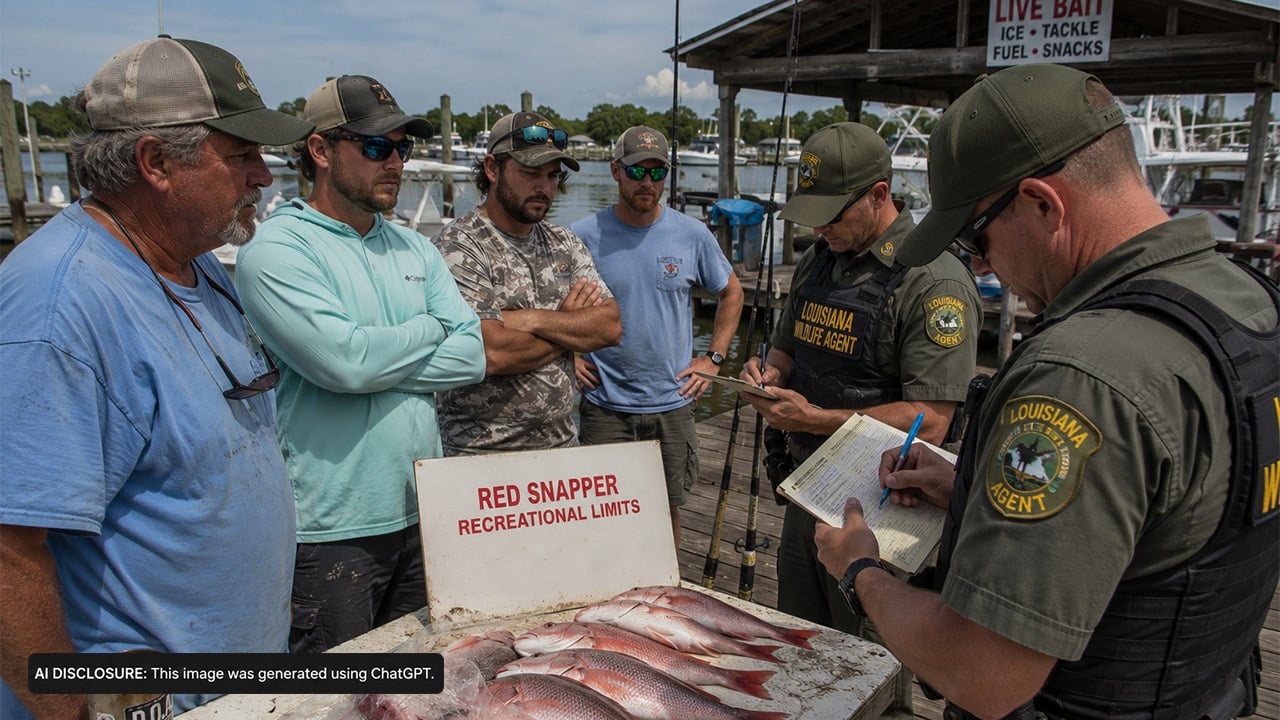
Authorities said six men were cited by Louisiana Department of Wildlife and Fisheries enforcement agents for alleged red snapper fishing violations in Plaquemines Parish on June 25. That’s the whole ballgame here—possession and limits—not life jackets, navigation lights, or a safety inspection gone sideways.
What happened in Plaquemines Parish
The available report is straightforward: LDWF enforcement agents cited six men after allegedly finding violations tied to red snapper limits. It took place in Plaquemines Parish, a place that sees plenty of anglers chasing snapper when seasons and opportunities open up.
There weren’t additional specifics included in the material about the exact number of fish involved, whether it was an over-limit situation, or whether undersized fish were part of it. But the key detail is clear: the citations centered on red snapper rules.
It wasn’t a “safety stop” story—it was a numbers-and-rules problem
A lot of folks lump wildlife enforcement into one bucket—like every contact on the water is about safety gear. In this case, the allegation wasn’t about someone running a sketchy boat or ignoring basic boating laws. It was about fish in the box and whether those fish lined up with what the law allows.
That distinction matters because snapper regulations are one of the easiest ways for otherwise “normal” trips to go south. You can run a clean operation, keep the boat squared away, and still end the day with a citation if your catch doesn’t match the limits that apply to you on that date and in that water.
Why red snapper limits trip people up
Red snapper is one of those fisheries where rules can feel like a moving target to the average weekend angler. Seasons, bag limits, and other requirements can differ depending on where you are and what set of rules applies to your trip. If you’re not checking right before you go, it’s easy to assume last season’s “normal” is still good.
And when you’ve got multiple people on a boat, things can get sloppy in a hurry if nobody is keeping a tight count. Six anglers can stack up fish fast, which is great until it isn’t—because enforcement doesn’t grade on a curve when the limit is the limit.
The part that should make every angler pause
Six men getting cited in one incident should make folks stop and think about how quickly a group trip can turn into a legal mess. Even if everyone on board is a decent fisherman who “means well,” the law doesn’t care about intent when it comes to possession limits and regulated species.
Another thing anglers sometimes forget: it’s not just what’s on your hook at the moment an agent contacts you. It’s the fish already in your possession. If you’re over, you’re over—and that’s a hard lesson when the cooler is full and the ride back to the dock feels like a victory lap.
What outdoorsmen zeroed in on: “Learn the rules, follow the rules”
The reaction included with the post didn’t waste words. One commenter boiled it down to a simple message: learn the rules and follow them, and don’t be the kind of person who makes the rest of the fishing community look bad.
You hear that a lot from serious anglers for a reason. Snapper management is already controversial in plenty of coastal states, and nothing fuels more regulation—or more aggressive enforcement—than anglers treating limits like suggestions.
How to keep a snapper trip from turning into a citation
No lecture here, just the practical habits that keep you out of trouble when the bite is hot and everyone’s excited. First, pick one person to be the “count guy” before the first line hits the water. Not “everybody kind of keeps track”—one person owns it.
Second, check the current rules before the trip, not the night after. Snapper seasons and limits are the kind of thing you confirm right before you leave, the same way you confirm fuel, ice, and the weather window. If you’re ever unsure, the safest move is to stop short of the limit instead of trying to land “just one more.”
Lastly, keep your fish handling clean and obvious. When fish are scattered between coolers, mixed with other species, or not managed in a way that makes sense, it invites questions. A tidy boat and an organized catch won’t fix a violation, but it can prevent confusion from becoming another problem on top of the one you already have.
LDWF agents cited six men in Plaquemines Parish for alleged red snapper violations, and that’s a reminder worth taking seriously. Offshore fishing is expensive, time is limited, and the bite doesn’t last forever—but none of that changes the limit. If you want to keep snapper fishing open and keep your wallet intact, the simplest move is the best one: know the rules before you go and fish inside them.
Like The Avid Outdoorsman’s content? Be sure to follow us.
Here’s more from us: