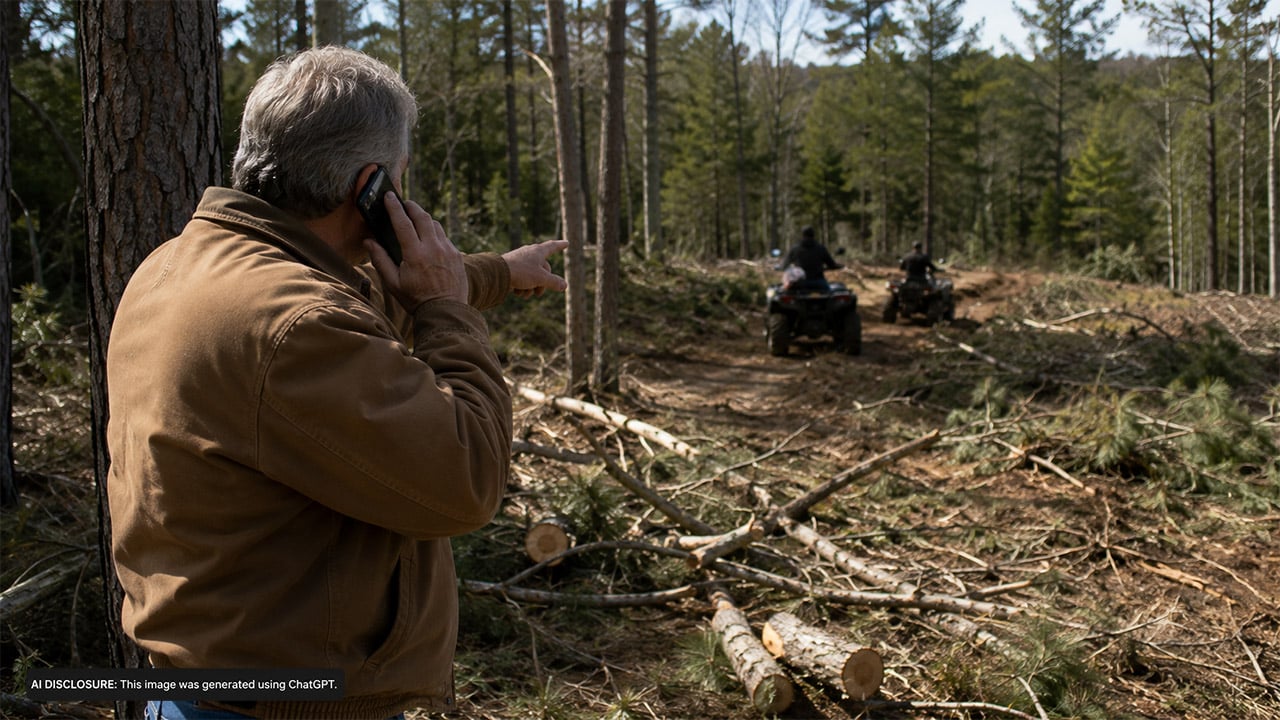
Photo credit: AI-generated image created using ChatGPT. Illustrative only
If you’ve owned a piece of rural ground for any length of time, you’ve probably dealt with the occasional boot track where it shouldn’t be. But it’s a different level of bold when trespassers start altering the land to suit themselves.
That’s exactly what one landowner described in the original post: ongoing trespass issues that escalated into people cutting down trees to make an ATV path through the property. The landowner said they’d contacted the sheriff, but didn’t have much confidence it would change the situation.
When trespassing turns into property damage
Trespassing is bad enough—especially for folks who hunt their own land, run livestock, or just want peace and quiet. But cutting trees isn’t “I didn’t know where the line was.” That’s somebody making a decision, putting in effort, and turning private ground into their personal trail system.
From a landowner’s perspective, that’s where the problem stops being a nuisance and starts becoming a real liability. Once there’s a worn-in route, you can expect repeat traffic, more riders, and more chances of accidents, gates being left open, fences being damaged, and trash showing up where it never used to.
ATV trails bring a safety problem that can’t be ignored
Anybody who hunts or works land knows how quickly things can go sideways when people are moving fast through timber. If you’ve got family members out there, neighbors walking lines, or hunters sitting a stand during season, unexpected ATV traffic is a serious safety concern.
And it isn’t just the rider’s safety. A landowner can end up dealing with a wreck, injuries, or a heated confrontation if someone gets caught in the act. The smartest move is keeping distance, staying calm, and building a plan that puts the responsibility on law enforcement and documentation—not on a one-on-one showdown in the woods.
Calling the sheriff is a start, but it usually isn’t the whole solution
The landowner said they called the sheriff but doubted it would help much. That feeling is common in rural areas. Deputies are busy, properties are large, and unless someone is caught in the act with clear evidence, it can be tough to get traction.
Still, making that call matters. It creates a record. If you end up needing extra patrols, a formal complaint, or follow-up later, you’re not starting from zero. It also sets the tone that this isn’t “kids being kids”—it’s a repeated issue that’s now crossed into intentional damage.
What usually works: proof, boundaries, and making it inconvenient
Even without getting into a step-by-step playbook, the general path forward for landowners is pretty consistent: document what’s happening, make property lines obvious, and take away the ease of access that makes repeat trespass likely.
Documentation is the backbone. Photos of cut trees, tire tracks, and any entry points help establish patterns. Clear boundary marking and signage can reduce the “I didn’t know” excuses, and it strengthens your position when you’re asking authorities to treat it seriously. Then there’s access control—whether that’s reinforcing gates, blocking makeshift trail entrances, or closing off the easiest routes that riders are using to slip in and out.
The part that eats at landowners: it’s your ground, but you’re the one adapting
This is the frustration that comes through in the landowner’s question—how do you stop it from happening when it’s been going on for years and now it’s getting worse? That’s the hard truth of rural property ownership: the land is yours, but the burden of prevention often lands on you.
There’s also the mental side of it. Hunters and landowners spend time improving habitat, clearing lanes the right way, planting, maintaining trails, and trying to do things responsibly. Seeing strangers cut trees just to joyride through the place feels personal, because in a way it is.
At the end of the day, involving the authorities is the right move, but the real progress usually comes when a landowner combines that report with solid documentation and clear boundaries. Trespassers like easy access and low risk. When it stops being easy—and starts feeling risky—most of them go find somewhere else to ride.
Like The Avid Outdoorsman’s content? Be sure to follow us.
Here’s more from us: