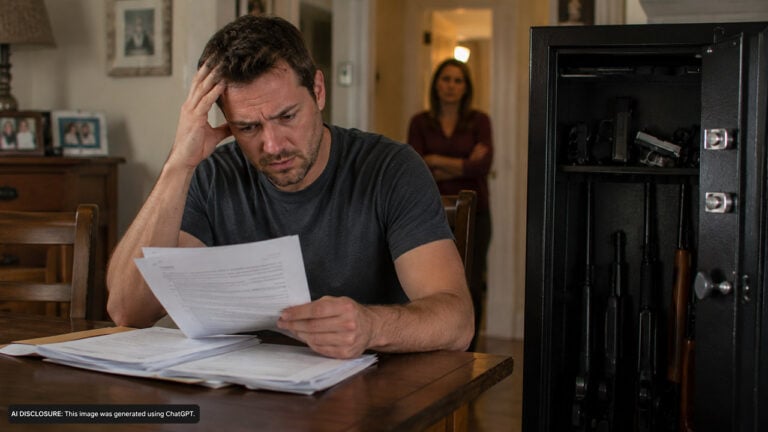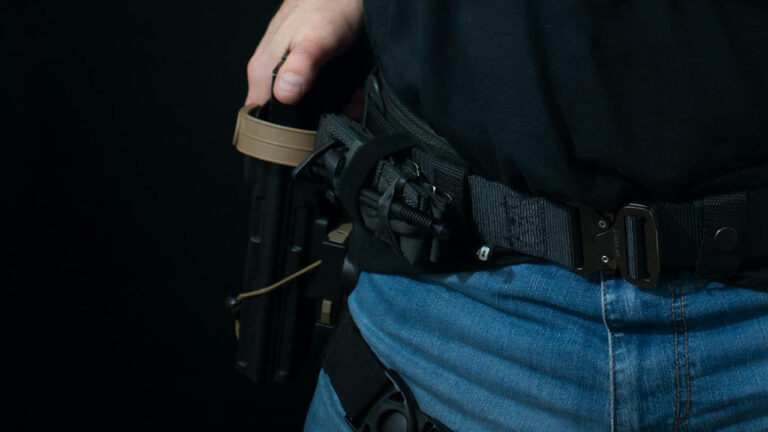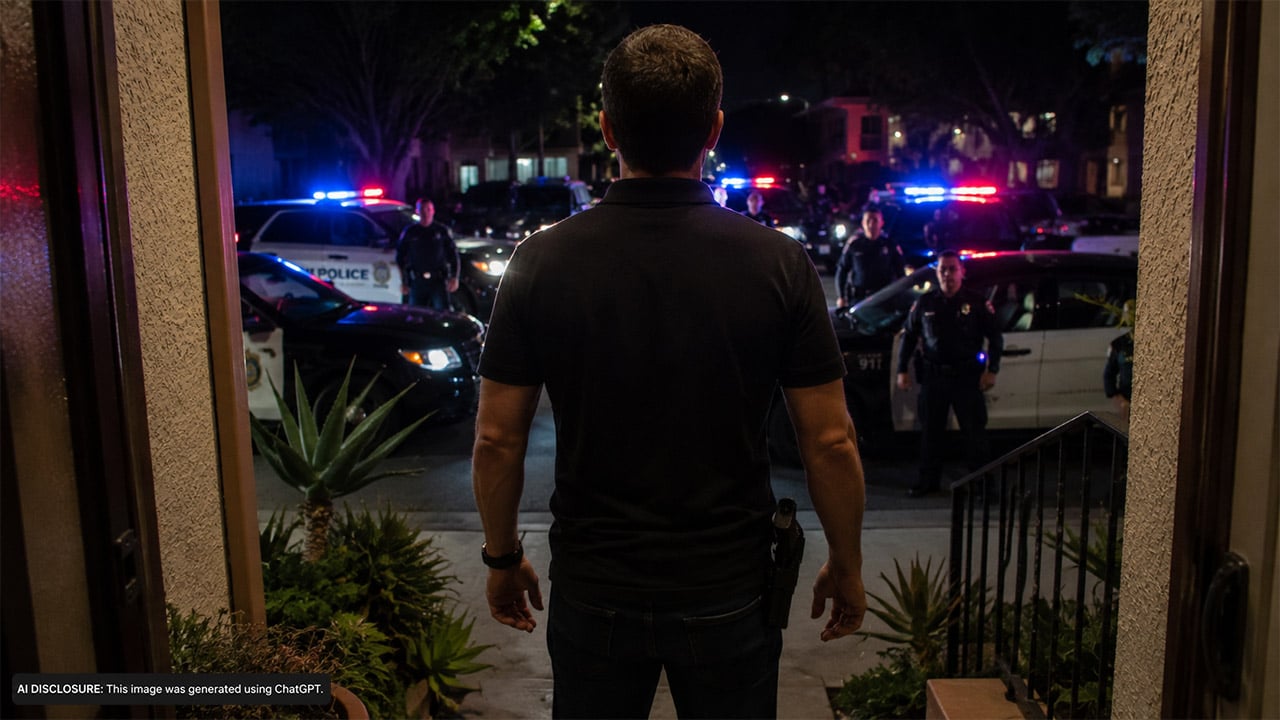
Photo credit: AI-generated image created using ChatGPT. Illustrative only
Most folks who carry every day will tell you the same thing: after a while, your handgun rides on you like a wallet or a set of keys. You don’t “feel” it anymore. And that’s usually fine—right up until you end up around someone who’s not comfortable with the idea and doesn’t know what to make of you.
That’s the hard lesson one legally armed man learned after a Tinder date went sideways and he stepped out of a downtown restaurant into a line of patrol cars. His full write-up is in the original post, and it’s the kind of story that makes you think twice about how you handle “gun talk” in public.
Carrying felt normal—until the conversation wasn’t
The man explained he’d done four years enlisted in the military, got out, went back to school, and stayed in a state where concealed carry is legal with the proper training and certification. On top of that, he worked at a firearms dealer as a sales associate and instructor. In other words, being around guns—and carrying one—was part of his everyday routine.
After about a week of texting and snapping with a woman he met online, he asked her to dinner at a nice restaurant downtown and made reservations. The date itself wasn’t going great. They didn’t have much in common, and she was, in his telling, outspoken and combative with her opinions while he preferred to let things roll off and not fight over what he can’t control.
Politics, the military, and one question that changed the temperature
Eventually they landed on the military, and then on firearm control. He said she was a political science major and was quick to tell him where he was “dead wrong,” especially when he tried to add his perspective. He also admitted this is one of the few topics where he gets defensive—he gave time to serve his country, and being condemned for it hits a nerve.
Then came the question that every concealed carrier has heard or dreaded at some point: “Well are you carrying a gun right now?” His answer wasn’t a calm “yes” or “no,” and it wasn’t a simple boundary like “I’d rather not discuss that.” He fired back with a sarcastic line: “idk, are you wearing underwear?”
That didn’t land. The conversation got louder and sharper. She asked—at normal conversation volume, he said—“why would you bring a gun to a restaurant!?” He tried to walk it back with “who said I had a firearm?” and spent the next few minutes talking things down before asking for the check.
A bystander heard one sentence—and made the call
After dinner, the woman went to the restroom. They met near the front and headed out. The man thought the awkward part was behind them. Instead, the second they got through the door, they were met by what he described as a convoy of patrol cars lined up along the street.
He gave a wave, but the officers closed in from different directions with hands near their sidearms and the usual firm request: “Sir, can you come here for a second.”
He later learned what triggered it. A young employee—he described the person as a high school barback—had overheard the “why did you bring a gun to a restaurant?” line and called the police because it sounded like a dangerous situation. Whether you agree with the call or not, it’s not hard to see why a teenager working a shift would hit the panic button after hearing that.
The roadside conversation turned into cuffs in a hurry
One officer told him they’d received a complaint about someone having a firearm inside and making people feel unsafe. Then the direct question came: “Sir, are you carrying a firearm?”
This is where the situation went from uncomfortable to full-on serious. The man said he’d spent enough time around law enforcement—some of his coworkers taught concealed classes as sheriff’s deputies—to know that refusing to comply can quickly go “not in your best interest.” But in the moment, he decided to play it hard and answered that he didn’t believe he was lawfully required to respond, adding: “Am I being detained, or am I free to go?”
That was the spark. His date, being questioned nearby, reacted strongly and told him, “just let them have it.” Officers then unstrapped their holsters, demanded his hands behind his back, and he was handcuffed. He immediately apologized and complied. His firearm was removed, and he was placed in the back of a patrol car for around 30 minutes while they sorted everything out.
How it ended: no charges, an unloaded gun, and a ride home
Once everyone calmed down and talked through it, the situation de-escalated. The man said there were veterans among the officers, and after some conversation they found some common ground. The key point was that it wasn’t a case of a gun being waved around—just a public misunderstanding and a complaint based on overheard conversation.
By that point, the date was over. The woman had already left. The man lived only three blocks away and had walked to the restaurant, so officers gave him a choice: walk home with his (now unloaded) firearm, or take a ride with them. He took the ride, and in a final strange moment, the officer rolled down the window on arrival and handed him his ammunition rounds, telling him not to forget them.
He said he apologized to his match afterward, didn’t get a reply, deleted her contact, and moved on. In a twist that shows how small the world can be, he later sold one of the officers a compact 9mm Shield through his job.
What gun owners can take from this kind of mess
If you carry regularly, this story hits close to home because there’s nothing exotic about the setup. Legal carry, normal dinner, normal talk—then one sentence overheard by the wrong person creates a police response you didn’t plan for. The man wasn’t accused of a crime in the story, but he still spent time in cuffs and the back of a cruiser because the optics got out of control.
The practical lesson isn’t “never talk about guns.” It’s that sarcasm and public argument don’t mix with concealed carry. A calm, boring answer—or a polite refusal to discuss it—keeps things from turning into a scene that bystanders can misread. The other lesson is about cooperating when the temperature spikes. Whatever your views on what you must legally answer, the side of the road in front of a restaurant isn’t the place to test it while officers are responding to a “gun in public” call.
Carrying a handgun is a responsibility, but so is managing how you present yourself around people who don’t live in that world. Sometimes the safest move is the simplest one: keep your voice down, keep your ego down, pay the check, and go home without giving a stranger a reason to pick up the phone.
Like The Avid Outdoorsman’s content? Be sure to follow us.
Here’s more from us: