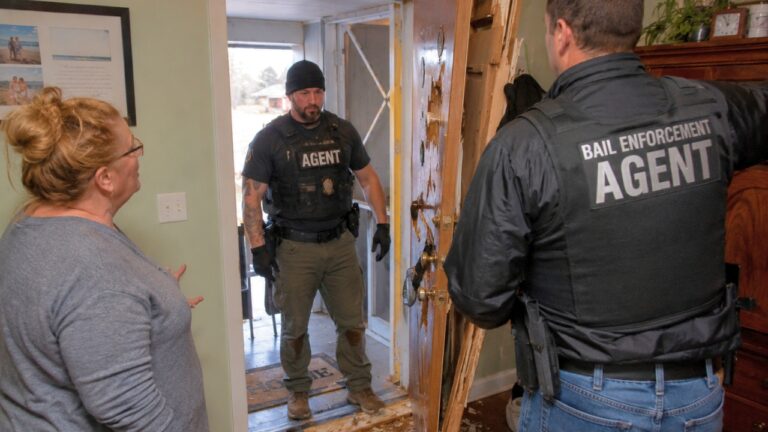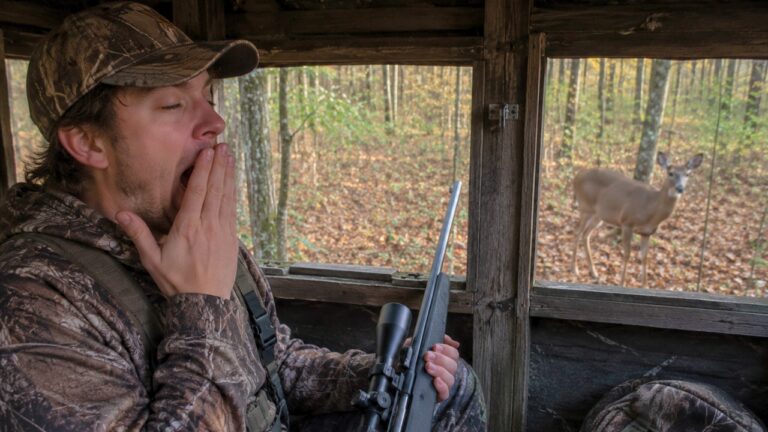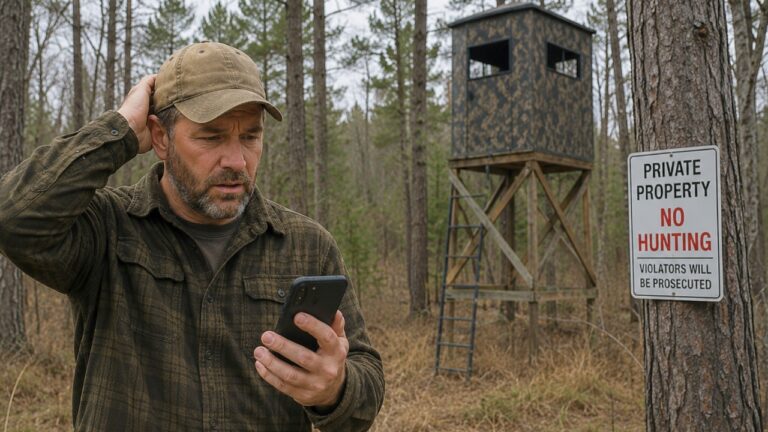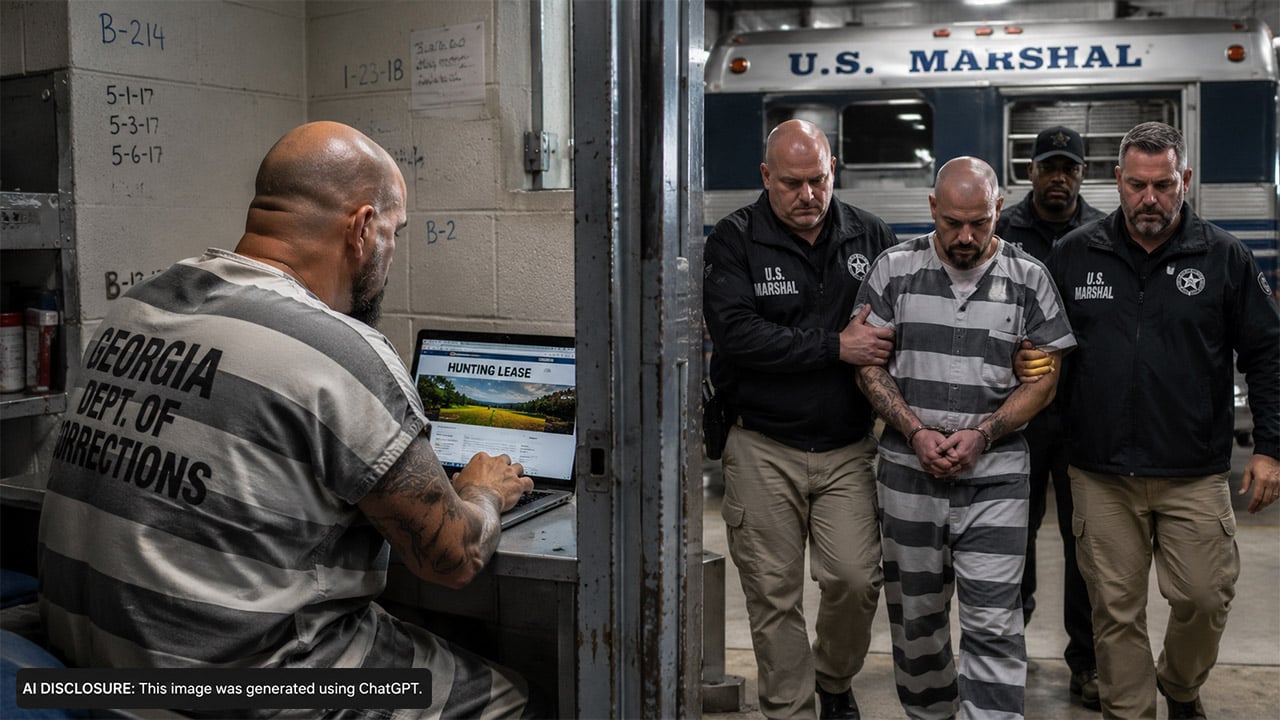
Photo credit: AI-generated image created using ChatGPT. Illustrative only
If you’ve ever tried to line up a deer lease late in the summer, you know how it goes. A decent piece of ground gets mentioned in a text thread or shows up on social media, the pressure’s on, and folks start sending deposits before somebody else grabs it. Florida investigators say that’s exactly the window a Georgia inmate used—while sitting in a prison cell—to take money for hunting leases on land he didn’t own.
Details from the source post say Florida Fish and Wildlife Conservation Commission (FWC) investigators charged 39-year-old Rodney Edward Smith of Chatsworth, Georgia, in Gilchrist County on May 7. Authorities allege Smith ran the scam from Macon State Prison in Oglethorpe, Georgia, and was later extradited to Florida on Aug. 16 to face four felony counts.
How the lease scam worked from behind bars
FWC says Smith operated between July 1, 2025, and April 30, 2026, while incarcerated for false imprisonment and other offenses. Investigators allege he used smuggled cell phones, “dozens of different phone numbers,” social media accounts, and multiple online aliases to post ads offering hunting leases on private land in Florida.
That’s the key piece: officials say the land being advertised wasn’t his to lease. In the real world, a hunting lease is a simple arrangement—access to private acreage under specific terms. But if the person taking your deposit has no legal control of the property, you’re not buying a lease. You’re buying a story.
The money trail stretched across 15 Florida counties
According to authorities, Smith negotiated lease agreements and collected cash deposits from victims in 15 Florida counties, stealing thousands of dollars. Hunters chasing a spot for deer season aren’t always looking for a handshake deal, but plenty of them will move fast if the ad sounds right and the photos look good.
That urgency is what makes these scams work. A guy thinks he’s locking down a place to run trail cameras, hang stands, and bring his kids for opening weekend—so he sends the deposit. Then the “lessor” goes quiet, or the victim shows up to a gate and meets the actual landowner, who’s never heard of the deal.
FWC says the damage goes beyond the dollars
Lease hunting runs on trust. Landowners are taking a risk when they let strangers onto their property with trucks, ATVs, firearms, and guests. Hunters are taking a risk sending money to someone they may not know personally. When someone fakes leases, it poisons that relationship for everybody.
FWC Lt. Col. Randy Bowlin, Deputy Director of Law Enforcement over Investigations and Intelligence, put it plainly: “By offering fraudulent hunting leases, he not only stole from Florida citizens, but also damaged the trust between hunters and landowners that is essential to Florida’s hunting tradition.”
That last part matters. Once landowners get burned—or see neighbors get burned—they tighten up. More “no trespassing” signs go up, legitimate lease opportunities dry up, and the folks doing things the right way end up paying the price.
The charges and the bond are serious
Smith faces four felony counts in Florida, according to the report: fraudulently offering property for sale or lease (a first-degree felony), scheme to defraud less than $20,000 (a third-degree felony), illegal use of a two-way communication device (a third-degree felony), and cheating (a third-degree felony). His bond was set at $700,000.
Those aren’t “gotcha” violations. Those are the kinds of charges that tell you investigators believe they can show a pattern—repeated representations, repeated payments, and repeated victims. The “two-way communication device” count also lines up with what many hunters already suspect when they hear about scams like this: the phone is the tool that makes it scalable.
What hunters and landowners can do to avoid getting played
This case is a reminder to slow down when money and access are on the line. If you’re paying for a lease, insist on proof that the person offering it actually has the legal right to do so. That can be as simple as matching the name on the agreement to county property records, or having a conversation that includes details only a real land manager would know—gate combinations, boundary lines, neighboring landowner names, and where vehicles are allowed.
For landowners, it’s worth occasionally searching your property description online—county name plus “hunting lease,” nearby road names, or even distinctive features like “oak hammock” or “powerline.” If your land is getting advertised without your permission, document the ad, save messages, and contact law enforcement rather than trying to “handle it” at the gate. A confrontation in the woods can go sideways fast, especially when somebody honestly believes they paid for access.
FWC credited the Florida Attorney General’s Office of Statewide Prosecution, the Georgia Department of Corrections, and the Dalton Police Department for assisting in the investigation. That multi-agency involvement is another sign this wasn’t treated like a small misunderstanding—it was treated like a deliberate operation.
In the end, every hunter wants the same thing: a legal place to hunt, a clean agreement, and a season that’s about time outdoors—not drama at a locked gate. Stories like this are a good push to verify first, pay second, and keep the trust between hunters and landowners intact.
Like The Avid Outdoorsman’s content? Subscribe to our newsletter so you never miss an article.
Here’s more from us: