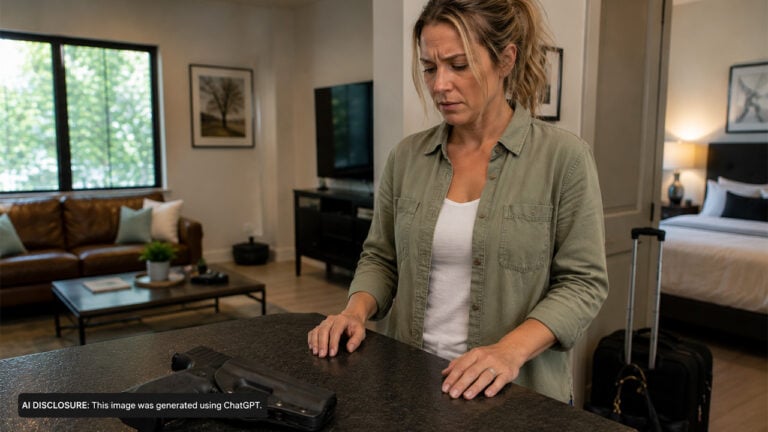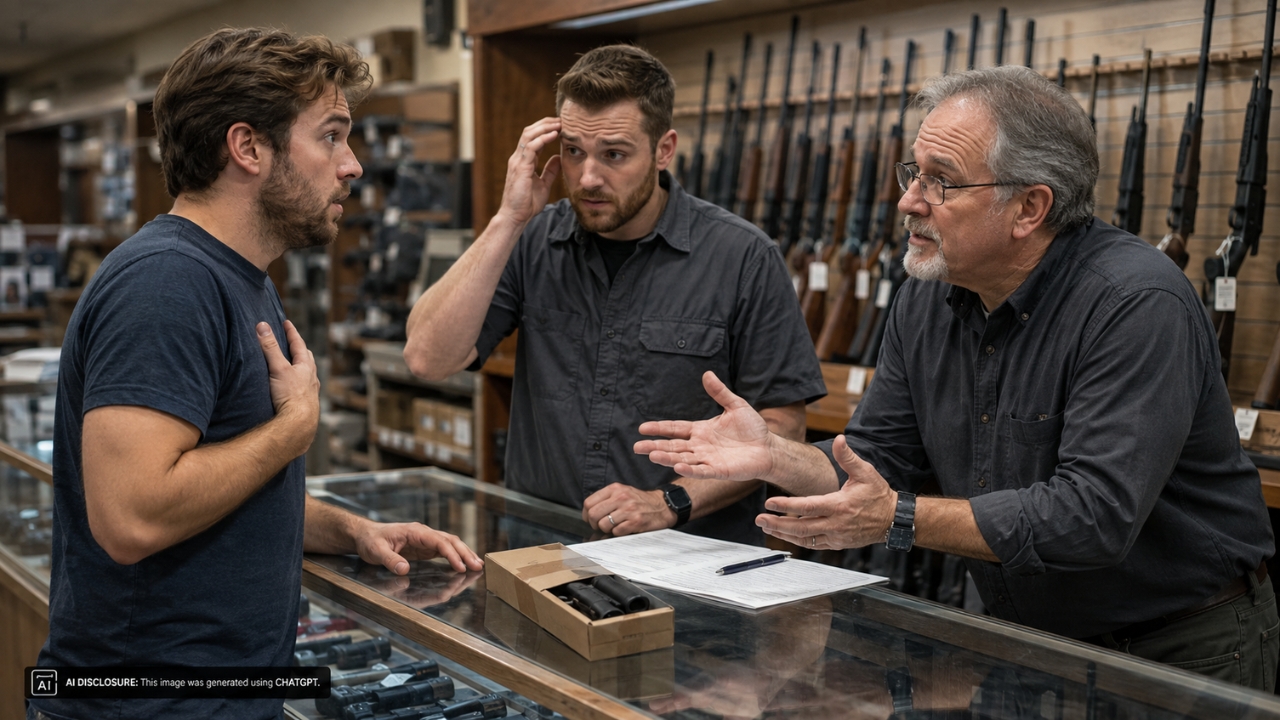
Photo credit: AI-generated image created using ChatGPT. Illustrative only
Most of us have walked into a big-box outdoor store expecting a quick, routine firearm purchase—pick the item, show your ID or carry permit, fill out the paperwork, and get back to thinking about the range or deer season. One customer thought that’s exactly what he was doing when he stopped in to buy an inexpensive handgun frame he’d already found online.
Instead, he says the counter interaction took a hard left when an employee claimed his name triggered a “straw purchase” alert in the store’s system. His account of the incident was shared in the original post, and it’s the kind of mix-up that can turn a simple transaction into a public, stressful scene in a hurry.
A straightforward buy went sideways at the gun counter
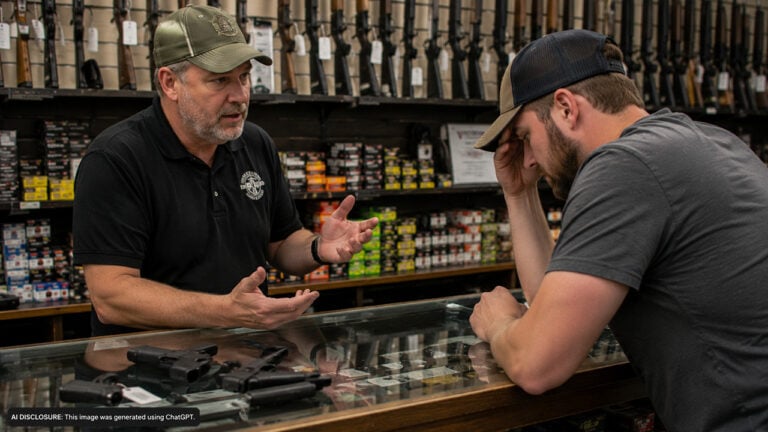
According to the customer, he went to Bass Pro by himself to buy a frame priced around $80. He’d found it online, walked in, told the employee what he wanted, and presented his concealed-carry permit.
Up to that point, it sounded like the normal rhythm of a firearms counter—verify information, get the item, and keep things moving. Then the employee reportedly told him his name “alerted as a straw purchase in the system,” which immediately changed the tone.
“Straw purchase” is a serious accusation, even before paperwork starts
Gun folks throw the term around, but in real life it’s not casual. A straw purchase accusation implies someone is buying a firearm for a person who can’t or won’t buy it themselves. Whether or not law enforcement is involved, the mere allegation can make bystanders look, can sour a customer’s day, and can put the store staff on edge.
That’s why this kind of call should be handled carefully—quietly, professionally, and with the understanding that systems aren’t perfect. Even if an employee thinks something looks off, there’s a big difference between pausing a sale and effectively announcing wrongdoing across the counter.
The employee escalated it into a scene
In the customer’s telling, the employee got frantic, started “screaming straw purchase,” and then refused to speak to him until a manager came over. Anyone who’s spent time around firearm counters knows how quickly that can draw attention, and not the good kind.
The practical problem isn’t just embarrassment. When employees start shouting labels like that, it puts the customer in a spot where anything he says can be misread as defensiveness, and anything he does—turning to leave, asking questions, even just standing there—can look “suspicious” to people who weren’t paying attention five seconds ago.
Managers blamed a common-name mix-up and apologized
When a manager arrived, the explanation reportedly shifted. The manager told him it “happens with common names,” and that the employee’s behavior was out of line. The customer says both the manager and the general manager apologized.
That detail matters because it points to what may have caused the trigger in the first place: not a specific, verified allegation tied to him personally, but a name-based flag that can snag the wrong person. If you’ve got a common first and last name, you’ve probably been mixed up on something before—credit reports, medical records, even basic store loyalty accounts. A firearms counter is a terrible place to learn that lesson again.
Why this kind of flag can feel so odd from the customer side
Even with an apology, it’s not hard to see why the customer walked away feeling unsettled. Getting mislabeled as a straw purchaser isn’t like being told the wrong item is out of stock. It hints at criminal activity, and it can make you wonder what’s attached to your name in somebody’s system.
And for gun owners, there’s another layer: people worry about being “on a list” or having future purchases delayed because of a bad note in a retail database. Whether that fear is justified or not, the stress is real—especially when the accusation is made loudly and without explanation.
It also raises a practical question for regular buyers: what exactly is “the system” in this context? The customer didn’t describe any paperwork stage or official agency contact. What he ran into sounded like an internal alert or store process—something that can be helpful when used correctly, and damaging when it isn’t.
What other gun owners tend to focus on in situations like this
When stories like this circulate among gun owners, the reactions usually fall into a few predictable camps. One group emphasizes that stores are under pressure to spot questionable transactions and may be quick to shut things down rather than risk trouble. Another group focuses on professionalism—there’s a right way and a wrong way to stop a sale, and shouting across the counter isn’t the right way.
There’s also the nuts-and-bolts angle: common names and database flags are notorious for false positives. If a store is using internal notes, third-party point-of-sale tools, or any kind of watch list process, it needs a clear procedure for verifying identity beyond a name match before anyone starts throwing around accusations.
And finally, plenty of people look at it from the everyday-carry perspective. The customer presented a carry permit at the start, which many folks see as a signal that the buyer is known to be legally eligible in at least some capacity. That doesn’t override store policy or federal requirements, but it does add to the “why is this happening?” feeling when the interaction turns accusatory.
Practical steps if you get wrongly flagged at a gun counter
No one wants to rehearse for a moment like this, but it’s worth thinking through because the stakes are higher than a normal retail dispute. If you ever get flagged or accused in a store, your best friend is calm, simple communication. Ask to speak to a manager, keep your voice steady, and avoid trying to “debate” the employee on the spot.
It also helps to remember that walking away isn’t an admission of anything—it’s often the smartest move if the situation is escalating. Let a manager sort it out, and if the store can’t or won’t, take your business to a dealer who runs a tighter ship. You don’t need to win an argument in public at a gun counter.
If you do get an apology like this customer did, it’s reasonable to ask (politely) what caused the flag in general terms—name match, internal note, or something else—without demanding details they can’t share. The goal isn’t to pry; it’s to understand whether you’re likely to run into the same snag again the next time you try to buy a simple frame, rifle, or box of ammo at the same chain.
Big outdoor retailers can be good places to shop, especially when they’ve got inventory you can’t find elsewhere. But this incident is a reminder that firearms counters live and die by procedure and professionalism. When an employee jumps to the loudest possible accusation over what managers later describe as a common-name mix-up, it doesn’t just ruin one sale—it chips away at trust, and that’s hard to earn back.
Like The Avid Outdoorsman’s content? Be sure to follow us.
Here’s more from us: