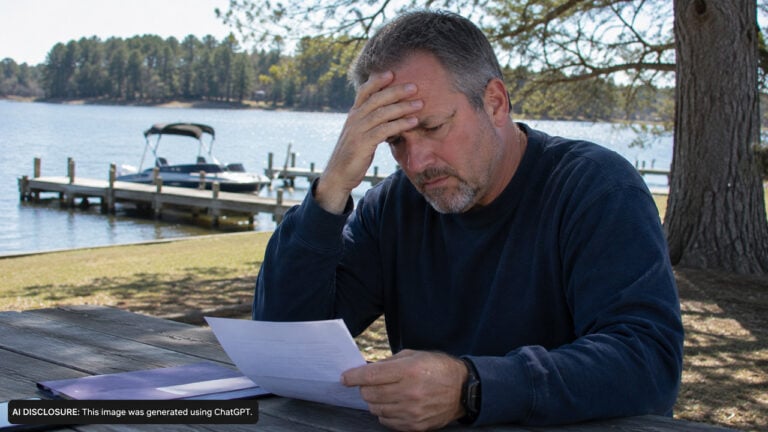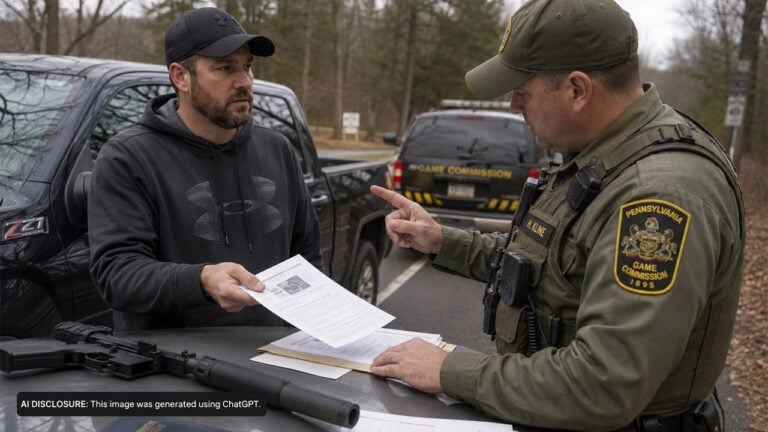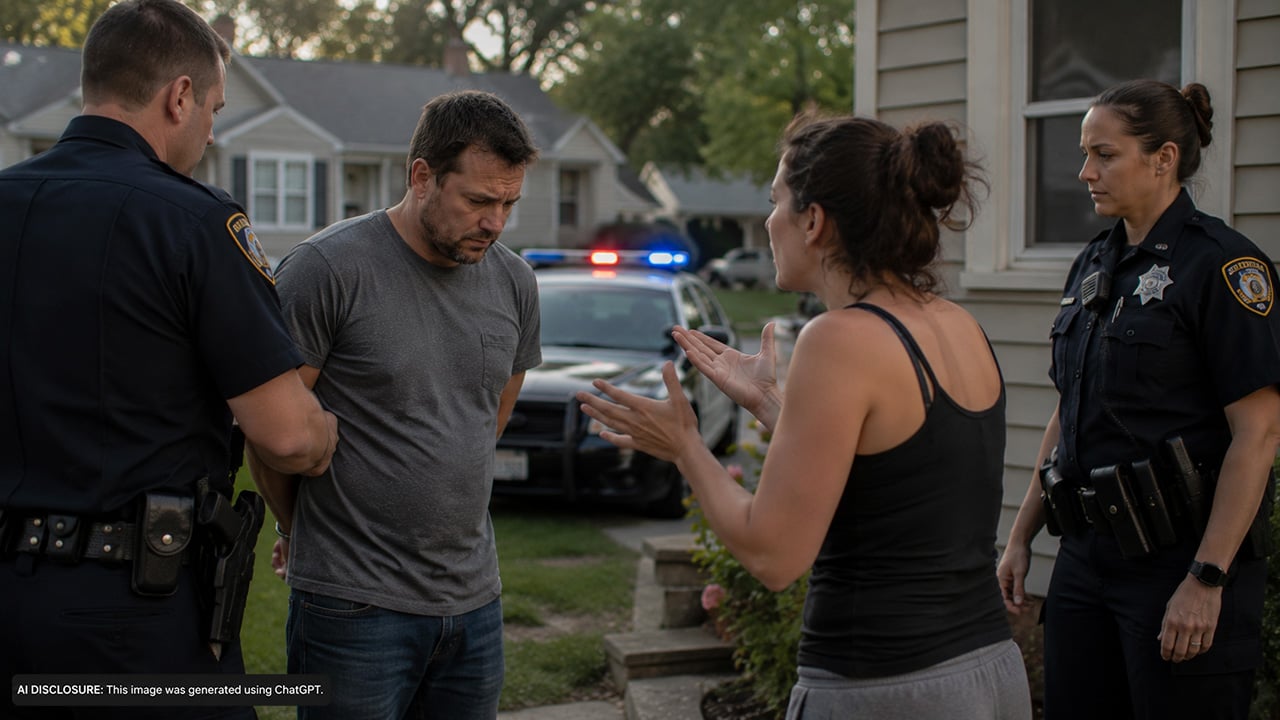
Photo credit: AI-generated image created using ChatGPT. Illustrative only
A guy got hauled off to jail after a verbal argument with his ex turned into an accusation of assault. Police arrested him, but he says they left his firearm sitting in her home. Fifteen days later, he walked out because she didn’t show up to court and the case was dropped—yet months later, his gun still hasn’t come home.
In the original post, he says his ex returned his car and clothes but not his firearm. He’s heard through friends that she sold it, and he’s been told a “Writ of Possession” might be the route to get it back—only it’ll cost him around $270, money he doesn’t have lying around.
A domestic call can turn into a property mess fast
Most outdoorsmen understand the gut punch here. One minute you’re arguing in your own life, the next you’re in handcuffs, and your gun—your property—is sitting in somebody else’s house. The part that’ll stick in a gun owner’s craw is that he says officers didn’t secure the firearm when they took him in.
Whether that decision was policy, discretion, or just a bad call in the moment, the practical outcome is the same: he lost control of a firearm he says he legally owned. And once you lose control of a gun, the situation stops being “just property” and starts being a safety and liability issue, too.
Charges dropped doesn’t automatically mean your stuff comes back
He says he spent 15 days in jail and then was released after his ex didn’t come to court, with the charges dismissed. A lot of folks assume that once the case is done, everything snaps back to normal—no case, no restrictions, no drama.
Real life doesn’t work that cleanly. Even if the criminal side is over, the property side can still be a knot: who has the item, who has proof of ownership, whether there are any no-contact orders, and whether law enforcement considers it a civil matter instead of something they can “fix” with a quick knock on the door.
Five months without the firearm raises the stakes
According to the post, it’s been almost five months, and he still hasn’t gotten the gun back. He also says he’s heard word-of-mouth that she sold it. If that’s true, it’s not just a missing item—it could mean the firearm is in unknown hands, possibly transferred without any paperwork that should’ve happened, depending on the state and the circumstances.
From a practical outdoorsman standpoint, this is where you stop thinking only about the money. If the firearm is ever used in a crime or found somewhere it shouldn’t be, the first question is going to be: “Who does it trace back to?” That’s why these situations are worth treating like a real problem the moment you realize the gun isn’t coming back.
Why a “Writ of Possession” comes up in situations like this
He says he was advised to file a “Writ of Possession,” and he was quoted around $270 to do it. That kind of legal tool generally gets mentioned when you’re trying to recover personal property through the courts—basically asking a judge to order the return of something that belongs to you.
It’s not the kind of thing most working folks want to spend money on, especially when they feel like the system already burned them once. But if law enforcement won’t retrieve the item and the other party won’t voluntarily return it, court paperwork is often what forces the issue—especially when you need a documented trail showing you tried to get your property back the right way.
The common-sense moves gun owners usually focus on
Even without a pile of extra details, the bones of the situation are familiar: a firearm left behind during an arrest, a relationship gone sideways, and property that disappears into a gray area. When gun owners talk through scenarios like this, they tend to focus on documentation and narrowing the story down to facts that can be proven.
That usually means writing down the make, model, caliber, and serial number of the firearm (if you have it), gathering any proof of purchase, and keeping records of any attempts to recover the gun. If there’s a believable claim it was pawned, one practical angle is confirming whether local pawn shops have it—because pawning a firearm typically involves identification and recordkeeping. The key, though, is doing it in a way that doesn’t create a new problem—no threats, no “I’ll handle it myself,” and no showing up where you’re not welcome.
He mentioned planning to get a lawyer involved, and that’s often where folks land when the firearm is valuable, the relationship is volatile, or the facts are muddy. Paying for legal help hurts, but so does losing a gun and having it floating around out there with your name attached to it.
When a firearm gets caught up in a domestic dispute, it’s a hard reminder that “ownership” and “possession” aren’t the same thing. The best time to protect yourself is before anything goes sideways—serial numbers recorded, receipts saved, and storage handled in a way that doesn’t leave your guns sitting in someone else’s house. But when you’re already in it, the smartest play is to keep it calm, keep it documented, and use the legal routes that create a clear paper trail.
Like The Avid Outdoorsman’s content? Subscribe to our newsletter so you never miss an article.
Here’s more from us: