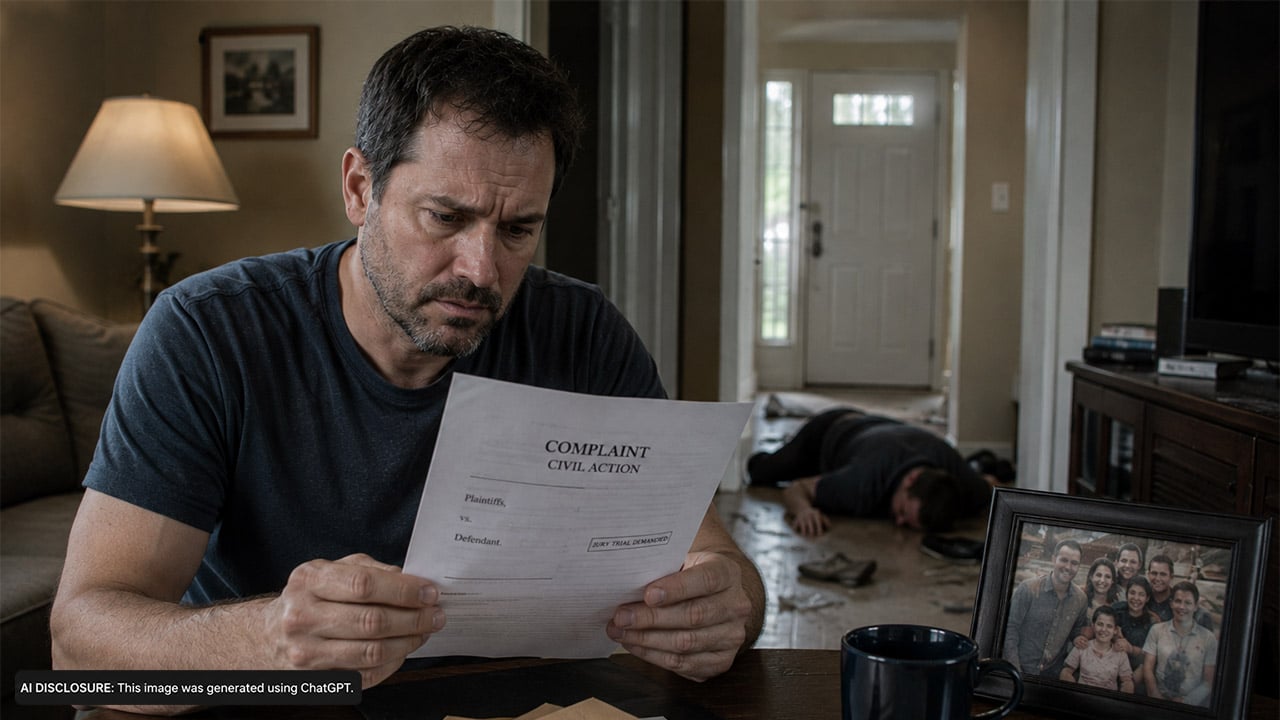
Photo credit: AI-generated image created using ChatGPT. Illustrative only
Most folks who keep a gun for home defense think the hard part is the moment you’re forced to use it. But for one Michigan homeowner, the fight didn’t end when the threat hit the ground—it kept going in the mailbox.
In the source post, the homeowner described shooting a man who kicked in his door with a baseball bat after a long stretch of online harassment and threats. After the incident, a relative of the intruder sent a letter demanding the homeowner pay the intruder’s medical bills and “drop the charges,” or they’d sue and “take my house and everything I got.”
The threats weren’t new, and the homeowner says police had already been told
According to the homeowner, the same person had been stalking and threatening him through Facebook for about a year. The messages weren’t vague trash talk either—they included threats to kick down the door and beat him.
The homeowner said those threats had been reported to police before anything physical happened. That detail matters in the real world because it speaks to fear, reasonableness, and pattern—three things that often come up any time a defensive shooting gets picked apart later.
A kicked-in door, a baseball bat, and a fast decision
One night, the man allegedly showed up and kicked the door open. He came in holding a baseball bat and threatened the homeowner inside the house. That’s the kind of scenario gun owners talk about at the range in the abstract, but it gets real in a hurry when someone crosses your threshold with a weapon.
The homeowner said he had a gun and fired two shots. After being shot, the intruder dropped the bat and ran back out the door. At that point, the immediate danger may have been changing quickly—something that becomes important later when people argue about what was “necessary” in a few seconds of chaos.
The medical bills may have come from the fall, not just the gunshots
The story didn’t stop at the doorstep. As the intruder ran out, the homeowner says he tripped on a rug, fell down the steps, and hit his face on cement, knocking himself unconscious.
Police responded, and the intruder was taken by ambulance to the hospital. The homeowner wrote that after being released from the hospital, the man “went directly to jail.” In other words, there were two kinds of injuries in play: the gunshot wounds and whatever damage was done in that fall.
The invader ended up jailed and facing a serious Michigan charge
The homeowner stated this happened in Michigan and that the intruder was still in jail. He also said the man was being charged with “home invasion first degree.” That’s about as serious as it gets for breaking into an occupied home, especially when a weapon is involved.
That detail is worth slowing down on: the criminal case appears to be moving forward separately from the family’s demand letter. A lot of people hear “drop the charges” and think the victim controls that switch. In most cases, charges are pursued by the state, and while victims can have input, they don’t typically get to just cancel a prosecution because someone’s relative is applying pressure.
The demand letter: pay the bills, drop the charges, or get sued
The letter the homeowner received wasn’t subtle. The intruder’s relative demanded payment of medical bills and insisted the homeowner drop the charges—or they would sue and take his home and everything he owns.
That’s a gut-punch after you’ve already dealt with a violent break-in. It’s also a common fear among homeowners: even when you’re the one defending your family, your freedom, and your property, you can still end up spending time, money, and stress dealing with civil threats afterward.
Can someone file a lawsuit like that? People can file all kinds of things. The bigger question is whether it goes anywhere, and whether the homeowner has protections under Michigan law and the facts as described—forced entry, an armed intruder, prior threats, and a rapid defensive response.
Where outdoorsmen and homeowners usually land on cases like this
For rural folks and gun owners, the practical lesson is that “good shoot” doesn’t always mean “good week.” Even if criminal charges land on the intruder, the homeowner can still get threatened with civil action, or at least paperwork designed to scare him into paying.
There are a few common-sense steps people tend to focus on in situations like this. First, don’t communicate directly with the intruder’s family once lawyers and threats get involved—save everything and route it through proper channels. Second, keep every scrap of documentation: prior police reports about the threats, screenshots of messages, the demand letter itself, and any incident reports. Third, if you carry insurance that covers self-defense legal costs (or if your homeowner’s policy offers any relevant coverage), it’s worth finding out what help is available—quietly, and through an attorney if needed.
And from a pure “living out in the real world” standpoint, it’s a reminder to harden the soft spots at home. Good locks, exterior lighting, cameras, and a plan for where family members go when something goes bump in the night can keep a bad situation from turning into a disaster. None of that replaces knowing your state’s laws, but it can reduce the chances you ever have to test them.
The homeowner in this case did what a lot of responsible gun owners hope they’d be able to do under pressure: stop an immediate threat inside the home. The twist is what came after—an attempt by the attacker’s family to shift the cost onto the victim. Whether or not that threat has teeth, it’s the kind of aftershock that makes it clear why documentation, restraint, and solid legal counsel matter just as much as the firearm you keep close.
Like The Avid Outdoorsman’s content? Be sure to follow us.
Here’s more from us: