Photo credit: AI-generated image created using ChatGPT. Illustrative only
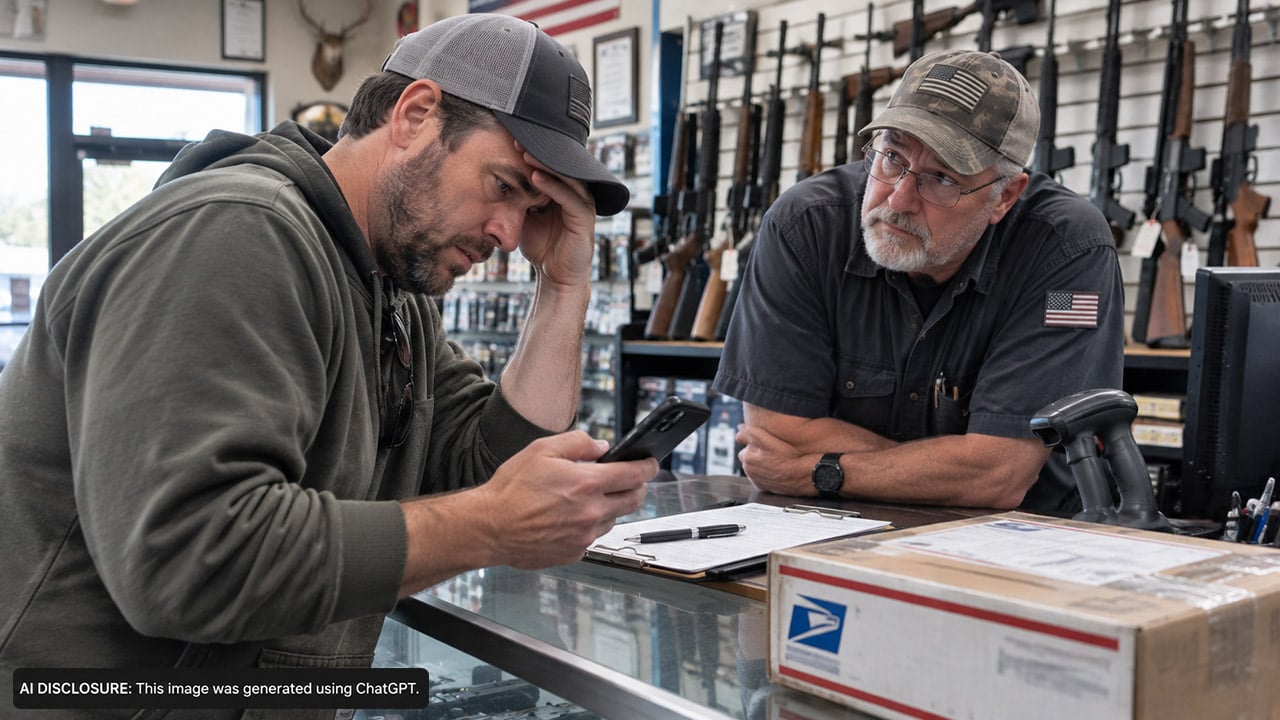
Buying a gun online is pretty routine these days, especially if you do it the right way—ship it to a local FFL, wait for the call, fill out your paperwork, and go home. But one buyer says that simple process went sideways when the tracking showed “delivered,” and the receiving dealer said nothing ever showed up. The details were laid out in the original post, and it’s the kind of situation that makes your stomach drop.
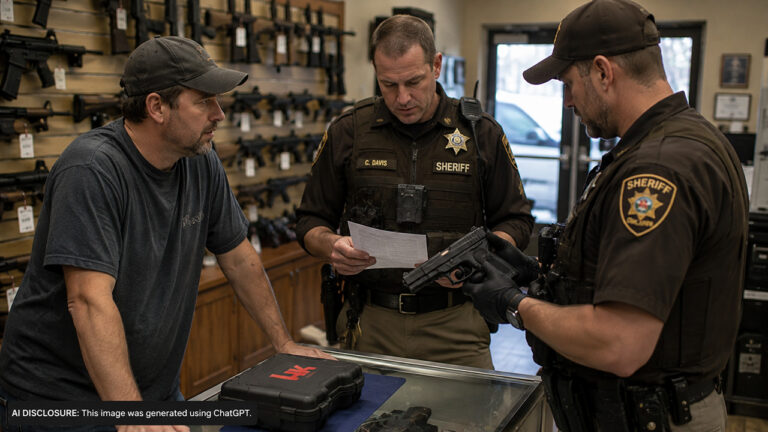
The buyer had won a firearm at an online auction and had it shipped to a local FFL. USPS tracking said it was delivered, but the FFL checked and didn’t have it—then checked again a couple days later and still had nothing. The tracking details made it even stranger: it was supposedly left “in a mailbox,” but the receiving FFL doesn’t have a mailbox, and the tracking didn’t show anyone signing for the package.
Tracking said “delivered,” but the shop had nothing
That “delivered” scan is where a lot of shipping problems get sticky. From the buyer’s perspective, it looks like the package made it to its destination. From the FFL’s perspective, nothing was received, nothing was signed for, and there’s no box sitting in the back waiting to be logged in.
When a firearm is involved, that’s not just an inconvenience. It’s a safety issue, and it’s also a documentation issue. Somebody, somewhere, either has a misplaced package or a bad scan—or a box sitting where it shouldn’t be.
The buyer did the first thing most of us would do
The buyer filed a missing mail report with USPS and specifically explained that the package was a weapon. The next day, USPS responded with a basic answer: per the tracking number, it was delivered. That didn’t move the ball forward, so the buyer called the receiving FFL again—still no package.
Anyone who’s dealt with shipping claims knows the routine: you can repeat the facts perfectly and still get an auto-pilot response if the system shows “delivered.” That’s fine when it’s a pair of boots. It’s not fine when it’s a firearm headed to a licensed dealer.
They verified the address and the tracking—everything matched
To rule out the most common mix-ups, the buyer contacted the shipping FFL and verified the tracking number and the address that was used. Then they verified that address with the receiving FFL. According to the account, everything was correct.
That matters because it eliminates the easy explanations: wrong address, transposed digits, outdated FFL information, or a label printed with the buyer’s home address instead of the dealer’s. When those boxes get checked and it’s still missing, you’re left with a smaller set of possibilities—and none of them are comfortable.
USPS closed the follow-up request for a strange reason
The buyer didn’t stop at the missing mail report. They filed a search request with USPS, again explaining that the package was a firearm. The next day, they got an email saying the address on the tracking number didn’t match the buyer’s home address, so USPS assumed the buyer provided the wrong tracking number. The case was marked “resolved.”
That’s where you can feel the process breaking down. Of course the address wouldn’t match the buyer’s home—this was shipped to an FFL. For plenty of gun owners, that’s the whole point: it’s not supposed to go to your house. But the response the buyer received suggests whoever handled it didn’t grasp that basic detail, or the system they were working inside wasn’t set up to understand it.
Trying to report it turned into a dead end
Next came the calls most folks assume are the “big hammer.” The buyer said local law enforcement told them that since they never had possession of the gun, they couldn’t file a theft report. They also called the ATF, but were told the agency doesn’t take reports from individuals on these matters.
In other words, the buyer was stuck between “USPS says delivered” and “the receiving FFL says it never arrived,” with no clear lane to force a real search. The buyer also said they reached out to the postmaster general for the area and didn’t get a response.
Why this hits gun owners differently than a normal lost package
If a turkey vest goes missing in the mail, it’s irritating. If a firearm goes missing, it changes how you sleep at night—because you know what a bad person could do with it, and you also know how hard it can be to unwind paperwork once a serial-numbered item goes off the rails.
The buyer noted they’d never heard of USPS losing a weapon like this. It’s not that guns never get lost in transit, but most of the time there’s a clearer paper trail: acceptance scans, movement scans, a signature, a shop receiving log, something. Here, the “left in a mailbox” detail and the lack of any signature stood out as the biggest red flags.
The buyer also said they’d been hounding the receiving FFL and were told the shop would be contacting the ATF soon. Nearly a month after it should have been delivered, the buyer’s main concern wasn’t just getting their purchase—it was getting someone to actually look for the package instead of using the “delivered” scan as an excuse to close the case.
For hunters and gun owners who buy online, the practical takeaway is pretty plain: shipping problems can happen, and when they do, the tracking page isn’t the final word. A “delivered” scan without a signature and without a receiving log at the dealer should set off alarms quickly.
And on the front end, it’s a reminder to keep every scrap of documentation organized—invoice, serial number if available from the seller, emails, shipping receipt details, and your receiving FFL’s correct address and contact info—because once you’re trying to get a human being to investigate, the only thing that seems to help is a clean, consistent paper trail.
Like The Avid Outdoorsman’s content? Be sure to follow us.
Here’s more from us: