Photo credit: AI-generated image created using ChatGPT. Illustrative only
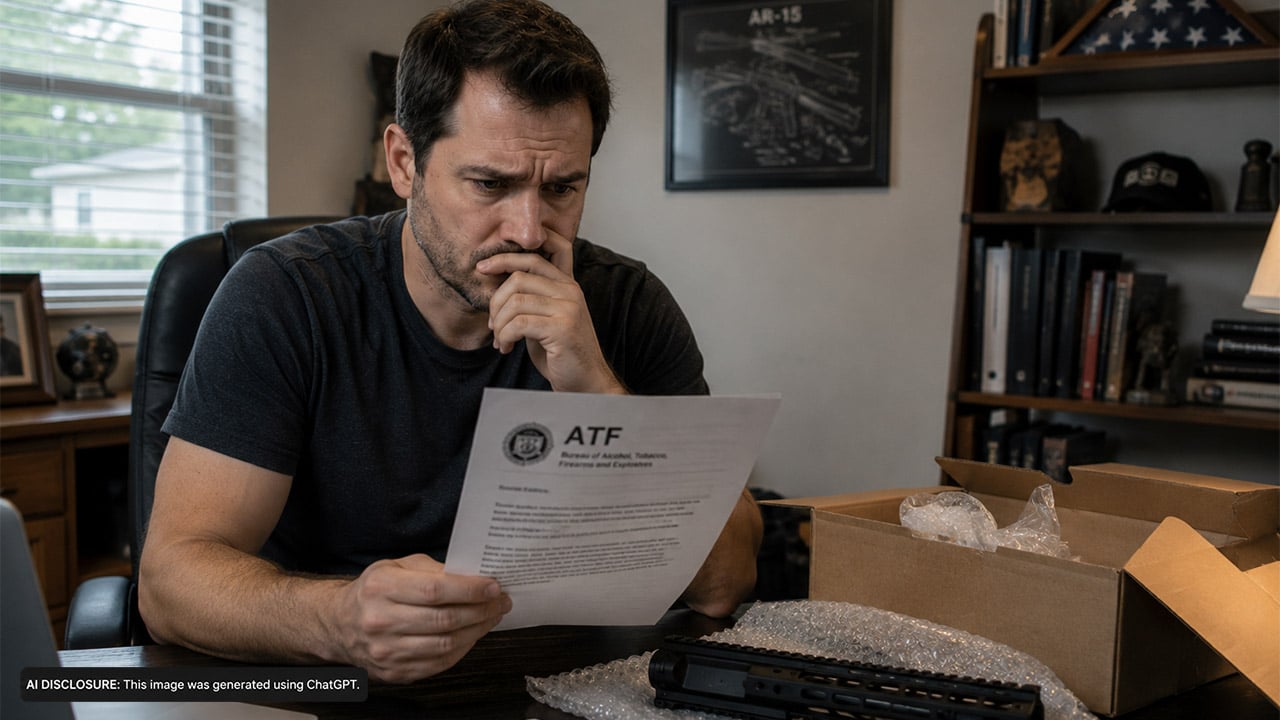
Most gun owners I know try hard to stay on the right side of the law, even when the rules get complicated. That’s why this situation—shared in the original post—hits a nerve: one guy’s brother ordered an illegal gun part online, assumed it would slide under the radar, and then got a message from the ATF telling him to forfeit it within 30 days.
The person posting said the purchase was “very very dumb,” and the main worry was straightforward: if he turns the part in, is he going to get arrested afterward? Then the story got messier—an update claimed the part is now “lost,” and that the purchase happened three years ago, with the ATF only contacting him now.
The moment it stopped being “just an online order”
A lot of folks treat online gun-part shopping like ordering boots or broadheads. Click, pay, ship, done. But some parts are regulated hard, and crossing that line can turn a “parts purchase” into a federal problem quickly.
In this case, the brother didn’t get a casual warning from a buddy at the range. The ATF contacted him directly and—according to the post—gave him 30 days to forfeit the illegal part. That’s the key detail: once an agency is reaching out with a timeline, they’re past the “we might not notice” phase.
The 30-day forfeiture letter is a big deal
We don’t have the exact wording of what he received, and the part itself isn’t identified in the post. But the basic shape of it matters: “we know you bought it” and “you have 30 days to forfeit it.” That’s not the same as a friendly request.
For outdoorsmen who keep firearms around for hunting season, predator control, or home protection, the practical takeaway is simple: if you get a letter like that, you’re already on their map. Whether or not charges come next isn’t something you can muscle through with guesswork and pride.
“If he turns it in, will he be arrested?”
The poster’s original question was the one any family would ask: if he complies and hands it over, is that basically walking himself into cuffs? There’s no definitive answer in the source material, because nobody in the post says he’s been charged, arrested, or even called—just contacted and given instructions.
But there’s an important reality here: turning something in can be seen as cooperation, or it can be seen as confirmation, depending on the situation. And when you’re dealing with federal firearms rules, you don’t want to be making decisions based on campfire logic. This is the point where a person needs real legal advice, not internet confidence.
The “it’s lost” update changes the tone fast
After the initial worry, the poster added an edit: the brother now says the part is “lost,” and claims he bought it three years ago. That kind of update is exactly what makes situations spiral. It raises obvious questions—where was it stored, who had access, is it truly gone, and why is this coming up only after contact?
From a common-sense outdoors perspective, this is also where people get themselves in deeper trouble. Losing gear happens. Losing a regulated item after you’ve been told the government knows you bought it is a different animal. Even if it’s true, it’s the kind of thing that can look convenient, and convenient stories tend to get scrutinized.
What stood out: no charges, no phone call—yet
The last edit in the source material says the brother hasn’t been charged with anything. No phone call. No charges. Just contact and the forfeiture window. That detail matters because it shows this may be in an early stage, where choices still matter a lot.
Outdoorsmen are used to dealing with wardens, permits, and rules that don’t always feel intuitive. But federal gun issues aren’t like getting a warning for a tagging mistake. If you’re sitting in that “not charged” zone, you want to keep it that way—by not improvising, not talking too much, and not trying to outsmart the process.
A grounded lesson for gun owners who buy parts online
This is the kind of story that should make every hunter and shooter take a breath before clicking “add to cart.” Know what you’re buying, know your state and federal rules, and be honest with yourself about what a part actually does and how it’s regulated. If you’re not sure, stop and verify before money changes hands.
And if an agency contacts you directly, treat it like a serious situation from the first minute. Keep your firearms secured, don’t move things around in a panic, and don’t start spinning explanations that weren’t part of the truth yesterday. When it comes to guns, paperwork and timelines are real—and so are the consequences when you pretend they aren’t.
Like The Avid Outdoorsman’s content? Be sure to follow us.
Here’s more from us: