Photo credit: AI-generated image created using ChatGPT. Illustrative only
It doesn’t take a big “poaching” moment to land you in hot water on the water. Sometimes it’s as simple as trying to do something good—like taking your kid brother fishing—then realizing too late you’re the one who forgot a basic rule.
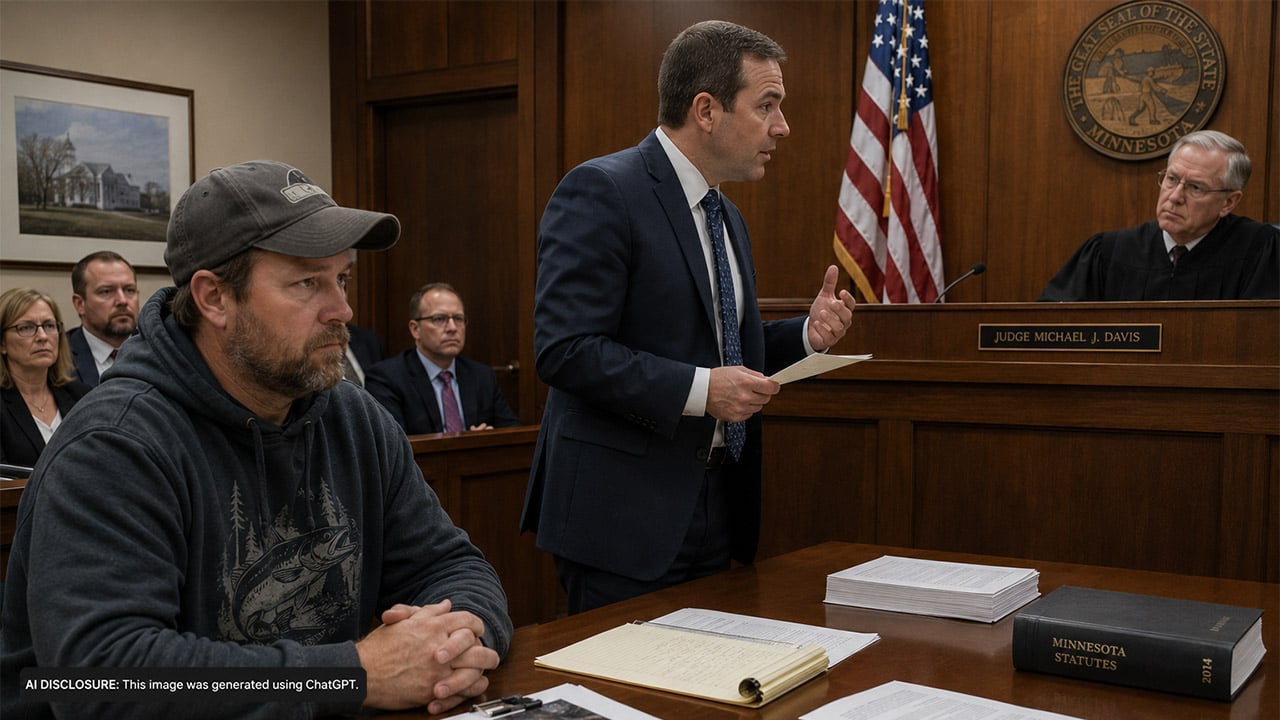
That’s what happened to one Minnesota angler who shared his situation in the original post. He said he was cited for fishing without a license under Minnesota statute 97C.301.2, and what bothered him wasn’t just the fine—it was seeing the citation labeled a misdemeanor and wondering what that could mean down the road.
A well-intended fishing trip turned into an expensive reminder
The angler said his 13-year-old brother had been asking him for about a week to go fishing. When he finally got the chance, he took him—then admitted the license requirement “completely slipped” his mind.
He also noted he didn’t catch or take any fish that day. But in Minnesota, like most states, the violation isn’t about whether you were successful. It’s about whether you were legally allowed to be fishing in the first place.
The citation’s “misdemeanor” label is what made him hit the brakes
Plenty of outdoorsmen would look at a license ticket the same way they’d look at a parking ticket: pay it, learn from it, move on. This guy’s tone shifted when he read the paperwork and saw it classified as a misdemeanor.
At 22 years old, he was thinking about jobs, housing, background checks—real life stuff. He wanted to know whether paying the fine quietly could still leave him with something that shows up later as a public record, and whether that possibility made it worth showing up in court to fight it.
“I didn’t keep any fish” doesn’t erase the elements of the violation
This is the part that trips people up. In the outdoor world, we tend to think in terms of harvest: possession limits, keeping fish, taking game. But most licensing laws are written so the act of “taking” or “attempting to take” fish is enough to trigger enforcement.
From a common-sense standpoint, it feels different when a guy is just trying to help a kid have a good afternoon and doesn’t even go home with a stringer. From an enforcement standpoint, though, an officer can’t build a system around intent. If you’re fishing, you need the license that applies to you, and the statute he cited—97C.301.2—exists to make that point plain.
His prior license history didn’t protect him this time
The angler mentioned he had purchased a fishing license once before, when he was 16. Now he’s 22. That detail matters for two reasons.
First, it undercuts any argument that he truly didn’t know a license was required—he’d done it before. Second, it shows how easy it is to get complacent if you’re not a regular license buyer every season. A lot of folks fish sporadically: a couple trips a summer, maybe a buddy invites them, maybe they’re trying to get a younger sibling outdoors. That’s exactly when the “I’ll just go this once” mistake happens.
The real decision wasn’t pride—it was future consequences
He wasn’t talking like somebody who wanted to beat the system. He sounded like somebody trying to keep a small mistake from turning into a long-term headache. His question was basically: “Can this misdemeanor affect me later, and if so, should I show up to court instead of just paying?”
That’s a smart question for anyone who hunts or fishes, especially younger guys building a work history. Even when the dollars aren’t terrible, the label can make you nervous—because “misdemeanor” carries a different weight than “civil fine” in everyday conversation. Outdoorsmen also know that some violations can stack up if you get cited again, and nobody wants to start down a road where a simple license issue snowballs into bigger problems with privileges.
And there’s another angle here that a lot of people don’t think about until it happens: once you decide to “fight it,” you’re trading a known cost (the fine) for unknowns (court time, missed work, possibly higher costs). For a working guy, that trade matters.
What other outdoorsmen typically focus on in cases like this
Even without a long thread of back-and-forth included in the source material, you can already predict where experienced anglers tend to land when a license ticket comes up: do the math on consequences, not emotions.
Outdoorsmen usually zero in on a few practical points. What exactly is being charged under the statute? Is it treated like a petty offense in practice, or does it really follow you like a criminal misdemeanor? Is there any option to show you’re now in compliance—buy the license, bring proof, ask about reduced penalties? And if you do show up in court, are you going to say anything that makes it worse?
Most of all, they’ll tell you the same thing they tell their buddies before opener: don’t guess, and don’t assume “no harm, no foul” applies in fish and game law. Conservation officers have heard every version of “I forgot,” and they don’t have the luxury of sorting good intentions from bad ones on the fly.
At the end of the day, this Minnesota angler’s situation is a reminder that the cheapest part of fishing is usually the license—and the most expensive part is forgetting it. If you’re taking a kid out, loading gear in a hurry, or squeezing in a quick trip after work, the best habit you can build is a pre-trip check: license, regs, and whatever stamps you need for that water. It’s not just about avoiding a fine. It’s about keeping your record clean and your time outdoors focused on fishing, not paperwork.
Like The Avid Outdoorsman’s content? Be sure to follow us.
Here’s more from us: