Photo credit: AI-generated image created using ChatGPT. Illustrative only
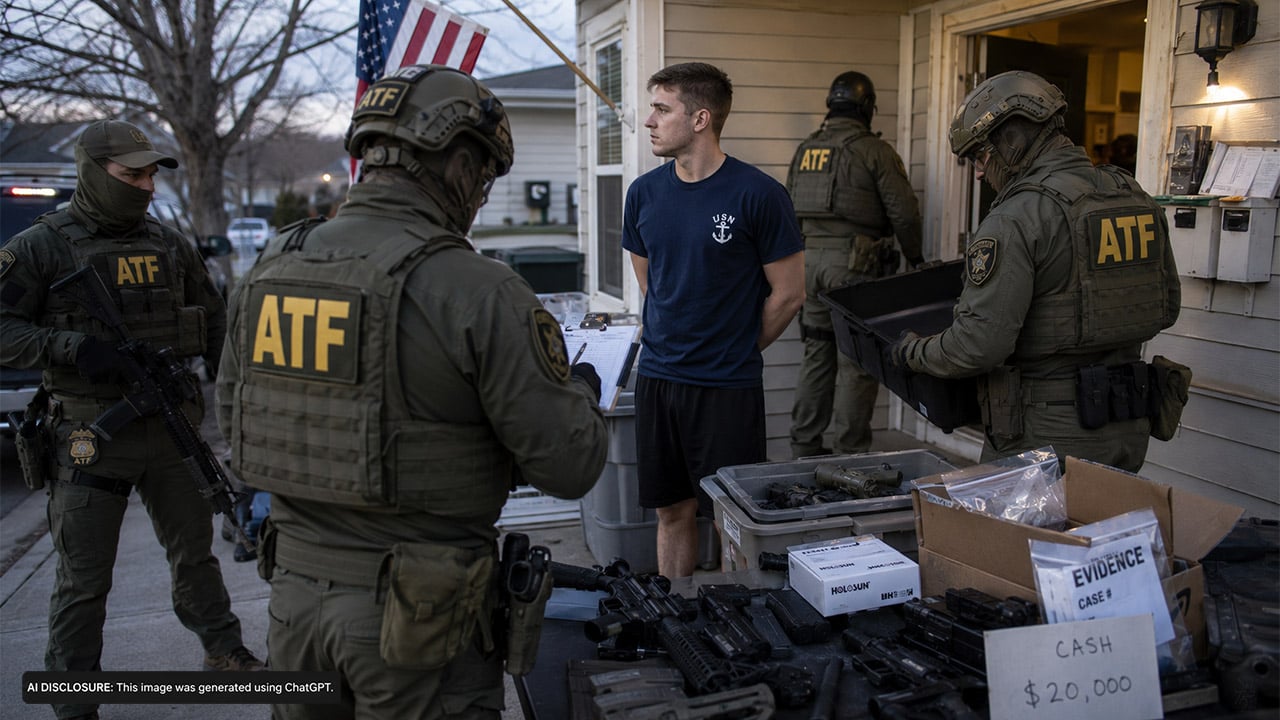
A law-abiding gun owner can do everything right—buy the right way, file the right paperwork, keep his nose clean—and still find himself standing in his own home while armed federal agents take his property. That’s the situation described in the original post, where a 20-year U.S. Navy sailor was reportedly detained at his residence while agents seized roughly $20,000 worth of legally owned firearms and gear.
The account says the items taken included regulated NFA firearms—short-barreled rifles and suppressors—owned lawfully. The post also claims the encounter and follow-on harassment left the sailor with crippling anxiety. While the original write-up was later deleted and discussion locked, the details that remain paint a familiar picture to gun owners: you can beat the rap and still lose the ride, at least for a while.
A routine day turned into a high-stress detention at home
There’s a special kind of gut-drop that comes with someone showing up armed at your front door—especially when it’s federal agents and you’re the one who’s been playing by the rules. The account describes ATF agents wrongfully detaining the sailor at his own home, not during a traffic stop or some far-off incident, but on his turf.
For most outdoorsmen and gun owners, that’s the nightmare scenario: you’re not out looking for trouble, you’re not causing a scene, and yet you’re suddenly treated like you are. Even if everything is ultimately sorted out, getting detained in your own living room changes how safe “home” feels.
They reportedly took $20,000 in legally owned guns and gear
The heart of the story is the seizure. The post states agents took about $20,000 worth of firearms and gear, including short-barreled rifles (SBRs) and suppressors that were lawfully owned. If you’ve ever priced out a quality can, a properly built SBR, optics, mounts, and the supporting gear, that dollar figure adds up fast.
To a lot of working folks, that isn’t just “stuff.” That’s years of saving, waiting, doing paperwork, and buying once instead of twice. It’s also time—range time, maintenance time, and the effort it takes to set up a rifle the way you want it for real use, whether that’s home defense, predator control, or just being a serious shooter.
The NFA angle makes it hit closer to home for serious gun owners
SBRs and suppressors sit in a category where you don’t just walk into a store, swipe a card, and walk out with your purchase the same afternoon. Lawful ownership usually means extra steps, extra scrutiny, extra waiting, and paperwork that’s supposed to prove you did it right.
That’s why this kind of seizure rattles people who hunt, shoot, and train. If regulated items—owned legally—can be swept up in a detention like this, it leaves regular citizens wondering what “compliance” even buys them when an agency shows up convinced they’re in the right.
Commenters focused on the one move that forces the issue into court
In the remaining comments, the most practical advice wasn’t chest-thumping or talk about fighting it out on the porch. It was legal process—specifically, how to respond to a federal seizure in a way that doesn’t leave your property stuck in limbo.
One commenter stressed getting an attorney and filing a claim in the seizure case as soon as possible—emphasis on a “claim,” not a “petition.” The distinction matters because, as the commenter explained, a petition can be denied as a matter of discretion and isn’t appealable in court under DOJ forfeiture rules. A claim, on the other hand, is the step that can force the government to take the seizure into court.
The same commenter also mentioned pursuing constitutional claims—described as “1983/Bivens violations”—as a potential route to challenge wrongful detention and seizure conduct. That’s not something most folks want to think about when they’re buying a suppressor for hearing protection on a hog rifle, but it’s the kind of reality check gun owners run into when things go sideways.
The part that lingers: stress, anxiety, and the cost of “being right”
The original post didn’t just frame this as a property dispute. It described the sailor being harassed and left with crippling anxiety. Anyone who has dealt with a serious legal threat—especially one that shows up at your home—understands how fast that stress gets into your sleep, your work, and your family life.
Even setting aside the money, being separated from your firearms and gear can leave you feeling exposed. For rural homeowners and outdoorsmen, firearms aren’t only recreation. They’re also the tool you grab when the dogs are barking at 2 a.m., when coyotes are working close, or when you need to put down an injured animal safely and humanely.
And then there’s the financial squeeze. Replacing $20,000 in firearms and accessories isn’t like replacing a busted cooler. If you’re forced into legal action just to get your own property back, you can end up paying again—this time in attorney fees and lost time at work.
What this story tells gun owners to do on the boring days
No one reads a story like this because they’re looking for excitement. They read it because they want to avoid being the next guy in that spot. While every situation is different, the practical theme running through the comments is simple: documentation and representation matter, and the timeline matters.
If you own regulated firearms, keep your paperwork organized and accessible, and consider how you’d respond if your property was suddenly seized. More importantly, don’t try to “wing it” through a forfeiture process that’s built to overwhelm regular people. The commenter advice that survived the lock was clear: get competent legal help early, and use the mechanism that actually puts the dispute in front of a court instead of relying on a discretionary process that can be denied without meaningful review.
Outdoorsmen tend to be independent. That’s usually a strength. But when the problem is a detention and a seizure, independence looks a lot like going it alone against a system designed to grind slow. The smart play is staying calm, staying lawful, and getting the right help before the weeks turn into months.
Like The Avid Outdoorsman’s content? Be sure to follow us.
Here’s more from us: