Photo credit: AI-generated image created using ChatGPT. Illustrative only
A lot of outdoorsmen live close enough to a state line that “running to town” means crossing into a whole different set of firearms laws. One day you’re legal and minding your business. The next day you’re explaining yourself to an officer in a place that treats carry permits like a private club membership.
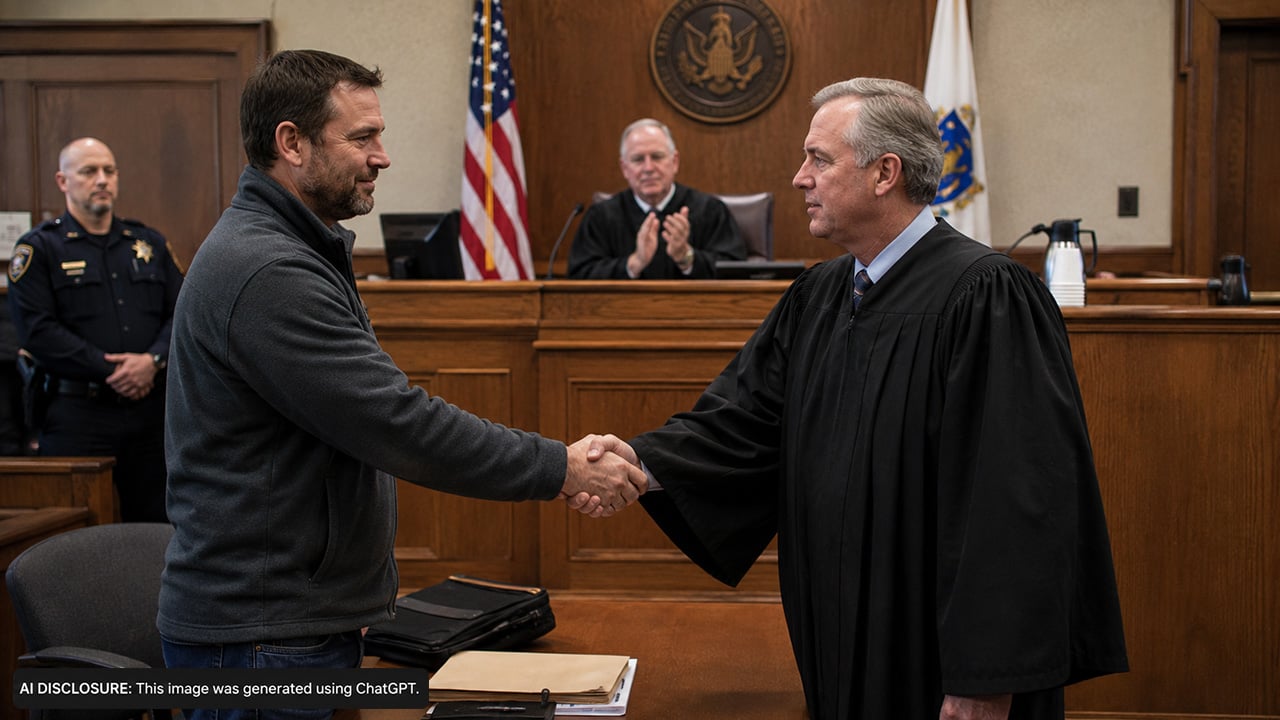
That’s the backdrop behind a recent Massachusetts case discussed in the source post: a New Hampshire resident, Dean F. Donnell, was charged in Massachusetts for allegedly carrying a gun illegally. But an MA state judge ultimately cleared him on constitutional grounds, leaning on the U.S. Supreme Court’s Bruen decision and the “text, history, and tradition” test that came with it.
How a simple state-line drive can turn into a criminal charge
If you hunt, fish, or travel for work in New England, you already know the routine: crossing a border doesn’t feel like anything in the real world, but it can feel like a brick wall in the legal world. The discussion describes Donnell as a New Hampshire resident charged in Massachusetts for “illegally” carrying.
The details of the stop and the exact charge language aren’t laid out in the material, but the situation is familiar: Massachusetts has long been known for strict rules on carrying handguns, and it’s not the kind of place where a neighboring state’s habits always translate cleanly. For regular folks, that mismatch is where trouble starts—especially if you’re used to constitutional carry or a more straightforward permit system back home.
The judge’s order: a Bruen-based win in state court
According to the source material, the key document is an opinion dated 8/3/23 in Commonwealth of Massachusetts v. Dean F. Donnell. The judge is identified as John F. Coffey, listed as an Associate Justice, and the case appears to come out of Middlesex, Massachusetts.
The post points to a video where the entire opinion is read and shown on-screen. The important part for gun owners is the outcome: the judge cleared Donnell on constitutional grounds, and the winning argument is described as being based on Bruen.
Bruen matters because it changed the way courts are supposed to evaluate gun laws. Instead of balancing tests and interest-weighing, the rule now is more like: if the Second Amendment’s text covers the conduct, the government has to justify its restriction by showing it lines up with the nation’s historical tradition of firearm regulation. That “history and tradition” requirement has been rattling cages ever since.
The argument that carried the day: you don’t lose the right to defend yourself just because you’re from out of state
Reconstructing the ruling, the source material says the defense’s winning point was basically this: there’s no historical tradition of barring people from carrying defensive arms in one state solely because they’re residents of another state. In other words, if the right exists for “the people,” the state needs more than “you’re not from here” to criminalize the act.
That’s a practical way to frame it for anyone who spends time outdoors. If you’re traveling to hunt, tow a boat, scout public land, help family, or just pass through, your need for personal protection doesn’t evaporate at the welcome sign. A lot of folks would say it actually increases—new roads, unfamiliar areas, late-night fuel stops, and plenty of time with expensive gear in the truck.
The point isn’t that every state has to love carry. The point is that after Bruen, states may have to prove their restrictions fit within a real historical pattern. And “we treat visitors differently” is a tough sell if the historical record doesn’t support it.
Other angles people wanted to see raised—fees, delays, and subjective hoops
The source material also lays out several other arguments the poster didn’t see evidence of in the decision, but thinks could matter in similar cases.
One is the real-world burden of needing a pile of permits to have something approaching nationwide carry. The post references Bruen footnote 9 and its warnings about excessive fees and excessive delays. Outdoorsmen understand that kind of burden immediately: if exercising a right requires time off work, repeated fees, travel to offices, and months of waiting—state by state—it starts to look less like “public safety” and more like an obstacle course.
Another point mentioned is Saenz v. Roe (1999), described here as prohibiting states from discriminating against visiting residents of other states. The poster notes an important nuance: Massachusetts does allow non-residents to obtain a Massachusetts carry permit, so the claim wouldn’t necessarily be that non-residents are categorically barred—more that the system can still be used in ways that treat visitors differently or unfairly in practice.
The third angle is about subjective screening in permit processes. The post mentions “letters of reference” and ties that to Bruen footnote 9 and Shuttlesworth v. Birmingham (1969), with the idea being that subjective standards in the path of a constitutional right are a major constitutional problem. The comparison offered is blunt: if the permit system is built on subjective hurdles, a person shouldn’t be punished for failing to navigate an unconstitutional system.
What gun owners and hunters should take away before crossing into a stricter state
This case is a good reminder that “eventually winning” in court can still mean getting arrested, hiring a lawyer, missing work, and spending months with a serious charge hanging over your head. Even when a judge gets it right, the process is the punishment for a lot of working people.
It also underlines a hard truth for anyone who hunts or travels with firearms: the safest plan is still to know the rules of the state you’re entering—especially around carry, transport, and what counts as legal possession. That means checking the current state police guidance, reading the actual statutes if you can stomach it, and when there’s any doubt, talking to an attorney who works in that state. It’s not about being timid; it’s about not donating your time and money to a court system.
At the same time, the constitutional side of this isn’t theoretical anymore. Decisions like Bruen are actively reshaping what states can enforce, and this Massachusetts ruling—at least as described—shows that state judges can and will apply that standard in real criminal cases, not just in big headline lawsuits.
For folks who live near borders and spend their free time in the woods and on the water, that matters. Your truck doesn’t care what state it’s parked in. But the law sure does—and now, in some cases, courts are being forced to care about the Constitution just as much.
Like The Avid Outdoorsman’s content? Subscribe to our newsletter so you never miss an article.
Here’s more from us: