Photo credit: AI-generated image created using ChatGPT. Illustrative only
If you own land or hunt the edges of public ground, you already know how these situations usually start: a couple shots in the wrong place, somebody claiming they were “just target shooting,” and a gut pile that tells a different story. That’s the thread running through the Scriba, New York case detailed in the source post—and it ends with a plea deal that left a lot of hunters shaking their heads.
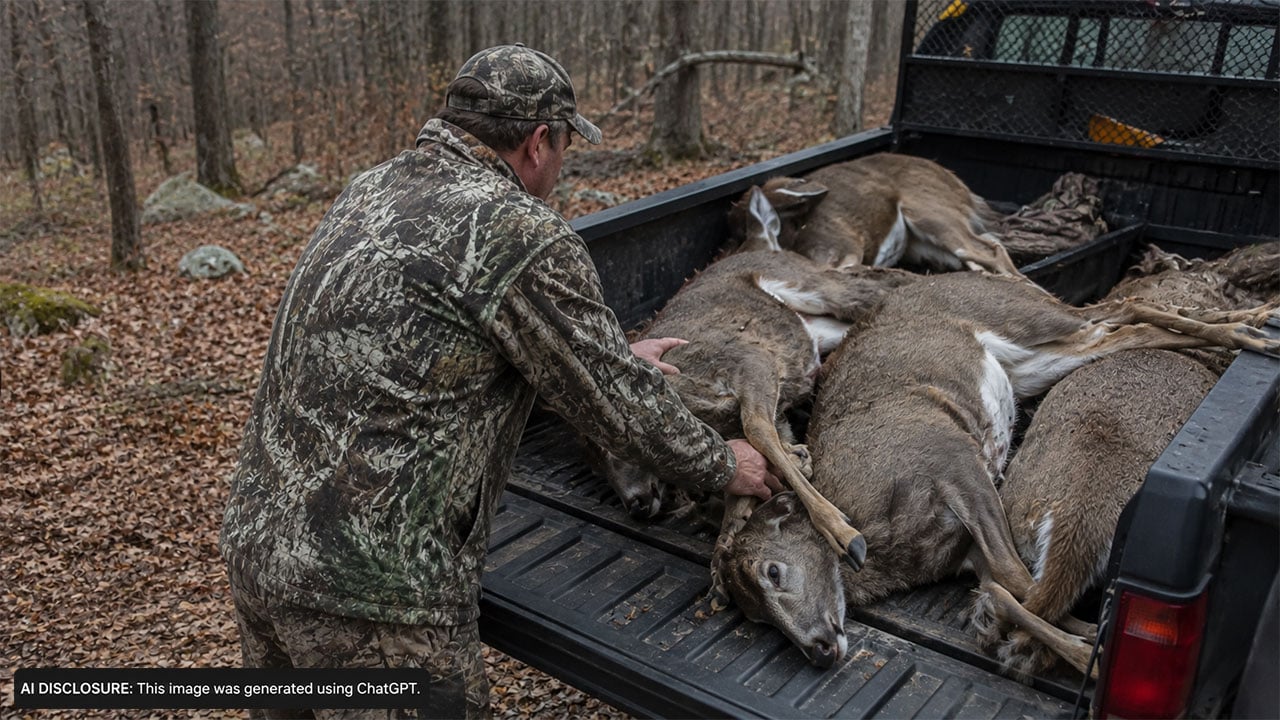
Justin Maynes, 36, of Scriba was accused of illegally harvesting more than 30 deer over a five-year span in Oswego County. Despite the scope of the alleged poaching, court records show he ultimately pleaded guilty to petit larceny and received a one-year conditional discharge, avoiding prison time and any fines.
A complaint about gunshots turned into a deer case fast
The investigation traces back to Nov. 7, 2024, when a concerned property owner called 911 after hearing gunshots on posted, county-owned property near Rikers Beach Road in the town of Scriba. A New York State Department of Environmental Conservation (DEC) officer responded and learned a state trooper had already contacted Maynes and another person and removed them from the property.
That could’ve been the end of it—two guys in the wrong spot, a warning, everybody goes home. But the responding officer was suspicious enough to forward the complaint to DEC Lt. Ryan Grogan, which is where the story takes a sharper turn.
“Sight-in” talk didn’t match the ground truth
On his way to Scriba, Grogan called both individuals, and they admitted to shooting two rifles. They said they were sighting-in—getting rifles dialed so point of aim matches point of impact.
But Grogan didn’t like what he saw when he arrived. The DEC said the area was overgrown with waist-high brush, with no clear shooting lanes—basically the opposite of where experienced shooters pick to confirm zero. Then he found a heavily used deer trail and, not far off, a freshly killed, field-dressed white-tailed buck.
That’s the kind of moment every landowner and ethical hunter recognizes. A “range day” story falls apart when there’s fresh sign and a dressed-out deer sitting in the same patch of mess.
K9 work and a casing helped connect the dots
Grogan secured the area and requested backup from Officer Brett Armstrong and his K9, Falcon. With the dog’s help, officers located what the DEC described as the original shooting location, the gut pile from the deer, and a spent bullet casing.
That casing mattered. The DEC said it was from the same type of rifle one of the individuals had admitted to shooting earlier. In the woods, small details like that are often the difference between suspicion and a case that stands up to scrutiny.
Officers followed up with interviews and, working with investigators from the Bureau of Environmental Crimes, executed search warrants. The DEC said forensic analysis of a seized cellphone uncovered a “trove” of evidence—photos and messages that tied Maynes to the illegal killing of more than 30 deer over the past five years.
The charges were serious, and the timeline wasn’t a gray area
When people hear “poaching,” they sometimes picture a technical violation. This wasn’t framed that way. Maynes initially faced second-degree criminal mischief (a felony), fourth-degree grand larceny (a felony), fourth-degree criminal possession of a weapon (felony conviction) (a misdemeanor), and wrongfully taking deer without antlers (a misdemeanor).
The DEC also laid out the basics that every New York deer hunter is expected to know: seasons are set, deer must be properly tagged, transported, and reported. In Oswego County, regular season runs Nov. 15 to Dec. 7, with bow and crossbow seasons starting earlier. In 2024, hunters harvested nearly 4,500 deer in the county—legal deer taken by folks who bought licenses, followed rules, and did it the right way.
Thirty-plus deer taken illegally over five years isn’t “one bad choice.” That’s a pattern, and it hits hard for the hunters trying to manage a property’s doe numbers, keep a buck age structure, or just enjoy a season without wondering who’s cutting corners behind the scenes.
How a felony case ended as petit larceny with no fine
Court records show prosecutors had offered Maynes a deal earlier: plead guilty to fourth-degree grand larceny (felony) and fourth-degree criminal possession of a weapon (misdemeanor), receive one year of interim probation, and—if successful—have the felony vacated down to a misdemeanor, followed by two more years of probation.
That earlier agreement also included restitution of $9,000. During an October court appearance, Judge Karen Brandt Brown said she was OK with the disposition, but she questioned what law the prosecution was using to base the $9,000 restitution on. She asked both sides for a memorandum of law on the issue and noted that, based on the indictment, it looked like the fine would go to the state.
Somewhere between that point and late January, the outcome changed. On Jan. 29, Maynes pleaded guilty to petit larceny as part of a plea deal and was sentenced by Brandt Brown to a one-year conditional discharge. The end result: no prison time, no fines, and a case that went from multiple charges—including felonies—to a single misdemeanor.
The record in the provided material doesn’t spell out exactly why the final deal shifted that far. But it does show the defense pushed hard to attack the structure of the case.
The defense arguments: where the state’s case got squeezed
In January, Maynes’s attorney, Salvatore Lanza, filed a motion asking the judge to dismiss the indictment or reduce charges. A big piece of his argument was procedural: he contended the illegally taking a deer charge was improperly brought to the grand jury for indictment when it should have been handled in Scriba Town Court.
He also took aim at the criminal mischief count, which alleged Maynes intentionally damaged property. Lanza argued, “The Defendant does not consider harvesting deer to be an intentional damage of property of the state of New York.” He further argued the weapon possession charge was vague because it didn’t specify why possession was illegal, and he challenged the grand larceny charge by calling the state’s valuation of each deer at more than $1,000 “simply arbitrary,” stating, “There is nothing in the law that tells us what the value of a deer is.”
Whether you agree with those arguments or not, they show where these wildlife cases can get complicated: restitution, valuation, and how charges are packaged can matter just as much as the photos and field evidence. If the legal framing isn’t tight, the whole thing can get negotiated down.
For hunters and landowners, the practical lesson is the same one we keep coming back to: document everything early. Posted signs, clear property lines, trail camera coverage at access points, and quick reporting are what give conservation officers something to build on when “we were just sighting-in” doesn’t pass the smell test.
And if you’re the one doing things right, this kind of outcome stings. Not because every case needs the maximum punishment, but because consistent enforcement is part of what keeps fair-chase hunting from getting dragged down by the few who treat deer like targets and seasons like suggestions.
Like The Avid Outdoorsman’s content? Subscribe to our newsletter so you never miss an article.
Here’s more from us: