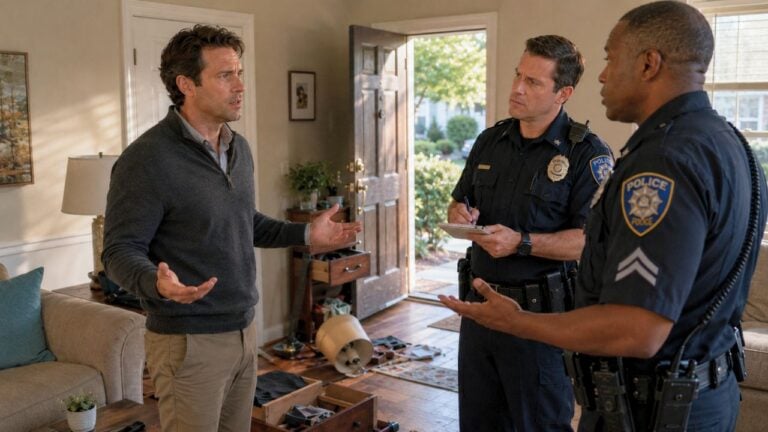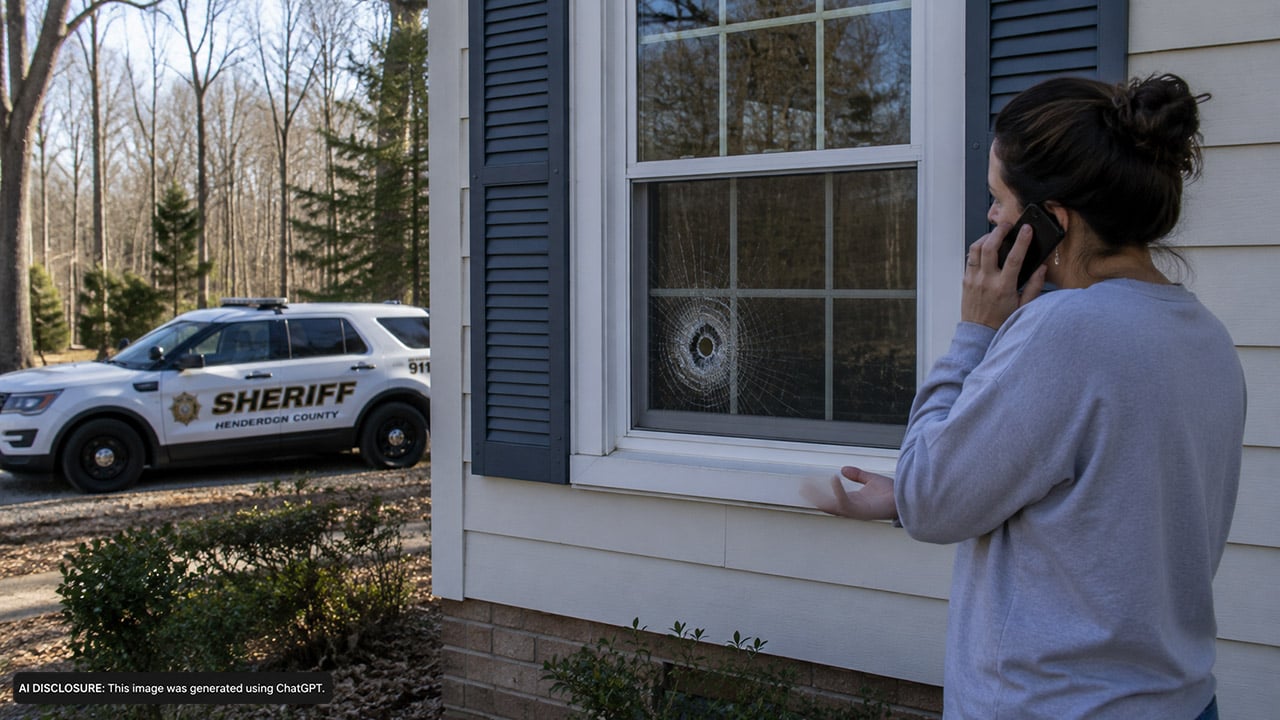
Photo credit: AI-generated image created using ChatGPT. Illustrative only
A deer in the road can turn into a mess fast—especially when somebody decides the quickest fix is to start slinging lead. In a situation shared in the original post, a North Carolina family says a sheriff fired at a deer and the shot ended up coming through a window of their mother’s house in the Outer Banks.
The family says the parents were in the room when it happened, and the bullet reportedly landed on the floor after striking inside the home. What’s got them heated now isn’t just the broken window and damaged furniture—it’s that they can’t get anyone at the sheriff’s office to return calls.
A “deer in the road” call turned into a home being hit
According to the account, the officer told them he was trying to “kill a deer in a nearby road.” The round went through the mother’s window, broke it, and also damaged a dresser where the bullet hit.
That’s the part that should make every hunter and gun owner stop for a second. You don’t get to pick where a bullet goes after a miss, a deflection, or a pass-through. A road, houses, and occupied rooms are exactly the kind of backdrop you work hard to avoid when you’ve got a firearm in your hands.
The part that really set nerves on edge: the parents were in the room
The family says the parents were in the room when the shot came through, and they were only “a few feet” from being hit. Anyone who’s spent time around gunfire knows how thin that margin is. A couple feet is nothing when a bullet is skipping through glass and drywall.
It also changes how you think about the incident. This isn’t just property damage. When a round enters an occupied home, it becomes a straight-up safety issue—one that deserves a serious response, not silence.
After the shot, the sheriff reportedly came inside and took the bullet
One detail that jumps off the page is what happened afterward. The family says the officer went to the mother’s house, took the bullet from the floor, and left.
From a common-sense standpoint, that’s unsettling. When property gets damaged by gunfire, the normal expectation is documentation: photos, measurements, a report, and evidence handled the right way. Even if the officer believed he was doing the right thing dispatching a deer, you’d still expect a clean paper trail and a clear process for repairs and liability.
Now the family says they can’t get a real person on the phone
The mother reportedly started calling the sheriff’s office “every day several times,” but only reaches voicemail and hasn’t gotten a response. That’s where frustration tends to boil over on the citizen side, because the problem doesn’t go away: the window is broken, there’s interior damage, and the family is rattled.
For rural folks, this is also the reality check—when the incident involves the same department you’re trying to get answers from, it can feel like you’re stuck. And when the shooter is a law enforcement officer, people immediately wonder how they’re supposed to get an unbiased investigation and a fair outcome.
The outdoorsman takeaway: “dispatching” deer still requires a safe backstop
Most hunters understand why someone might want a wounded deer handled quickly, especially if it’s suffering in or near a roadway. But no deer is worth sending a bullet toward houses, vehicles, or anything you can’t safely control.
Even a good shot can turn bad if the angle is wrong, if the deer is positioned near hard surfaces, or if the round skips. Glass, pavement, and even frozen ground can do unpredictable things. If you don’t have a safe backdrop, you don’t take the shot—period. That’s the same standard whether you’re a kid on your first hunt or a seasoned hand wearing a badge.
What people in these situations typically focus on next
The post asked, plainly, “What we need to do?” With the details provided, the practical next steps in a situation like this usually revolve around three things: documentation, outside reporting channels, and repairs.
On the documentation side, folks generally start with photos of the window, the interior damage, and the bullet path if it can be safely understood. Write down the date, approximate time, what was said at the scene, and who was present. If there are neighbors who heard the shot or saw the officer’s vehicle, note that too.
On the reporting side, when a local office won’t return calls, people often look at escalation routes that aren’t the same front desk voicemail—county leadership contacts, a request for a formal incident report, or state-level agencies that can receive complaints. The goal isn’t to pick a fight. It’s to make sure the event is officially recorded and handled like the serious safety incident it was.
And on the repair side, homeowners often have to decide whether to wait for the agency to respond, file an insurance claim to get the house secured, or do the minimum fix (like boarding a window) while keeping receipts. Broken glass doesn’t care about bureaucracy, and a home needs to be safe and weather-tight.
If there’s one thing most experienced landowners learn the hard way, it’s this: you can be polite and still be firm. A round through a window isn’t a “we’ll get back to you when we get time” kind of problem.
The family’s account is short, but the basic picture is clear: a shot meant for a deer reportedly entered an occupied home, caused damage, and left a family trying to get someone—anyone—on the phone to take responsibility and explain what happens next. In the outdoors world, we preach knowing what’s beyond your target for a reason. This is what it looks like when that rule gets ignored, and regular people are left to pick up the pieces.
Like The Avid Outdoorsman’s content? Be sure to follow us.
Here’s more from us: