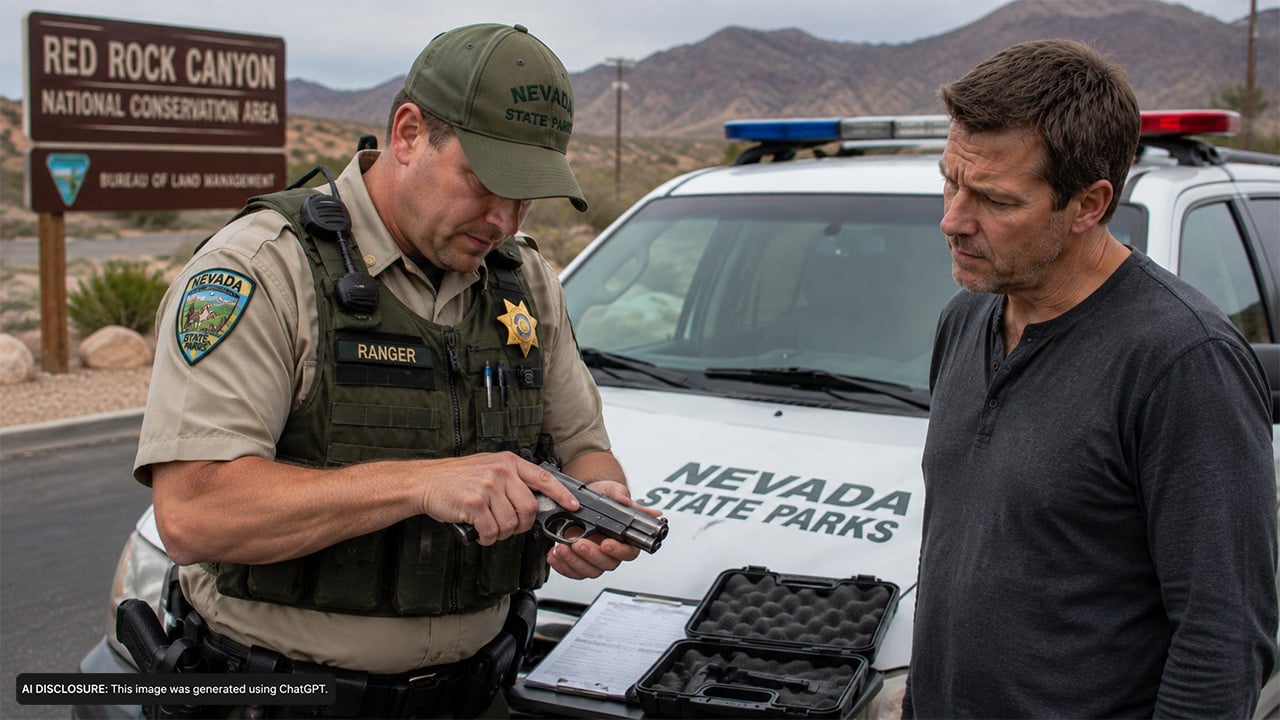
Photo credit: AI-generated image created using ChatGPT. Illustrative only
A routine traffic stop in Pennsylvania went sideways fast after a driver tried to do what many of us have been taught is the “right” thing: calmly disclose a legally carried handgun before reaching into the glove box for paperwork. In the original post, the driver says he was pulled over for running a red light while hurrying to pick up his girlfriend for work.
He wasn’t trying to be difficult. He says the pistol was stored in the glove box where he also kept his registration and insurance, so he warned the officer ahead of time to avoid any sudden surprises. That one decision—made in the name of safety—set off a chain of events that ended with officers searching the vehicle, finding marijuana in a closed compartment, and the driver leaving the scene expecting drug possession paperwork in the mail.
The stop began with a simple traffic claim
According to the driver, he noticed a patrol car pull out and follow him for a couple blocks before initiating a stop. The officer told him he’d run a red light and asked for the usual trio: driver’s license, registration, and proof of insurance.
Any hunter or gun owner who’s been pulled over with gear in the truck knows the moment. Your heart rate ticks up because you’re running through the safest way to handle the next five minutes—hands visible, no surprises, no reaching around.
Disclosing the handgun changed the temperature immediately
The driver says he told the officer he had a legal handgun in the glove box, specifically because he’d need to open it to retrieve his paperwork. He also says he had a license to carry, and that permit was in his wallet in his back pocket.
The officer instructed him to keep his hands on the steering wheel while a partner retrieved the firearm from the glove box and unloaded it. That’s a common-enough move during stops: control the gun, slow everything down, and reduce risk. Up to this point, it reads like a stop that’s tense but still procedural.
From “hands on the wheel” to “step out” to a full search
After the driver handed over his information, he says the officer told him to step out of the vehicle and then frisked him. The officer asked if there were any other weapons in the car, and the driver said no.
Then came the part that would make most lawful gun owners’ ears perk up: the driver says the officer proceeded to search the vehicle anyway, looking for “other weapons” the driver had already denied having. During the stop, three additional police cars arrived, and the driver was moved to the back of his vehicle with other officers while the search continued.
At least from the driver’s telling, this wasn’t a quick peek for a knife under the seat. He says the officer searched the driver side, went around the back, and then continued on the passenger side.
Handcuffs, Miranda, and marijuana in a closed compartment
The driver says that during the search he was placed in handcuffs and read his rights, but he wasn’t told what he was being arrested for. The search continued, and the officer located a bag of weed in a closed compartment above the glove box.
The driver says he told the officer it wasn’t his and that he doesn’t smoke. He also notes he was running late to work and asked if he could call in when it seemed like he might be taken away in a cruiser.
Instead, he says officers removed the cuffs, returned his handgun—unloaded—to the glove box, placed his paperwork on the passenger seat, and let him leave. The officer told him he’d receive papers in the mail for possession of an illegal substance.
The question every permit holder asks: was the search actually allowed?
The driver’s confusion is the same one you hear around campfires and gun counters: if you’re legally carrying and you disclose it, how does that turn into a full-vehicle search when the original issue was a traffic violation?
This is where real life and legal standards often collide. In many places, a traffic stop doesn’t automatically give an officer the right to search the entire vehicle. Typically, a search requires consent, a warrant, or some recognized exception—like probable cause that a crime is happening, or certain safety-based limits that let officers do a more narrow sweep for weapons.
But in the field, “officer safety” is a powerful phrase, and it can expand a stop from a citation into something much bigger. The driver’s account suggests officers treated the presence of a firearm as the trigger to escalate: retrieve the gun, frisk the driver, ask about additional weapons, and then start looking.
Even if you’ve done everything right, that’s the uncomfortable truth: disclosing can be the safe move, but it can also change the officer’s posture instantly. And once multiple units roll up, the odds of the stop staying simple drop in a hurry.
Practical lessons for outdoorsmen carrying in a vehicle
No one wants to learn these lessons the hard way on the shoulder of the road, but they matter—especially for folks who spend time in rural areas and travel with firearms as a normal part of life.
First, think hard about where you store your carry gun relative to your paperwork. If your registration and insurance live in the same compartment as your handgun, you’re almost guaranteed to have an awkward moment during a stop. A simple change—keeping documents in a visor wallet or a separate console pocket—can reduce the need to open the “gun compartment” at all.
Second, keep your movements slow and visible. The driver says he waited with the car off and disclosed before opening the glove box, which is the kind of calm behavior most officers say they want. That’s still a smart way to handle the human side of the encounter, even if it doesn’t guarantee the stop stays limited.
Third, understand that a roadside discussion isn’t the place to “win” an argument about search authority. If a stop escalates to a frisk, handcuffs, or a vehicle search, the smartest move is usually to stay polite, don’t physically resist, and sort out the legality afterward through proper channels. That’s not surrendering your rights—it’s keeping a traffic stop from turning into something worse.
Finally, if you share a vehicle with other people—friends, family, coworkers—recognize the risk you’re taking. The driver says the marijuana wasn’t his and was found in a closed compartment above the glove box. Whether it belonged to a passenger, a previous rider, or someone else entirely, it was still inside his vehicle, and he was the one looking at possession paperwork afterward.
For hunters and anglers, this is the same lesson as finding an unknown shell casing in your truck at a check station: you may not have put it there, but you’ll be the one explaining it.
The driver’s decision to disclose a lawful handgun was meant to keep everyone safe. Instead, it turned a red-light stop into a full-blown search and a drug allegation. If you carry—and a lot of outdoorsmen do—it’s worth setting your vehicle up so a routine stop stays routine, and so a legal firearm doesn’t become the spark that lights the fuse.
Like The Avid Outdoorsman’s content? Be sure to follow us.
Here’s more from us: