Photo credit: AI-generated image created using ChatGPT. Illustrative only
Buying your own slice of East Texas is supposed to be simple: a gate, a few stands, maybe a food plot if you’ve got time. But one landowner found out quick that “private” doesn’t always mean people stay out.
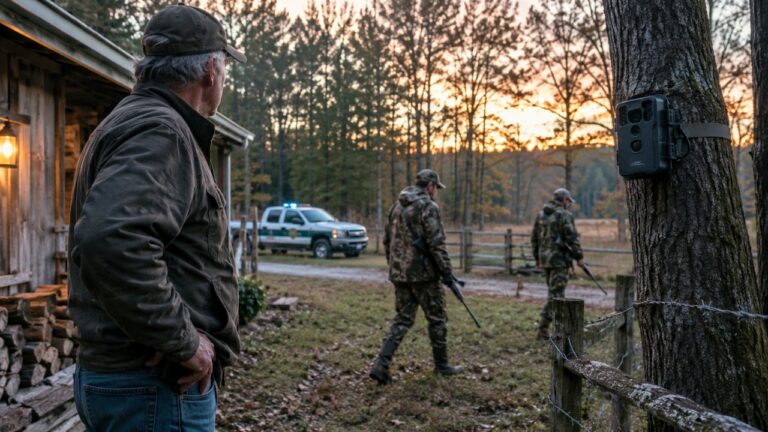
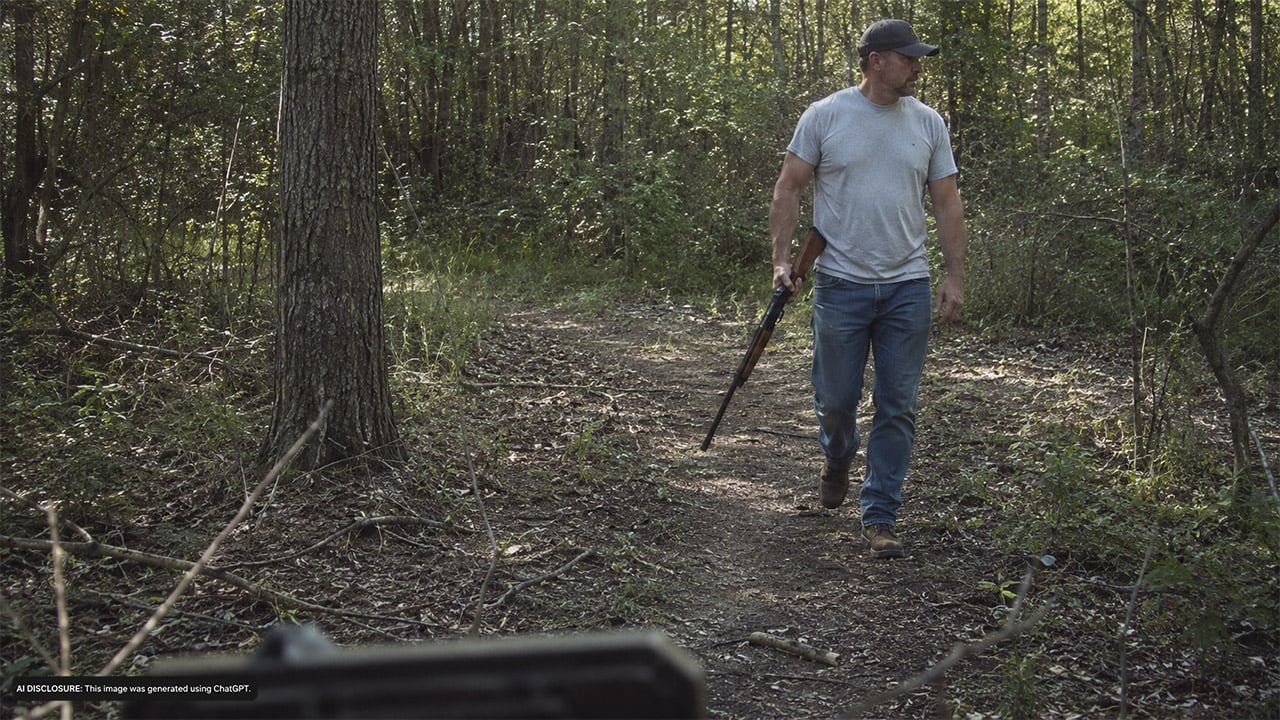
In the original post, the new owner of a 50-plus-acre property said he’d already dealt with minor trash dumping after the purchase. He cleaned it up and kept moving. Then he pulled his trail camera cards and saw something different—dogs on two separate days, and on a third day a man walking by with the same dogs and what looked like a shotgun.
The first warning sign was the trash
Most rural landowners have seen it: a bag of household garbage tossed at the edge of a county road, a pile of old shingles, maybe a busted TV somebody didn’t want to pay to dispose of. The owner said he’d found a couple instances of dumping on the new place, but it was minor enough that he hauled it off and didn’t make a big deal out of it.
That’s a common approach early on. You’re excited about the property, you don’t want to start a war with neighbors you haven’t met, and you’re hoping it was a one-off. The problem is, dumping can be a signal that folks already think of a tract as unmonitored, or “nobody’s land,” especially if the owner lives a few hours away.
The trail camera pictures changed the situation
The big shift came when he checked his cameras. Instead of trash, he had images that suggested active use—dogs moving through on two different days, then a man with the same dogs on another day, carrying what he described as a possible shotgun.
It wasn’t just a random hiker cutting a corner. To the landowner, it looked like somebody running dogs through his place and hunting—or at least prepared to hunt—without permission. And the part that stuck in his craw was that the guy walked past a posted “no trespassing” sign and didn’t hesitate.
He wasn’t sure if it was hog hunting or something worse
What made it tricky was motive. The landowner said he wasn’t completely upset about someone walking through the land, and he even floated the idea that the man might be a local who knows the area better than he does. Since the owner lives about three hours away, he’s not there every weekend to keep eyes on the place.
He also questioned what the trespasser could be hunting that time of year if it wasn’t hogs. In Texas, hogs are often the “usual suspect” when you see dogs and a long gun outside of typical deer season patterns, but the owner’s concern was straightforward: if it isn’t hogs, is it out-of-season game? And if a guy ignores a sign once, what else will he ignore?
The safety issue wasn’t theoretical anymore
Trail cam photos can feel like a victory—proof is proof—but they can also raise the temperature. Once you know someone is on your place with a firearm, it’s not just about property rights and deer management. It’s about safety.
A stranger moving around your acreage with dogs and a gun creates real risk. You don’t know where he’s shooting, what’s beyond his target, whether he knows your boundaries, or if he’s the kind of person who gets angry when confronted. And if you or your family show up during deer season, you don’t want any confusion about who’s where, or somebody “still-hunting” your back corner like it belongs to them.
The landowner was clear about his line in the sand: he didn’t want the property treated like a free-for-all. He might be fine with a local taking a hog once in a while, but not with someone coming and going whenever they want—especially when deer season rolls around.
He considered contact first, but didn’t want to invite more problems
His first instinct was surprisingly reasonable: talk to the guy and understand his motives. If he could have a phone conversation, he might feel better about what’s happening and set expectations. That’s the neighborly approach a lot of country folks prefer—handle it like adults, keep it from turning into an ongoing feud.
But there’s a catch. If you open the door the wrong way, you can accidentally grant a sense of permission where none exists. The owner worried about looking like a pushover or giving the trespasser—and “all his buddies”—the idea that they’ve got a standing invite.
To try to bridge that gap, he mentioned two possible next steps: repositioning cameras to capture a clearer face shot, and posting a sign with his cell number asking the trespasser to call and discuss intentions. At the same time, he wondered if that was just a waste of time and whether he should focus on documenting the trespass and reporting it to the sheriff.
Documentation and boundaries are the real leverage on rural property
Even without getting into legal fine print, the practical side of this is pretty simple: landowners need clean boundaries and solid documentation. A “no trespassing” sign matters, but it works best as part of a bigger system—clear marking, maintained fence lines or gates where possible, and cameras placed where they catch faces, vehicles, and travel routes.
The other big piece is consistency. If someone has been using a tract for years—running dogs, cutting across it, hunting it—they may act like it’s normal. That doesn’t make it right, but it does mean the owner often has to be the one to reset the standard. And that reset is usually best done sooner rather than later, before the habit turns into “tradition.”
There’s also a hard truth in the landowner’s post: distance makes enforcement tougher. Living three hours away gives trespassers a sense of comfort. Cameras help, but they’re not the same as being present, improving access control, and making it obvious the property is watched and cared for.
In the end, this wasn’t about being unfriendly. It was about keeping a property safe, protecting hunting seasons, and making sure one armed stranger with dogs doesn’t decide he’s the manager of land he doesn’t own. When you buy rural acreage, you’re not just buying dirt and trees—you’re taking on the job of setting the rules, and making sure people follow them.
Like The Avid Outdoorsman’s content? Be sure to follow us.
Here’s more from us: