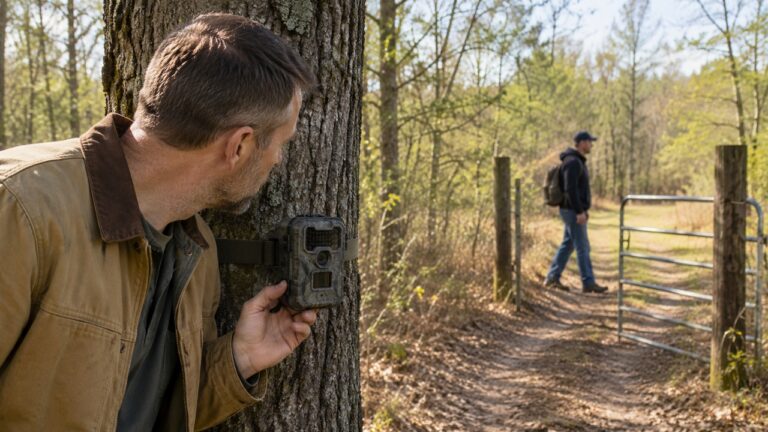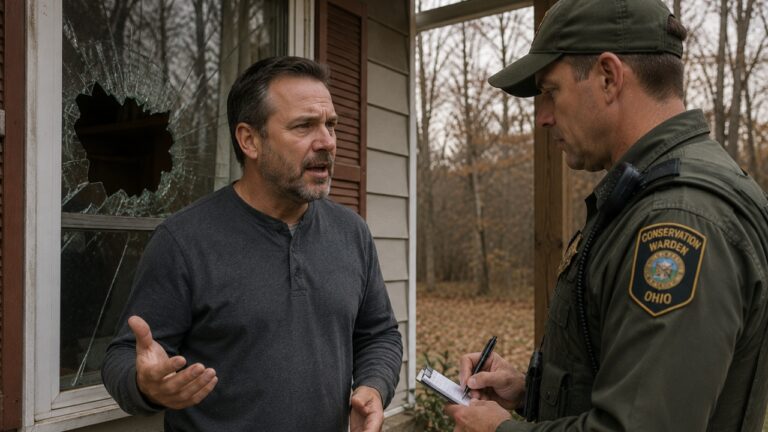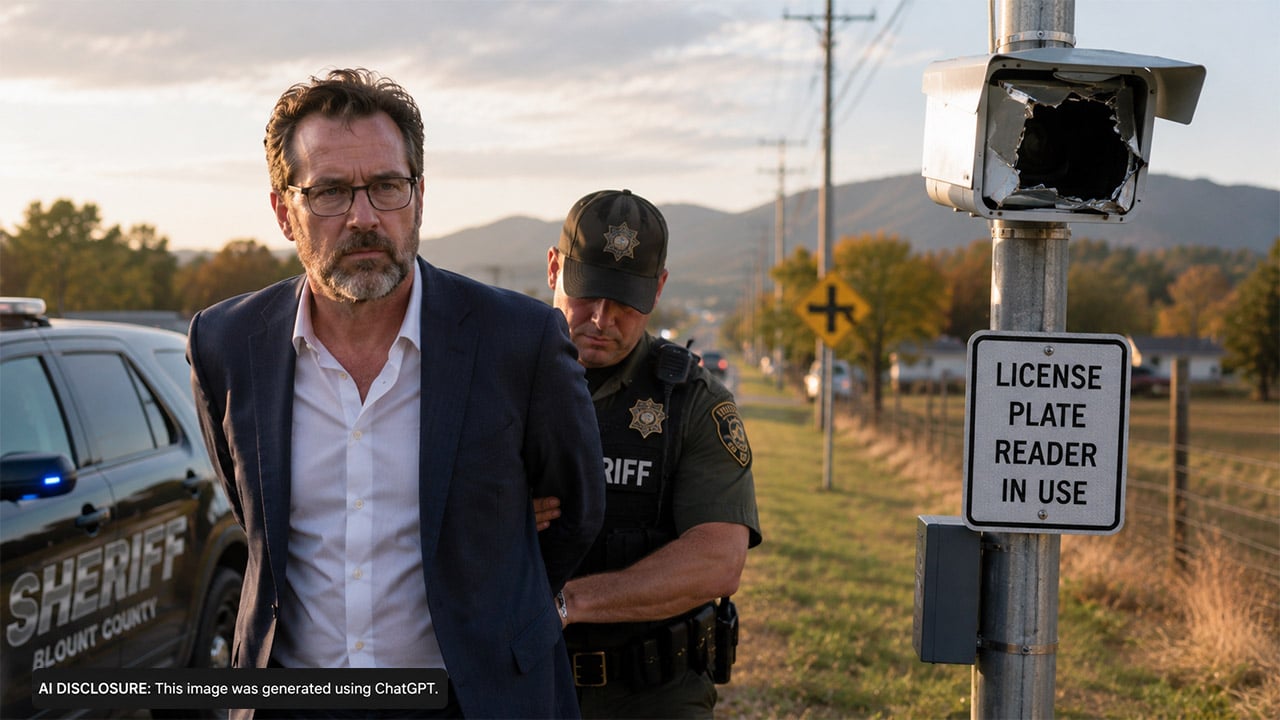
Photo credit: AI-generated image created using ChatGPT. Illustrative only
Most folks who live out in the country understand the push-pull between privacy and public safety. You want criminals caught, but you also don’t want to feel like every drive to town is getting logged and stored somewhere forever.
That tension boiled over in Blount County, Tennessee, where an independent congressional candidate is accused of taking a rifle-and-scope approach to a tech policy fight. According to the source post, Adam Lee Heimerman, 37, admitted to shooting four automated license plate reader cameras over an eight-day stretch in July 2026—and now he’s facing four felony vandalism counts.
Eight days, four cameras, and a trail that led back to a candidate
The affidavit information cited in the report lays out a tight timeline: damage to four ALPR systems was discovered between July 14 and July 22, 2026. Three were in Blount County, and a fourth was in the City of Maryville.
Heimerman, who is listed with the Tennessee Secretary of State as an independent candidate challenging Rep. Tim Burchett in Tennessee’s 2nd congressional district, was arrested after allegedly admitting to the shootings. The arrest was reported July 31, and he’s being held in the Blount County Correctional Facility on a $40,000 bond, with a court appearance scheduled for August 5, 2026.
What these Flock cameras actually do—and why people get fired up about them
Flock Safety cameras aren’t trail cams and they aren’t a simple “red light” camera either. They’re networked devices designed to capture license plates, timestamps, and vehicle data, then send that information into cloud-based law enforcement analytics.
In plain language, they’re built to help track vehicles across corridors—more like a wide-area neighborhood camera system than a single camera watching a front porch. Supporters call that a powerful tool for solving crimes. Critics see it as constant monitoring of everyday drivers, especially when rules on retention and access aren’t crystal clear.
The outdoorsman angle: shooting at equipment is still shooting, and it’s rarely “just property damage”
Out here, people are used to solving problems face-to-face: a fence line dispute, a trespasser cutting across a hayfield, somebody dumping trash at the back gate. But the minute bullets start flying at public infrastructure—especially along roads—you’ve moved from “I’m mad” into a safety problem with real criminal penalties.
The reporting notes that at least one of the damaged units was confirmed to be Flock Safety-branded, and one camera was accessed from a church property while services were actively underway. That detail matters. Even if a person thinks they’re only “taking out a camera,” the real-world risk is stray rounds, traffic nearby, and people who never signed up to be part of it.
And once it crosses into felony vandalism counts—as this case did—life gets expensive in a hurry. Bond money, attorneys, time off work, and the kind of record that doesn’t care whether you were making a “political point.”
The political irony: the same district is already fighting about these cameras through legislation
The odd part is this didn’t happen in a vacuum. The incumbent in that same district, Rep. Tim Burchett, has been publicly pushing to restrict or ban Flock cameras on civil-liberties grounds, and the company has responded directly to his proposed legislation.
That’s what makes this situation feel like a cautionary tale for anybody who’s frustrated with surveillance tech. There are channels already in motion—legislation, hearings, public pressure, records requests. The allegation here is that a man running for Congress decided to skip all that and destroy the hardware instead.
People’s reactions split fast—“hero” talk versus felony reality
Online reaction, as you’d expect, wasn’t measured. The source material describes comments on a local station’s Instagram reel that included people calling Heimerman a “hero,” along with demands for a legal defense fund.
That right there shows how charged the camera issue has become. A lot of folks see ALPR systems as a step too far, and they’re tired of being tracked. But the courtroom doesn’t grade on vibes. Four damaged units turned into four felony vandalism counts, and that’s the lane this case is in now.
If you don’t like ALPR cameras, there are smarter moves than a trigger pull
Whether you lean hard toward privacy or hard toward law-and-order, most people can agree on one thing: shooting out cameras on public roadways isn’t a plan—it’s a mess. It also hands the pro-surveillance side the easiest talking point in the world: “See, we need more protection for these systems.”
Tennessee lawmakers are already reviewing how ALPR deployments should work, including data retention limits and transparency requirements. That’s where the fight can actually be won or lost—through clear rules on how long data is kept, who can access it, what audits exist, and what the public can see about where cameras are installed.
This is also a good reminder for gun owners: the Second Amendment doesn’t cover bad judgment. The fastest way to lose your rights—and your money—is to turn a political disagreement into a shooting incident. If you want less surveillance, the best pressure is boring pressure: show up, call, write, document, and vote. That’s slower than a rifle shot, but it’s the only route that doesn’t end with four felonies and a bond you’ve got to come up with in cash.
Like The Avid Outdoorsman’s content? Subscribe to our newsletter so you never miss an article.
Here’s more from us: