Photo credit: AI-generated image created using ChatGPT. Illustrative only
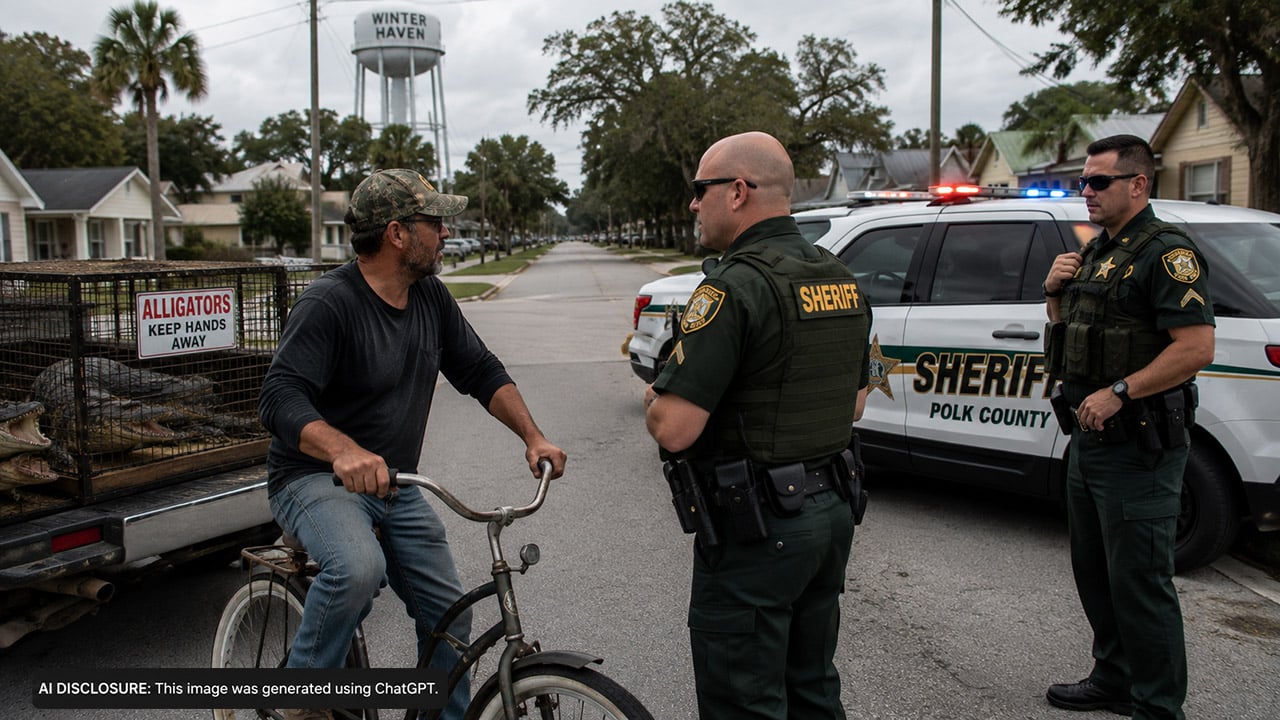
A late-night bicycle ride in Winter Haven didn’t sound like it was headed anywhere but home. No reckless driving, no drama—just a deputy noticing a bike rolling along without lights and deciding to make a stop.
But the stop turned into something only Florida could deliver, as laid out in the source post: Polk County Sheriff Grady Judd says deputies ended up arresting the rider on an outstanding warrant tied to keeping alligators at his house.
The stop was about basic visibility, not a bigger crime
According to the Polk County Sheriff’s Office, a deputy stopped the man late one night because his bicycle had no lights. That’s the kind of thing most outdoors folks understand—visibility isn’t just a “ticket issue,” it’s a safety issue. Cars don’t see you until it’s too late, and on a dark street you’re relying on everyone else to be paying attention.
Plenty of stops like that end with a warning, a quick lecture, or maybe a citation. This one didn’t, because the deputy couldn’t even get a clean ID on who he was dealing with.
He didn’t have ID, and the name he gave didn’t come back
Judd says the man didn’t have identification, so he gave his birthday and said his name was “Tony.” When the deputy ran that information, nothing showed up. Then the man provided a different birth date to try again, and still nothing came back.
If you’ve ever dealt with a game warden at a boat ramp or a deputy at a roadside check, you already know how this goes: the fastest way to turn a simple contact into a long night is to make the officer guess who you are. Even if you think you’re “saving time,” the system is built to confirm identity, not take your word for it.
The real name brought an outstanding warrant along with it
Deputies eventually determined the man was not “Tony.” Judd identified him as Surujpaul Ramjordan. And once they had the right name, they also had a reason the stop wasn’t going to end with him pedaling off into the night.
Judd says Ramjordan had an outstanding warrant for possessing alligators without authority. Florida Fish and Wildlife records obtained by PCSO indicate he kept two alligators in his home. That’s where this shifts from “traffic stop” to “wildlife case” in a hurry.
Florida law, as cited in the report, states a person is not permitted to “take or possess any alligator or the eggs thereof without having been issued an alligator license.” In other words: if you’ve got gators, you’d better have the paperwork and the authority to have them—because the state doesn’t treat that like a harmless hobby.
Keeping gators at home isn’t a novelty—it’s a safety and responsibility problem
A lot of outdoorsmen respect alligators the way they respect anything wild that can hurt you fast: give it space, don’t get casual, and don’t pretend you’re in control just because you’re on your own property. Two alligators in a home isn’t like keeping a turtle in a tank. Even if they’re small now, they don’t stay that way.
Then there’s the public side of it. Animals escape. People make mistakes. Visitors don’t know what they’re walking into. And when something goes wrong with a dangerous wild animal, it’s never “just your problem” anymore. Neighbors, first responders, and anybody nearby can get pulled into it.
That’s why wildlife laws tend to be strict and enforcement tends to be firm. The state wants control over who has high-risk animals, where they’re housed, and whether they’re being handled in a way that doesn’t create a problem for everyone else.
The stop turned into additional charges when he resisted and gave false information
Judd says Ramjordan was uncooperative and told deputies he was “working for the feds.” PCSO also says he’s facing charges of resisting without violence and two counts of providing false ID to law enforcement.
That’s another outdoors lesson that crosses over to everyday life: when you’re dealing with law enforcement, the moment you start feeding bad information, you’re stacking trouble on top of trouble. A warrant is one thing. Turning a basic stop into an identity mess—and then resisting—usually means more charges, more time, and fewer options.
PCSO says he was arrested and taken to the Polk County Jail.
There’s a straight-line takeaway here for anyone who spends time on the road at odd hours, runs a trapline before daylight, or bikes around town after dark: handle the simple stuff like lights and ID, and don’t gamble with wildlife laws. If you want to be around animals like gators, do it the legal way—because the state isn’t going to treat an illegal “pet” like a quirky mistake once it shows up on their radar.
Like The Avid Outdoorsman’s content? Subscribe to our newsletter so you never miss an article.
Here’s more from us: