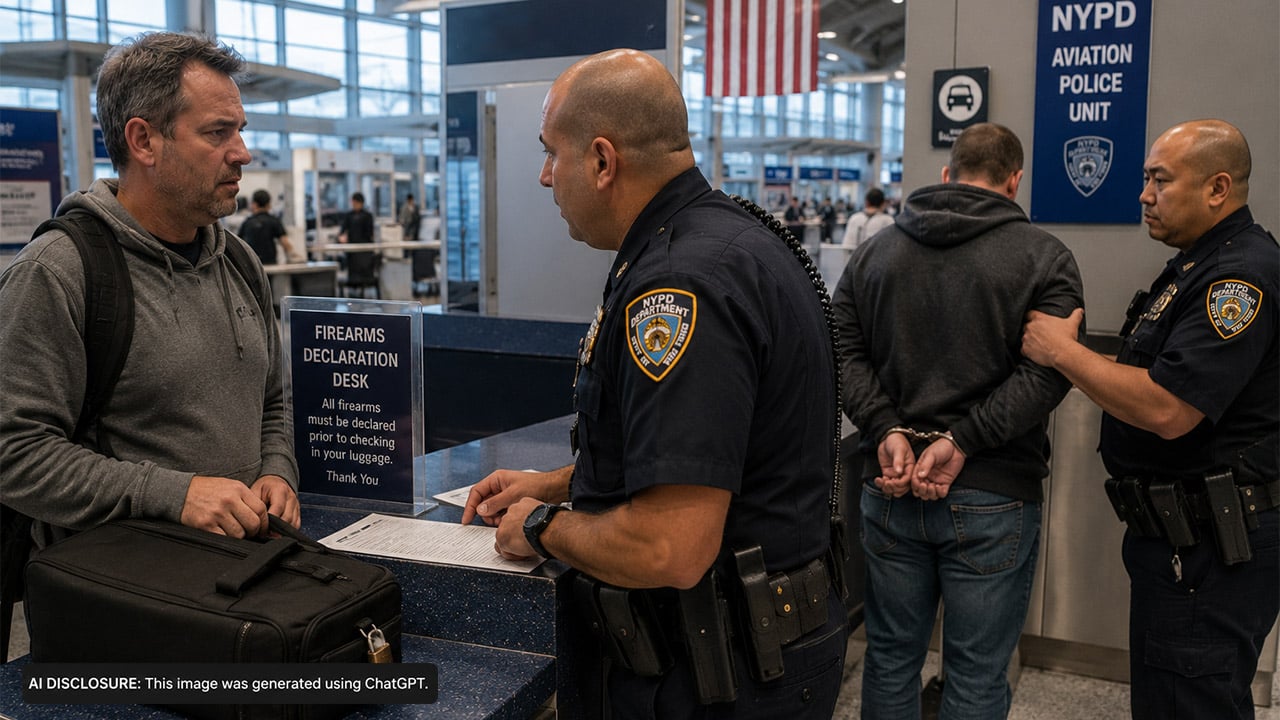
Photo credit: AI-generated image created using ChatGPT. Illustrative only
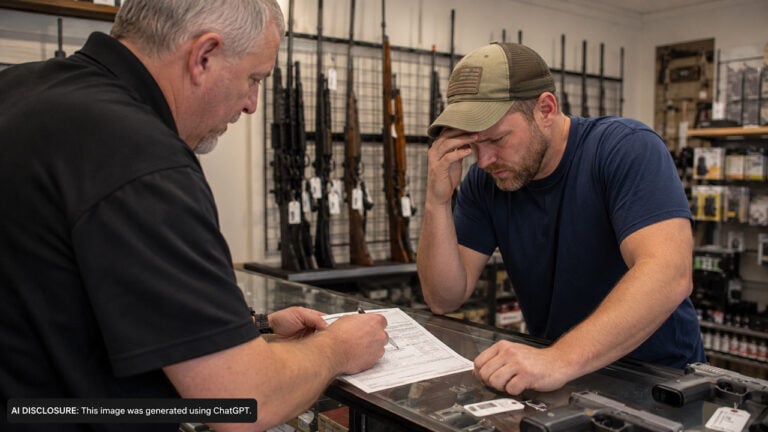
A guy from Wisconsin did what most gun owners think is the “right” move at an airport: he walked up to the airline counter and said, “I’d like to declare a firearm.” Instead of getting a declaration card and heading for his gate, he says it ended with officers walking up, inspecting his locked case, and putting him in handcuffs.
The details come from the original post, where he explained he’d traveled to New York for the holidays, brought his handgun along, and had “no problems” while he was there. The trouble started when he tried to fly home out of a New York City airport and followed the normal airline procedure for checking a firearm.
He thought he was doing it by the book
From his description, he didn’t try to sneak anything through security. He says the handgun was in a locked case inside his checked bag, with no ammunition, and even had the slide removed.
That’s the kind of preparation a lot of hunters and shooters are used to when they travel—hard case, lock it up, ammo separate, declare it at the counter. In most of the country, that gets you a quick inspection, a signature, and you’re done.
The moment he declared it, the tone changed
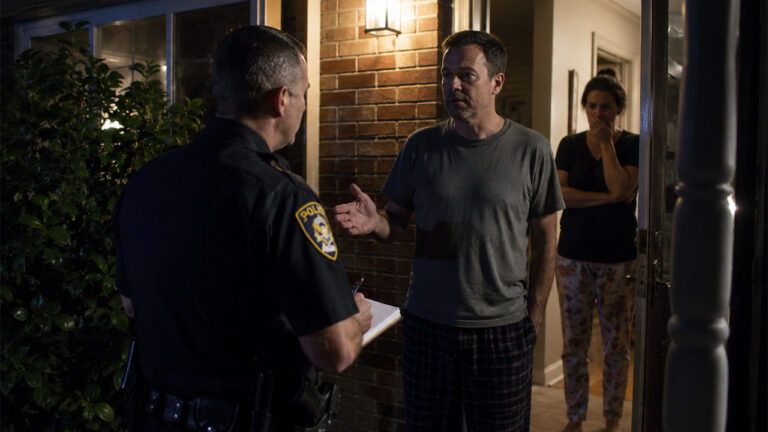
According to his account, the airline agent responded calmly—“ok cool”—and then made a call. A short time later, police officers walked over and asked to see the firearm.
After looking at it, he says they arrested him and charged him with a felony. No shouting match. No argument in the terminal. Just a straightforward declaration that turned into a criminal case.
Why this happens in New York City, even for out-of-state gun owners
If you’ve spent your life in states where a law-abiding adult can own a handgun without a stack of extra permissions, New York City can feel like a different planet. The big trap is assuming that airline rules and federal travel norms automatically protect you from local gun laws once you step onto city soil.
What many experienced travelers warn about—and what this story highlights—is that NYC has its own tight restrictions and permitting requirements. A person can be completely legal at home and still be treated like they’re in illegal possession the moment they’re in the city with a handgun, especially if they don’t have the right local authorization.
Even if you never load it, even if it stays cased, and even if you only handle it to comply with the airline’s declaration procedure, the city can still view it as unlawful possession. That’s the hard lesson here: “safe” and “unloaded” doesn’t always equal “legal,” depending on where you are standing when you say the words, “I need to declare a firearm.”
The part outdoorsmen should pay attention to: airports aren’t neutral ground
A lot of folks assume an airport is sort of a federal island where the rules are the same everywhere. It isn’t. You’re still in a specific city and state, and local law enforcement can get involved fast, especially when a firearm is introduced into the check-in process.
This is why you’ll hear seasoned gun owners say they’ll avoid certain airports entirely when traveling with handguns—even if it means a longer drive or a different flight. The risk isn’t usually the airline. The risk is the jurisdiction you’re physically in when that bag gets opened and your gun becomes part of a conversation with a badge.
In this case, the gun owner admits bringing the gun to NYC was “very stupid idea,” which tells you he already understands, in hindsight, that he walked into one of the harshest environments in the country for handgun possession.
His immediate questions were the right ones: get a local lawyer
After the arrest, his focus turned practical: he asked how to hire an attorney in New York City, what it might cost, whether it’s hourly or flat-fee, and how to judge whether a lawyer can actually handle a case like this.
That’s exactly where your mind should go if you ever find yourself in this kind of bind. A local criminal defense attorney who regularly deals with firearms cases in that jurisdiction is not a luxury—it’s the starting point. The “I’m legal back home” argument may feel morally true, but it doesn’t automatically help you in a courtroom that’s applying NYC and New York State rules.
Cost-wise, these cases can get expensive quickly, and the price can depend on whether the charge is reduced, whether there are court appearances, and whether it becomes a fight over motions and hearings. But the bigger point is this: once you’re in felony territory, you don’t bargain-shop like you’re buying a used outboard motor. You find the right help and you listen.
What gun owners can learn before they ever pack a case
This story is a cold shower for anyone who travels with firearms, whether it’s for a hunt, a match, a cabin weekend, or just because you prefer having your own handgun nearby. You can do everything “airport correct” and still be on the wrong side of the law the second you cross a border into a restrictive place.
The simplest prevention is planning your route and your airports like you plan your hunt: know the land. If your destination—or even a layover—puts you in a jurisdiction that treats handgun possession as a serious crime without specific permits, don’t assume your home-state status buys you any grace.
And if you’re traveling for the outdoors, it’s worth thinking about alternatives. For certain trips, bringing a different legal tool for the job (or arranging legal access at your destination) may keep you out of a situation where doing the “responsible” thing at the counter becomes the beginning of a nightmare.
For this Wisconsin gun owner, the damage wasn’t caused by careless handling or bad intentions. It came from a bad assumption: that declaring properly would protect him. In a place like New York City, that assumption can cost you dearly.
Like The Avid Outdoorsman’s content? Be sure to follow us.
Here’s more from us: