Photo credit: AI-generated image created using ChatGPT. Illustrative only
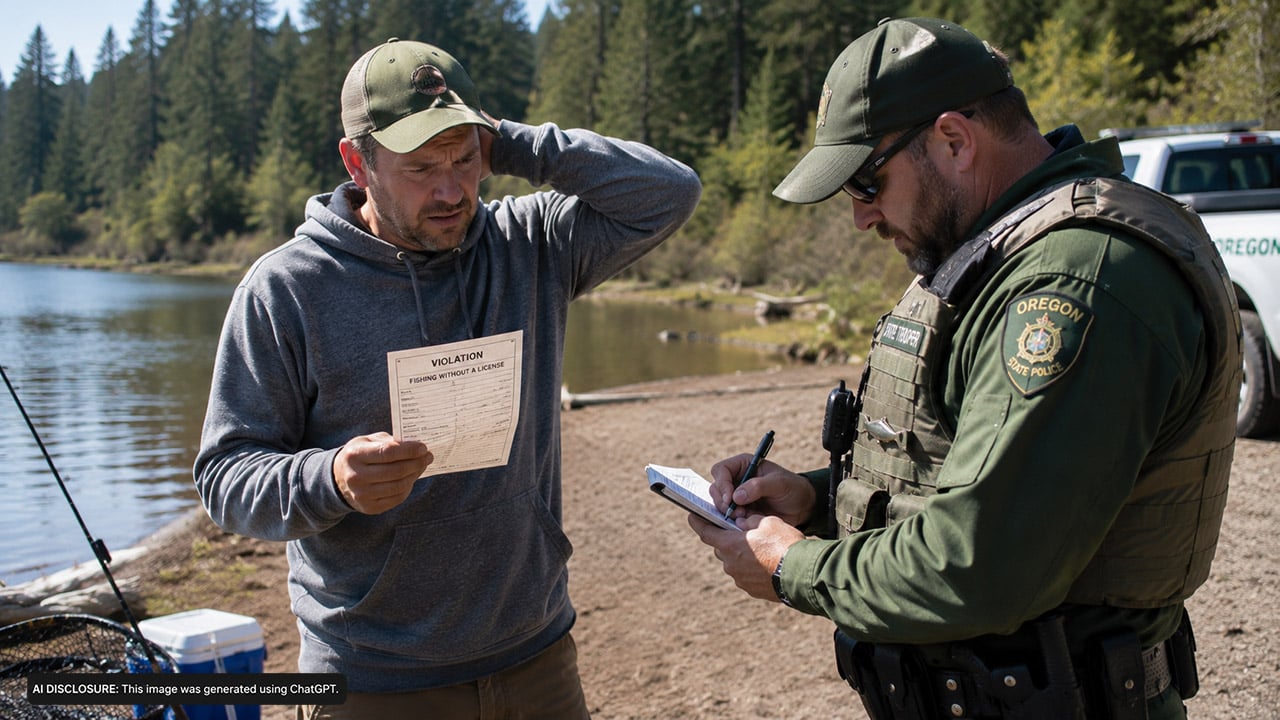
Every angler knows that sinking feeling when a day on the water turns into paperwork on the tailgate. One Oregon fisherman learned that lesson the hard way after getting cited for fishing without a license—and then noticed something else that didn’t sit right: the address printed on the citation wasn’t his.
In the original post, he explained that he bought a fishing license on the way home after receiving the ticket. When he looked the citation over, he saw the address listed was somewhere he’d never lived—“50 miles away,” in his words—and it didn’t match the address on the sticker on his driver’s license.
A quick stop for fishing turned into a ticket
The situation was straightforward at first: he was checked while fishing and didn’t have a valid license on him at the time, so he was cited. That’s a common enforcement point in a lot of states—if you’re fishing, you’re expected to already be licensed, not to “fix it later.”
He did exactly what many folks do after the fact: stopped and bought a license on the way home. But a license purchased after contact usually doesn’t erase the violation that already happened. It may help in court, it may show good faith, but it doesn’t change what was true at the moment the citation was written.
The part that didn’t add up was the address on the citation
Then came the detail that raised his eyebrows. The citation had the wrong address printed on it—an address he says he’s never lived at and not even close to where he actually resides. He also noted that it didn’t match what appears on the sticker on his driver’s license itself.
To an outdoorsman, this is the kind of thing that makes you pause. A typo is one thing. But an address that’s “50 miles away” from anywhere you’ve lived starts to feel like more than fat-fingering a number. It raises practical questions, too—like whether future notices end up going to the wrong place, or whether the paperwork gets tied to the wrong person.
What he hoped the judge would do
His goal was clear: he wanted to see if he could get out of the ticket. He asked what to say to the judge at court and whether Oregon law made any difference.
That’s a pretty normal line of thinking. Lots of good people make one mistake—especially if they don’t fish often, or they’re used to a different state’s rules, or they assume they’re covered. And when a citation itself contains an obvious error, it feels like it ought to matter.
The tricky part is that “wrong information on the ticket” can mean a lot of different things in court. Some errors are minor and get corrected without dismissing anything. Other errors can create real problems for the state’s case, depending on what the mistake is and what it impacts.
Why an incorrect address matters in the real world
Even before you get to the legal side, a bad address can cause headaches for a working person. If a court notice or follow-up letter goes to an address you don’t live at, you can miss deadlines without even knowing it. That’s how small tickets turn into bigger problems.
It can also complicate the simple act of showing you’re you. Outdoors enforcement often starts with a driver’s license, so most folks assume what’s printed should match what they handed over. When it doesn’t match, you want that discrepancy cleared up quickly, because you don’t want a record floating around that looks like it belongs to someone else—or looks like you gave false information.
And from a common-sense perspective, it’s also just part of keeping your name clean. Most anglers aren’t trying to dodge the system. They want to pay what they owe, do things right next time, and make sure the paperwork attached to their name is accurate.
The most practical path: fix the paperwork and show good faith
Based on what he shared, there are two separate issues: the underlying “no license” citation and the incorrect address printed on the citation. Treating those as two separate problems is usually the most grounded way to approach it.
The “good faith” part is easy: he already bought the license after the ticket. Walking into court with proof that he promptly got legal can help show he wasn’t trying to poach or skirt the rules—just got caught unprepared. It doesn’t magically erase the citation, but it can matter in how the court views him.
The address issue is more nuts-and-bolts. The practical move is to make sure the court and issuing agency have the correct contact information so nothing gets mailed into the void. If the citation truly lists an address he’s never lived at and doesn’t match the ID he presented, that’s something he can raise plainly and calmly—because it’s not about excuses, it’s about accuracy.
Most outdoorsmen know how this goes: stay respectful, stick to the facts, don’t ramble. Judges and clerks have heard every story under the sun. Clear documentation—driver’s license address, any proof of current mailing address, and proof of the newly purchased license—does more work than a long speech.
And if there’s one thing that’s worth remembering, it’s this: missing court or missing a notice because it went to the wrong address can turn a fixable mess into an expensive one. Whether the ticket gets reduced, amended, or upheld, you want your mail coming to the right place.
For anglers reading this, the bigger lesson is the old one: buy the license before the first cast, and keep it accessible. Licenses are cheap compared to a citation, a day off work to show up in court, and the stress of wondering what got typed wrong on your paperwork.
Like The Avid Outdoorsman’s content? Be sure to follow us.
Here’s more from us: