Photo credit: The Avid Outdoorsman
Apartment tenants said a search for someone else turned into a frightening situation for everyone in the building when bounty hunters allegedly set off smoke bombs inside.
According to the Reddit post, the bounty hunters were apparently looking for a person connected to the property. But the people living there said the situation escalated beyond a normal knock at the door or a request for information.
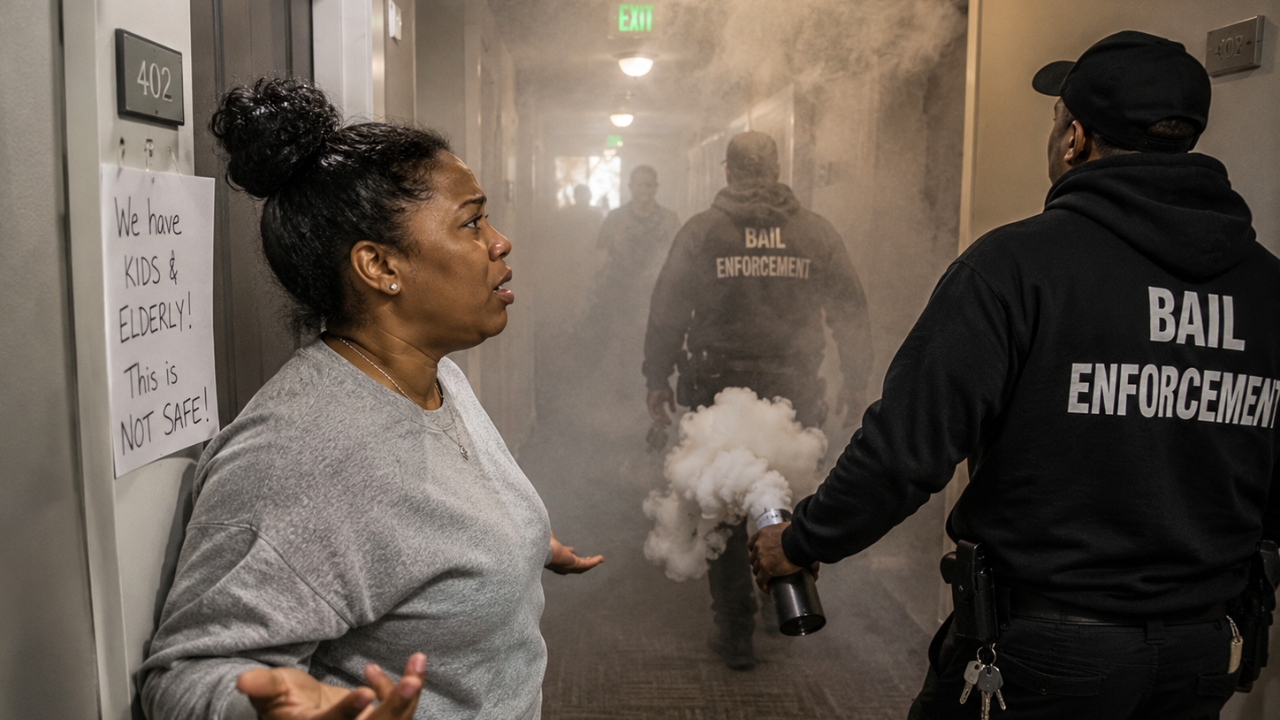
They claimed smoke bombs were set off inside the apartment building, leaving tenants confused, alarmed, and wondering whether private recovery agents had crossed a serious line.
The tenants explained the situation in a Reddit thread and asked what they could do after bounty hunters allegedly used smoke bombs in the building: https://www.reddit.com/r/legaladvice/comments/12uyt2z/bounty_hunter_setting_off_smoke_bombs_inside/
The search affected everyone in the building
The biggest issue was that this did not stay between bounty hunters and the person they were trying to find.
An apartment building is shared space. Hallways, stairwells, entryways, and connected units can all be affected when someone brings smoke into the property.
Even if the bounty hunters believed they had a reason to locate someone, the other tenants did not sign up for that. They were just living in the same building when the situation unfolded.
That made the complaint feel bigger than a wrong-door visit. It was a building-wide safety problem.
Smoke inside an apartment building is not a small thing
Smoke can create panic fast.
Tenants may think there is a fire. People with asthma, breathing issues, pets, children, or elderly relatives may be affected more seriously. A smoke-filled hallway can also make it harder for people to see, leave, or understand what is happening.
That is why the alleged use of smoke bombs stood out.
This was not just a loud argument outside. It was something that could make residents feel trapped or unsafe inside their own building.
If people did not know who set off the smoke or why, the fear would be even worse.
Commenters focused on calling police and fire officials
The practical advice was to report it.
If smoke devices were set off inside a residential building, police and possibly the fire department needed to know. Fire officials may care about smoke, alarms, evacuation risks, building codes, and whether any device used indoors created a hazard.
Police would need to know who the bounty hunters were, why they were there, and whether they had any legal authority to do what they did.
A landlord or property manager may not be enough. This was not a normal tenant complaint. It involved outside agents allegedly using smoke devices inside housing.
The landlord needed to be notified too
The tenants also needed to tell management immediately.
A property owner has a strong interest in knowing if bounty hunters entered the building and set off smoke devices. There could be damage, fire risk, tenant complaints, and liability concerns.
The landlord may also know whether the person being searched for actually lived there, whether anyone had permission to enter, and whether the bounty hunters contacted management before showing up.
If the landlord did nothing after learning about it, that could become part of the tenants’ complaint too.
Everything needed to be in writing.
Identifying the bounty hunters mattered
One of the most important steps was figuring out who these people were.
Bounty hunters usually work for a bail bonds company, recovery agency, or someone connected to a bond agreement. If tenants only know that “bounty hunters” showed up, it may be hard to hold anyone accountable.
They needed names, company information, vehicle descriptions, license plate numbers, photos, video, business cards, or anything else that could identify the people involved.
If the building had cameras, management needed to preserve that footage quickly.
Without identification, the tenants might have trouble getting beyond a general police report.
The person they wanted may not have justified the method
The thread raised a bigger question: even if the bounty hunters were looking for a real fugitive, did that allow them to use smoke bombs in a shared apartment building?
Commenters were likely to be skeptical.
Bounty hunters may have unusual authority in certain situations involving the person who signed a bail agreement. But that does not mean they can endanger unrelated tenants or create panic in a building.
The people living there were not the fugitive. They were not the bond company. They were not the court. They were neighbors caught in the middle.
That distinction mattered.
Tenants needed to document health effects and damage
If anyone had breathing problems, smoke exposure, panic, medical treatment, or property damage, that needed to be documented.
A tenant who had to use an inhaler, take a child outside, clean smoke residue, replace damaged belongings, or miss work because of the incident should keep records.
Photos, videos, written timelines, medical notes, and receipts can all matter.
Even if nobody was physically injured, the tenants still had a reason to preserve evidence. Smoke devices inside housing are serious enough that the facts should not be left to memory.
Other residents could strengthen the report
Because this affected a building, multiple tenants may have seen or heard different parts of the incident.
One person may have video. Another may have seen a vehicle. Another may have heard the bounty hunters say which company they were with. Another may have smelled smoke first or seen where the device was thrown.
Commenters often suggest that each resident make their own report instead of relying on one person to speak for the whole building.
Multiple independent reports can make the incident harder to dismiss as one tenant exaggerating.
Direct confrontation was not the answer
Tenants may have wanted to confront the bounty hunters or chase them down afterward.
That would be risky.
If the agents were there looking for a fugitive, they may have been armed, aggressive, or already on edge. A hallway argument after smoke devices were used could make a bad situation worse.
The better move was to stay safe, call authorities, document what happened, and let police, fire officials, the landlord, or attorneys handle accountability.
That is especially true in a building where other residents could be caught in the middle.
The incident could affect whether tenants felt safe staying there
After something like this, tenants may question whether the building is secure.
Can bounty hunters just get in? Did management let them inside? Was the person they wanted actually a resident? Could this happen again? What happens next time if the search gets more aggressive?
Those are reasonable questions.
Tenants may want management to explain building access policies, repair any damage, improve locks or entry control, and confirm whether the person being searched for lives there.
If management cannot answer basic safety questions, residents may start wondering whether they have grounds to move.
The story was about private agents affecting innocent tenants
The most troubling part of the post was how many uninvolved people were allegedly pulled into someone else’s legal problem.
The bounty hunters were not simply knocking on one door. According to the tenants, they used smoke bombs inside an apartment building, affecting people who had nothing to do with the fugitive.
That is why the practical response needed to be serious: call police, contact fire officials if smoke devices were used, notify the landlord in writing, identify the bounty hunters and bond company, preserve video, gather witness statements, and document any health effects or damage.
Because when a fugitive search fills an apartment building with smoke, it stops being just a bounty hunter problem. It becomes a safety issue for everyone living there.
Like The Avid Outdoorsman’s content? Subscribe to our newsletter so you never miss an article.
Here’s more from us: