Photo credit: AI-generated image created using ChatGPT. Illustrative only
Every elk hunter who’s spent time out West knows the drill: property lines can get messy fast, especially where BLM ground butts up against a ranch. You can be doing everything right—GPS on, map layers checked, boots on public dirt—and still end up staring at a ticket that can wreck your season and your license privileges.
That’s the situation one Colorado hunter described in the original post, where he and his nephew say they did something a lot of folks don’t bother doing anymore: they went to the neighboring ranch owner first, showed their plan on GPS, got a clear “that’s fine,” and were still cited after an outfitter got involved.
They did the neighborly thing and got the ranch’s GPS-verified OK
According to the hunter, he and his nephew were elk hunting on BLM land and “following property lines and staying on public ground using our GPS and an app on our phones.” Before they ever hung a piece of orange tape, they visited the ranch that bordered the public ground and explained where they planned to sit.
They even showed the ranch owner the exact spots on their GPS. The landowner’s answer, as described, wasn’t vague: hunt the public, stay off the private, and if a wounded elk crossed onto the ranch, call first before stepping over the line. The landowner provided contact info and wished them luck.
Orange tape, public dirt, and the kind of planning that should prevent problems
Most trespass messes start with “we thought we were on public.” This one didn’t. The hunter said they went down and marked the boundary with orange tape where they could, then hunted from above the area the next morning.
That detail matters because, on heavily hunted borders, mistakes usually happen in low light or while tracking animals. These guys say they were deliberately working the edge, using GPS, and doing what they could to keep their hunt clean—exactly the kind of effort you’d hope would keep a warden interaction simple.
Then an outfitter showed up and made it personal
While they were set up, an outfitter drove up next to them. The hunter said the outfitter had four guys get out and start making a lot of noise, acting “very belligerent,” and doing it only about 30 yards away.
The hunter’s description reads like an intimidation play—make it loud, make it uncomfortable, and push competing hunters off the spot without technically telling them to leave. After that, the group reportedly drove up onto the private property.
A game warden arrived, left, then came back with a very different tone
Not long after the run-in, a game warden drove up. The hunter said they told him about the outfitter encounter, and the warden responded that he knew the guy and that he can act like that sometimes.
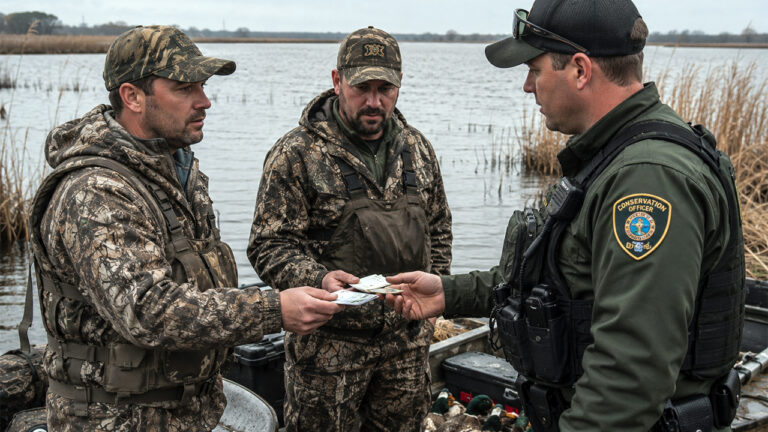
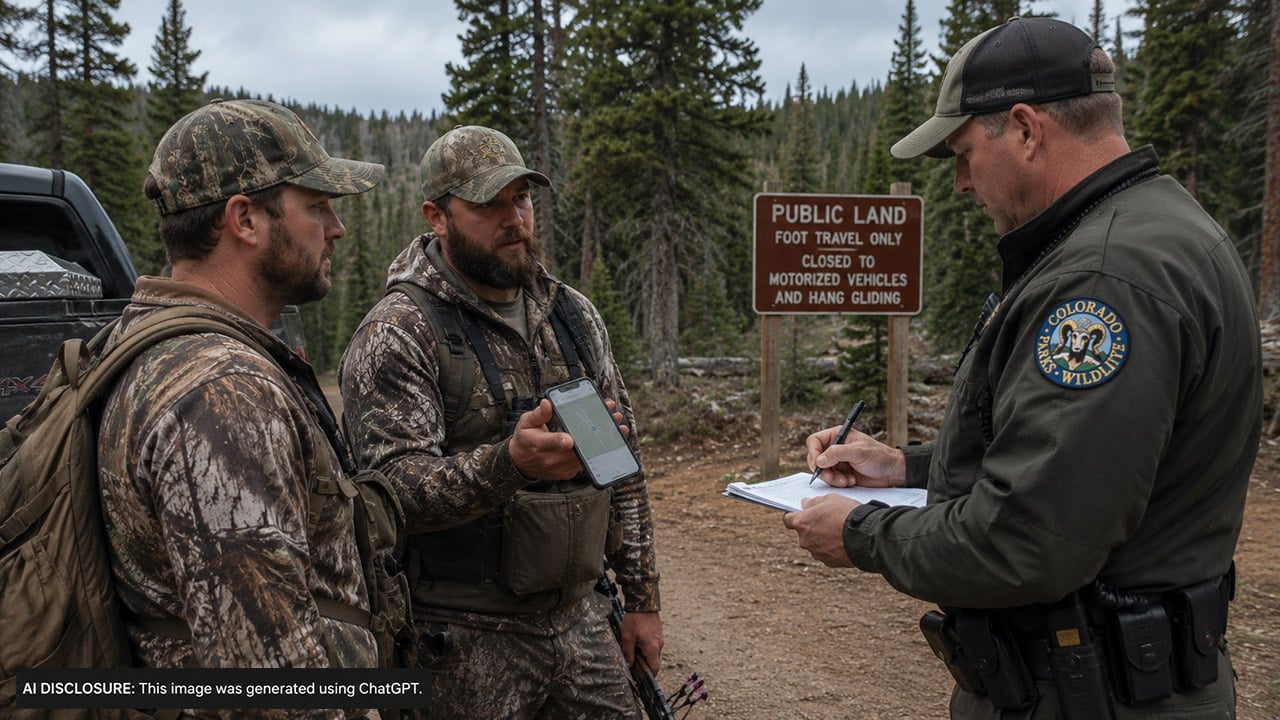
The warden asked where they’d been, and the pair showed him exactly where they went on their GPS, pointing out the property lines and their route on BLM. The warden left, telling them he was looking for a different vehicle and investigating a report that someone trespassed and possibly poached an elk off the private ground nearby.
About 25 minutes later, as the hunters were driving out, the same warden blocked the road and stopped them again. He had them pull up the GPS and go through it once more. Then he returned to his truck to “check where the property lines are,” and the hunter says the warden spent about 20 minutes in the truck, on the phone with the outfitter.
The citation: criminal trespass with intent to hunt, plus points that can cost your privileges
After that phone call, the hunter says the warden came back and told them they’d been on private property and that the outfitter wanted to press charges. The warden told them he had no choice and wrote them tickets for “criminal trespassing with intent to hunt on private property.”
In Colorado, the hunter noted that this is also an automatic 20 points—enough to put hunting and fishing privileges in jeopardy depending on what a hearing committee decides. Even before court, the damage was done. They packed up and left that day, with their hunt effectively over.
Here’s the part that will stick in any public-land hunter’s craw: the hunters weren’t accused by the ranch owner whose boundary they were hunting. They say they had the ranch owner’s contact info, had been told their plan was fine, and had been instructed only to stay out of private unless calling to retrieve an elk. Yet the person “pressing charges” in the moment was described as the outfitter.
The hunters double-checked with BLM and said the maps matched their GPS
Afterward, the hunter said they contacted the local BLM office and got the system BLM uses to identify its lands. Their conclusion: they were never on the private property, and the BLM mapping matched their GPS exactly.
They also said the same GPS program they used is the exact one the game wardens use to determine property lines. That doesn’t automatically prove where boots were at every second, but it does strengthen the point that they weren’t freelancing with some questionable map layer or guessing at fence lines.
From a practical standpoint, this is why border hunters lean so hard on documentation. A phone app, a handheld GPS track, and screenshots can be the difference between a quick “have a good day” check and a life-changing citation—especially when tempers and business interests are involved.
What outdoorsmen keyed in on: documentation, lawyers, and not arguing on the roadside
The hunter’s questions were the same ones most of us would ask: Should he consult a lawyer? Can charges be dropped? Can anything be done about an outfitter allegedly lying about where they were?
In situations like this, the common-sense advice tends to be consistent. First, don’t try to win your case on the shoulder of a two-track. Be polite, comply, and save the argument for court. Second, preserve everything: GPS tracks, screenshots with timestamps, mapping layers used, photos of boundary markers, and the landowner’s contact info and any record of the conversation if it exists.
And third, when a citation carries major point consequences—and especially when it involves a criminal trespass allegation—most hunters are wise to at least consult an attorney who handles wildlife and hunting cases in that state. The risk isn’t just a fine; it can be loss of privileges, future tag trouble, and a record that follows you.
None of that fixes the bigger frustration: the hunters believed they’d done the respectful thing by contacting the ranch owner ahead of time, only to be pulled into a conflict that appears to have centered on an outfitter’s complaint. But if there’s a silver lining, it’s that they weren’t relying on memory alone. They had GPS data, they had BLM confirmation, and they had a clear account of what happened—tools that matter when the stakes are your season and your ability to hunt at all.
Like The Avid Outdoorsman’s content? Subscribe to our newsletter so you never miss an article.
Here’s more from us: