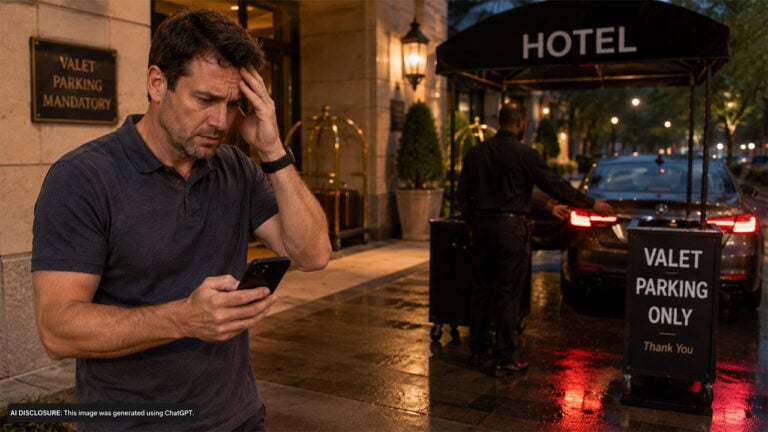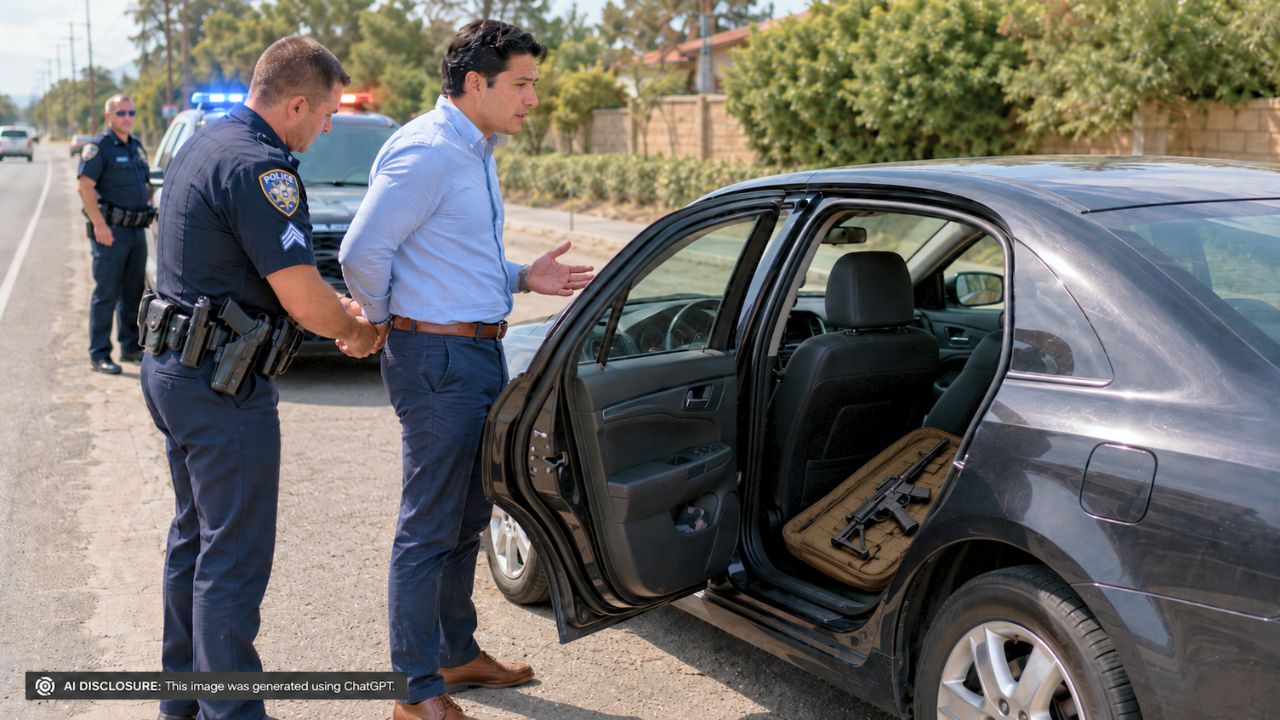
Photo credit: AI-generated image created using ChatGPT. Illustrative only
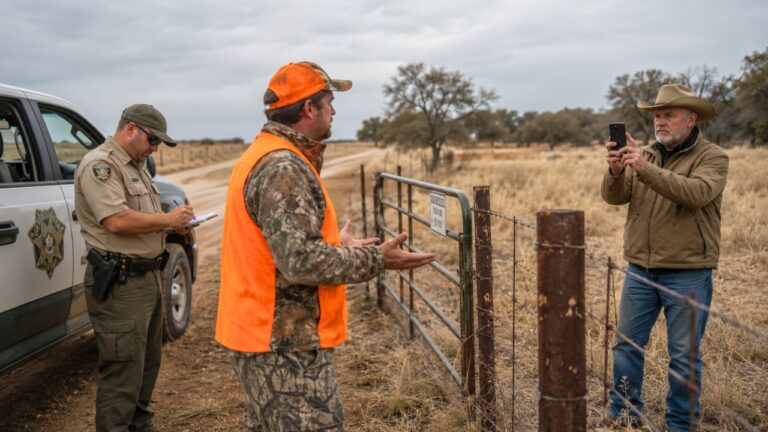
A routine traffic stop can flip from annoying to life-changing in about 30 seconds. One Mississippi hunter found that out the hard way when a 20-over speeding stop turned into handcuffs, a patrol car hood conference, and a rifle case he didn’t even remember was in his vehicle.
The full story was laid out in the original post, and it’s a reminder that “truck gun” habits, hunting buddies, and sloppy storage can collide with the law when you least expect it.
A hog hunt, a forgotten rifle, and a bad chain of events
According to the account, the driver had been hunting hogs with a friend. Both had rifles along, and at some point during the night the friend put his rifle into the driver’s car, under the bench, in a case. Then it got forgotten.
Two weeks later, the friend’s truck was broken into. Since the friend normally kept the gun in his truck, he reported it stolen. The driver said he didn’t know the rifle was still in his own vehicle, and he also didn’t know it had been reported stolen.
That kind of mix-up sounds crazy until you’ve lived the real version of it: gear shuffled in the dark, cases stacked behind seats, a long week at work, then the next hunt. A rifle in a case looks like an empty case until somebody unzips it.
The traffic stop that changed the tone
Weeks after the hunt, the driver got pulled over for doing 75 in a 55. When the officer approached, the driver did what a lot of concealed carriers try to do—he told the officer he had his concealed carry pistol on him, because that was the only weapon he believed was in the car.
But speeding 20 over drew extra attention. The driver said the officer asked to search the car, and he consented. The stated purpose for the search, as the driver described it, was looking for drugs, alcohol, or weapons because the area was “bad.”
That consent is the hinge point. Once you say “go ahead,” you’ve just invited someone to look in all the places you stopped checking months ago.
When the rifle case came out, the stop became an arrest
While the driver sat on the hood of the cruiser, he watched the officer pull out the rifle case. The driver said he didn’t think much of it at first because he believed the case was empty and his own rifle was at home.
Then the officer’s demeanor changed. The driver reported the officer got on the radio and indicated he believed he’d located a stolen rifle. The officer questioned the driver about where it came from and who it belonged to, and the driver explained it was his friend’s “hog rifle” and that he didn’t know it was in the car.
From there, the driver said everyone knows what happened next: he was arrested and initially faced possession of a stolen firearm.
Here’s the hard truth for hunters and gun owners: it doesn’t matter how honest you are if you can’t prove it in the moment. On the roadside, with a rifle that’s coming back as stolen, your story is competing with a computer return and an officer’s obligation to take the safe route.
The stolen-gun charge got cleared—then another charge showed up
The driver said that later, the situation with the rifle was sorted out. The stolen firearm charge was dropped after the friend corroborated the story and backed it up with pictures of their hog hunts showing the guns.
But the relief didn’t last. The driver said he was then charged with falsifying information, based on the fact that he told the officer he had no other weapons in the car—when, in fact, the rifle was in there.
To the driver, it wasn’t a lie. It was ignorance. He believed what he said at the time. But roadside decisions and later courtroom decisions aren’t always judged by “what you meant.” They can turn on what you said, how it was interpreted, and whether the state thinks it can prove you knowingly made a false statement.
This is where a lot of outdoorsmen get blindsided. They think the only legal danger is the “big” charge—stolen gun, poaching, trespass, whatever it is. Then, after the main issue gets cleared, a leftover statement, a consent, or a paperwork detail becomes the new problem.
What other gun owners focused on: lawyer up and stop trying to talk your way out
The driver asked what to do next and said the officer didn’t consider the “friend left it there and I forgot” explanation to be enough. He also said he didn’t want more trouble or jail time.
In an update, the driver said he hired a firearms and weapons lawyer and planned to meet to go over options. He also noted he did not meet with a supervisor, which many people had suggested.
That’s the most practical piece of this whole situation: once you’re being charged with anything beyond the traffic ticket, the best “gear” you can bring to the fight is competent legal counsel. Not a long explanation on the shoulder of the highway. Not a handful of screenshots. Not a promise that your buddy will straighten it out later.
And it’s also a good reminder that there’s a difference between cooperating for safety—like notifying an officer you’re carrying—and volunteering extra conversation once the stop has taken a criminal turn. There’s a point where talking more doesn’t clear things up; it just creates more angles for the state to argue intent.
The outdoorsman takeaway: control your gear, control your risk
This whole mess started with something most of us have seen: a buddy tossing a cased rifle into a vehicle after a hunt. The fix is simple, but it takes discipline—especially when you’re tired and it’s dark. Before you leave the woods, do a quick inventory. Before you pull into the driveway, do another one. If it’s in your vehicle, it’s your responsibility until it’s back in the right hands.
If you swap vehicles for hunts, or you hunt with friends who keep guns in their trucks, make it a habit to confirm what’s getting loaded and unloaded. Treat it like checking headcount at the boat ramp. “We’ve got two rifles in, two rifles out.” It sounds basic, but basic habits prevent felony-level headaches.
And finally, be careful with consent searches and roadside statements. You don’t have to be doing anything wrong to end up in a bad spot when forgotten gear, a stolen-gun report, and a traffic stop intersect. The best way to avoid that intersection is to keep your vehicle squared away—and if things go sideways anyway, get the right lawyer and let them do the talking.
Like The Avid Outdoorsman’s content? Be sure to follow us.
Here’s more from us: