Photo credit: AI-generated image created using ChatGPT. Illustrative only
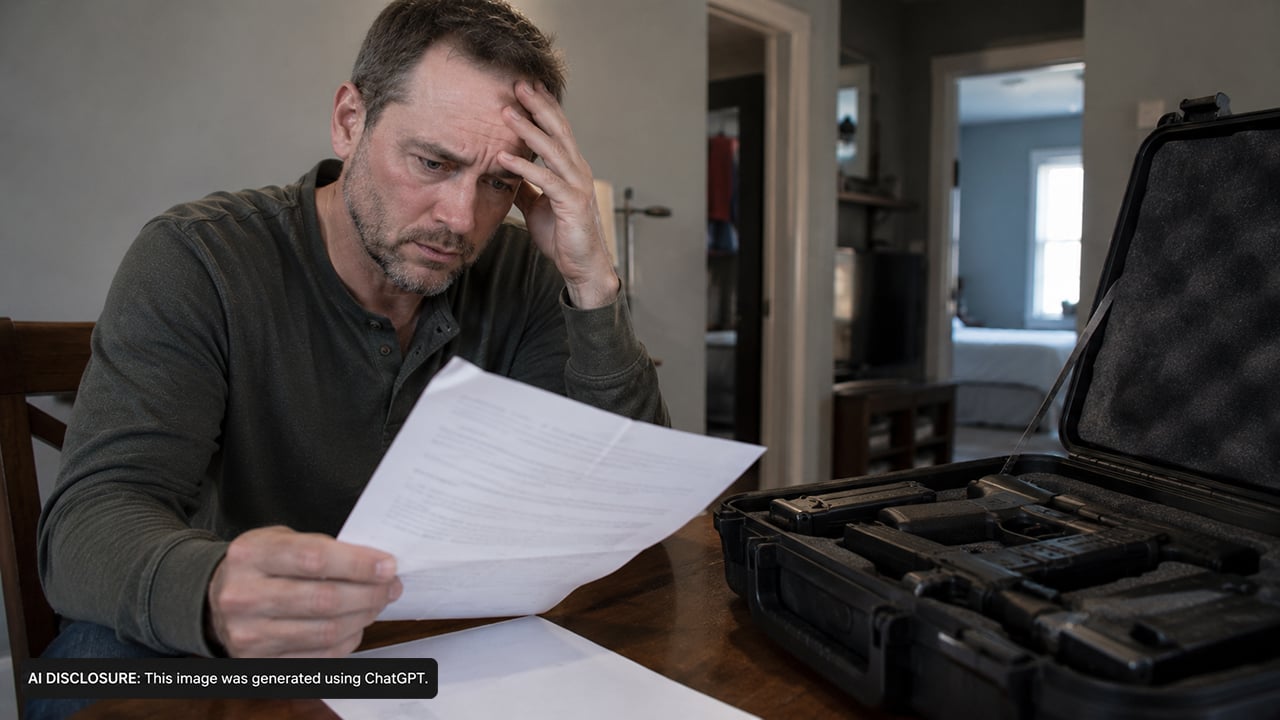
Most gun owners have a shelf, a safe corner, or a back closet where “temporary” stuff ends up living way longer than it should. A buddy’s ammo can. A relative’s old shotgun case. Or, in this Ohio guy’s case, two pistols his then-girlfriend dropped off right before she shipped out overseas.
They weren’t heirloom Colts or some tricked-out carry pieces—just two Taurus G3c pistols her dad gave her shortly before an OCONUS deployment to Europe. She didn’t really want them, she was headed out of the country for years, and he was the gun person in the relationship. So she left them with him.
Then the relationship ended after she deployed. Two years went by. No pickup plan, no “hey can you ship those,” no “I’m coming home in July.” Just silence—and two handguns sitting in someone else’s house, with the owner living in another country.
How “holding onto them” turns into the headache
On paper, it sounds simple: if someone leaves property at your place and never comes back, you treat it like abandoned property and move on with your life. The problem is that guns don’t behave like a box of clothes or an old TV when it comes to law and liability.
The Ohio resident said he doesn’t want the pistols. He’d rather sell them to a legal gun owner or even turn them in at a local buyback program. But he’s also got the right gut instinct: firearms have a way of dragging people into a mess later, even if they were trying to do the right thing.
Two Taurus G3c pistols and a whole lot of unanswered questions
Part of what makes this situation feel so familiar is how ordinary the guns are. The Taurus G3c is a budget-friendly compact 9mm that plenty of folks carry. These two, according to the post, were worth about $165 each at best—nothing special, not collectible, not something most people would fight over in court for the money.
But value doesn’t matter much here. What matters is ownership and transfer. The pistols were a gift from her dad, which means they’re hers, not his. And now they’re sitting in Ohio while she’s living overseas, with no clear timeline for returning to the U.S.
That’s exactly the kind of limbo where good intentions can still land you in a bad spot.
The “abandoned property” instinct is natural, but guns play by different rules
The gun owner’s first thought was what most of us would think: notify her, wait a set period (he mentioned 30 days), and if she doesn’t claim them, treat them as abandoned property. In normal life, that’s reasonable—especially after two years with zero inquiry.
But firearms aren’t just “stuff.” Even when they’re not NFA items, they’re still regulated in ways that can turn a casual decision into a legal mistake. Selling them “to another legal firearm owner” sounds responsible, but how that sale happens matters. So does whether he has the legal authority to transfer property he doesn’t own.
And there’s another layer that makes gun folks nervous for good reason: if a firearm you transferred ends up stolen, used in a crime, or simply traced later, you don’t want to be the guy in the chain who can’t clearly explain how it left your possession.
Why a casual sale or buyback could backfire
The poster specifically floated two options: selling the pistols or turning them in at a buyback where police exchange gift cards or cash for firearms. Both options feel like “clean” ways to get unwanted guns out of the house.
The catch is that neither option magically erases the underlying issue—he’s not the owner. If you hand over somebody else’s guns without the right authority, you can create a dispute later. Even if she never comes back for them, she could still decide she wants them five years from now, or her circumstances could change, or a family member could start asking questions.
Buybacks can also be a gray area for folks who care about paperwork. Some departments do minimal documentation, some do more, and some have specific rules about who can surrender what. If you’re trying to avoid “a court case with firearms looming,” the last thing you want is a transaction that doesn’t leave you with a clear record of what you did and why.
That’s why his hesitation makes sense. He’s not trying to profit. He’s trying to reduce risk.
What people tend to focus on in situations like this
In the post, the gun owner wasn’t looking for a loophole—he was asking how to do this cleanly. The biggest practical concerns he raised are the same ones most experienced gun owners would flag immediately: whether he can legally dispose of them, whether “registered firearms” create extra baggage (even when they’re not NFA), and whether selling them creates future exposure.
When gun people talk through scenarios like this around a tailgate or in a shop, the advice usually centers on three common-sense points: document your attempts to return property, don’t make casual transfers, and involve the right professionals when the item is regulated. That typically means taking the “I’ll just sell them quick” option off the table until you’re certain it’s lawful in your state and done in a way that protects you.
The other thing outdoorsmen tend to focus on is storage. Two years is a long time to be responsible for someone else’s defensive firearms. Even if you didn’t ask for that responsibility, you’ve still got to secure them safely and keep them away from unauthorized hands.
A practical path that avoids the worst outcomes
There’s a difference between being “stuck” with guns and being the one who made a bad transfer. The safest general approach in a situation like this is to treat the pistols like you’d treat a buddy’s gun left in your safe after hunting season: you don’t sell it, you don’t trade it, and you don’t hand it to some third party unless you’ve got clear legal cover to do so.
That usually starts with communication and records. If you can reach the owner, you give them a clear notice to arrange retrieval, and you keep proof you did it. After that, the cleanest next steps often involve a local firearms dealer or law enforcement guidance—some places allow a dealer to facilitate a lawful transfer back to the owner, or provide a legal way to surrender firearms you cannot keep. The goal isn’t to “win” the situation; it’s to exit it with paperwork and peace of mind.
The original details and the dilemma were laid out in the source post, and if you’ve ever had a friend leave something at your place “for a little while,” it’s a good reminder that guns are the one category where you want to be boring and by-the-book.
Because at the end of the day, those two budget pistols aren’t worth much money—but handling them the wrong way could cost a whole lot more than $330 in headache.
Like The Avid Outdoorsman’s content? Subscribe to our newsletter so you never miss an article.
Here’s more from us: