Photo credit: AI-generated image created using ChatGPT. Illustrative only
Divorces are rough enough without firearms getting pulled into the mess. But one gun owner’s situation turned into a full-blown administrative headache when guns that were supposed to stay put ended up shipped across state lines and checked into a military installation’s system. The details come from the original post, and it’s the kind of story that makes you want to tighten up your own paperwork and storage plan today.
The short version: while married, the couple moved to Hawaii, where firearms have to be registered. The wife asked the husband to register all five guns in his name—four that were his and one that was hers. After the divorce, he moved to Iowa with the understanding he’d retrieve the rest of his personal property when she eventually rotated back to the mainland.
How a “temporary” arrangement turned into a permanent problem
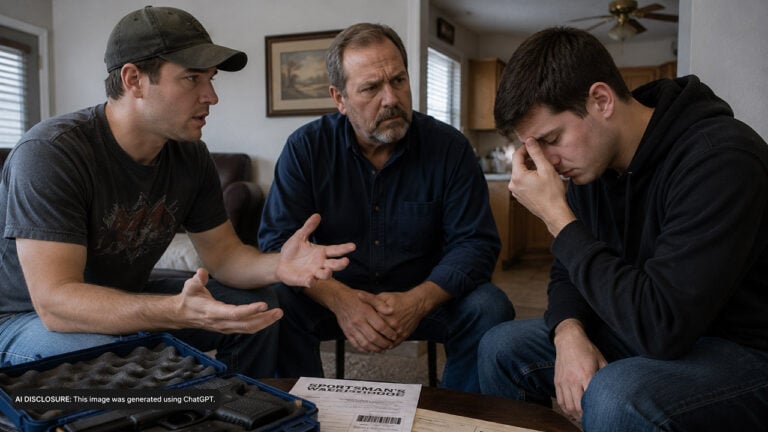
In March of 2018, his ex brought their daughter to Iowa for a visit—and unexpectedly brought three of his four guns with her. He says he didn’t ask her to, and she didn’t give him a heads-up. When he asked about the fourth gun—a shotgun that had been a gift from her dad—she told him it was “too much work” to bring them all at once.
Then the whole tone of the situation changed. In July of 2018, she requested and was granted a temporary restraining order. The day after he was served, he took the three guns he had and turned them over to the sheriff’s office. That move matters, because it shows he was trying to stay on the right side of the law when his ability to possess firearms was suddenly in question.
Trying to do the right thing with law enforcement—then getting stonewalled
After turning over the three guns he had in Iowa, he called the Honolulu Police Department and asked them to confiscate the other two guns still in Hawaii, specifically “to be in full compliance with the law.” According to the post, his ex refused to turn them over, claiming the guns were hers under the divorce.
At that point, he let it go, saying he had “bigger fish to fry.” Anybody who’s been through court knows that feeling: you pick your battles because you’re already drowning in paperwork, stress, and deadlines. But the guns didn’t stay quietly in a safe in Hawaii.
What came out in court: the guns were mailed to her oldest son
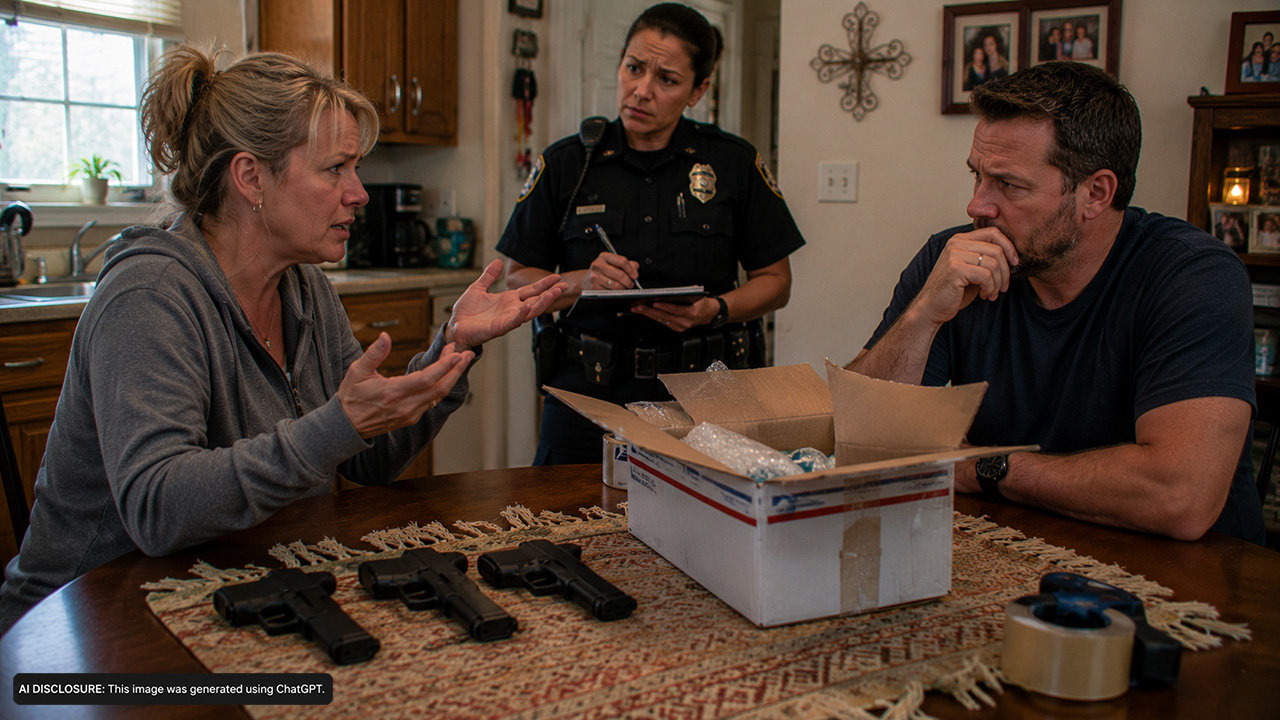
At the hearing for the temporary restraining order, he brought up the “wayward guns.” There, his ex told the judge she had sent them to her oldest son, who was stationed in San Antonio with the Army. Again, he let it go.
This is where gun owners should start paying attention, because it’s a perfect example of how firearms can get treated like ordinary household property in a breakup—when they absolutely are not. Transporting, shipping, transferring, and even temporary possession can trigger different rules depending on the states involved, the people involved, and whether anyone is prohibited from possessing firearms.
The call from San Antonio: guns checked in, never checked out, and one gun missing
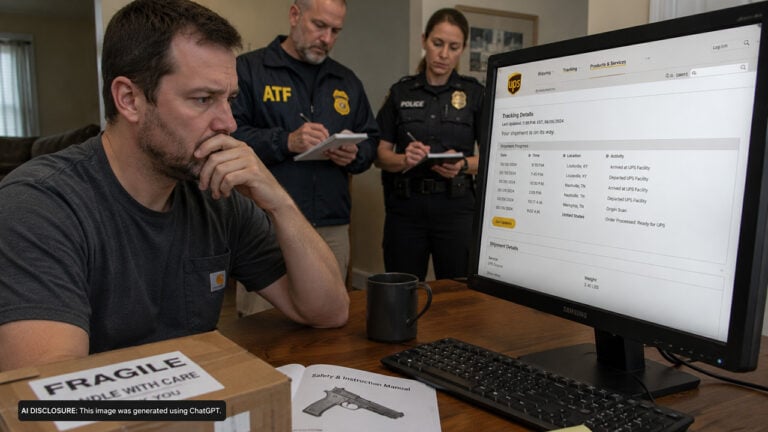
Fast forward more than a year. He got a call from JBSA Lackland in San Antonio. They were trying to reach his ex’s son about the guns. Their concern was that the guns were checked in over a year ago and never checked out.
It got worse: the shotgun was reportedly checked out, but there was no record of who took it or when. That’s not just an “oops” moment. When a firearm slips into a paperwork black hole, it can come back on the last known owner in all kinds of unpleasant ways—especially if the gun later turns up in the wrong hands or the wrong place.
In the post, the gun owner told them not to release the other gun to anyone until ownership could be sorted out. That’s a practical instinct. When there’s confusion, you want the firearm secured and the chain of custody frozen until the facts are on paper.
Documentation is the whole ballgame when guns move between states
One thing the gun owner did right away was request a copy of the Hawaii firearms registration form to prove ownership. That’s smart, because it’s a concrete document tied to a specific jurisdiction that required registration in the first place.
If you’re reading this as a hunter or gun owner, treat this as a reminder: keep a simple personal inventory of your firearms somewhere secure—serial numbers, make/model, and photos—along with any bills of sale or transfer paperwork you have. In normal times, you may never need it. In messy times, it’s the difference between “I think that was mine” and “here’s the record.”
It also highlights why “registered in my name” and “awarded in a divorce” can collide. Even when something is awarded to someone in family court, firearms transfers still have to follow applicable law. When the guns are also crossing state lines, things can get complicated in a hurry.
The practical questions he asked—and the ones every gun owner should consider
In his post, the gun owner asked what else he should do: whether he should report the guns stolen, and whether the Air Force should reimburse him for the missing shotgun. He also noted his ex still hadn’t returned other property and remained stationed in Hawaii.
From a common-sense outdoorsman’s perspective, three practical points jump out. First, if a firearm you own is missing and there’s a paper trail showing it left your control, you want a formal record that you didn’t “just lose it.” Second, if a gun is sitting in an armory or property room and nobody can say who checked it out, you want that documented too—dates, names, and case or receipt numbers. Third, reimbursement is a separate question from responsibility; even if you’re out the value of the gun, what most folks want first is to make sure the missing firearm doesn’t become their problem later.
There’s also the bigger safety issue in the headline angle: when guns get sent to someone who can’t legally possess them, everybody involved is suddenly standing in a legal minefield. Whether the sender knew it or not, “I mailed them to my son” is not a magic sentence that makes the rules go away—especially if the recipient is prohibited.
For gun owners watching this from the outside, the best takeaway is preventive: don’t let your guns become bargaining chips or storage leftovers during a separation. If a move, deployment, or divorce is on the horizon, get clear—on paper—about where the firearms are, who has them, and how any transfer is going to be handled legally.
This story is a reminder that the firearm you don’t have in your safe can still become your problem. When relationships break down, paperwork and secure possession matter as much as any lock on the door.
Like The Avid Outdoorsman’s content? Subscribe to our newsletter so you never miss an article.
Here’s more from us: