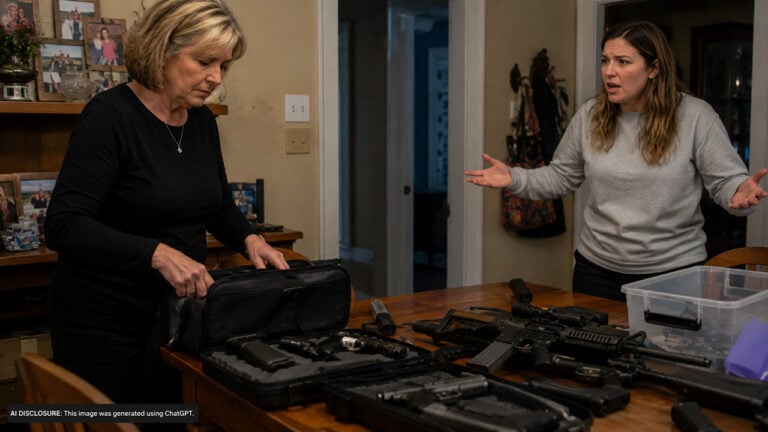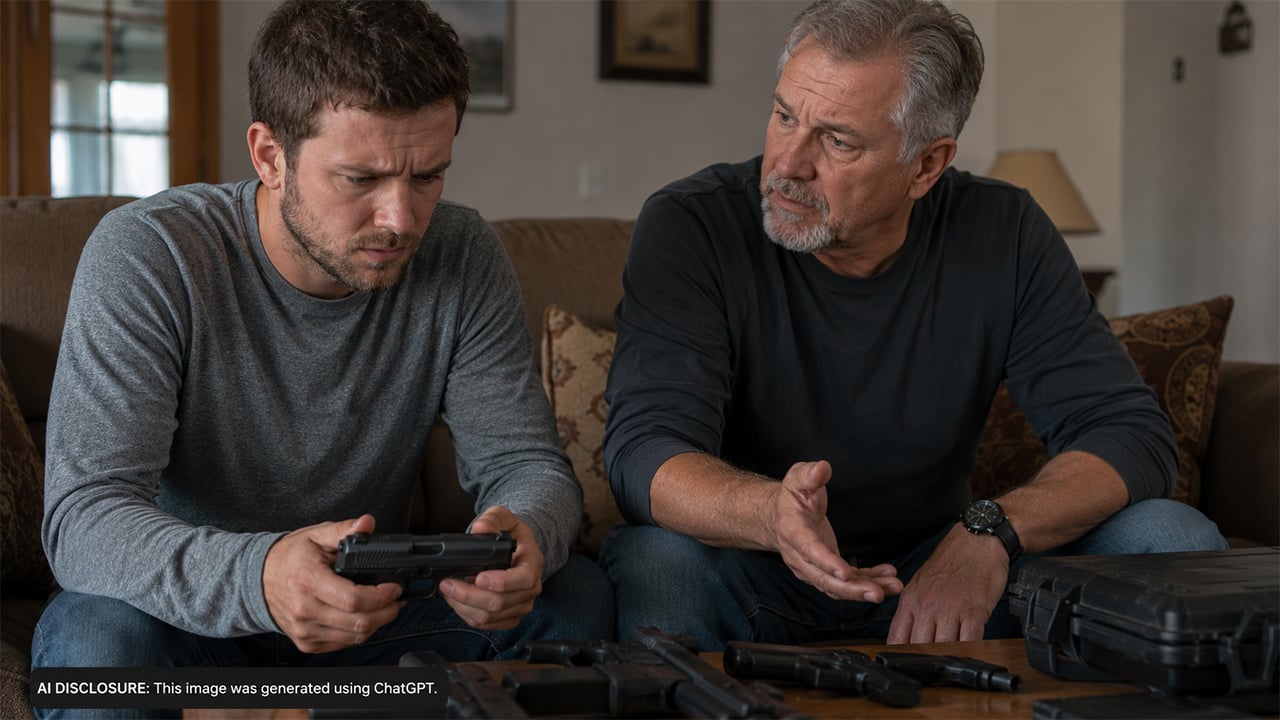
Photo credit: AI-generated image created using ChatGPT. Illustrative only
Most folks who grew up around guns understand an unwritten rule: if somebody’s already had firearms taken away, there’s usually a reason—and it’s rarely a small one. That’s the spot a Tennessee high schooler found himself in after his dad’s guns were surrendered, and the dad started pushing for “replacement” guns bought under the kid’s name.
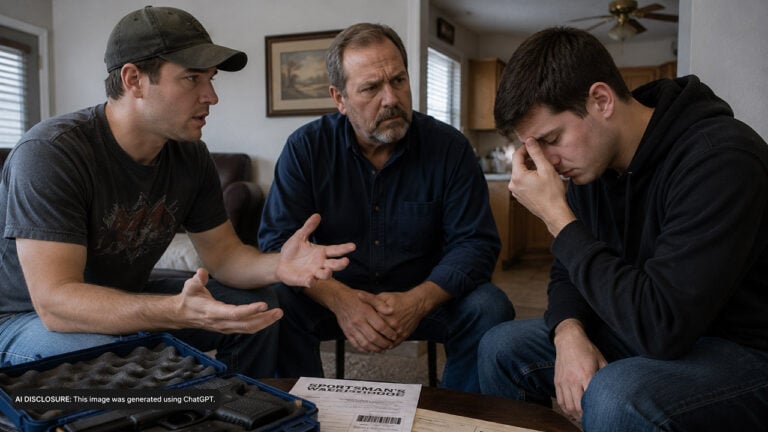
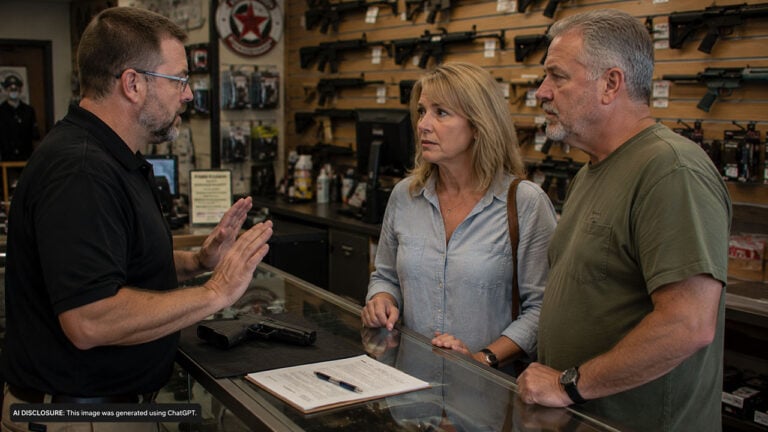
In the original post, the 17-year-old laid out a situation that’s equal parts legal headache and safety nightmare. His father allegedly drew a gun at a party and fired into a wall, and afterward the guns were taken. Now dad wants his son to walk into a gun shop, buy a handgun and maybe a rifle “as if they were for me,” using the dad’s money—while the dad would be the one using them day-to-day.
The request sounded simple, but it wasn’t
On paper, the dad’s pitch is straightforward: “Buy them under your name, I’ll give you the money, and I’ll use them.” In real life, that’s the kind of arrangement that gets people jammed up, because it starts to look like someone trying to get around a firearms restriction.
The son’s worry wasn’t only about paperwork, either. He said he lives with his dad, so “clearly he would have access to the guns at all time.” When you share a roof, there’s no realistic way to pretend a firearm is “yours” but permanently out of reach of the person who asked you to buy it.
When someone else provides the money and intends to use the gun
Gun owners hear the term “straw purchase” thrown around a lot, sometimes loosely. But the red flags in this scenario are the same ones instructors and FFLs warn about: the dad would provide the cash, the son would be the buyer on record, and the dad would be the primary user.
That matters because buying a gun while representing it’s for you—when it’s really for someone else—can cross into serious trouble. Even people who’ve never had a run-in with the law can end up facing felony-level consequences if they lie on the federal paperwork or knowingly buy for a prohibited person.
And here’s the part many younger folks don’t realize: you don’t have to be “selling guns on the street” for it to be a big deal. One bad decision at a counter can follow you for life—hunting rights, jobs, military service, the whole nine yards.
The age problem that stops this before it starts
The poster said he’s 17 and still in high school. That’s a major practical issue right out of the gate. Federal law generally requires you to be 21 to buy a handgun from a licensed dealer, and dealers aren’t going to sell a rifle or shotgun to someone under 18.
Even putting the dad’s involvement aside, the “go to a gun shop and buy a handgun” part just doesn’t line up with how legal dealer sales work for a minor. In other words, the plan isn’t just risky—it likely isn’t even possible through normal, legal channels.
The safety facts made the gun question feel different
A lot of families argue about guns in the house. This one is different because of what the son described about his dad’s behavior. He said his dad is “kind of irresponsible with guns,” and claimed his dad shot the family dog while drunk. He also said his dad likes to “play with his guns when he drinks.”
That’s not an abstract “what if.” That’s a pattern—alcohol, handling firearms, and negligent or reckless decisions. Anyone who’s spent time on a range or in deer camp knows alcohol and guns don’t mix, and when they do, somebody eventually gets hurt.
The son even admitted he felt relieved when his dad had to surrender the guns. That line says a lot. It’s one thing to be annoyed about losing a tool you use responsibly. It’s another when the people closest to you feel safer after they’re gone.
Why the son could end up carrying the blame
There’s another angle here that rural gun owners understand instinctively: the name attached to the gun often becomes the first name questioned when something goes wrong. If a firearm is bought under the son’s name and later used in a negligent discharge, a threat, or worse, the son has now been pulled into the mess—even if he never wanted to be.
He also mentioned a real fear: “I’m not comfortable with having guns under my name when there’s a risk someone could be injured.” That’s good judgment. If the dad gets drunk and “plays” with a gun, it doesn’t matter whose name is on the receipt—the consequences will land on everyone in that house.
Beyond legal exposure, there’s the human side. If a gun is used in a domestic incident, an argument, or another party situation, the son may have to live with the fact he helped put that firearm back in the mix. That’s a hard thing to carry.
The cleanest path was saying no and keeping distance from the scheme
The son’s goal was simple: “If I can convince him that it’s a problem I might not have to do it.” In a case like this, the most practical move is to refuse, plainly and firmly, and avoid being dragged into anything that looks like buying for someone else—especially someone whose guns were taken after a reported incident.
Grown gun owners sometimes forget what a tough spot this is for a teenager living at home. But the right call is still the right call. If you’re the “buyer,” you’re the one signing your name, putting your future on the line, and tying yourself to whatever happens next.
Responsible gun culture isn’t just about muzzle direction and trigger discipline. It’s also about knowing when not to enable bad behavior. In this situation, the kid’s instincts were solid: if someone has already proven they can’t handle firearms safely—especially around alcohol—helping them get guns back isn’t loyalty. It’s gambling with lives and with your own record.
Like The Avid Outdoorsman’s content? Be sure to follow us.
Here’s more from us: