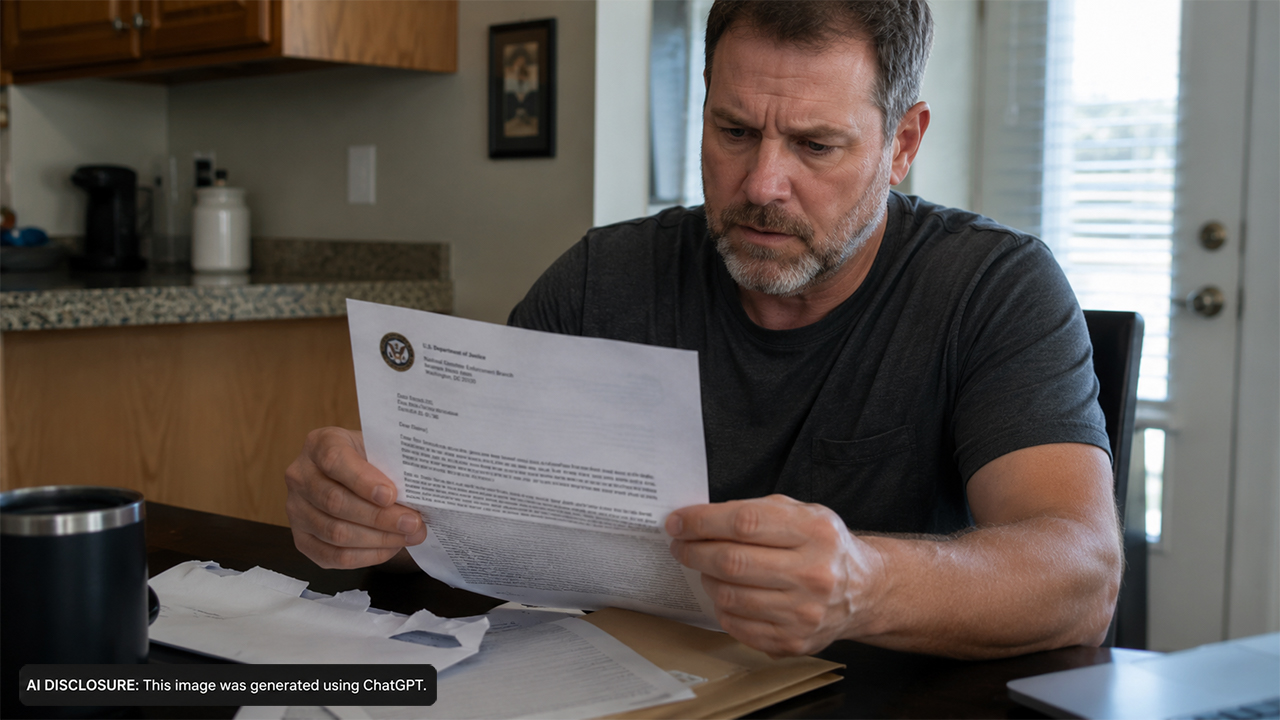
Photo credit: AI-generated image created using ChatGPT. Illustrative only
Most gun owners can picture the feeling: you open the mailbox, expecting junk flyers and bills, and there’s an official-looking letter staring back at you. For one Arizona firearms hobbyist, that letter came from a local ATF office—and it wasn’t a routine notice. It was a warning that he “may have acquired one or more firearms from a federally licensed firearms dealer for, or on behalf of, another person,” and it included a deadline: 30 days to respond.
A collector’s buying habits suddenly looked suspicious
In the original post, the gun buyer said he was shocked by the accusation because, in his words, no one had ever asked him to buy a firearm for them—and he never asked anyone to buy one for him. He described himself as a collector who bought guns for his own use and interests, mostly focused on building and testing different rifle configurations.
Specifically, he liked buying complete lower receivers so he could pair them with different complete uppers (he noted 16-inch-plus barrels in rifle setups). Over time he tried “many different combinations” and calibers, the same way a lot of enthusiasts chase a certain feel—lighter, handier, better-balanced—until something finally clicks.
He says every purchase and transfer went through an FFL
The reason the letter hit so hard is that he believed he’d done things by the book. He said every firearm he purchased and every firearm he later transferred went through a federally licensed dealer. No parking-lot handoffs. No casual private sales. Every transfer involved an FFL, a background check on the receiving party, and the standard paperwork and fees.
That’s a common approach for folks who want a clean trail and don’t want headaches down the road. He emphasized there would be records for “each and every one,” and that his goal wasn’t to supply anyone else—it was to experiment until he found the rifle setup he liked.
The “straw purchase” label can come from patterns, not just intent
Here’s where the outdoorsman’s reality check comes in: a straw purchase is usually thought of as a straight-up scam—buying a gun for someone who can’t or won’t pass the background check, then pretending on the paperwork that you’re the true buyer. But the way this warning landed suggests another angle that can raise eyebrows: buying and then quickly selling or transferring firearms over and over.
The poster explained that when he wasn’t satisfied with a rifle or didn’t like how it handled, he’d sell or transfer it because he had limited storage space. He called the buyers “purely coincidental transferees,” meaning he wasn’t trying to route guns to any particular person—he was just moving items he didn’t want to keep.
Even if the intent was innocent, that kind of repeated buy/transfer cycle can look a lot like “acquiring for someone else” from the outside, especially if it happened frequently. In the same way a game warden might take interest in a pattern of activity on a property line, agencies look at patterns first and sort out explanations second.
The 30-day response window is the part you can’t ignore
A warning letter isn’t a conviction, and it’s not the same thing as being charged. But it is a bright flare across the bow, and the stated deadline matters. Thirty days goes fast when you’re trying to gather paperwork, remember dates, and reconstruct a timeline of what you bought, when you built it, and when you transferred it out.
The practical issue is that the letter signals you’ve been noticed. Whether that attention came from dealer reports, a trace connected to one of the guns later on, or simple volume of transactions, the end result is the same: you’re now in a spot where a careless response could create problems, and no response at all can look worse than it needs to.
This is the part where a lot of responsible gun owners need to slow down. It’s tempting to fire off a quick, angry reply—especially when you feel accused of something you didn’t do. But the smarter play is to treat it like you would an insurance claim after a wreck: document, organize, and be measured.
What other gun owners tend to focus on in situations like this
The post itself didn’t include a running comment section in the source material, but you don’t have to spend long around gun counters or ranges to know what experienced folks home in on when they hear “straw purchase” and “warning letter” in the same sentence.
First, they focus on paperwork. If you’ve truly done everything through FFLs, that paper trail is your friend, but only if you can access it and present it clearly. Receipts, dated transfer records, and any notes that show the firearms were bought for personal use—and only later sold because they didn’t work out—help tell the story that the pattern alone can’t.
Second, they focus on frequency. A guy buying one rifle, selling it two years later, and buying something else isn’t going to read the same as someone doing a string of buys and transfers in a short window. Even if it’s just “trying stuff,” it can resemble dealing activity to an outsider. The poster said he used to do it “fairly frequently,” then stopped once he found what he wanted—so the period of higher activity may be what triggered attention.
Third, they focus on keeping everything above-board going forward. If you’re in the habit of building rifles from lowers and swapping uppers to test setups, you’re not doing anything inherently wrong in that hobby space. But the moment you start flipping guns regularly, you’re stepping into an area where regulators may look harder, even if your local circle sees it as normal tinkering.
A grounded way to think about it if this ever lands in your mailbox
No one wants federal attention, and a letter like this can feel personal. But it’s often less about a single purchase and more about how a series of transactions looks on paper. The buyer in this case said he purchased for himself, transferred only through FFLs, and never acted as a proxy for anyone else. His confusion makes sense.
The best lesson for everyday gun owners is simple: if you’re buying frequently, keep clean records and make sure your actions match how you’d explain them to someone who has never met you and only sees dates and forms. If you ever receive an official notice with a response deadline, treat it seriously, avoid emotional replies, and get your documentation in order fast.
Outdoorsmen spend a lot of time thinking about safety and responsibility—muzzle discipline, secure storage, knowing the law on the water or in the woods. That same mindset applies here. When a letter shows up with a 30-day clock, the smart move is to handle it like a grown-up and keep your side of the story tight, factual, and backed by records.
Like The Avid Outdoorsman’s content? Be sure to follow us.
Here’s more from us: