Photo credit: AI-generated image created using ChatGPT. Illustrative only.
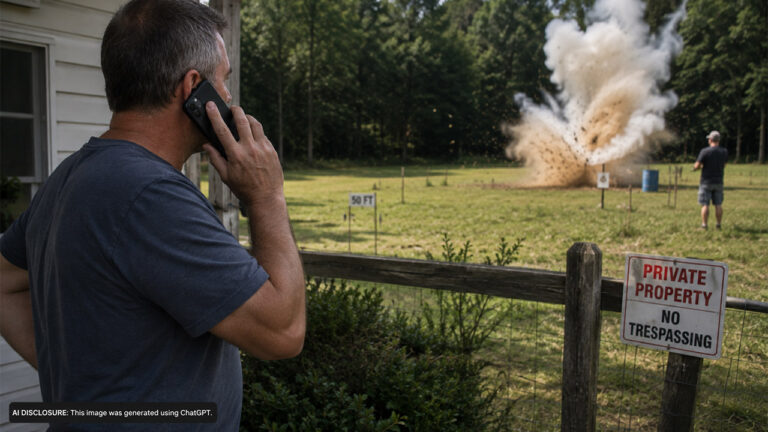
Out in the kind of rural township where you’re your own first responder, it doesn’t take much to turn a quiet homestead into a mess. One landowner says that’s exactly what happened after a neighbor kept turning loose a pack of intact huskies that roam the road and drift onto nearby farms. When the dogs finally hit livestock, the damage wasn’t minor.
In the original post, the landowner describes a long-running problem with a neighbor about a half-mile up a dead-end road. The neighbor has three “unfixed huskies” that run unsupervised and off-leash. Meanwhile, the one “well-behaved” dog—a spayed pit mix—was reportedly put on an electric collar without training, to the point the poster says you can hear the dog screaming.
Free-roaming dogs and livestock don’t mix for long
If you’ve raised animals for any length of time, you know the math. A loose dog turns into two, then three, then a “pack” mindset sets in. And huskies, like plenty of high-drive breeds, can cover ground fast and treat a farmyard like a buffet if they get the habit started.
The landowner says the situation didn’t start with chickens. Last winter, one of the huskies was “missing” for days and eventually showed up on the poster’s farm trying to attack pigs. Another incident involved a goat that ended up with puncture marks in an ear, though the poster didn’t see the attack happen. Those are the kind of warning flares rural folks learn not to ignore.
The day the chickens were hit, it turned into a real loss
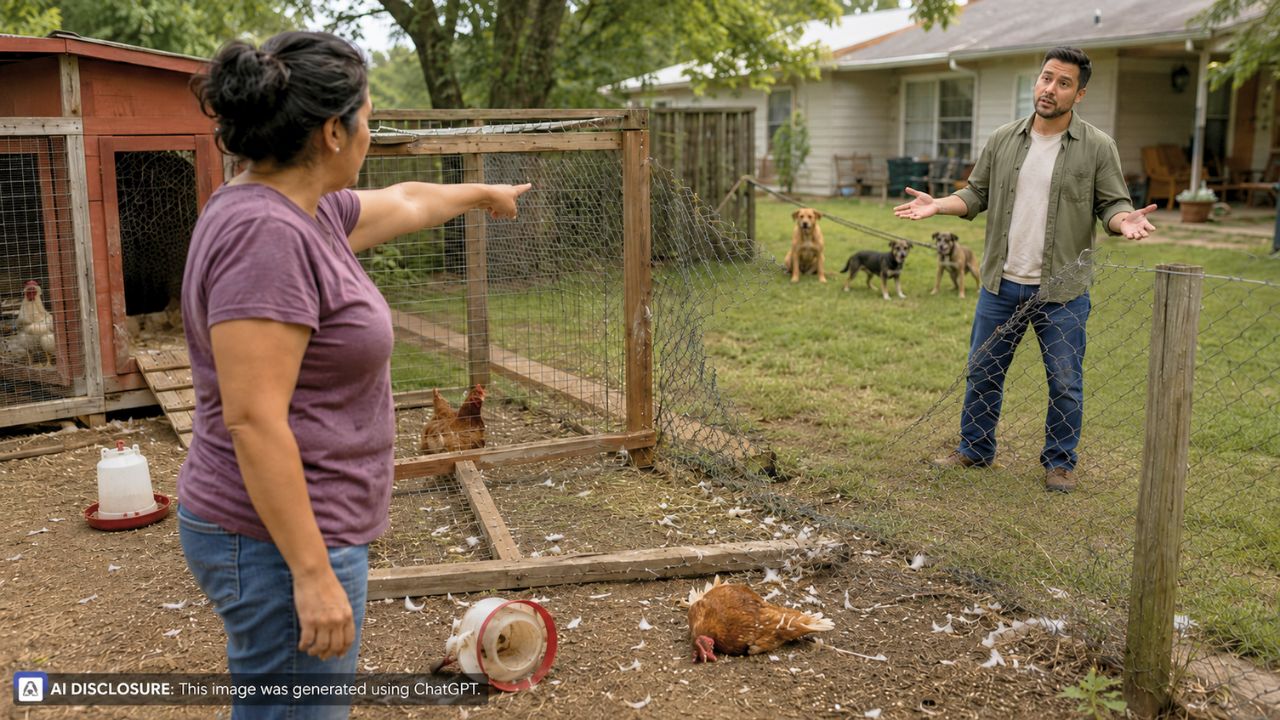
The latest incident, according to the post, escalated quickly. One of the dogs came onto the property and “killed my chickens brutally,” then “bloodied up my goats” before the landowner was able to run the dog off.
Anyone who’s walked into that scene knows it isn’t just about the dollar value of a few birds. It’s the sick feeling in your stomach, the wasted feed, the mess to clean up, and the realization that the same dog will likely come back bolder. Once a dog figures out chickens can’t outrun it, you’re not dealing with a one-time mistake—you’re dealing with a pattern.
Local enforcement sounded sympathetic but limited
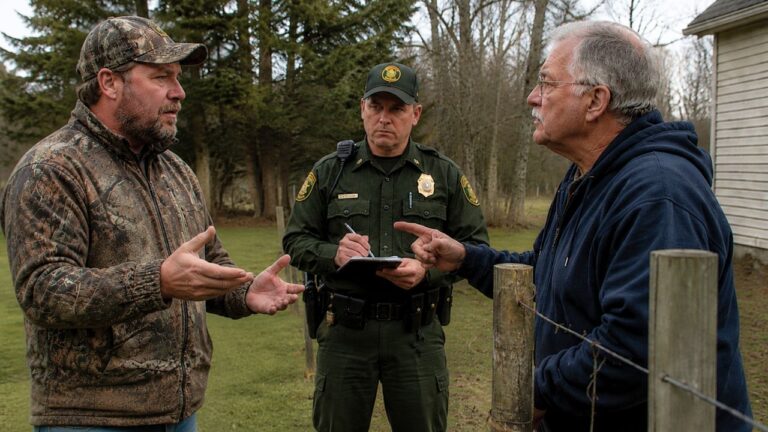
The landowner called police, and an off-duty constable arrived about 40 minutes later, took photos, and said he’d “investigate.” The constable also reportedly told the landowner, “This dog ain’t gonna stop. He’ll do it again.” That’s a blunt statement, but it’s also one most country people would agree with after seeing a dog in kill mode.
The big issue is the structure—or lack of it. The poster says there’s no dog warden, no animal control, and not even a town office. In other words, there isn’t a clear lever to pull besides hoping the constable has time, interest, and authority to keep leaning on the neighbor.
When the rules are soft, the problem gets hard
What really put the landowner in a corner was the way the local ordinances are laid out, at least as they understand them. The post describes a “first offense” for an aggressive or unruly dog as a written warning with a $0 fine. Second offense: $75 and another written warning. Third offense: $200 and an impoundment, with $30 to release the dog. And the kicker: “No leash ordinance.”
That kind of setup might work in a town where dogs are mostly contained and problems are rare. But in farm country, where loose dogs can rack up livestock damage fast, it reads like a system that forces the landowner to absorb loss after loss while the dog owner gets a slap on the wrist.
The poster’s read is simple: if the neighbor can let dogs run “free range” with minimal consequences for multiple incidents, the incentive to change behavior just isn’t there.
The landowner was already thinking about the last-resort option
When animals are being killed, folks start thinking about hard solutions. The poster says they believe it may be their legal right to shoot the dogs if they attack again, but they “really prefer not to.” That’s an honest line a lot of responsible gun owners would recognize—nobody wants to drop a neighbor’s dog, but plenty of people will protect livestock when it’s actively being harmed.
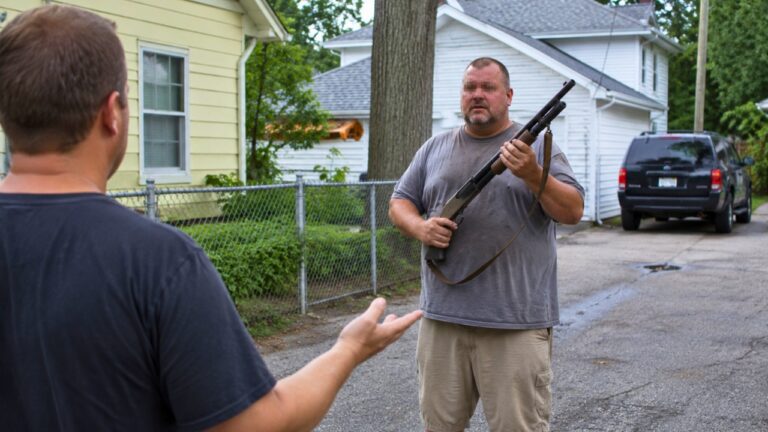
There’s also a second layer that gets glossed over by people who don’t live out there: retaliation and escalation. The landowner says they’re fearful the neighbor may retaliate and they don’t want their animals harmed in return. That’s a real concern on a dead-end road where everyone knows where everyone lives, and help can be a long drive away.
What practical-minded folks tend to focus on in cases like this
Even without a long comment thread included in the source, the practical playbook for situations like this is pretty consistent, and it lines up with what rural landowners and outdoorsmen talk about at feed stores and range benches.
First, documentation matters. Photos of dead birds and injured livestock help, but time-stamped trail camera footage near coops, gates, and known entry points can be the difference between “I think it was your dog” and “Here’s your dog doing it.” If a constable is already taking pictures, building a clean, organized record of each incident—dates, times, damage, vet bills, and any communications—keeps the pressure on the system that exists.
Second, communication should stay boring and businesslike. It’s tempting to march up the road and have it out, but that’s how neighbor disputes turn into property-line feuds that last for years. Written messages that stick to facts, losses, and expectations can help if the issue ever needs to be handled more formally.
Third, livestock protection starts at home, too. That doesn’t mean the victim “caused” the problem, but hardening the target can buy time. Better latches, hot wire around vulnerable runs, and secure nighttime housing can reduce losses while the legal side crawls along. A lot of folks also lean on livestock guardian dogs or other deterrents, depending on their setup and what they can responsibly manage.
And finally, if it ever comes down to defending livestock in the moment, safety and legality have to be front and center. That means knowing what your state and township actually allow, being certain of your target, having a safe backstop, and avoiding any shot that risks sending a round toward a home, road, or livestock you’re trying to protect. It also means calling it in immediately afterward, because the fastest way to lose the moral high ground is to handle it quietly and let rumors fill the gap.
The ugly truth is that free-roaming dogs can turn into a serious livestock predator overnight, and “warnings” don’t bring chickens back. The landowner in this case is trying to find a way to force a change without taking the most permanent option, but the mix of weak ordinances and limited enforcement is pushing everything toward a breaking point—exactly where nobody wants it to go.
Like The Avid Outdoorsman’s content? Subscribe to our newsletter so you never miss an article.
Here’s more from us: