Photo credit: The Avid Outdoorsman
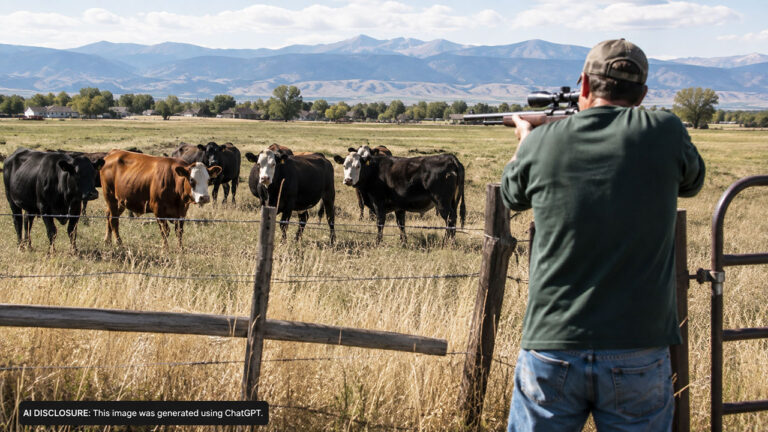
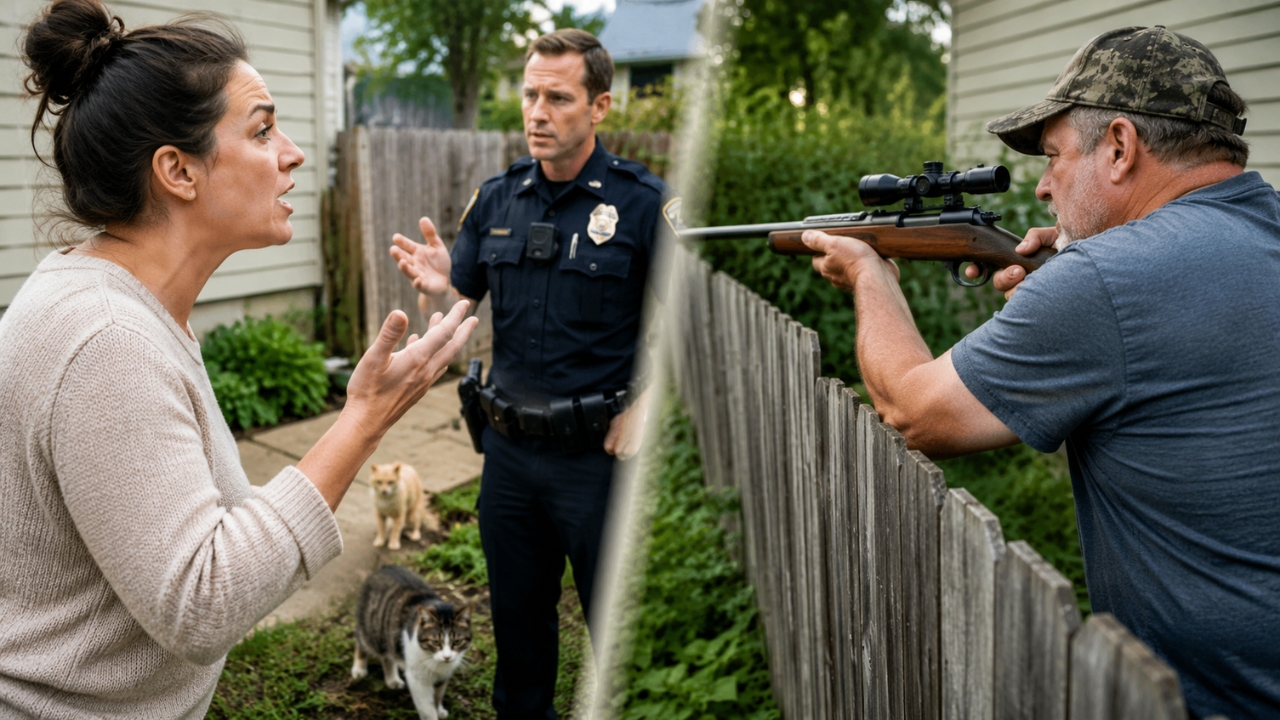
In a lot of rural neighborhoods, folks learn each other’s routines the same way they learn the seasons—by watching what happens around the barns, the trash cans, and the edge of the woodline. That’s why it didn’t take long for one woman to notice her neighbor stepping out behind his shop with a rifle whenever the stray cats showed up.
She’d been seeing the cats for weeks. Skinny, skittish, and always nosing around the feed shed and the chicken run. When she heard the sharp crack of gunfire one evening and saw the cats scatter, she decided she’d had enough and called it in.
The cats weren’t just “around”—they were getting into feed and birds
Out where people keep livestock, stray animals stop being a cute problem real fast. Cats can get into feed storage, tear open bags, and spread fleas and disease. And while some cats are just dumped pets trying to survive, others go feral and start acting like predators.
In this case, the neighbor had been dealing with more than paw prints on the porch. He’d reportedly found dead chicks and disturbed nesting spots, and he was tired of replacing birds and cleaning up messes. He’d tried shutting up the coop tighter, but the cats kept finding a way to slip in when doors were opened and closed during chores.
A phone call to police turned into a property-rights lesson
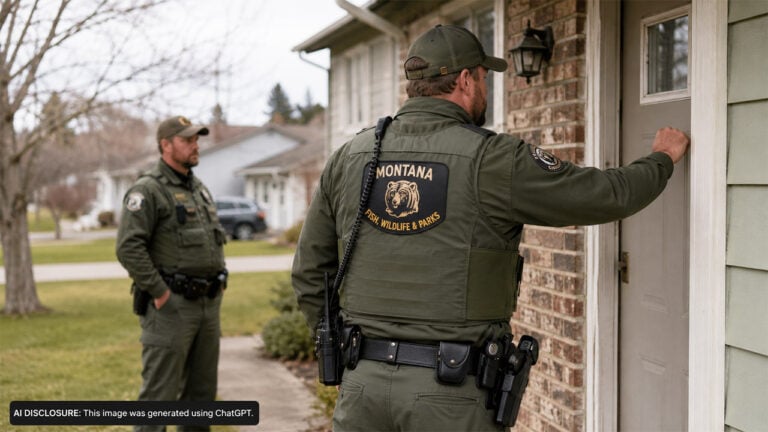
When deputies showed up, the woman expected it to be treated like reckless shooting or animal cruelty. She described shots being fired “toward” the property line and said she was worried about safety. That’s not a crazy fear—anybody who’s spent time around a neighborhood dispute knows how fast “just shooting pests” can become sloppy and dangerous.
But the responding officers didn’t show up looking to confiscate guns. They walked the area, looked at where the neighbor was shooting from, and checked what was behind his target area. The key detail: he wasn’t sending rounds toward a road or a house, and he had a solid backstop on his own land.
Then came the part she didn’t want to hear. In many places, landowners are allowed to protect livestock and property from nuisance animals, including feral cats, as long as they follow local discharge rules and do it safely. Deputies reportedly told her that, based on what they could verify, he wasn’t breaking the law.
Safe backstops and local ordinances are what make or break these calls
This is where a lot of folks get tripped up. “It’s my land” doesn’t automatically mean “I can shoot whenever I want.” Many counties have rules about shooting distances from occupied dwellings, roads, and public rights-of-way. Some have no-discharge zones. Some treat certain firearms differently inside subdivisions.
On the other hand, a complaint doesn’t automatically mean somebody is unsafe. Deputies tend to look at the same basics every responsible shooter should: direction of fire, what lies beyond the target, whether there’s a berm or natural backstop, and whether the shooter is taking shots that could cross property lines.
In this situation, the neighbor’s setup mattered. Shooting down into a creek bank or into a dirt berm behind the outbuildings is a whole different deal than sending rounds flat across a pasture where houses sit in the distance. The difference isn’t opinion—it’s geometry and consequence.
The neighbor problem wasn’t really about cats—it was about trust
Once law enforcement says the shooting itself is legal, the whole dispute shifts. Now it’s not a crime problem; it’s a neighbor problem. And those are usually worse, because they simmer.
The woman wasn’t just upset about the cats. She didn’t like the idea of gunfire close to her home, and she didn’t like an animal being shot—even if it was feral and destructive. The neighbor, meanwhile, didn’t want to lose more birds, didn’t want to invest time and money into traps that get stolen or tampered with, and didn’t want someone else telling him how to manage predators on his property.
Both sides can be “right” in their own minds, and still end up making the situation more dangerous. When people stop talking and start calling, the next step is usually more cameras, more signs, more tension, and more late-night suspicion.
What people latched onto: traps, TNR programs, and “don’t shoot near houses”
Whenever a story like this makes the rounds, the same themes pop up. One camp says, “Strays are a nuisance animal—handle it.” Another says, “Use trap-neuter-return, call animal control, don’t shoot.” And a third group focuses strictly on the firearms side: “Legal or not, it better be safe.”
Trapping is the obvious alternative, and in some areas it’s the best answer—especially if local shelters or farm groups help with spay/neuter. But trapping isn’t always simple. It costs money, requires time, and if you’ve got a steady stream of dumped pets coming in from nearby roads, it can feel like bailing a leaky boat.
The safety crowd has a point too. Even if a landowner has the legal right to dispatch nuisance animals, every shot has to be treated like it could ruin a life if it goes wrong. Subsonic rounds, rimfires, and careful angles can reduce risk, but nothing replaces a proper backstop and a hard rule against shooting if you can’t guarantee where that bullet ends up.
The practical options that actually reduce conflict
The smartest moves in situations like this usually aren’t the loud ones. If you’re the neighbor worried about gunfire, asking for a calm walk-through of where shots are being taken can do more than a dozen angry calls. If you’re the landowner, showing that you’ve thought about safe direction of fire—and that you’re not taking risky shots—goes a long way.
There are also middle-ground solutions that don’t require anybody to “lose.” Motion lights around coops, better wire at ground level, and locking feed down tight can reduce the attractants that pull cats in. On the animal side, coordinated trapping days with a local group can knock down numbers without turning a neighborhood into a war zone.
But there’s a hard truth here: feral cats are predators, and they don’t just bother chickens. They hammer songbirds and small game too. If someone chooses lethal control on their own property and does it within the law and with a safe backstop, that’s often going to be considered a lawful, if unpopular, solution.
Outdoorsmen and landowners don’t get to outsource responsibility. If you’re going to pull the trigger anywhere near other homes, your safety margins need to be bigger than your ego. And if you live next to rural property, it’s worth understanding that “country quiet” has always included tractors, barking dogs, and sometimes gunfire—ideally handled with restraint, common sense, and a little neighborly communication before it gets to the point of flashing lights in the driveway.