Photo credit: Theavidoutdoorsman.com
The day started the way a lot of good walleye days do—dim light, a little chop on the water, and a cooler that might finally get some use. The angler had put a couple decent fish in the livewell and decided to head for the ramp before the wind got too sporty. That’s when a routine check turned into a headache he didn’t see coming.
A normal ramp check turned into a measurement dispute
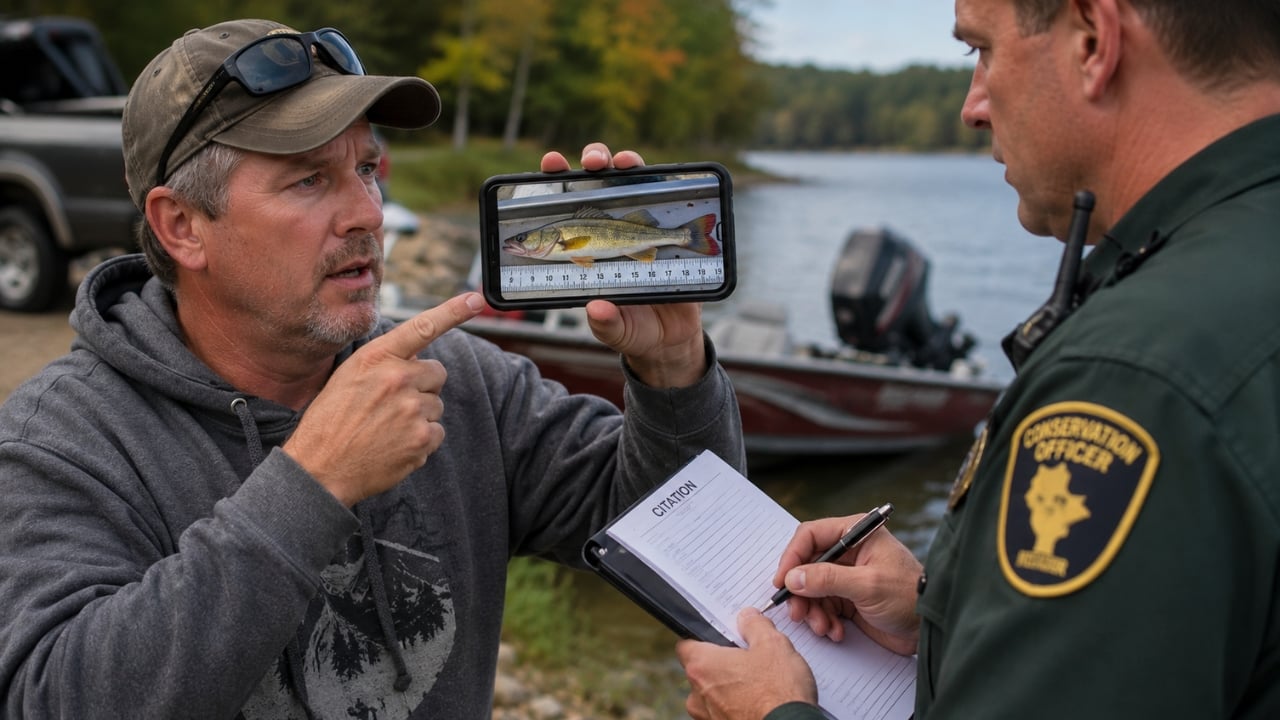
At the landing, a conservation officer was working the flow of boats, checking licenses and doing what officers do during peak bite windows—making sure limits and length rules are being followed. When the angler opened his cooler to show his catch, one walleye in particular drew attention. The fish was already cleaned, and without the head and guts, it didn’t look like it had much room to spare.
Here’s the problem: in a lot of states and on a lot of waters, the minimum size rule applies to the fish as it came out of the water. But once it’s cleaned, you’ve changed the reference points an officer uses to verify length. Some regulations require fish to remain “measurable” until you’re off the water or until you reach your residence. Others allow cleaning but still require proof the fish met the minimum length at the time of harvest.
The officer measured what was left and determined it was under the minimum. A citation followed. The angler tried to explain it was legal before he cleaned it, but at the ramp, “trust me” isn’t evidence.
The photo on his phone changed the tone fast
After the citation was written, the angler dug through his phone and pulled up a photo he’d taken earlier in the day. In the picture, the walleye was laid flat on a ruler—mouth closed, tail pinched, clear numbers showing the fish was over the legal minimum before it ever saw a fillet knife.
That kind of photo is the closest thing you can have to a time-stamped receipt on the water. It doesn’t erase every question, but it’s hard to ignore when the ruler markings are readable, the fish is intact, and the shot doesn’t look like it’s playing games with angles. It’s also the kind of detail that can separate an honest mistake—or an honest angler—from someone trying to slide a short fish through by cleaning it first.
Whether the citation gets amended, dismissed, or upheld depends on the exact regulation where this happened and what the officer observed. But producing a clear measurement photo immediately reframed the situation from “undersized fish” to “fish became hard to measure after being cleaned.” Those are two different issues, and they don’t always carry the same consequences.
Why cleaning fish early creates trouble even when you’re legal
Plenty of folks clean fish at the cleaning station near the ramp, and in some places that’s normal and allowed. The issue is that “allowed” doesn’t always mean “smart,” especially on waters with tight minimums, slot limits, or special regs that change by lake, river section, or even species.
A walleye sitting right on the line is a coin flip once it’s been processed. Take the head off, trim the belly, or leave a little meat behind the gill plate, and you’ve shortened the measurable length. Even if you did everything right, you can’t blame an officer for being skeptical when a fillet job turns a borderline legal fish into something that looks clearly short.
There’s also the identification side. Some waters have mixed bag limits, protected slots, or restrictions that require the fish to remain identifiable—skin on, a patch of scales, fins intact, or whole fish. Those rules exist because once fish are reduced to anonymous fillets, it’s easy for bad actors to hide what they actually kept.
The simplest approach—especially when the bite is hot and the minimum is tight—is to leave them whole until you’re done fishing for the day and you’re well away from a check. It’s not about being paranoid. It’s about avoiding a problem you can’t easily talk your way out of at a busy ramp.
What people latched onto: documentation, officer discretion, and common sense
Whenever a story like this makes the rounds in fishing circles, you see the same split. Some anglers argue a clear photo should end the conversation on the spot. Others say a photo proves almost nothing because you can manipulate angles, pinch the tail, or use a ruler that isn’t clearly marked.
What most practical outdoorsmen seem to agree on is this: if you’re going to keep borderline fish, you’d better be able to prove it. That doesn’t mean turning every catch into a photo shoot. It means having a measuring board in the boat and taking quick, honest documentation on the fish that are close.
A lot of folks also focused on officer discretion. Conservation officers aren’t there to ruin your day, but they’re tasked with enforcing rules that get broken constantly. A cleaned fish that appears short is a red flag. Some officers might issue a warning if the situation looks like an honest misunderstanding and the angler is squared away otherwise. Some won’t, especially if the regulation clearly requires fish to remain measurable until you’re off the water.
And then there’s plain old common sense—if you know the minimum is, say, 15 inches, and you’ve got one that might be 15 and a hair, maybe let it go. A walleye that barely makes the cut is rarely worth a fine, a court date, or the stress of arguing over fractions at the ramp.
How to protect yourself without turning fishing into paperwork
The lesson here isn’t “carry a camera so you can fight a ticket.” It’s that a little preparation keeps small issues from turning into big ones. A rigid measuring board with bold numbers beats a soft tape every time. Measure on a flat surface, close the mouth, and pinch the tail the way your local regs specify. If your state has a specific measurement method, follow it.
If you’re going to clean fish before you leave the area, make sure you’re allowed to do it and understand what has to remain attached. Some rules require skin-on fillets. Some require leaving a patch of skin for species ID. Some require leaving the carcass in a condition that still shows length or sex. That stuff matters.
And if you do take a photo, make it a clean one. Straight down, clear markings, fish flat, no weird angles, no shadows hiding the end of the tail. One good picture of a borderline keeper can save you a lot of hassle later, even if it doesn’t automatically erase the enforcement action.
In the end, this is one of those situations where an angler can be “right” and still end up in a bind, simply because the proof got thrown away with the head and guts. If you fish waters with strict length rules, treat measurability like part of the limit. Keep them whole until you’re done, measure twice, and when a fish is on the edge, remember there will always be another one that isn’t.