Photo credit: Theavidoutdoorsman.com
It doesn’t take a burglar to turn a responsible gun owner’s life upside down. Sometimes it’s a roommate, a shared hallway closet, and one bad decision made on a random weekday afternoon.
That’s the kind of mess one gun owner found himself in after his handgun went missing from his place without a word. He assumed it was misplaced, or maybe he’d moved it while cleaning gear and forgot. Then the call came: his roommate had been stopped in a car, a pistol was found, and the serial number traced right back to him.
A borrowed gun turns into a real-world problem fast
The roommate didn’t break in. He didn’t pick a lock. He just grabbed the pistol that wasn’t secured the way it should’ve been and slid it into a waistband or center console like it was a spare phone charger.
That’s where “borrowing” stops being a household argument and starts becoming a criminal case. In a lot of states, if someone takes your firearm without permission and gets caught with it, law enforcement is going to ask the same hard questions every time: How did they get it? Why was it accessible? And did the owner knowingly allow it?
The traffic stop is where everything came to light
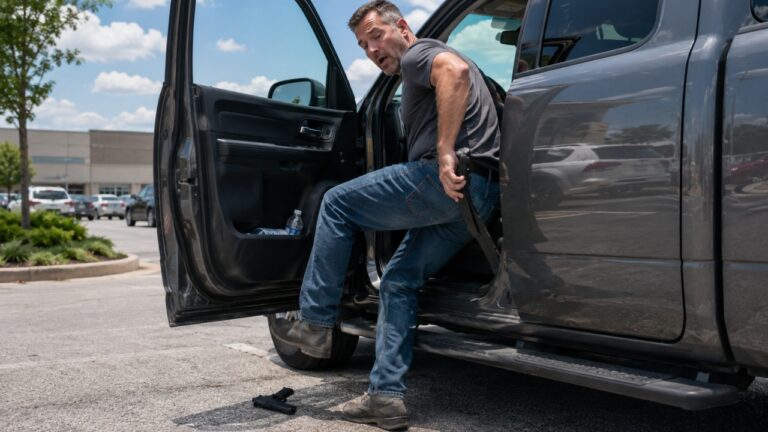
Traffic stops are routine—until they aren’t. A busted taillight, rolling through a stop sign, expired tags—pick your poison. But when an officer sees nervous behavior, smells alcohol, spots drug paraphernalia, or gets a “weapons present” admission, the whole tone changes.
In this case, the roommate reportedly had the pistol in the vehicle when he was pulled over. Whether it was on his person or within reach, it doesn’t matter much once it’s discovered and doesn’t belong to him. Officers run the gun, and suddenly the stop isn’t about driving behavior anymore. It’s about unlawful possession, potential prohibited-person status, and where that handgun came from.
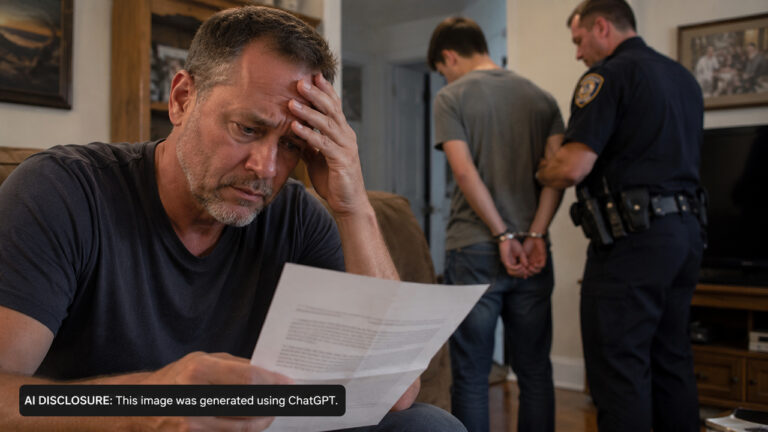
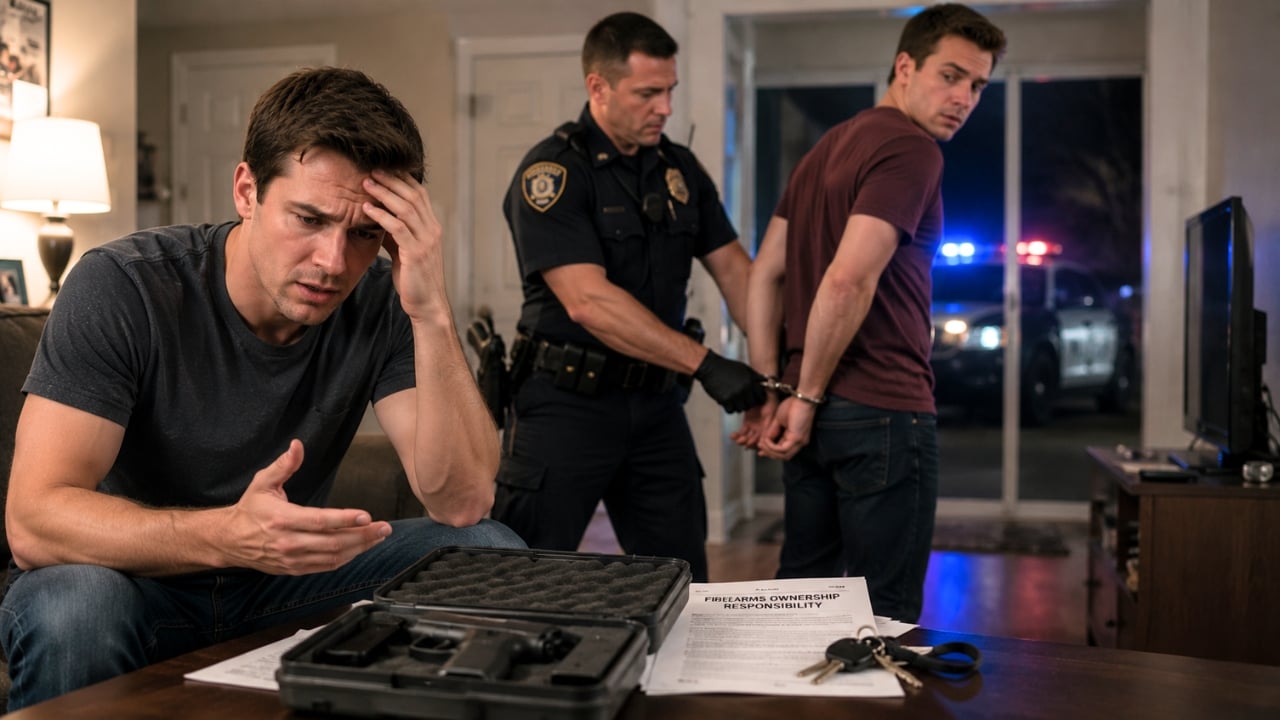
Why the gun owner can end up in handcuffs too
A lot of folks assume the owner is automatically the victim. Sometimes that’s true. But depending on the state and the surrounding circumstances, the owner can get dragged into it for things that don’t feel “criminal” in the everyday sense—like how the firearm was stored or whether the owner was careless in a way the law recognizes.
Some states have safe-storage requirements, especially around unauthorized access. Others can lean on negligence-style charges if a gun is left unsecured and someone takes it and commits another offense. Then there’s the ugly gray area: if investigators believe the owner “loaned” the gun informally, or knew the roommate wasn’t legally allowed to possess it, the owner’s exposure grows fast.
Even without any intent, a prosecutor can argue that leaving a loaded pistol in an unlocked nightstand in a shared apartment isn’t just sloppy—it’s reckless. That’s a hard pill for a lot of gun owners to swallow, but it’s the reality in more places every year.
The roommate situation is a storage situation, whether you like it or not
Hunters and shooters tend to think in terms of “my house, my rules.” But a roommate setup isn’t the same as living alone. The minute you share a roof with someone else, you’ve got a security problem you didn’t have before—especially if that person has friends over, parties, or leaves doors unlocked.
This is where a lot of folks get honest about their setup. A soft case in the closet is not secure. A pistol tucked on a top shelf isn’t secure. A quick-access safe that’s bolted down is a different story. Same with a real gun safe, even a smaller one, if it keeps unauthorized hands off your firearms when you’re asleep, in the shower, or away at work.
And it’s not just about theft. It’s about proving control. If your handgun is found in someone else’s car, the first thing you’ll wish you had is a clear way to show you took reasonable steps to prevent unauthorized access.
What people zeroed in on: “How could he even grab it?”
Whenever a story like this makes the rounds in gun circles, the comments split into predictable camps. One side says the roommate is a thief, full stop, and the owner shouldn’t face anything. The other side points to the storage piece and asks the question nobody likes: why was it so easy to take?
A lot of experienced gun owners land in the middle. Yes, the roommate made the choice. But you don’t get to pretend storage doesn’t matter when you share an apartment with someone who might be impulsive, irresponsible, or into things you don’t mess with.
Another hot point is the “I didn’t give permission” defense. It matters, but it’s not magic. If the facts look like casual access was normal—guns left out, ammo around, no lock, no safe—then “he didn’t ask” can start sounding like a technicality instead of a true barrier.
The practical moves that would’ve changed the whole outcome
This isn’t about shaming someone who got burned. It’s about how quickly this can happen to anybody who’s comfortable at home and treats a roommate like family.
First, secure the pistol in a locked container when it’s not on your body. If you carry, great—carry it. If you don’t, lock it. A quick-access safe is better than a drawer, but it needs to be anchored if you can manage it. Second, separate firearms from “household access.” If your roommate can reach it while you’re cooking dinner, they can reach it while you’re at work.
Third, have the hard conversation early. “Don’t touch my guns” isn’t rude. It’s normal. If you’re the only gun owner in the home, you need clear rules, and you need to pay attention to how that roommate lives—substance use, who they run with, how often they get pulled over, whether they’re stable. That’s not judging. That’s risk management.
And finally, if you discover a gun is missing, treat it like it matters immediately. Don’t wait a week hoping it turns up under a jacket. If it’s truly missing, document it and report it according to your local requirements. That single step can be the difference between being viewed as careless and being viewed as someone trying to do the right thing.
The hard lesson here is that your firearm doesn’t stop being your responsibility just because someone else made a bad decision with it. If you live with roommates, store your guns like you’re living with strangers—because when the lights come on during a traffic stop, that’s exactly how the situation will be treated.