Photo credit: The Avid Outdoorsman
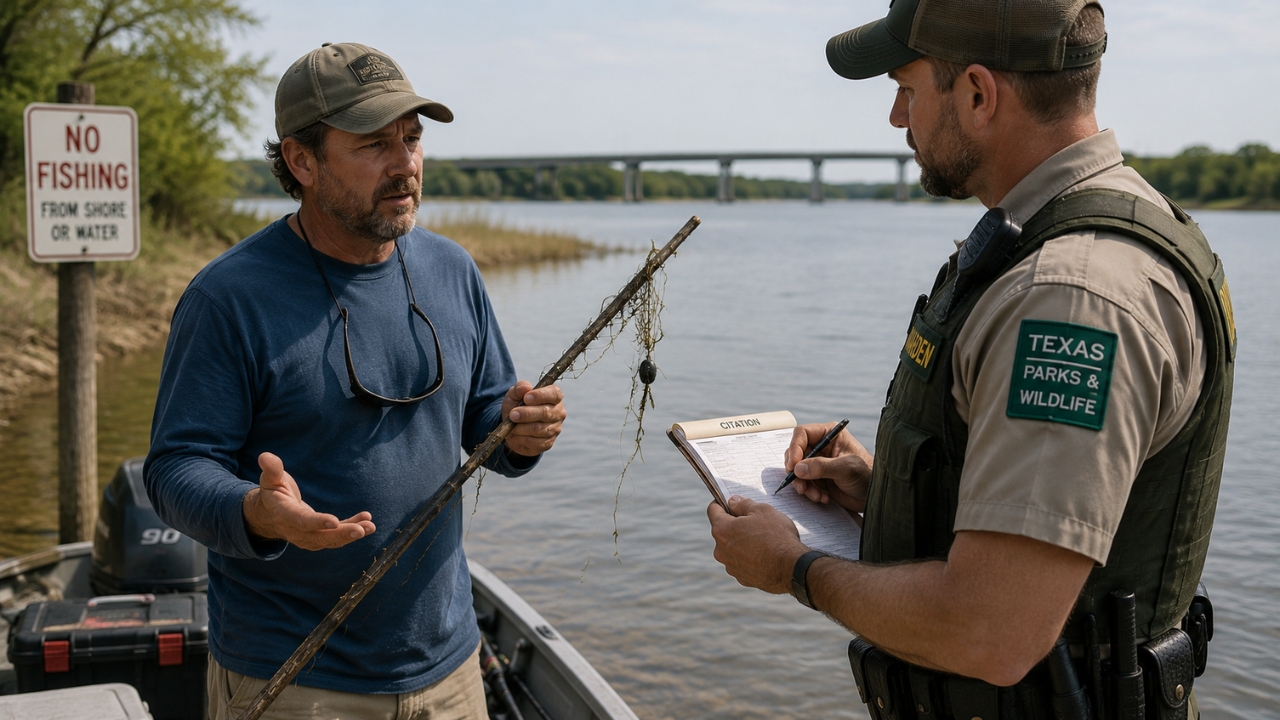
The fishing trip turned into a legal headache over something that did not sound like fishing at all. According to the Reddit post, the person’s friend was written up after pulling tangled fishing line out of the water with a stick.
The original Reddit post can be found here: https://www.reddit.com/r/legaladvice/comments/1edw00t/friend_got_written_up_for_fishing_without_a/
That was what made the situation feel so frustrating. The friend was not described as casting a rod, setting a hook, keeping fish, or trying to sneak around license rules. The issue was that they used a stick to pull tangled line out of the water, and somehow that ended with a citation for fishing without a license.
On paper, wildlife and fishing laws can be broader than people expect. In some places, “fishing” may not only mean using a rod and reel. It can include attempting to take fish, using certain gear, handling lines in the water, or interacting with fishing equipment in a way an officer believes falls under the statute. But from the friend’s point of view, pulling up tangled line probably felt more like cleaning up trash than fishing.
That is where the conflict came in. The friend had to decide whether to treat the ticket as a misunderstanding, pay it, fight it, or try to explain the situation to the court or prosecutor. A fishing citation may sound minor, but depending on the state and wording of the charge, it can still bring fines, a record, or future license issues.
The story also shows why outdoor enforcement can turn on tiny details. What was the friend actually holding? Was there a hook attached? Was bait involved? Were fish nearby? Did the officer believe the friend was trying to retrieve a fish or use the line? Or was it truly just tangled trash being removed from the water?
Those facts matter because intent can be hard to prove in the field. A person holding line in the water may say they were cleaning up. An officer may see someone manipulating fishing line without a license. Once the citation is written, the argument shifts from the riverbank to paperwork.
The friend’s best chance would likely depend on documentation and explanation. If there were witnesses, photos of the tangled line, or a clear reason they were removing it for safety or cleanup, that could help. But the friend would still need to handle the citation properly instead of ignoring it.
Commenters focused on the exact wording of the citation. Several said the friend needed to read what law or regulation was listed, because “fishing without a license” may have a specific definition that matters more than how the friend described the situation casually.
Others suggested contacting the court or prosecutor before the hearing date. If the friend could explain that they were removing tangled line rather than attempting to catch fish, there might be a chance to get the charge reduced or dismissed. But commenters warned not to assume that would happen automatically.
Some commenters said the friend should gather proof. If anyone saw what happened, their statement could matter. If the tangled line was saved or photographed, that could help show the activity was cleanup rather than fishing.
A few people also pointed out that paying the ticket may count as admitting the violation. That could be fine for a small infraction, but if the charge carried any record or licensing consequences, the friend needed to understand that before choosing the quickest option.
The post ended with a strange lesson about outdoor rules. Something as simple as pulling tangled line out of the water with a stick can become a fishing citation if the officer believes it crosses the legal definition. Whether the friend was cleaning up or technically fishing would have to be sorted out through the process on the ticket.
Like The Avid Outdoorsman’s content? Subscribe to our newsletter so you never miss an article.
Here’s more from us: